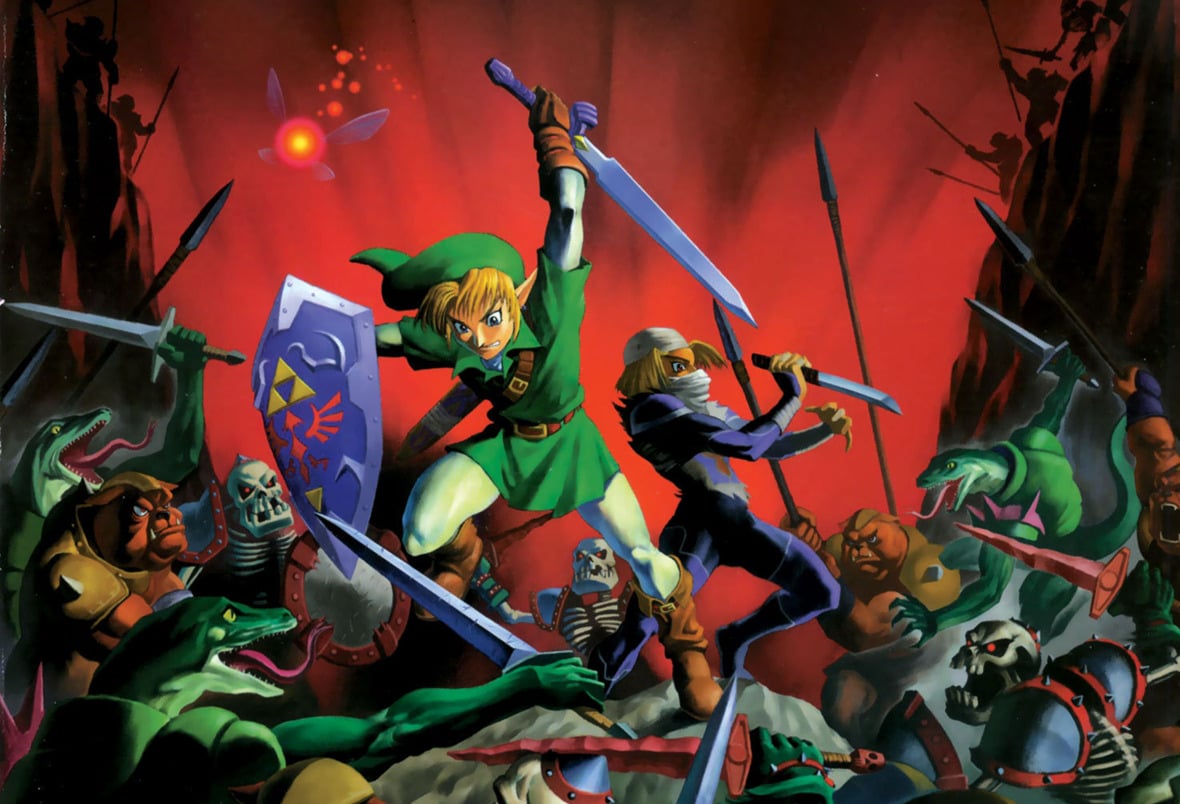
While we’re seemingly beyond the days of payouts hinged on its review scores, the influence of Metacritic on games is hard to overstate. Since the early 2000s, it has composited and averaged review scores for film, music and games, the latter of which it seems to weigh on the most. Most people would not dispute the game sitting at the top spot, The Legend of Zelda: Ocarina of Time, the beloved 1998 Nintendo classic that sits at a near perfect 99. But Did You Know Gaming, the YouTube compendium for overlooked trivia and newly uncovered history, is not most people.
“The calculation for Ocarina‘s meta-score is deeply flawed,” says the latest DYKG video. “We’re not attributing any of this to malice. We get that hunting down every back issue of every magazine for every game was a tall order back then. Mistakes were made. But hey, we all make mistakes. That said, none of that changes the fact that Ocarina‘s championship belt simply isn’t legitimate. And by extension, some of its Guinness records aren’t either.”
Since 2001, Metacritic aggregates review scores from approved publications and rounds them into a score out of 100 (unlike Rotten Tomatoes, who tally a pass/fail ratio). These ratings come from websites, newspapers, magazines and critics of certain regard. Released in 1998, Ocarina of Time predates Metacritic and most online resources. Still, Metacritic compiled a total of 22 then-contemporary reviews for Link’s first 3D journey across Hyrule. These come from the nascent IGN, the Canadian TV show Electric Playground and Famitsu magazine, which gave it their first and still incredibly rare perfect score.
While compiling a new video, DYKG’s fact finding discovered that Metacritic’s score is out of sync. The dispute isn’t based on remeasuring the critical consensus through any modern lens, but scrutinizing Metacritic’s own standards and protocols. This comes down to two key factors.
First, they noticed that Metacritic didn’t pull scores from all their usual approved publications, which are factored in not just other game scores, but other Zeldas. They included perfect scores from EGM and GamePro, but left out Game Informer and Nintendo Power, the official in-house Nintendo publication that gave it a humble 95. They found similar discrepancies with early blogs as well. This could be interpreted as cherry picking, though it’s possible Metacritic didn’t have these back issues and failed to check over the last quarter century. The second thing DYKG takes issue with is the inclusion of more arguable scores. Write-ups that merely call it “perfect,” without a numerical score, including a few flowery non-critical retrospectives published well after the game’s launch.
According to their own calculations, DYKG says the Metacritic score should be degraded from 99 to a whopping 98, rounding up from 97.6 (which is protocol on the site). While a single percentage slip doesn’t sound so controversial, this alone would knock Ocarina down to the more competitive second place, tying it with Grand Theft Auto IV, Super Mario Galaxy 2 and Soulcalibur. In the name of fairness, DYKG went through the same fact checking with Soulcalibur, which also launched before Metacritic, and found that despite some of the same issues in the process the score still ended up the same.
Metacritic is an influential resource and may act as a decent starting point for critical consensus. But it pales in comparison to establishing your own taste through critics and outlets you find speak to your sensibilities. It may matter to some bean counters or beer company record keepers, but an aggregate can only fit loosely over truth.