This week, I became a proud parent. My new son’s name is Ingredient, and I dressed him up to look like a big dork:
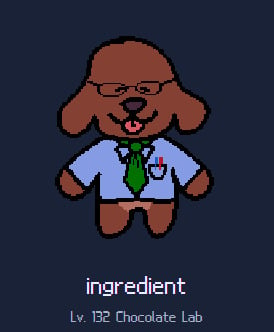
Ingredient is my beloved dog in the open beta of Dog Online, a semi-new browser game that’s like an MS Paint-drenched, dog-themed version of Neopets. It’s a deceptively simple game with different locations that let you go fishing, tend to a farm, shop for clothes, adopt pets, cook recipes, make trades, explore an enemy-filled dungeon, and sell your wares when the economy’s right, all while leveling up a dog (or two, or three). While there’s no chat feature, Dog Online also lets you send gifts to friends and show off your favorite items on your Dogpage (here’s mine).
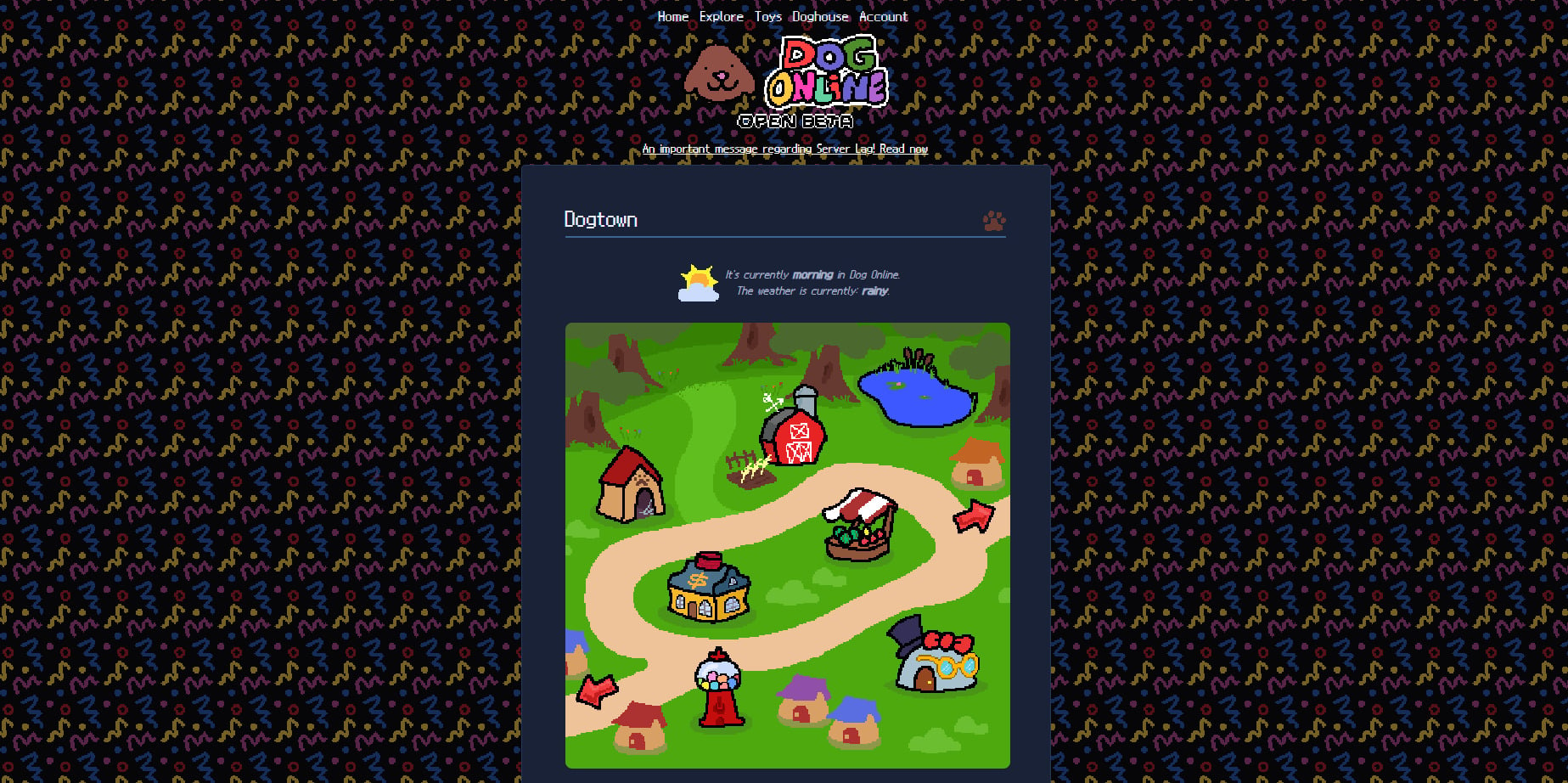
But Dog Online is also fairly mysterious. Despite being a former Webkinz freak and therefore this game’s exact target audience, I didn’t hear anything about it until this week, over six months after its open beta release. Even then, I struggled to find the actual game, which has a comically un-Googleable name and no real social media presence other than a small Bluesky account that reposts the occasional piece of fanart. As far as I know, Dog Online has really only grown through word of mouth.
I briefly chatted with lead developer Mimi, who told me that Dog Online’s small team got started a little less than a year ago, launching the game’s public beta this past April Fools’ Day. Over the past two weeks, however, Dog Online has had somewhat of a sudden renaissance, surpassing 10,000 users and forcing its development team to scramble to upgrade the site’s servers.
It’s easy to understand why Dog Online is finding so much success with its largely millennial and Gen Z audience, which grew up with a more vibrant and less terrible version of the internet. It’s fitting, then, that Dog Online is so chronically online yet simultaneously rooted in nostalgia—you can go shopping for scene clothes at Hot Dog Topic, don Spamton’s glasses from Deltarune, and exchange something called…Freaky Tokens.
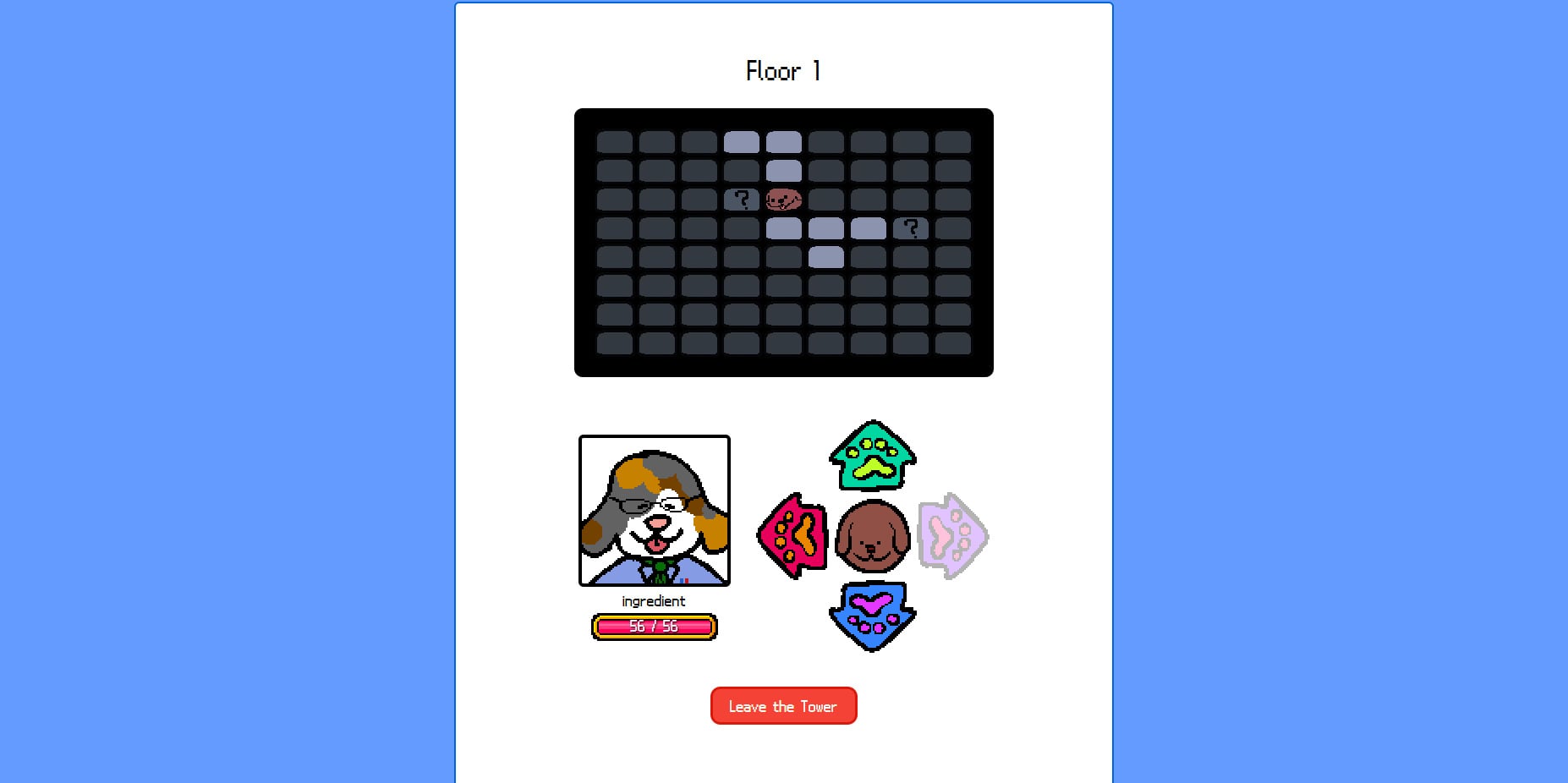
But beneath all the irony, Dog Online also hides an in-depth turn-based RPG in a location called the Lonely Tower. Here, you’ll have to navigate a grid to battle enemies, which get progressively tougher and might also lead to new floors. You might also run into treasure chests, random status effects, healing fountains, or even alternate floors with new sets of enemies. I’ve spent most of my Dog Online journey in the Tower, and I still get the feeling that I’ve really only skimmed the surface! (It’s also hard. It is still kicking my ass.)
Dog Online is equally expansive outside of the Tower. Despite what its beta status might imply, there are a lot of things to do in this game. There are currently 73 fish, 238 foods, 57 enemies, and 76 crops and other goodies to harvest, not to mention a host of other random weapons, creatures, enemy drops, and other items that you can discover.
For the completionists out there, there’s a fan-made Discord server and a Wiki where players have been collaborating to catalog information, but I’d encourage anyone who tries the game out to avoid looking anything up unless you get really stuck. The joy of Dog Online comes from taking your time, clicking around, experimenting, and trying stuff over and over again.
But what I really appreciate about Dog Online is how it encourages patience and discovery. Each dog has five main stats, and each stat can only be leveled up by finding new things. That means that you’ll only increase your bravery the first time you defeat a new enemy type or gain coordination the first time you catch a new species of fish, for example. A lot of these activities are gated behind time, too: you can also only fish a few times per day, and crops can take real-life days to grow.
Really, Dog Online feels like the most offline game I’ve played in a while. While you’re free to grind in the Tower for hours, the best way to make progress and discover new items in Dog Online is by logging off, taking a break, and coming back the next day, and that feels immensely special in 2026.
“Between social media and AI and the general corporate nature of the internet, it may feel like the good times are over,” Mimi said. “But I and the team know that there are still rich pockets of independent creators and people creating websites simply as a labor of love; they just typically don’t get the spotlight in the ecosystem of the modern web. When things feel strange and scary, sometimes the best thing to do is respond with creativity, absurdity, and joy from your heart!”