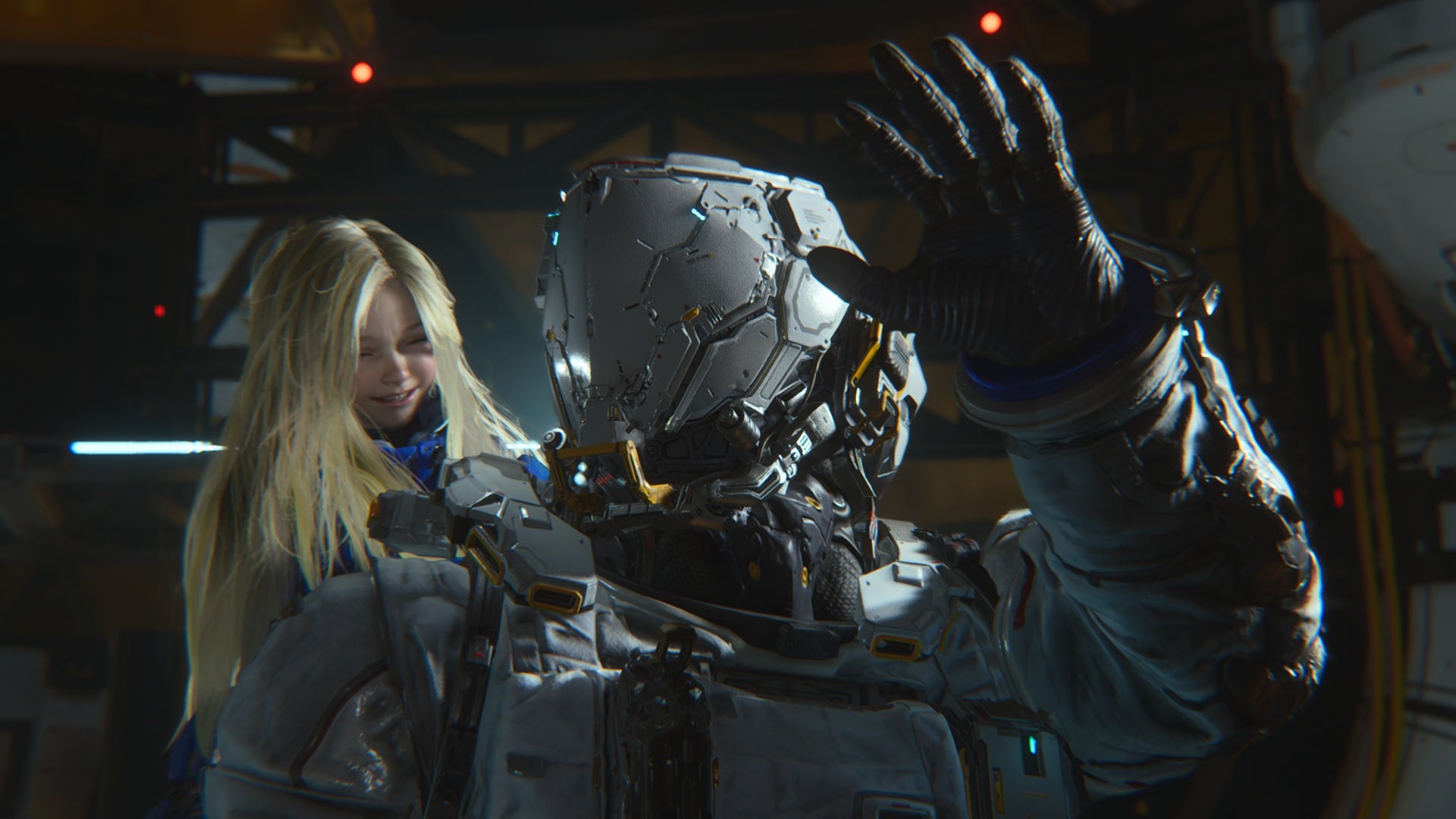
I was struck by a thought while playing through Pragmata. No, not about Hugh, Diana, or the shitstorm surrounding discussions of the game online. Not even about its lunar setting, the game’s wider fascination with 3D printing, or its “uncle-core” qualities. Instead, I was surprised by how much I sucked at its primary puzzle-solving gameplay mechanic, and how much I was totally okay with that.
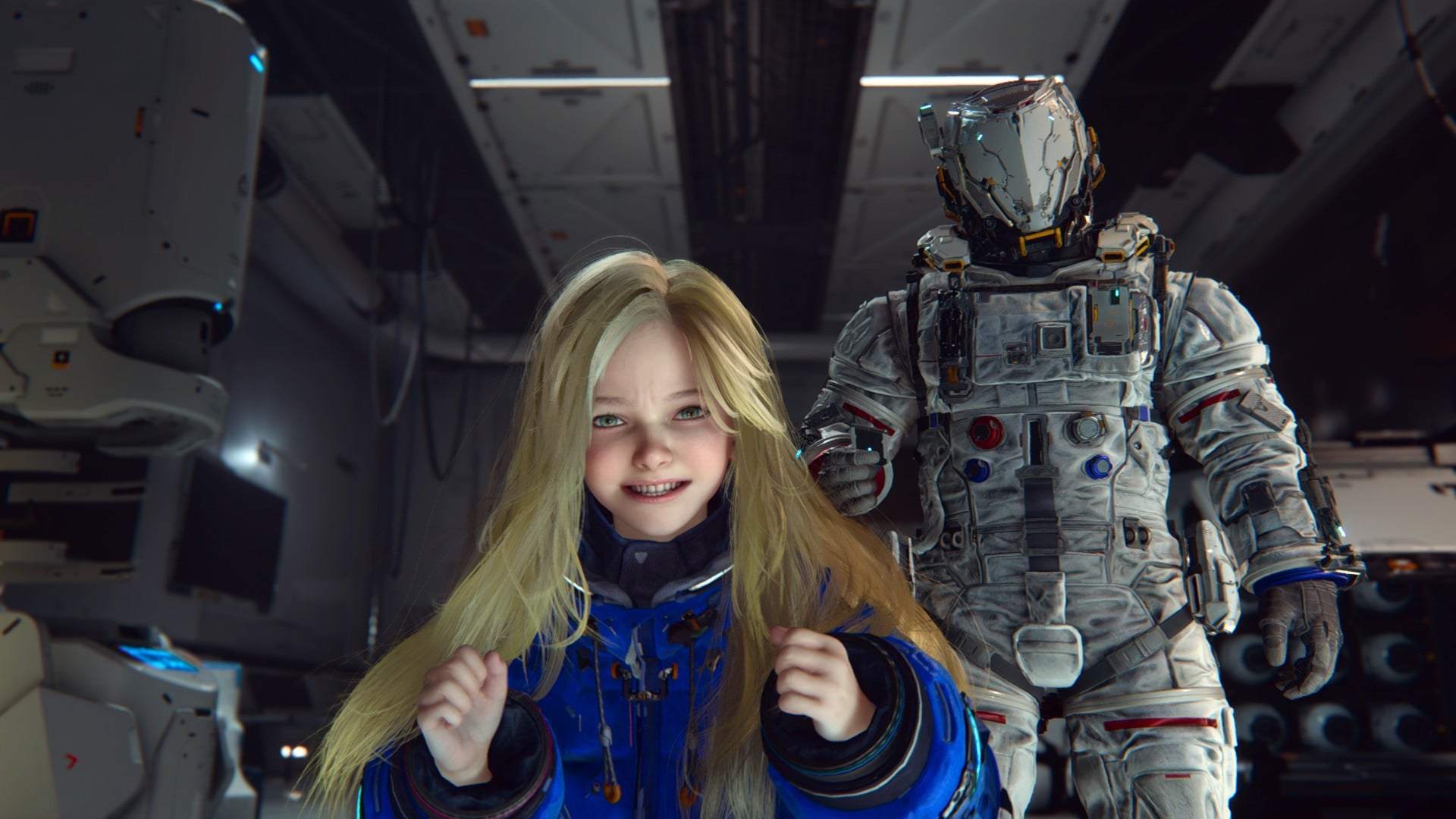
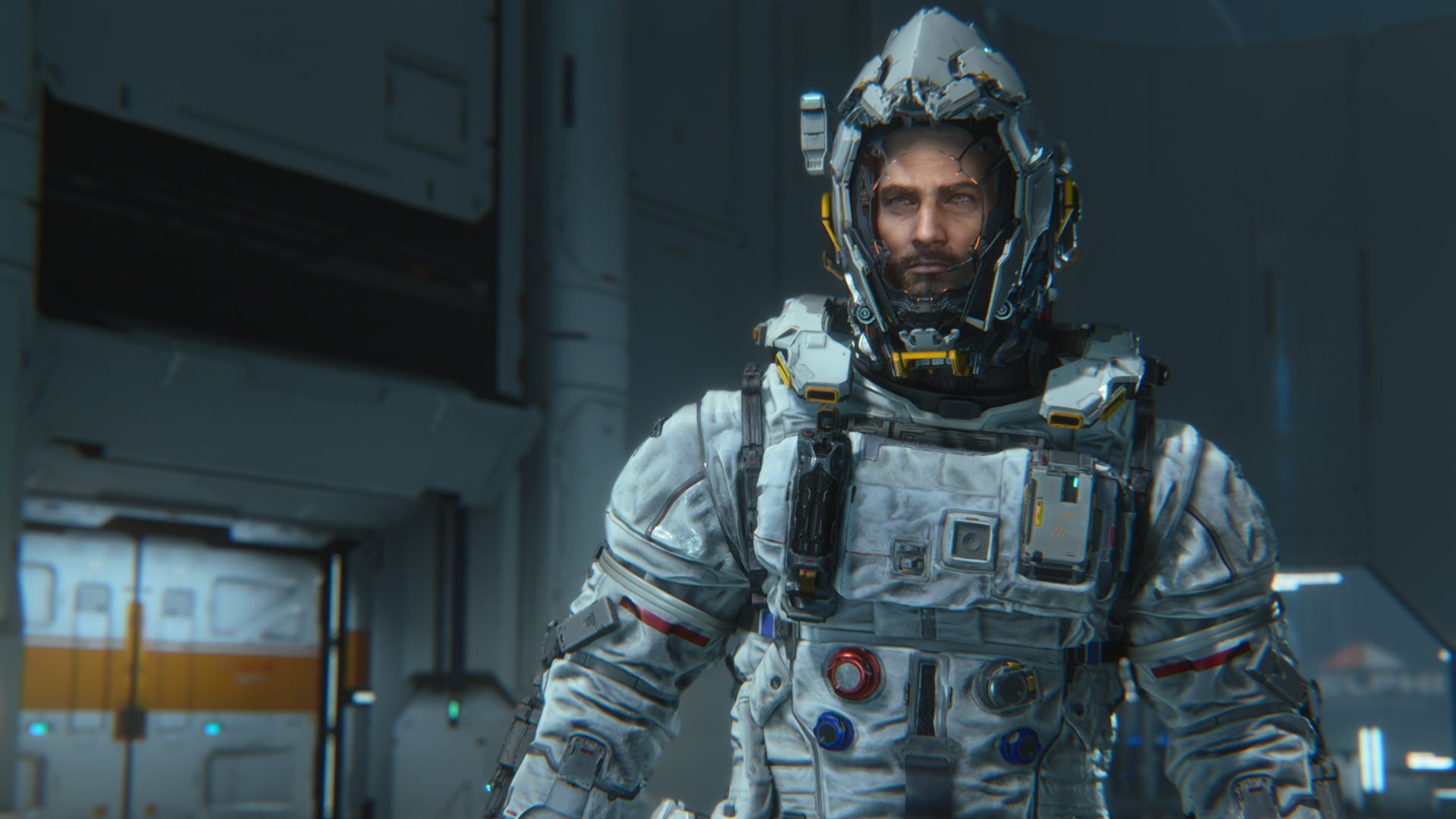
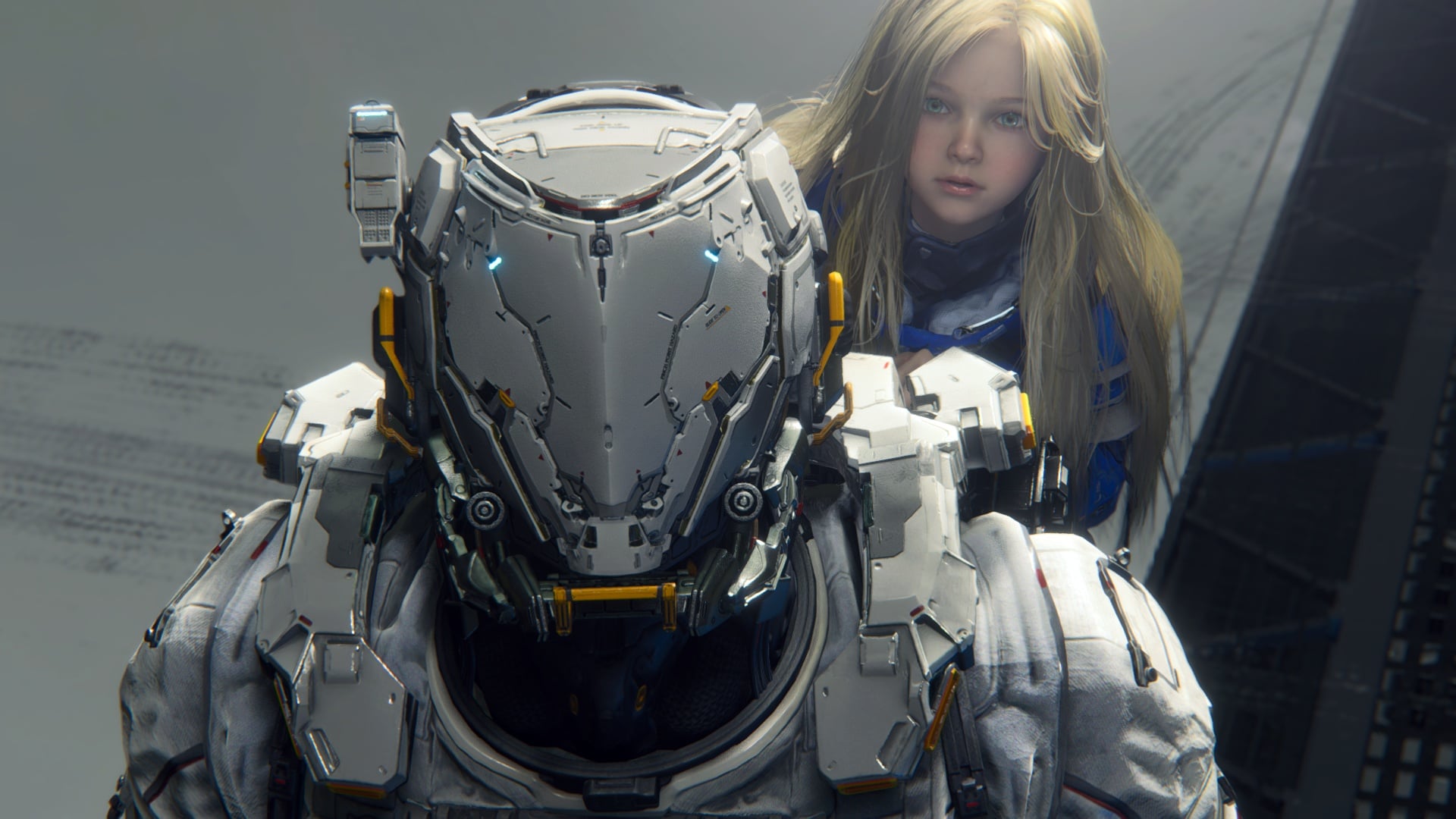
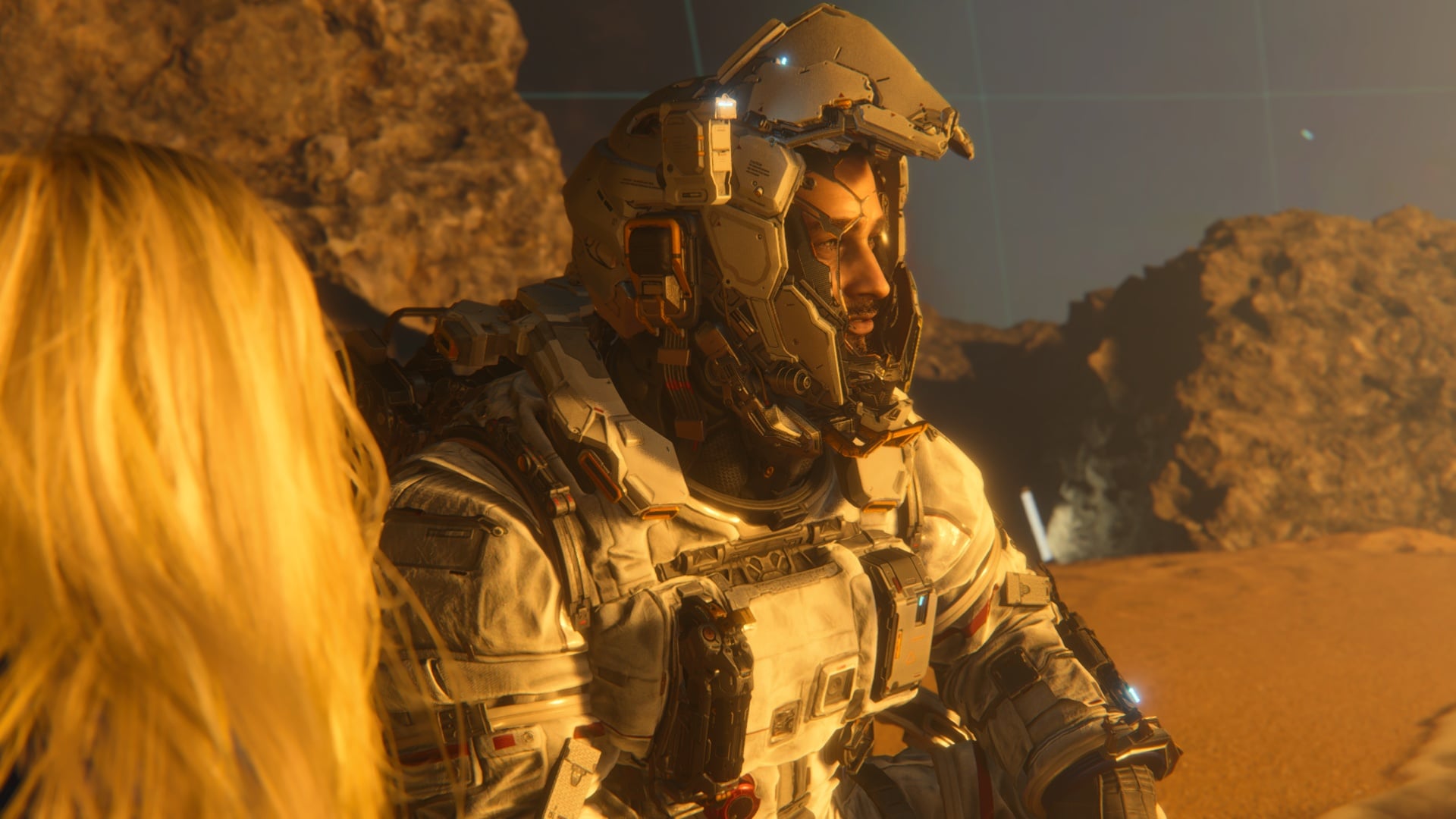
In Pragmata, you’re dropped into the heavy boots of Hugh, an engineer sent up to make repairs on a moon base packed to the brim with homicidal robots. The only problem is that the weapons with which he can defend himself do little against his foes. That is, until Diana (a robot who happens to look like a six-year-old child) hops on Hugh’s back, takes aim at the same enemies, and hacks them via a matrix that appears alongside your reticule.
The goal of these puzzles is to navigate through nodes that expose enemies and work toward a final green point on the grid, at which point Hugh can unload his various armaments into them. Though this puzzle mechanic grows more complex over the game’s roughly 10-15 hours, the aforementioned loop stays pretty much intact throughout. Aim, solve, fire, repeat. You’d think the repetition would instill within me the ability to competently and efficiently dispatch foes, but truth be told, I was pretty middling at Pragmata all the way to the end. And you know what? I kind of enjoyed it.
I think sucking ass at Pragmata actively made the game more fun for me. It certainly made things more tense and interesting. While I’ve seen others confidently tout how they were able to quickly master Pragmata’s ideal rhythm—that is, a dance that involves using Hugh’s thrusters to dart around arenas while keeping his aim trained on nearby enemies, maximizing usage of the matrix and the debuffs one can deploy, and, of course, taking out enemies—I struggled. I took hits often because I could usually only focus on one thing at a time. I burned through my healing items. I died and was sent back to shelter by both standard mobs and Pragmata’s stunning bosses plenty of times.
The time spent in the shelter, and the amount of times I was sent back there, forced me to reconcile with the skill ceiling I’d clearly hit early on. It forced me to use mods and upgrades to craft a build that suited me and my capacity for being bad at it. Eventually, I was kitted out with abilities that made it so my matrix would not reset whenever I got hit and even nullified damage received while aiming down sights. Suddenly, being caught with my pants down around my ankles didn’t hurt or embarrass me as much. I was forced to think smarter rather than fight harder, and while I never got quite as good at Pragmata’s combat as others, I had a thrilling time barely getting by.
Pragmata isn’t the only game where this tension has been present. I also recently sat down to finally enjoy Dispatch, Ad-Hoc Studio’s spiritual successor to the adventure game format that Telltale Games revolutionized back in the 2010s. Though its quick-time events and dialogue choices are admittedly a little more sparse than I’d initially expected, I was drawn into the game’s titular activity: dispatching.
With a map of the city and a retinue of superfailures—Dispatch charges the protagonist Robert Robertson with rehabilitating a team of villains-turned-heroes so low on the totem pole they are dubbed “the Z-Team”—it was my responsibility to field emergency calls. I’d send out the appropriate heroes based on several of their skills, including charm, intellect, strength, and speed, as well as flavor text that often nudged one’s choice in a certain direction.

Much like Pragmata, though, I found I was comically bad at this bit of Dispatch, even though I found it the most riveting. I regularly dispatched heroes to jobs they were unsuited for, stalling my team’s progression in the early-to-mid game. Many were injured and occasionally downed from successive mismatches on my part. I would at times send too many heroes on a single job, and have no one left over to field another emergency, resulting in missed calls and chances to net XP. And before you think “Part of Dispatch’s narrative revolves around this group’s growing pains, often resulting in the failures you’re mentioning,” let me simply add that my end-of-episode stats regularly stated that I only performed better than about 10 percent of the game’s entire audience during these dispatch sequences.
10, goddamn, percent. I was god awful at Dispatch’s main mode of gameplay up until the concluding chapters, at which point I’d finally developed the know-how to, at my best, rank higher than the bottom 30 percent.
And yet, the tension of sucking did lead to an unintended dovetailing of narratives. Whereas it seemed like many other players found their groove early on, my ability to efficiently lead the Z-Team coalesced alongside the likes of Flambae, Invisigal, and Malevola finally setting aside their differences with each other (and Robert) and finding their footing. Statistically, my best shift on the job came near the end of Dispatch’s story, at a time where my team and I needed each other the most. We showed up.
I’ve taken a shine to challenging games that wind up requiring a lot of the player. I’m a sucker for a From Software game, and I worked my ass off and lost sleep to beat the masochistic bosses hidden in both the “true” endings of Hollow Knight: Silksong and Nine Sols. I’m quite good at getting good at those kinds of games. But it felt almost as rewarding to never quite surmount the high walls posed by both Pragmata and Dispatch. To not be wired for them and still come up against their challenges. To barely squeeze by and finally catch a breath on the other side of some thrilling gauntlet or exchange.
Games are engineered and designed around the conceit of winning. We all love to beat a game, and that’s what I did in the case of both these titles. But in Pragmata, failure and its fruits were a more rewarding prospect than outright success. In Dispatch, failing paved the way to deepening my kinship with my assorted gallery of fuck-ups, and made the game’s resolution all that more effective and moving. Maybe winning isn’t always the be-all and end-all of the video gaming experience. Maybe there’s a rich trove of opportunities in exploring loss and failure as consummately as the medium chases the taste of victory. But that’s just this loser’s take.