The ways people judge their video games are many and various, with few agreeing on hard and fast rules for what truly imbues gaming time with value. But surely one of the most controversial is the length of a game. And now, “how long to beat” is a metric Microsoft has just added to its PC version of the Xbox app.
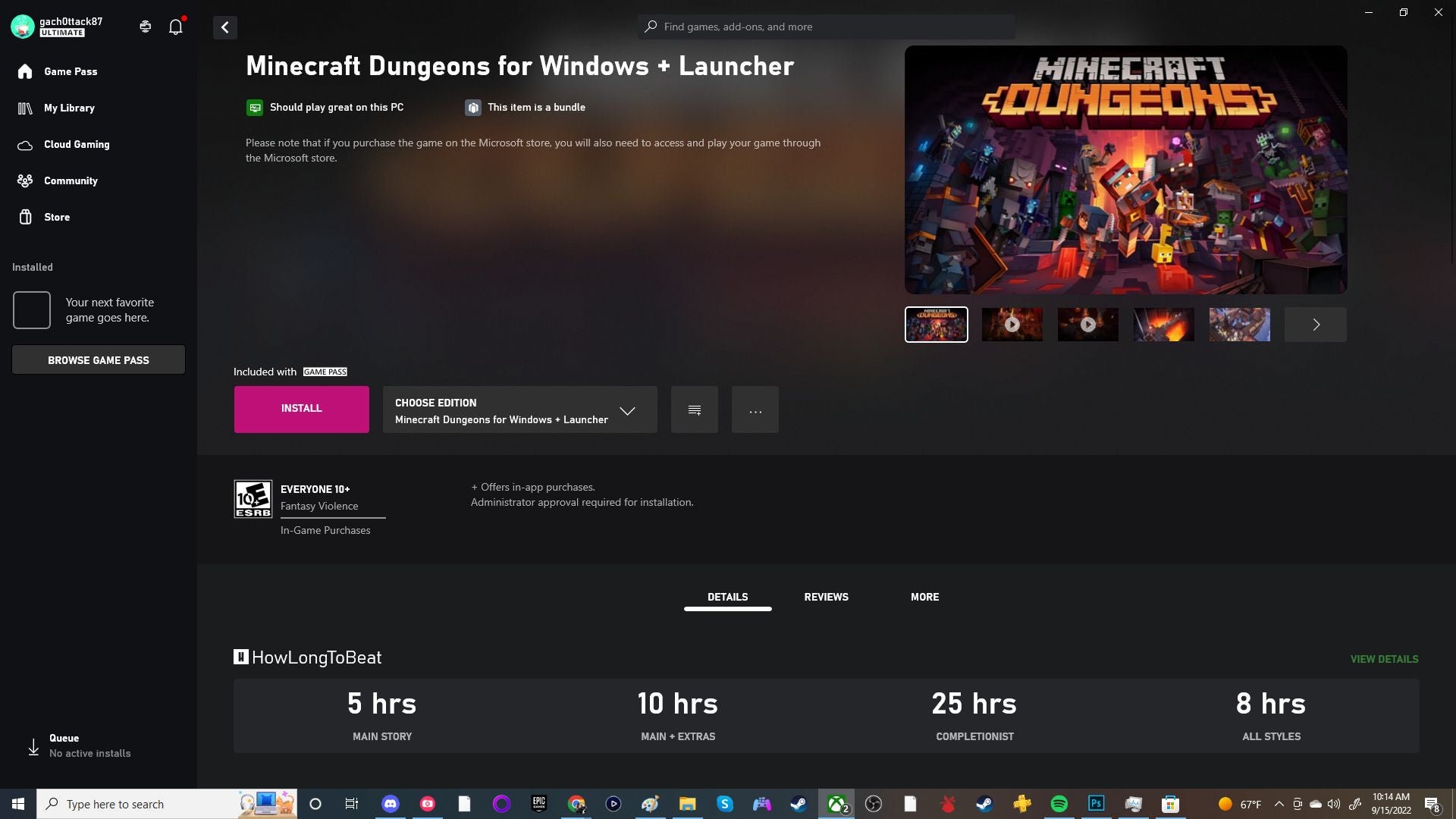
In the latest update on Microsoft’s Xbox Wire blog, the company announced it has just added “HowLongToBeat” to its PC Xbox app, promoting it as a basis on which people should make decisions. They explain that this is “a unique feature that makes it even easier to pick your next PC game.”
Leaving aside that it’s obviously not unique in any way (HowLongToBeat.com—inevitably owned by IGN-owners Ziff Davis—with whom Microsoft is partnering on this, has been around for over a decade, and Steam has such statistics), it’s fair to say that this metric could be misused completely by people who confuse length with quality.
To Microsoft’s credit, they don’t lean in to the worst aspect of such thinking, where value = game length / price. The post explains that they see this as a way to decide “if you’re in the mood for something you can crush in a day or two, or maybe looking for your next long-term game.” And while I would sever a limb if I could just convince this industry to stop using words like “Beat” and “Crush” in place of “Play,” at least they’re suggesting there’s value in brevity too.
Read More: How To Calculate A Game’s True Value From Its Price And Length
It would be disingenuous to suggest the response to this announcement hasn’t be positive. Replies and responses on Twitter are generally celebratory, with many begging for the same to be integrated on the Xbox console. A few raise concerns, especially when it comes to those who make shorter games.
“Not a big fan, tbh,” said BioWare art supervisor Ryan DownlingSoka in reply to a tweet by Waypoint’s Patrick Klepek. “I think the ‘short game isn’t worth money’ is already a big thing, and this will grow it.”
However, Gloomwood developer Nate Berens said he thinks mentioning that a game is under two hours in its description has helped prevent refunds.
Kimmo Lahtinen, developer of Day Repeat Day and Barbearian told me they see it as a positive. “Players are generally more happy the more realistic expectations they have.”
The problem with such statistics, however, is they can too easily drift from truth. As a games critic, I’m well aware just how much even other games critics will flat-out lie about how long a game took them to complete. If you write saying a difficult game took you 12 hours, you can get bombarded with vitriol from people who finished it in 9, so people shave a couple of hours off to be safe. Players do the same, not wanting to look like they struggled. Then, honestly, who among the public is sat there with a stopwatch as they play? Does it count if you stop to sip some coffee? What if the doorbell goes? Let alone the silliness of relying on a console or Steam’s clock times, given they usually keep running when a game’s on pause.
I just checked, and you can make up any number you want for HowLongToBeat—I just told it I finished Stray in one hour, but took 1,223 hours to 100% it, and that got unquestioningly added to the game’s overall stats. (I deleted this right away, obviously.) Update: HLTB’s creator got in touch to say that times are queued for approval, and outliers like this would be examined by them personally. Apologies for my mistake.
I’m left with no explanation for how Minecraft Dungeons is currently listed as five hours long. Um, no.
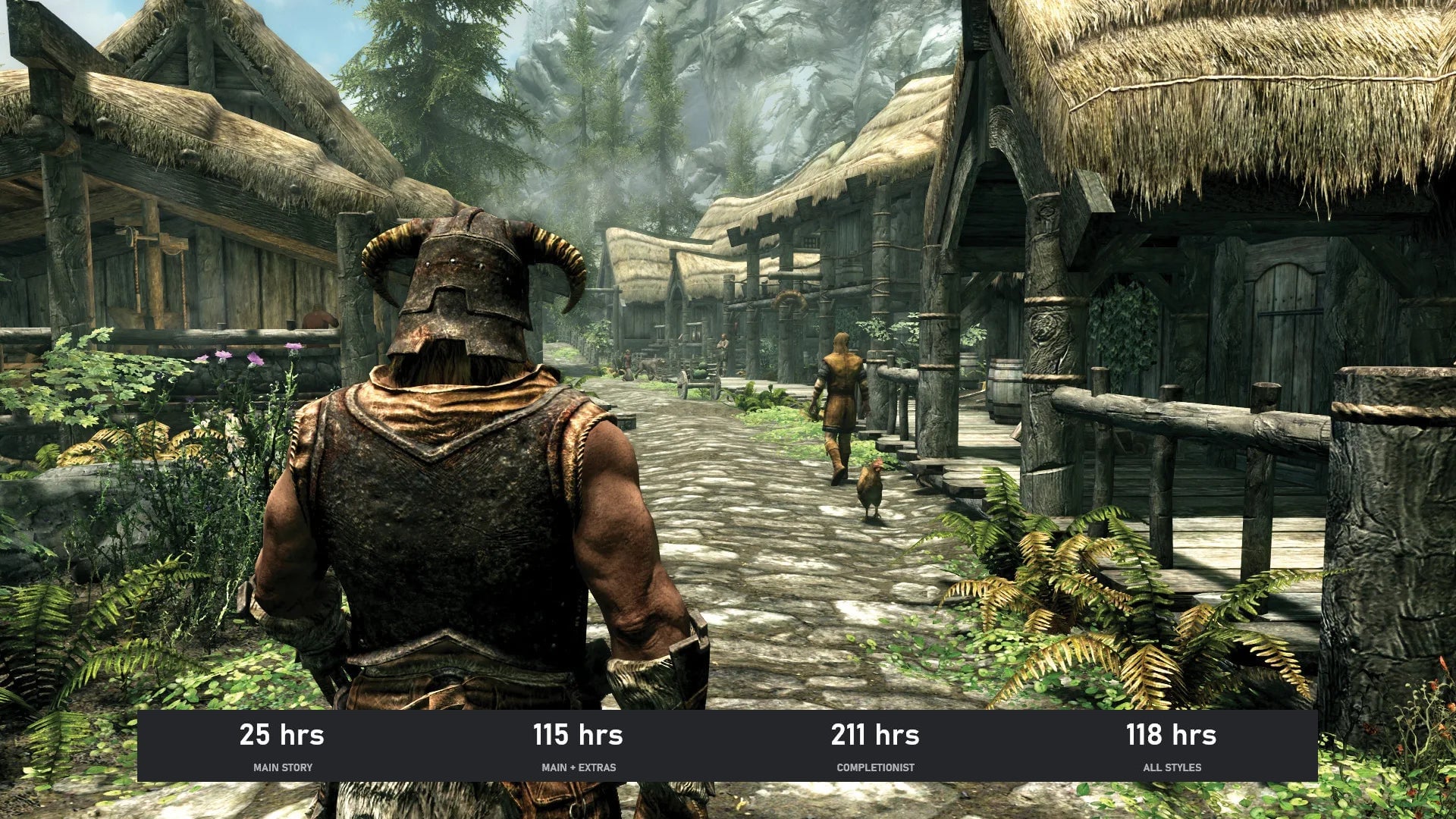
At best, a HowLongToBeat stat gives you a very general idea of the sort of game you’re dealing with. Is it two hours, or forty? And, in general, it’s pretty good at this. Right now it’s front page tells you that Elden Ring will likely take you 52 hours to finish its main story, while Spider-Man’s narrative offers around 17 hours. But there are so many games for which such measurements simply don’t work.
Take, for instance, Spelunky. A game in which most people can’t get off the second world is listed as “19 hours” for its main story. An endless game like The Sims 4 somehow has a figure of “67 hours.” Hilariously the site even reports times for MMOs, like Eve Online’s wonderfully specific “2,896 hours.” (Since you’re wondering, World Of Warcraft is 2,364 hours long.)
Then there’s the way this inevitably does bias against shorter games. If someone sees that something is only a few hours, are they less likely to buy it? Are all-time classics like Firewatch, Day Of The Tentacle, or ABZÛ worth less because they’re under six hours? Aren’t they, or their modern equivalents, far more likely to be overlooked because of their low single-digit “beat” time, when alongside a similarly priced roguelite? Some will no doubt be thrilled to know a short game can fit inside their day-to-day life, but there’s a reason the industry is collapsing under itself under the weight of live service games, which never end. People like the idea of “more” even if they may never get to that 200th hour of Assassin’s Creed Valhalla.
One Twitter user, @MOOMANiBE, observes another peculiarity of this update. Within the Xbox Wire post is a direct link to a new section of HowLongToBeat specifically collating information on Game Pass games. It’s a really useful resource, as it happens, but as the Ivy Road Games developer points out, it also includes a front page section titled, “Poorly Received,” featuring games like The Anacrusis at 43%, and Nongunz: Doppelganger Edition at the same. Except click through on the latter and you discover those figures are based on a grand total of two reviews, one giving it 1/10, another 7/10. For Anacrusis, Chet Faliszek’s Left 4 Dead follow-up, it’s three reviews at 3, 4 and 6 out of 10. Surely Microsoft doesn’t want this left like that?
Whatever your take, the news is unquestionably going down well online so far. It’ll be fascinating to see how developers feel about it over the next few weeks, whether it’ll prove a boon or a burden.
Updated: 09/15/22, 12.39a.m. ET: Text updated to recognize and correct an incorrect statement.