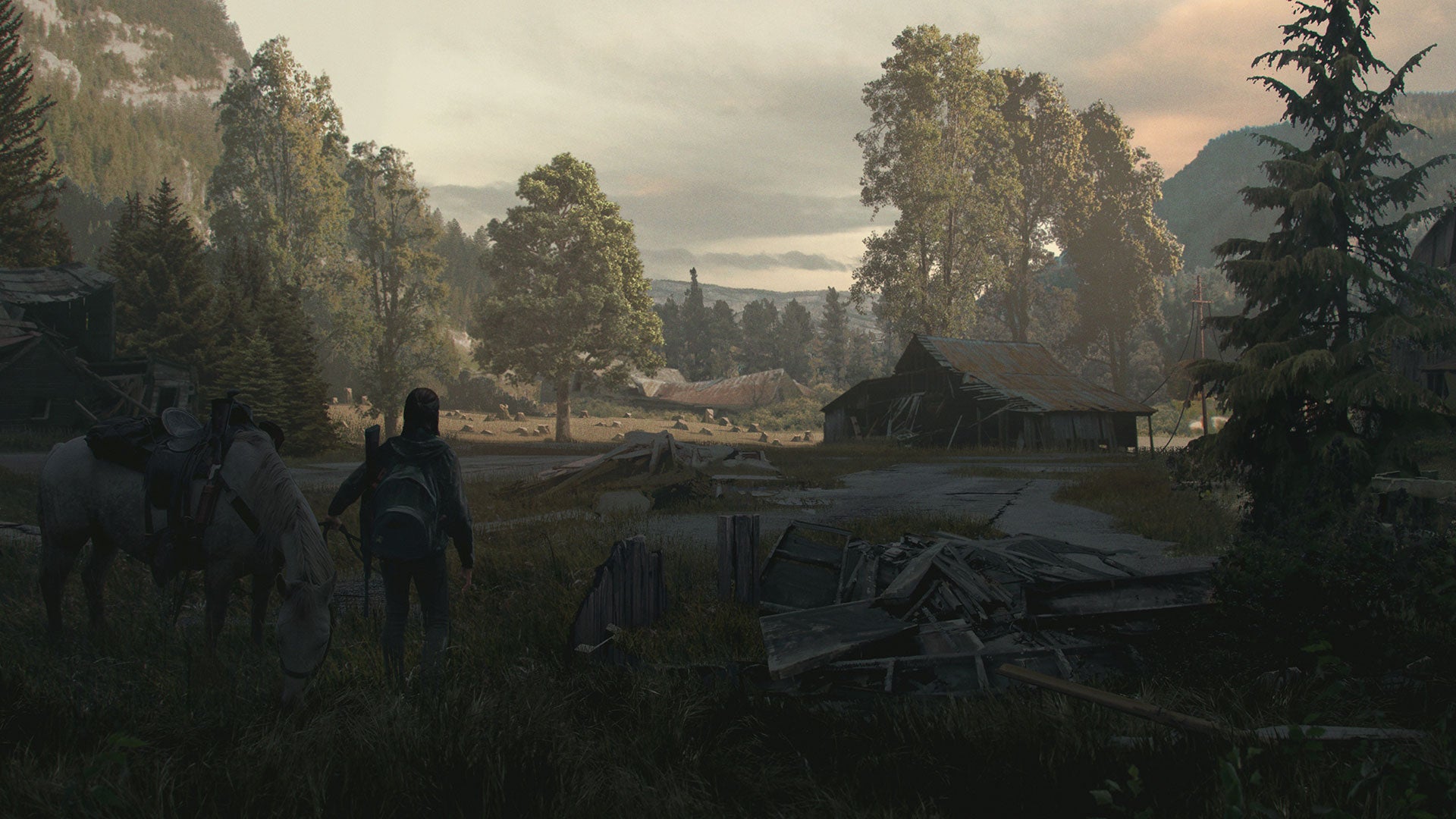
We took a big look at the art behind The Last Of Us Part 2 last week, but given the way Fine Art tends to be a feature that deals in scale and volume, I thought it might also be cool to take a deeper dive into the game and find out what a single concept artist’s experience was like working on one of the biggest games of 2020, and what that work looks like.
https://kotaku.com/the-art-of-the-last-of-us-part-ii-1844210874
I think this is really interesting because an artist’s work on a game can be radically different to many other developer’s, especially if they’re a concept artist. While many roles simply work on a game from start to finish, an artist’s job can be taking part at weird times of the development cycle, sometimes months before anyone else lays a finger on the project, or even knows what that project is going to look like.
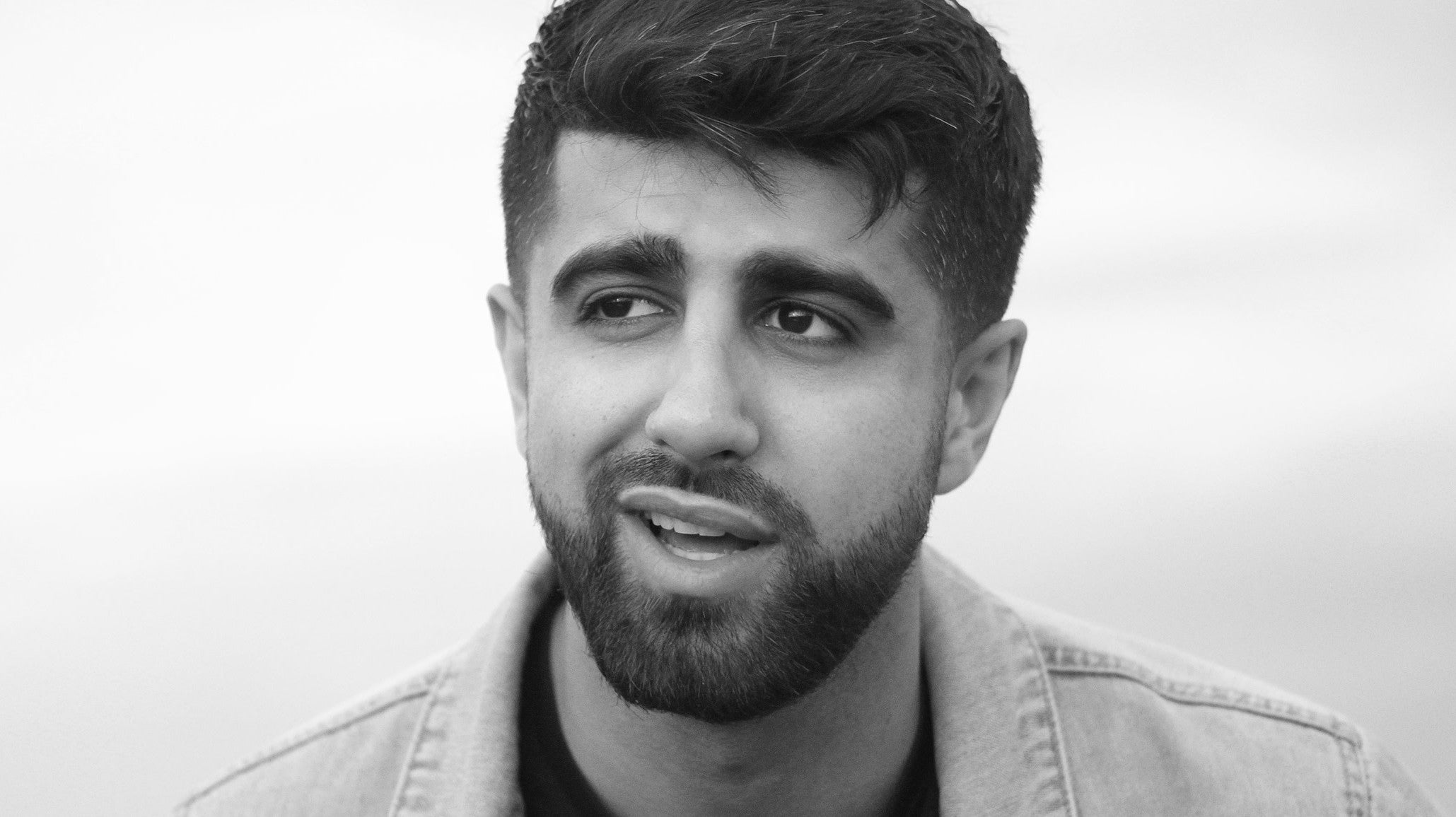
For this zoomed-in feature I spoke with Danar Worya, one of the artists I featured in the main roundup last week. Based in the Netherlands, Danar doesn’t work at Naughty Dog; like many others who contributed to the game’s visual foundation, he was instead brought on by an outsourcing company, a pretty common practice in the video games industry that allows studios to compliment their existing art staff with some extra sets of hands (and eyes).
In Danar’s case that company was One Pixel Brush, which itself was the feature of one of our first instalments of Fine Art. Over the last decade One Pixel Brush have helped out on everything from Call of Duty to Uncharted to The Division to Mass Effect
Danar was brought into the fold on The Last Of Us Part 2 just two weeks before the game’s announcement trailer reveal back in 2016, and would end up working on the game until October 2019, only a matter of weeks before its original intended release date of February 21, 2020. Based half a world away from Naughty Dog’s Santa Monica headquarters, his routine would usually consist of getting a weekly briefing from the in-house art team detailing the kind of work that was needed, then getting to it.
After completing the first pass of a piece, Danar would hand it over to One Pixel Brush’s co-founder (and former Naughty Dog artist) Shaddy Safadi, who would then workshop with him, making their own revisions. They’d then pass that onto Naughty Dog’s internal art team, who would provide their own feedback (usually necessitating changes), and this back-and-forth process would continue for every piece of art until an image was greenlit.
Sometimes it would only take a week to get an image approved, like Danar and colleague Florent Lebrun’s idea on what some rotting skeletons would look like (below), with particular focus on “the nitty gritty aspects such as how the flesh, bone, and clothes degenerated.”
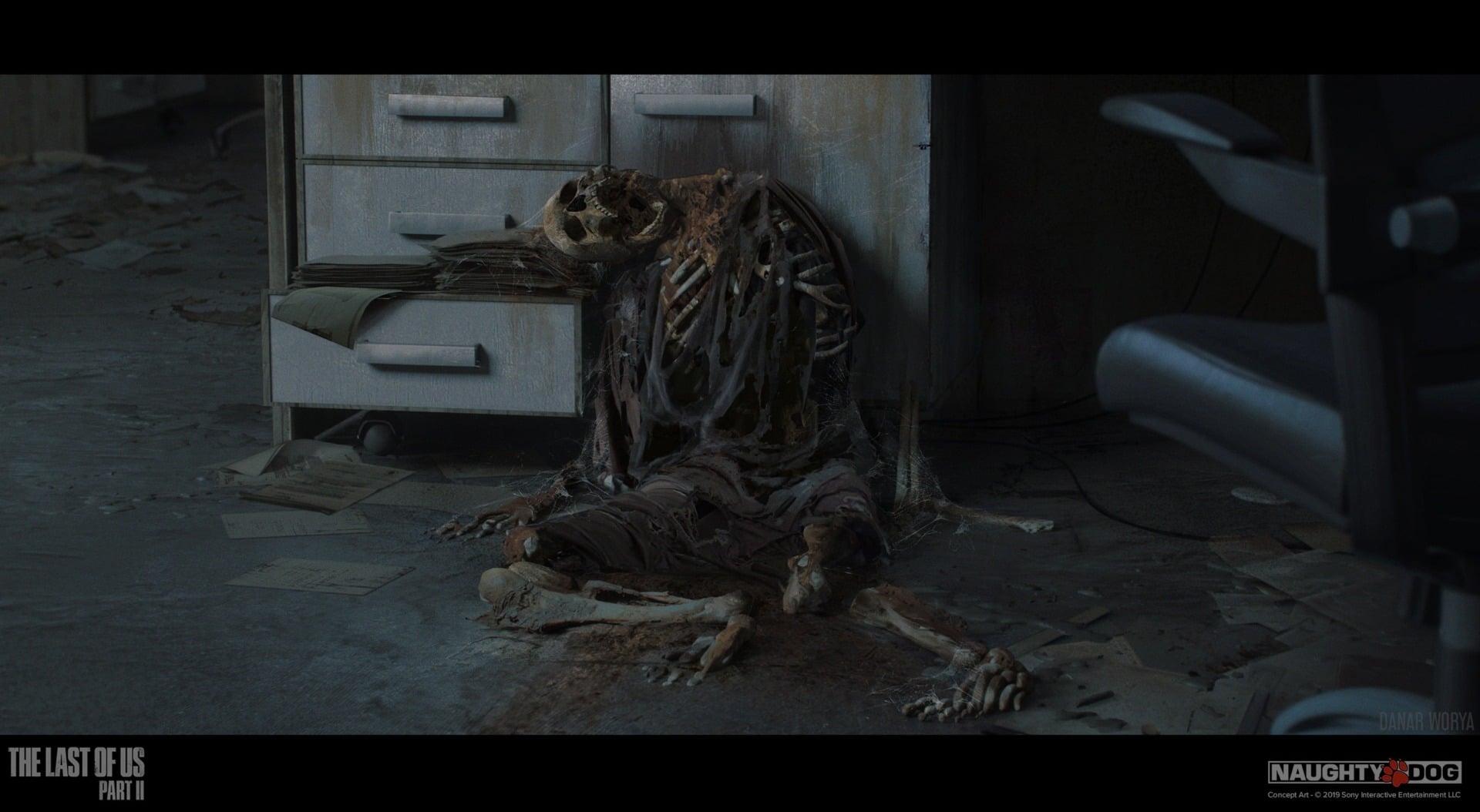
Other images, though, could take months. An example of this is Owen’s room at the aquarium, not because the work itself wasn’t good, but because it was such an important part of the game, and so the collaborative sessions with Naughty Dog meant that the design had to go though multiple iterations.
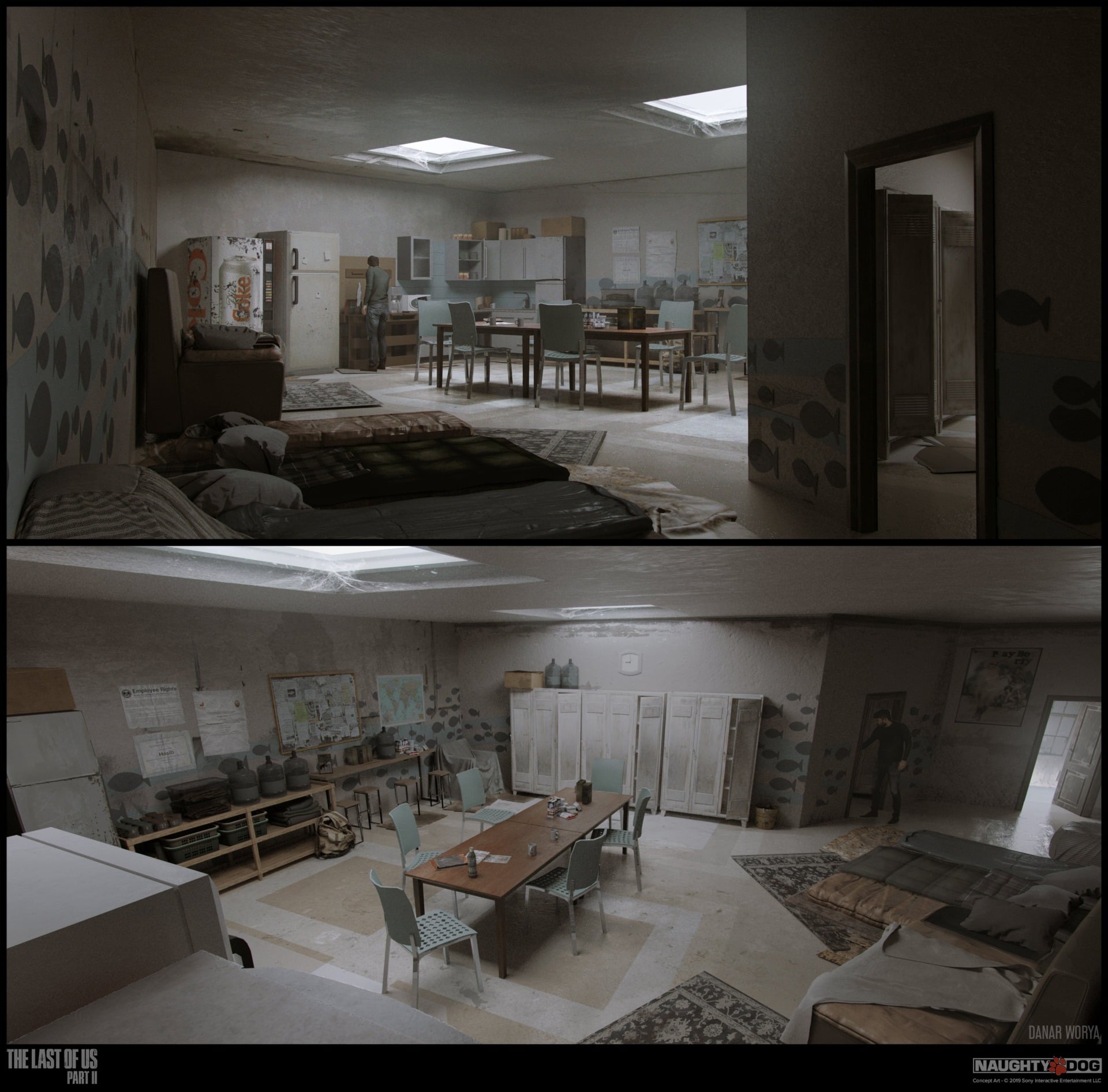
This might sound trivial, but in many video games—blockbuster AAA ones that can afford the art expenditure especially—concept art isn’t just being used to design outfits, weapons and buildings. The artists working on The Last Of Us Part 2 were tasked with doing some serious environmental story-telling, where almost every single room and object within them has something to say about the people who lived/worked there and the world they lived in (or, in this case, died in).
If you’ve ever had the feeling—like I do!—that you love the world of The Last Of Us but not necessarily the game (or love the latter more because of the former), this might be a big reason why. Because of stuff like Owen’s room, which says so much about the person he has become (and which then feeds into the tragedy of his death), and which only does that because a team of professionals had to work for months to get the shape and colour of it just right.
Another important thing the art team had to take into consideration was the lighting, which in The Last Of Us Part 2 wasn’t just there for the mood (though some sections, like the hospital basement, were definitely about the mood). In The Last Of Us Part 2 lighting helps take some of the load off more traditional video game tools like a HUD or a waypoint marker.
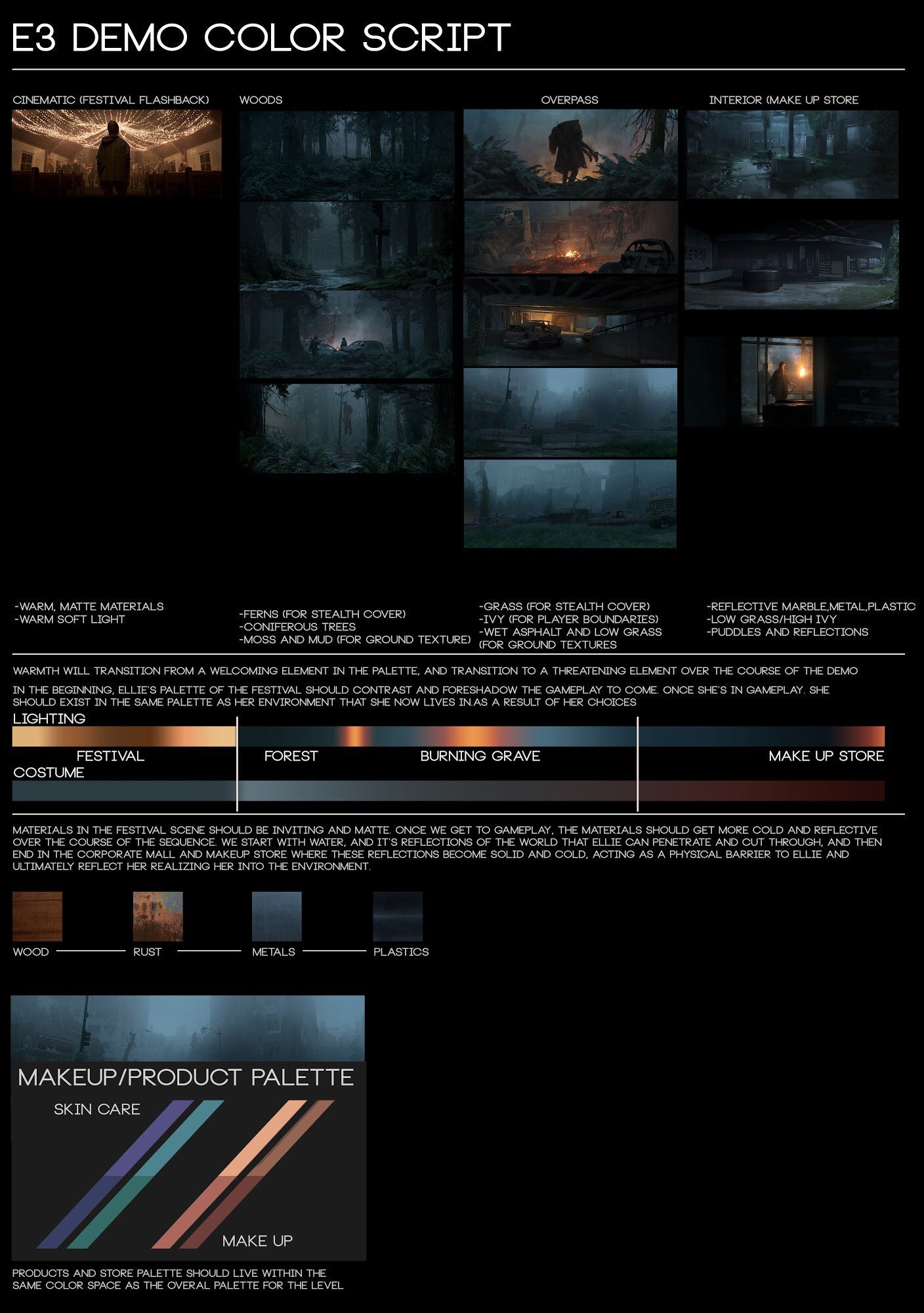
“Lighting in a scene is one of the most important aspects that Naughty Dog wants to have in their images, it is part of the overall vision” Danar says. “Lighting is the direction that will lead the eye. It is the finger that is pointing towards the focal point and says ‘HEY LOOK HERE!’ without using caps lock like I am doing right now.”
It’s used a lot in the game, but one standout sequence was during Abby’s frantic dash through Seattle’s streets—recreated using Google Street View data—while Tommy fires at her with a sniper rifle, which Danar says allowed that scene to “be so fearless and enigmatic at the same time from Abby’s point of view”.
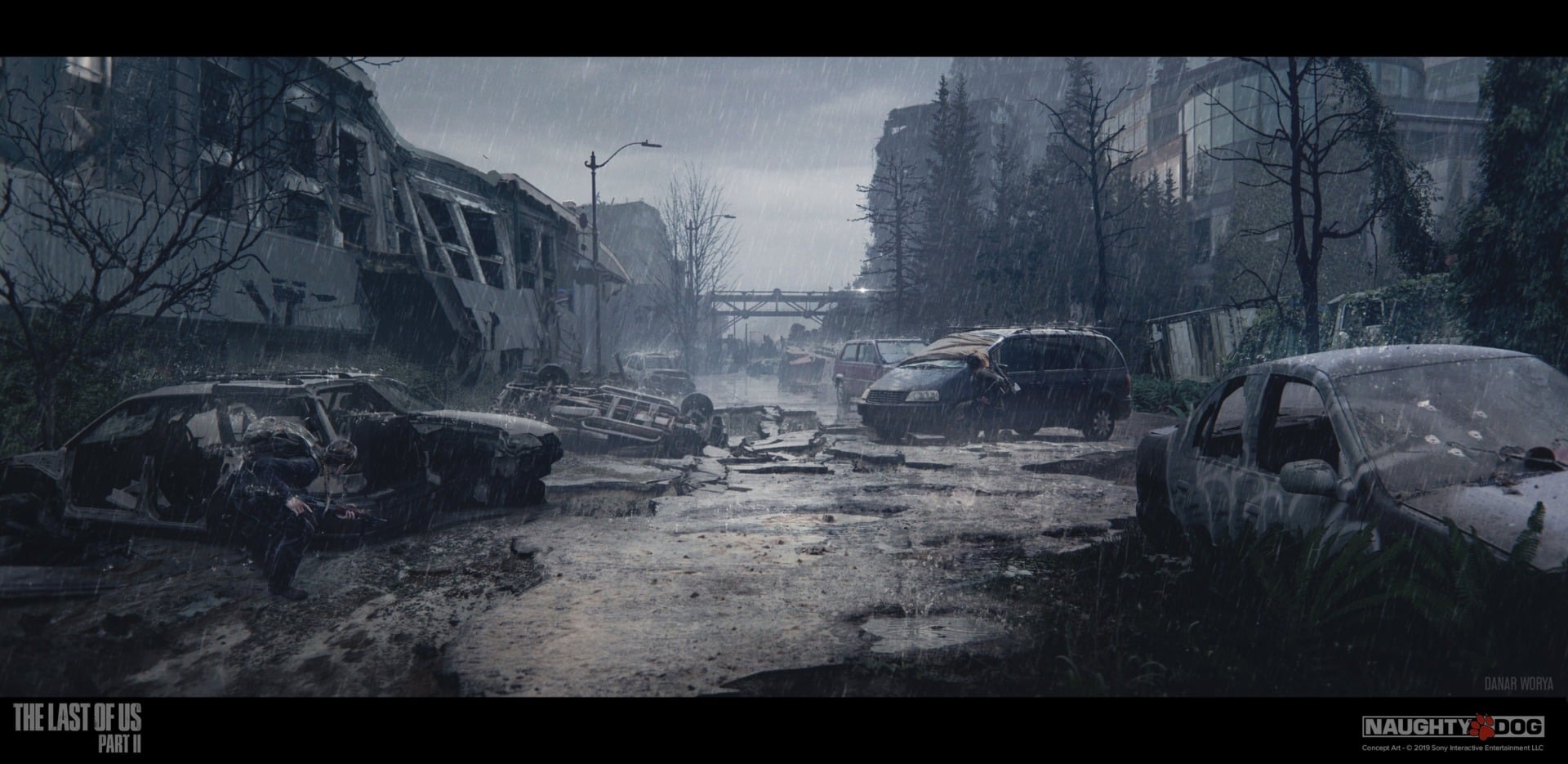
One last consideration artists had to take into account was that, despite being a fictional slant on our own reality, the game’s world still had to feel as real and believable as possible. This is reflected in obvious ways, like recreating Seattle’s streets and landmarks, but in less noticeable ones as well.
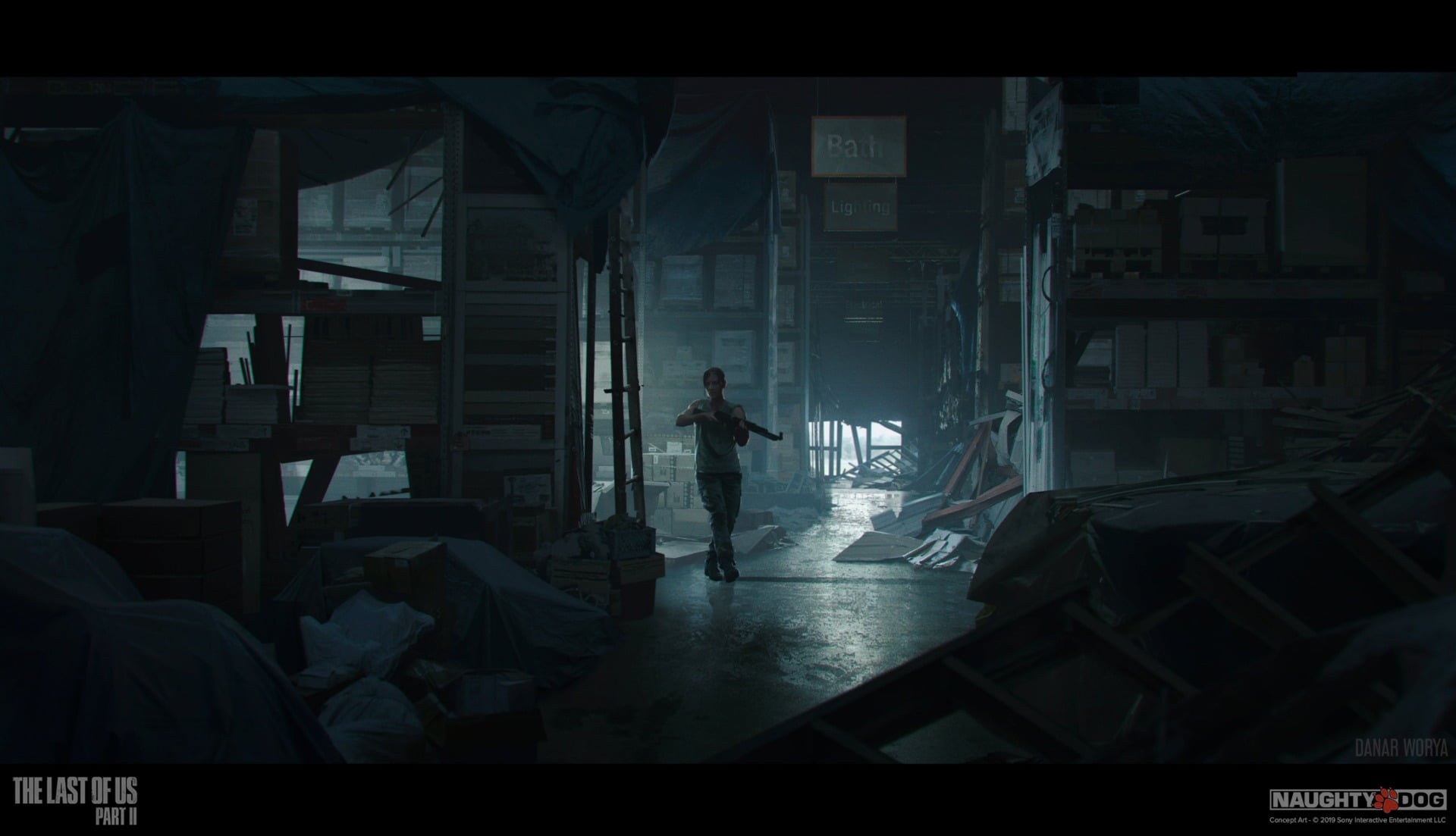
Rusty, overgrown warehouses, loading docks and storage facilities are a Last Of Us mainstay, but they’re also things where most of us aren’t going to notice (or care) if they’re not “accurate”. But in The Last Of Us Part 2, where everything had to look as realistic as possible, a depot still had to look like an actual depot.
“For this image I actually drove up to the nearest Ikea I could find, talked to their staff, and upon approval started snapping photos of their isles where you collect the items”, Danar says. So if you were thinking the image below looks familiar, that’s why!
You can see more of Danar’s work at his ArtStation page, Instagram and Twitter account