Bright Memory Infinite is an ambitious first-person shooter action game that fuses the futuristic samurai combat of something like Warframe with the epic adventure and platforming of games like Tomb Raider. But while FYQD-Studio’s game is an improvement upon its 2020 build, Bright Memory, there is still much to be desired from its underdeveloped story and busy combat system.
Bright Memory Infinite’s story is a benchwarmer, sat alongside the game’s far more appealing selling points of its lightning-fast combat, and crisp ray-tracing graphics. Rather than offering a compelling tale to hook you in, the game lets the raw power fantasy that emerges from its combat system stand out as its most memorable element. Unfortunately, this isn’t enough. You can be putting on a clinic while mowing down enemies but if the game’s story doesn’t offer a compelling reason for why you’re increasing your body count, the result is more mindless fun than something you can savor. Heck, you get more narrative information from its Steam page than from the game itself.
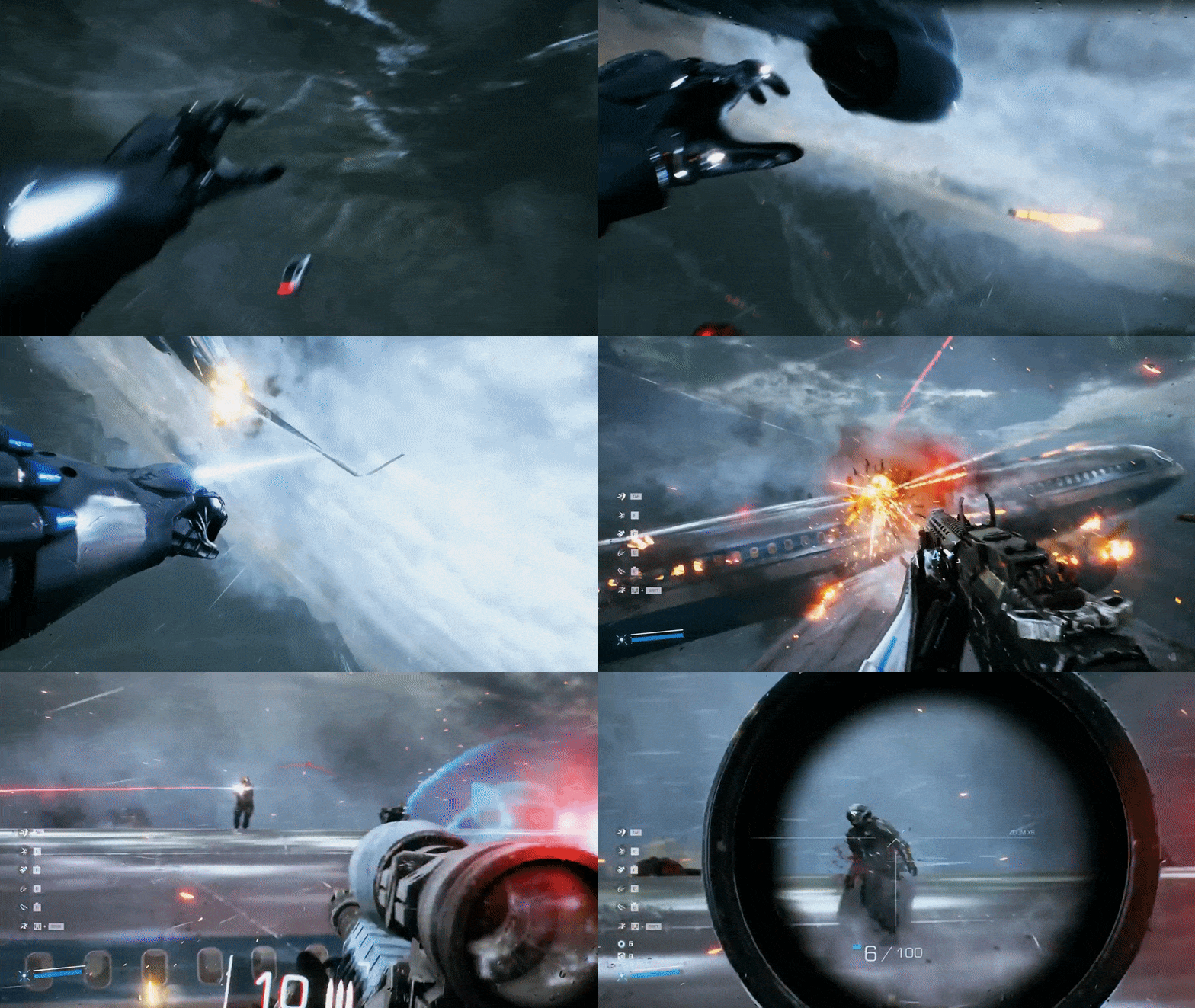
All you need to know about the story is that one minute the game’s protagonist, Shelia Tan, is fighting faceless militia men, and the next, for some reason, she’s fighting faceless armored warriors with flaming arrows and spears. Thankfully, she has a solid array of tools and skills with which to tackle her enemies, as she swaps between gun combat and swordplay on a dime. And for a while, being able to fight ancient warriors with an electromagnetic pulse, a rocket punch, and wickedly powerful guns, is almost an even trade for BMI’s bland story. Your agility is a fleeting thrill as well, as you wall-run through environments and pull off extraordinary feats like grappling to the wing of a flying plane as you shoot and slice baddies off the aircraft.
Bright Memory Infinite is in fact the second draft of a game released in 2020, then called simply Bright Memory. That first release was a mix of Dark Souls’ boss fight presentation, the fantasy action adventure flavoring of Tomb Raider, and Dishonored’s otherworldly abilities. While the core concepts were the same, the previous build was far less concerned with making a cohesive game, instead feeling like a gumbo of gameplay mechanics from action adventure and FPS games. It wasn’t subtle, for instance, about its Dark Souls bonfire-lighting easter egg and its frenetic Devil May Cry-style meter report cards. BMI tidies a lot of this up, presenting a second version with a more cohesive focus that thankfully doesn’t lean on distracting references to other games. Despite leaning more heavily on cyberpunk hack-and-slash gameplay than the fantasy artifact hunting aspects of its 2020 predecessor, it still feels a bit like a generic neurablender of different action games.
Read More: Bright Memory Is The Perfect Dark Zero Of 2020
Bright Memory Infinite really shines when it forces you to find a balance in how you stylishly dispatch your enemies. Rudimentary bullets will do chip damage to the game’s mythological creatures and ancient warriors, who either shrug them off or taunt you for trying to come at them without studying the blade, so you’ll have to get creative with the weaponry Shelia has strapped to her. One minute I’m dealing with enemies like a Call of Duty player, ducking behind waist-high cover and doming them with headshots, and the next I’m riposting swords, deflecting bullets, and force-pulling or air-juggling enemies. Once I got in the groove of Bright Memory Infinite’s combat, I found myself freestyling between gunplay and swordplay.
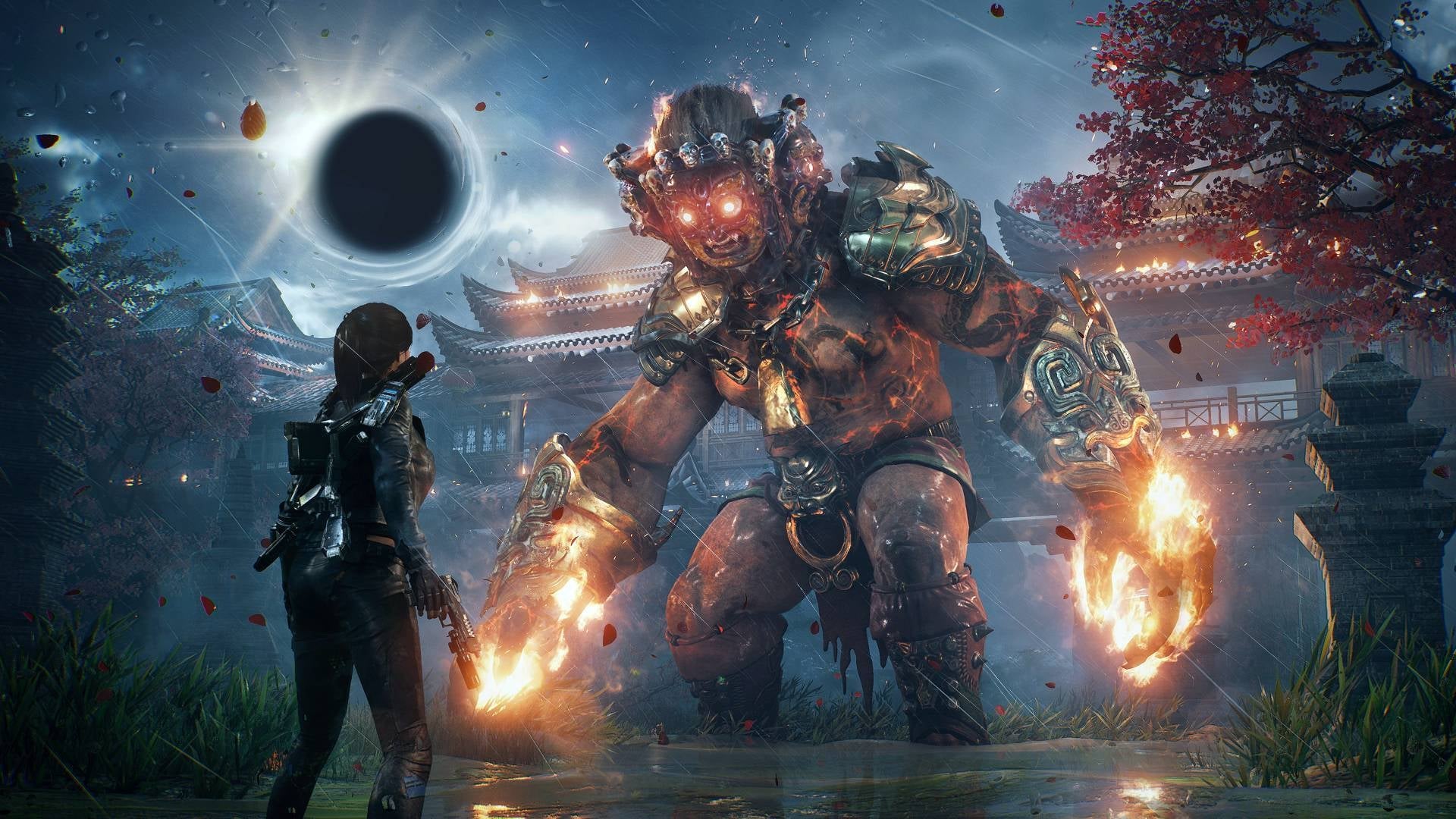
The game’s shining moments are in its boss fights. These enemies take inspiration from Chinese mythological creatures like the foo dog, or the six-armed asura demigod, and your battles with them warrant a replay to test your skills once you unlock more abilities. What’s satisfying about these encounters is that you feel the same sense of empowerment as a Devil May Cry character—you are as much of a boss fight for them as they are for you. Being able to express yourself in a game with a multitude of combos is satisfying once you can figure out the timing of your ability’s cooldowns—that is, if the game doesn’t crash under the pressure of your ambitions.
Although the game’s visuals and your own stylish abilities look and feel refined, combat can nonetheless be a bit clunky. Enemies seem to spawn out of thin air, and the trajectory of their arrows doesn’t make sense based on where they’re positioned. On gamepad, the buttons are mapped such that face buttons have more than one role between battle and environment interactions, which is frustrating when you have to initiate cutscenes that have failstate quick time events. The game’s lightning-fast combat feels sleek, but also so frantic that you’re just as likely to find yourself dying by falling off a combat area as you are to be killed by an enemy.
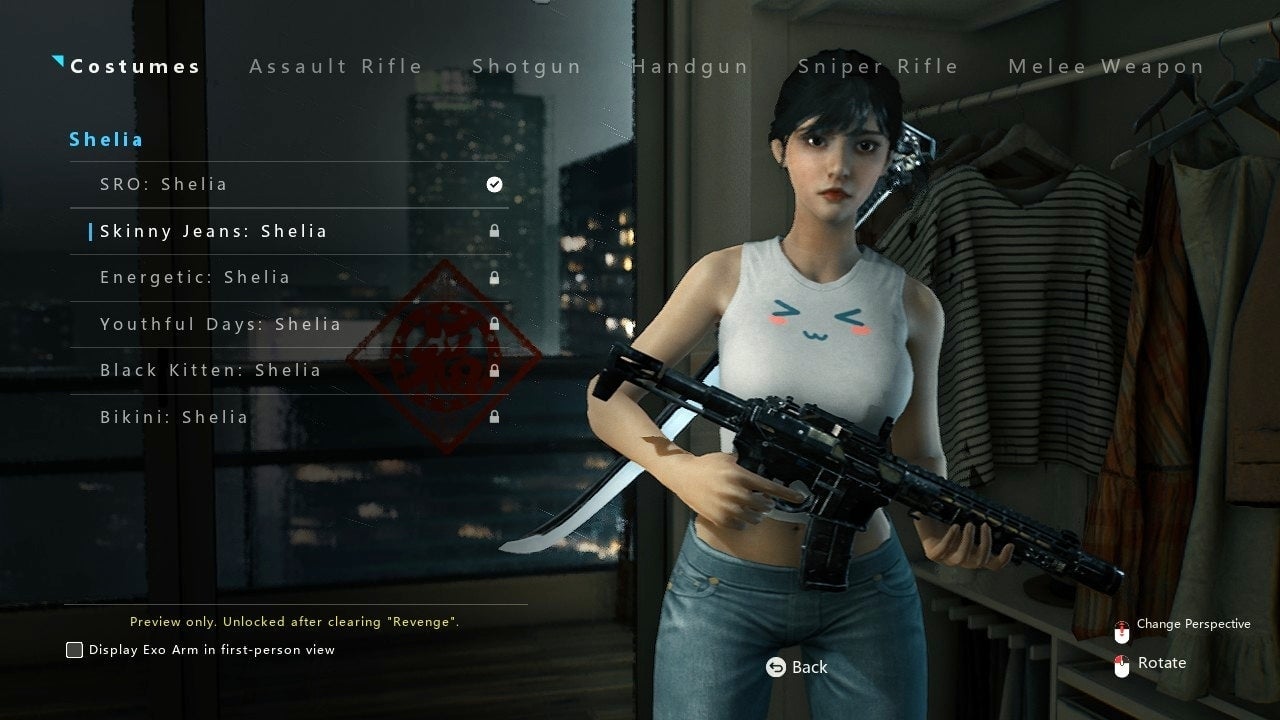
One aspect of the previous Bright Memory that I especially disliked was the ogling of its main character. At one point her skirt flew up like someone uncorked the winds of Aeolus from under her, and the Dead or Alive-style skins Shelia can wear in the game made the whole thing feel predatory. Bright Memory Infinite tones down Shelia’s sexualization a tad, and the more degenerate outfits are at least locked behind completing the game at harder difficulties, or through buying its DLC.
Bright Memory Infinite sneaks in a story beat here and there to excuse its mind-blowing set pieces and bonkers boss fights, but it would be so much better if there was a beefed-up narrative supporting the whole thing. Cutscenes abruptly appear out of nowhere after boss fights and combat encounters. The story’s ending, which comes after the best boss fight in the game, cuts in like the final scene of The Sopranos. A lackluster cutscene, and then suddenly it’s over. It raises the question of whether there will be a follow-up game or expansion that improves its story as well as its combat because the game’s final cutscene doesn’t provide any definitive closure.
Bright Memory Infinite is a game to play for a good time, but not a long time. Any enthusiasm it elicits comes from seeing cool gameplay mechanics from other games replicated well rather than being in awe of any original idea the game presents, which would have been easier to accept if the story didn’t feel like an afterthought. Although the individual elements of its combat don’t feel particularly original, there’s something fresh about the way the game fuses them together. Still, the story fails to provide adequate context to your stylish slaughter. That, combined with the standard aspects of its gameplay, prevent the game from making enough of an impression to become a memory.