The things that make us reconsider who we are and what we believe in are often bizarre, random, coincidental; sometimes completely unremarkable save for the sudden realization that concusses you. Lately, things I’ve been reading and playing have coalesced into a divine cognizance for me. I’ve been reconsidering my faith.
[jump]
First, some context. My family may have not had an education past elementary school, or had something to eat every day while growing up, but they’ve always, always had religion. My father is a pastor, following in the footsteps of my grandpa, who gives service in a church that he built with his own hands. My grandma instilled the fear of an all-seeing lord upon my aunts and uncles through castigation – atonement for missteps was paid through the reading of bible passages while kneeling, or ‘creative’ punishments based on bible stories, if not flagellation itself. It was that same grandma who, infuriated with a city girl who didn’t know what to do with herself without TV and video games in rural El Salvador, made me read the entirety of the bible when I was 10.
“Love dares the self to leave itself behind, to enter into poverty.”
I don’t remember all of what I read, but I recall the sense of disquietude, the sense of discomfort very well. I knew, even then, that people like those in my family desperately needed something to believe in—religious belief seems to be endemic to poor, downtrodden communities like those in El Triunfo, El Salvador—but it was beyond me why they would elect to believe in something like this. A vengeful, jealous god who doled out punishments like hissy fits was the entity who oversaw mankind? Religion was supposed to be guiding principles under which to live life, to be a better human being, but there was an underlying ugliness that the bible revealed to me that was difficult to reconcile with the morals it was supposed to promote.
“Grandma, if God asked you to kill me to prove your love for him, like with Isaac and Abraham, would you do it?”
“In a heartbeat”
“Really?”
She stares at me.
“But why would I need to die to prove your love? Why does God DO things like that, ask such awful things of the people in the bible? Why do so many terrible things happen to people? Why?”
Silence.
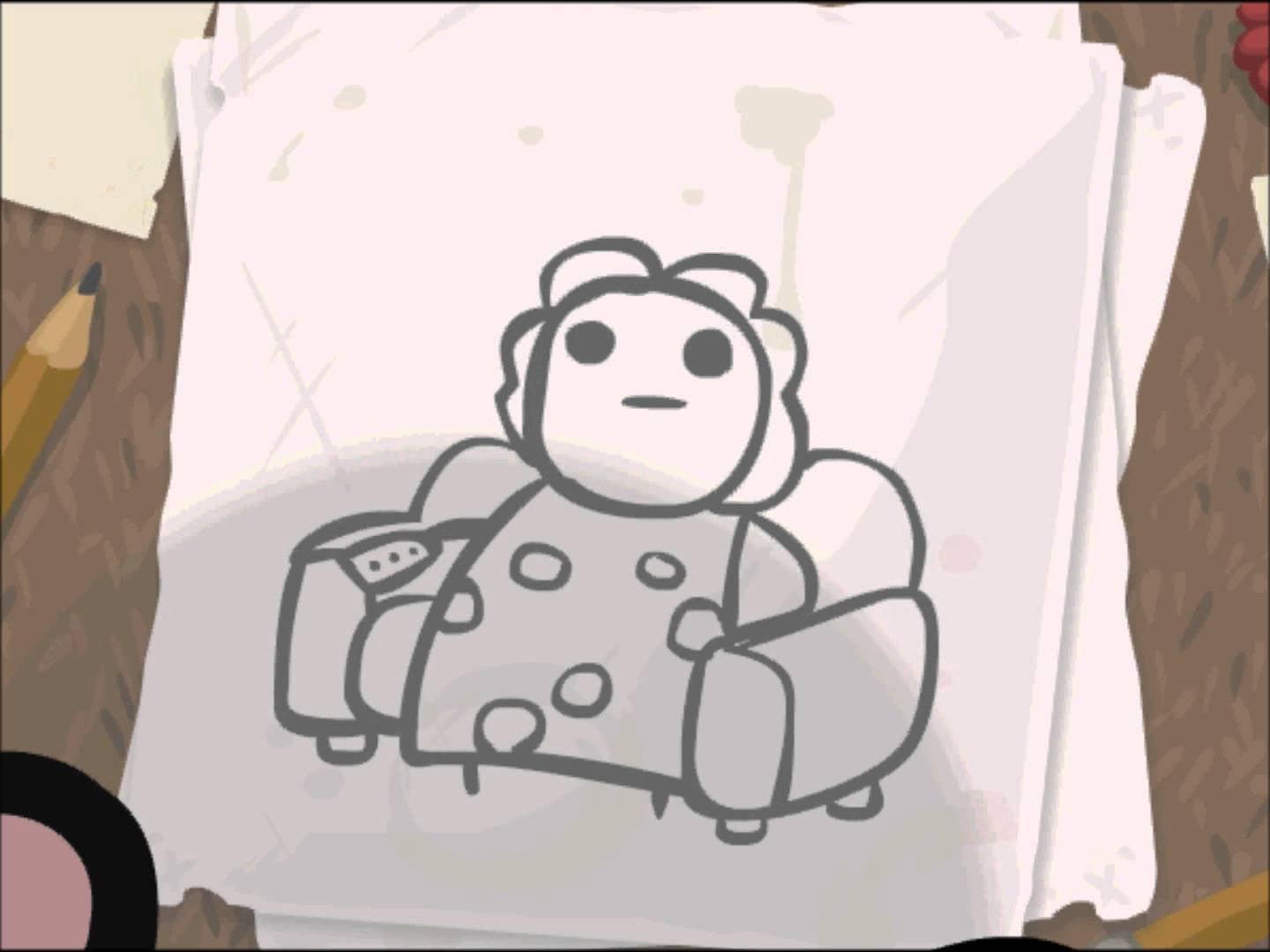
Eleven years later, I can’t quite describe the anxiety I feel when watching the intro of The Binding of Isaac
My mother was always the wild child of the family. She was, for instance, the first in an entire village who dared to leave El Salvador for the land of the free. Before that, though, she ran away from home as a teen to work in the capital – meaning she didn’t quite undergo the full extent of religious indoctrination in my family. My mother is still religious, she’s just very ‘fluid’ about what she practices. A sampling of the hodgepodge she operates under: she believes in a Christian god, but she also gives special prayers to an entity called Death, and she gives offerings to a little statue of Buddha. This cacophony of religious entities and beliefs muddled together coupled with my traumatic experience with the bible meant that growing up I didn’t see myself as a person of faith.
Right now that’s changing. It all started with Decreation, a collection of writings by Anne Carson, a Canadian poet and essayist, about coming undone. The book is headlined by different three women—Sappho, an ancient Greek poet, Marguerite Porete, a French mystic, and Simone Weil, a French philosopher—who want to love God as fully as they can. So fully, so completely, that these women seek erasure—they see their existence as a hindrance. Religion, to them, is a method of de-centering oneself, a way of purifying and clearing the self such that only God and love itself can exist.
“She did not want to be a woman. She wanted to disappear.”
I became obsessed with what, exactly, drew people to religion, what it took to create a captivating pull, or an interesting narrative that one might want to affiliate with.
These women are completely, completely insane, to be sure (though the erasure of the self brings to mind the idea of ‘immersion’ in games, and some even argue that immersion in gaming is death) , but there’s something weirdly poetic to it, too. These women seek ecstasy. The word ‘ecstasy’ comes from ‘ekstasis’, which means ‘standing outside oneself’ and this is typically a condition prescribed by the Greeks to the crazy, the fervent, the brilliant, to lovers. Doesn’t the idea of ‘Decreation’ sound a bit romantic, when put that way? The clincher, the moment in which I knew that Anne Carson had seduced me with her dubious ideas, was the following quote.
“Love dares the self to leave itself behind, to enter into poverty.”
A week later, a realization washes over me: I wanted to feel beside myself, I wanted to be poor. I wanted to feel ecstasy. I wanted something beautiful, romantic. I wanted love. Most of all, I wanted to come to an understanding regarding faith, what draws people to it and where it fits in my life. So I picked up my DS and set out to finish Shin Megami Tensei: Devil Survivor
The Megami Tensei games are practically drowning in religious overtones. Like Final Fantasy, there are common elements found in the entirety of the metaseries: mythology, demons, the obscure, morality, amongst other things. Devil Survivor in particular takes place in present-day Tokyo as it is being overrun by demons released by cultists. Humanity is given seven days to prove their worth and stop an ‘ordeal’ sent by God himself. The first time around, I stopped playing the game because I was frustrated with the fact that the ‘good,’ moral option seemed to mean aligning with the cultists, called Shomonkai, and ‘becoming the messiah’ for them.
It wasn’t just that the cultists were insane and I felt uncomfortable becoming a pawn in their silly holy battle. While it’s true that I found it ridiculous that the ‘good’ option meant helping the cultists get rid of a problem they caused in the first place, there was another source of uneasiness that was more tangible about it: they reminded me of the Aum Shinrikyo cult.
I first heard about the Aum through Underground, a book about the Tokyo gas attack written by Haruki Murakami, a Japanese writer. Though most famed for his fiction novels, like Hard-Boiled Wonderand and the End of the World and the more recent 1Q84, Murakami wrote a non-fiction book about the famous Japanese cult in an effort to better understand what happened in Japan on March 20th, 1995. You see, on that date a group of five people set out on the Tokyo subway system and released sarin, a deadly gas that attacks the nervous system and is considered by the UN as a weapon of mass destruction. The book reveals some electrifying truths about the Japanese psyche and society through interviews with victims, onlookers and even the Aum themselves.
Most Megami Tensei games include a religion, usually a cult. Devil Survivor felt different, somehow. We’re in modern-day Japan, in a real city—Tokyo, actually. The people involved in both cults tend to be younger, often brilliant, elite young men from the top universities; both cults feel ‘modern’ in their approach to religion, too. This is true in two senses: first, given the Aum’s development of advanced doomsday weapons. There are many conspiracy theories floating around regarding how ‘futuristic’ these weapons were. Some even blame the 1995 Kobe earthquake on the Aum thanks to a prophecy by Hideo Murai, the Aum lead scientist who was murdered by Yakuza shortly after public conjecture that the Earthquake may have been man-made. Later, FBI investigations revealed a strong Russian backing of the Aum, explaining some of the scary weaponry that the Aum possessed. Despite these conspiracy theories, the Aum are still considered one of the most technologically innovative terrorist groups in history. Beyond being modern in a technological sense, the Aum were modern in ideology, in conception. The entire creation of the cult was in response to the modern-day ills of Japanese society.
Games have long obsessed with the attribution of a metric to morality.
In particular, the argument Murakami makes is that the Aum cult is the response to a society that makes it difficult to create a personal narrative to situate oneself within the wider matrix of society, that the individual autonomy is repressed. This might sound farfetched, but what else can you conclude when you look at a Japanese adage like “The nail that sticks up gets hammered down”? Is this not the understanding you get when you finish reading Tim Roger’s diatribe on Japan, too? More concretely, the Aum arose during the bubble economy of Japan, in which material wealth was heavily emphasized and, as a result, there was an overt feeling of spiritual emptiness, and a huge sense of loneliness. One might even say the social climate in Japan produced a sense of anomie – a detachment of the self from wider societal mores. Enter the Aum, who promised guidance to many young Japanese who were feeling lost and ostracized, by promised a virtuous existence. Initially, the teachings were a fusion of Christianity, Hinduism, Buddhism and Yoga. Somewhere down the line though, some of the Aum lost their way.
https://kotaku.com/japan-its-not-funny-anymore-5484581
Devil Survivor’s Shomonkai feel modern in a literal sense: like the Aum, they’re very technology-centric. Every day, the protagonists receive emails that predict the future. In order to to avoid said grim future—the emails always predict death—you summon demons through a DS. The DSes are literally powered by the thoughts and desires of the Internet and its denizens. You can also purchase said demons via an eBay-like auction house. The locus of the entire otherworldly attack resides in a program stored in a server somewhere in Tokyo. Lastly, the demon program even provides a helpful UI over reality that allows humans to see how much time everyone has to live.
Hell, you could literally be the controller, but that’s a tagline that Microsoft has already taken, unfortunately.
Really though, it’s difficult to think of a “Japanese cult” without having the mind jet straight to the Aum. They’re one of the most famous, if not the most famous Japanese cult there is. Certainly, one of the few who is famed for a terrorist attack on a major city….and can the release of demons really be considered anything but a terrorist attack? In some ways, we can see the abstraction in Devil Survivor as metaphorical. Murakami writes that “The Aum ‘phenomenon’ disturbs precisely because it is not someone else’s affair. It shows us a distorted image of ourselves in a manner none of us could have foreseen…psychologically speaking, encounters that call up strong psychological disgust or revulsion are often in fact projections of our own faults and weaknesses….’they’ are a mirror of ‘us.’” They’re our societal demons, hurled back at us. It’s not surprising, then, that the aftermath of the attacks sparked a lot of soul searching within Japan—the years after the sarin attack and the bubble collapse are called Japan’s ‘Lost Decade.’
It wasn’t until Carson’s Decreation enticed me with its pretty words that I tried to actively understand where these cults hailed from, what caused them to exist. Decreation rocked my world like that: suddenly, I was looking at not-quite suicide but ‘not existing’ as a romantic concept, suddenly experiences that I thought were anathema to me (I mean, it’s not as if I don’t want to exist!) were under the microscope for any semblances of empathy, comprehension. As a result, I didn’t see the Aum as completely alien to me anymore, I didn’t feel so averse to the Shomonkai that I was infuriated with the idea of siding with them – however misguided they might’ve both been.
Once it wasn’t a matter of relating, I became obsessed with what, exactly, drew people to religion, what it took to create a captivating pull, or an interesting narrative that one might want to affiliate with. For my family, the draw was fear: fear of punishment from parents who forced the ideals on them, sure, but the bible itself seemed to prey on fear, too. All lessons seemed to be grounded in consequence: if you don’t listen, God will flood the Earth, he will destroy your towns, he will take away your first-born, he will turn you into salt statues, you will go to hell. The bible even ends on a dour note—Revelations, or, a prophecy of the messed up things that will happen as most of humanity is damned and the select few that followed God’s law receive the ultimate prize.
What better way to approximate an understanding of this all than to try to make a religion? I began to wonder what a ‘modern day’ religion—something constructed today, something that was as responsive to the social climate as the Aum were in the 90’s—would function. Beyond making it modern in a literal sense—incorporating technology and whatnot—I began thinking of the underpinnings of a hypothetical religion. The more I mused, the more I realized: woah, I’m thinking of religion as a game. I’m trying to ‘gamify’ religion here.
Sounds facetious, no? Hey now, I may be channeling some Jane McGonigal here—she’s the author of Reality is Broken and a staunch supporter of ‘gamification’ as a tool to improve the world. It’s not as if I’m about to suggest something like “Good actions produce XP, called ‘Karma’ for simplicity’s sake. You gain enough Karma, you gain a level in your next life. You win by gaining a high enough level to reach God.” That already exists, and it’s called Hinduism. No, I wanted to go beyond simply attributing (divine) levels and (holy) experience and (cosmic) badges. Those are just slapped onto many ‘gamification’ efforts without any real purposeful method to the design, without a real understanding of what drives people to do the activity in question. Naturally, I started by seeking counsel from the ‘experts’ of Gamification
The entire platform of the folks at Gamify is making a business out of gamification. They take non-game things and use game design to turn these things more into games. Gamification has become a very desirable thing to have at startups, and I’m sure we’ve all heard about progressive efforts like the gamification of education, fitness and health…of everything, really. I’m serious, look at the website – you see people asking about how to gamify things like parenthood, love and citizenship. Things that you wouldn’t think have any business being gamified, like religion. And the folks at Gamify had suggestions for those delicate and esoteric subjects, but not religion. Disappointing.
Right then, all on me (and friends who consulted). I started racking my brain: how would a ‘modern day’ religion work? Everyone hears jokes about how an easy way to make a quick buck is to make a religion and profit from it. I couldn’t fulfill that role for this religion, I decided. Actually, nobody should. The first tenet of the religion seemed clear: it won’t have a face.
Where Christianity has Jesus, Buddhism has Buddha, and Scientology has, uh, Tom Cruise, this won’t have a specific figurehead. There’s a reason for this: the religion will be crowdsourced. Think of it as a ‘moral social network’, people can submit values, rules, general writings (poetry, fables, philosophic texts) and media and the community at large can vote for the ‘best’ ones, can vote for what everyone will believe in and uphold. These submissions can be tagged and categorized under wider headings, which are also determined by the community.
You may be thinking that this doesn’t sound like a religion at all, it sounds like a weird hub that contains an ever-changing system of ethics and values. All religion is, though, is a set of beliefs regarding life, a collection of views relating to spirituality and moral values. What contains them (a social network of sorts, in this case) and the fact that these values and beliefs can be highly modified doesn’t preclude my hypothetical creation from being a religion. Plus, this approach leaves room for all sorts of beliefs and practices to rise to the surface—so you could make that religion that follows the teachings of Twitter ebooks accounts that you always wanted.
This framework also means that the religion and its teachings would always be fluid, which is important. This flexibility makes it possible for the religion to be relevant and modern at all times, and it would hopefully also mean that it would be difficult to ‘game’ the system. This approach would also mean that the religion would follow recent ideas of the blurring of ownership and authorship. Though submissions cannot be attributed to a specific person, the ideas themselves would be ranked on global leaderboards. This would ideally incentivize people to flesh out their belief system of choice and create a system of ‘meritocracy’ (which is idealistic, to be sure.)
Leaderboards also create competition. Imagine fighting for supremacy with your friends for morality, with morality. Actions have consequences, yes, have values, yes – in the moral sense, I mean – and games have long obsessed with the attribution of a metric to morality. You’d be able to submit actions to the system—like a more malleable version of Facebook’s upcoming ‘verbs’ – which the collective can morally judge according to the teachings of the beliefs they currently align with. It’ll be like a moral Gamerscore, only the score is the result of tangible, ‘good’ actions – which is what gamification efforts like Jane Mcgonigal’s promote.
The more virtuous you’re deemed, the higher your score, the more ‘relevant’ your life becomes to netizens. And, in an effort to keep things honest, actions you submit would have to be verified to be real by other witnesses and general proof – you could ‘check in’, submit pictures, video, and so on. This would make the game ‘social’ in a literal way, as you need other people to vouch for you before you can actually gain any points. For fun, let’s say that those with high-scoring profiles would be able to poll and probe the community-at-large, and the results would be showcased on the front-page – think of it as the confessional in Catherine, where we could see what players thought about certain issues, divided by gaming system.
Further, the evangelizing of the religions could be completely organic and perhaps even invisible in their spread. Believers can appropriate anything they want to their ideologies, after all. So, something going ‘viral’ won’t simply be a quirk of digitized content, but a virtual, low-energy equivalent to door-to-door preaching. This also means that virtually any device could be used for the spread of your religion, means that any device can be the ‘controller.’ Hell, you could literally be the controller, but that’s a tagline that Microsoft has already taken, unfortunately. I imagine that the community might even value games as evangelization tools the most, just to make this particularly meta, but also since interactive education tools have great potential (and would probably be effective as indoctrination tools, but I digress).
It’s an interesting thought experiment, and I started getting more and more involved in the way things work, what sort of mechanics would entice people. At this point, I realize that I’ve fallen into the same pitfall most gamification efforts do: I’ve established nothing that binds people together. Not finding that glue, that heart of the religion, is a violation of a fundamental pillar of marketing. If there’s anything I’ve learned studying marketing, it’s that the key to selling an idea or a product is the story. It’s why you can have two identical products that are valued and understood completely differently from one another. A story has to be something that meshes with our values and ideologies, something that we want to latch onto and share by virtue of its own merit.
This is why Decreation sold me on the idea of religion: the story I want to believe is ‘Beauty is truth, truth beauty.’ That’s a line from the John Keats poem ‘Ode on a Grecian Urn,’ and it speaks to my idealist, romantic sensibilities. It was important for me to see religion as my Grecian urn, as something beautiful, before I was willing to give it a chance. This is why clever marketers don’t sell lies, as the best stories are authentic and true. For the Japanese, this story was the promise of a fulfilled life amidst a time of materialistic, shallow societal values. Though the gas attack and the weapons in the 90’s are a testament to something having gone wrong, the Aum still exist. They’re not as plentiful as they were before, they don’t have the monetary backing they used to, and they’re under constant surveillance from the government, but the fact that they’re still around tells me that maybe, just maybe, the Aum belief system can deliver, was a story that could be believed in.
Here’s where it all gets alarming—in analyzing the Aum, I’ve come to realize that the timing could not be any more right for a new religion, or perhaps a new movement that tells the same story the Aum did. The prescient Barack Obama even speculated on the possibility of an American ‘Lost Decade’ back in 2009, after our own housing bubble burst. According to the NYT, and as the Occupy Wall Street protests attest to, we have a legion of twenty-somethings out there, who feel discontent with society, are uncertain about themselves and their future, who feel disenfranchised.
Decreation piqued my interest, but in trying to find the heart to my gamified religion, it became clear to me that I’m really looking for something to believe in, something to hold onto amidst personal crisis. I frequently thought to myself that I’m graduating in a few months and I have no idea what I’m doing with myself, and even if I did, it doesn’t seem likely I could do it given the current job climate. I felt desperate, I felt vulnerable.
I’m still not entirely sure how much closer I am to understanding where I stand with my faith, but shortly after this ‘spiritual journey’ started, Stephen Totilo contacted me about the possibility of a job at Kotaku. I don’t know if God listens to prayers from someone who hasn’t called in a while, I don’t know if I felt comfortable turning to him just when I needed something. Nonetheless, I contacted my mother and asked her to pray for me, to light up some candles like she would whenever I’d have things like big tests coming up. She’d write sentences on the candles until there was no space left – just something like ‘Patricia will get the job,’ over and over, on dozens and dozens of candles. Our house looks like it’s on fire whenever I have a looming trial.
I guess God must’ve answered.
Patricia Hernandez is the editor-in-chief of Nightmare Mode, a site devoted to writing critically about games. She can be found on Twitter, typically ranting about SNSD, gifs and games, or emailed at patricia (at) nightmaremode (dot) net.