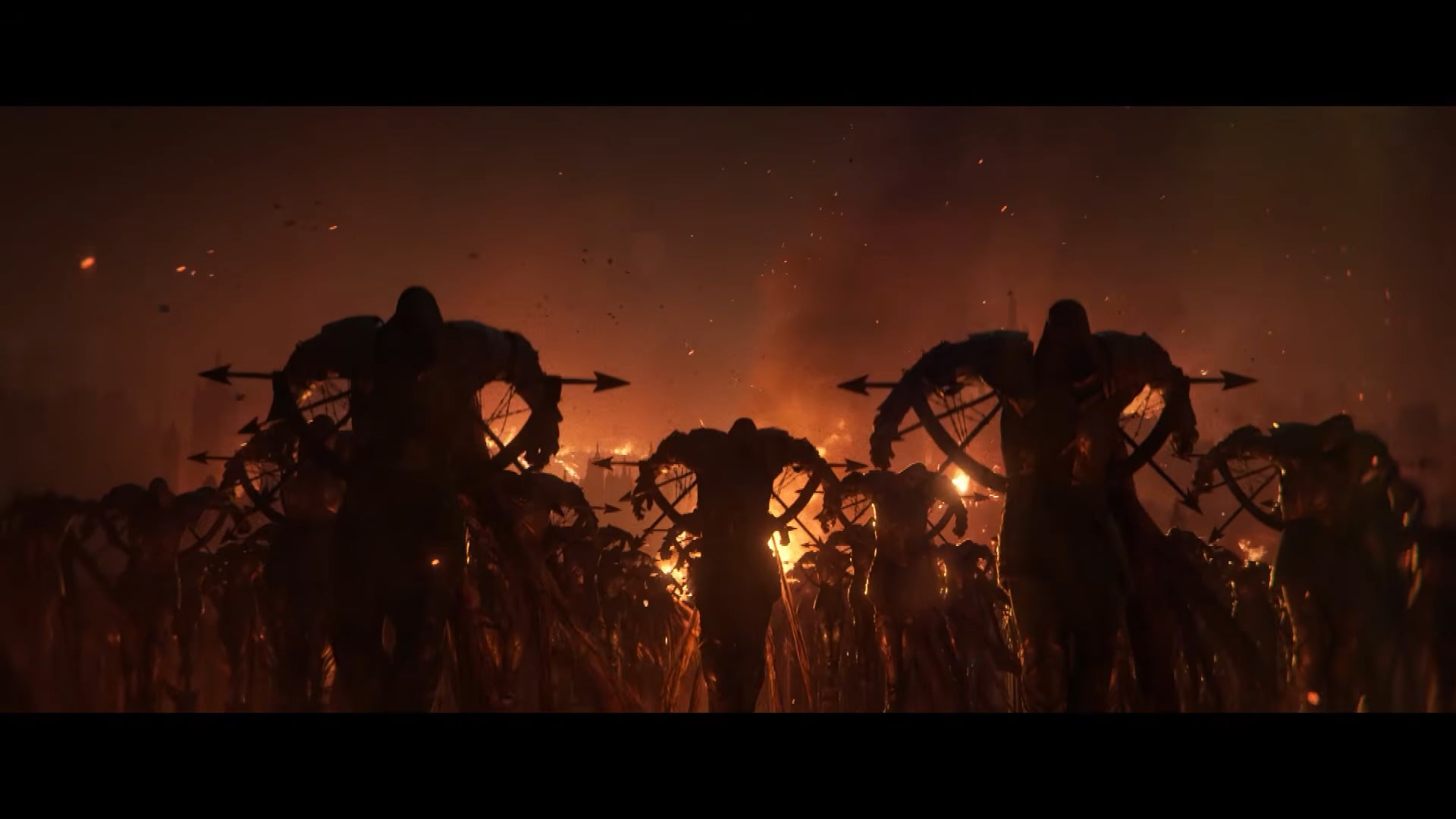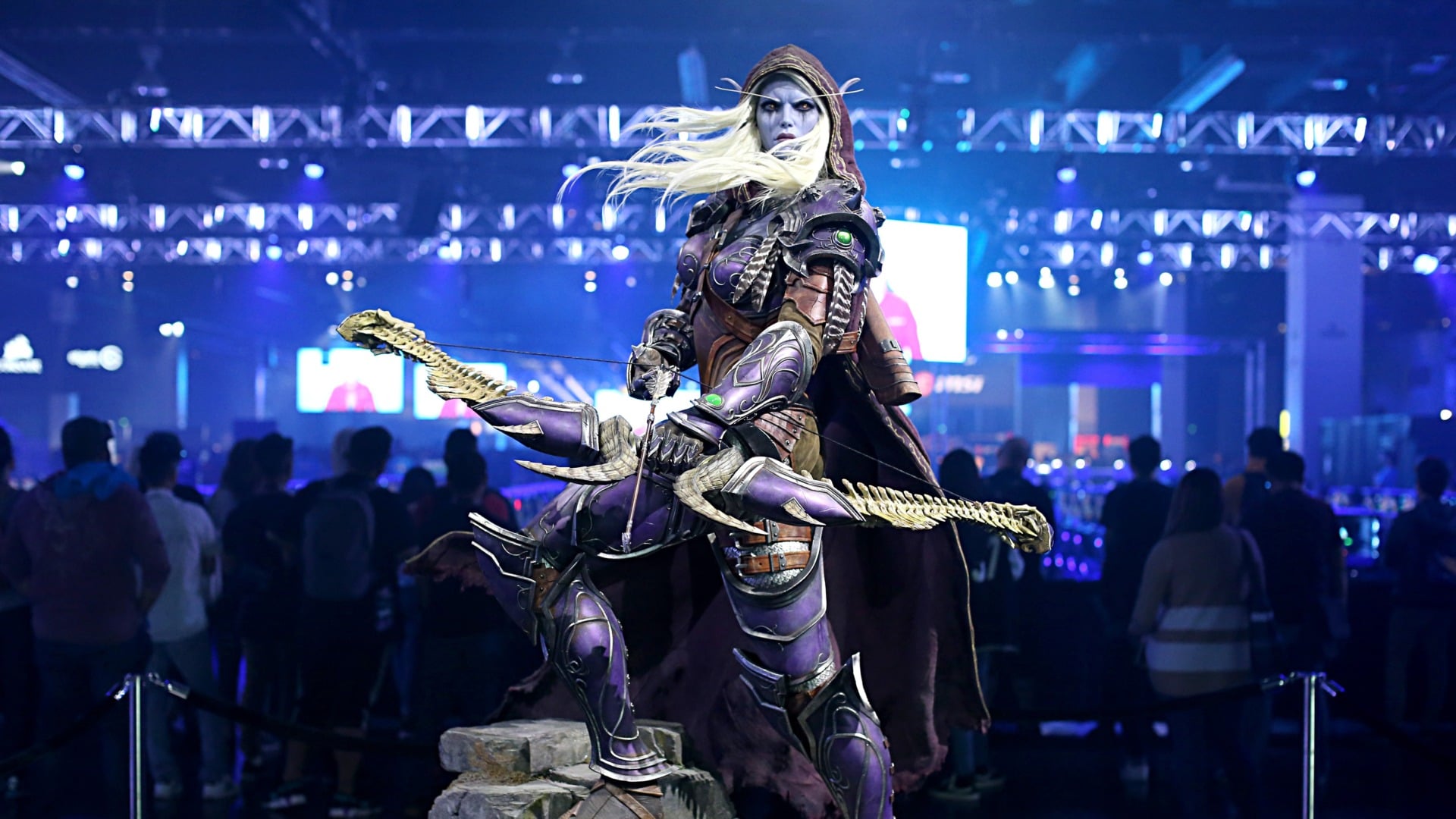

On November 2, 2018, Blizzard closed its annual BlizzCon keynote by announcing, to scattered applause, a Diablo game for phones. It was a baffling marketing decision that immediately set off controversy, as fans of Blizzard’s iconic action-role-playing game franchise loudly accused the company of neglecting its PC players
Perhaps Blizzard’s marketing department had expected Diablo fans to be excited about Diablo Immortal, but the announcement was yet another strange move in a string of bizarre Diablo-related decisions over the past few years. After Diablo III’s disastrous launch on PC in 2012 and a road to redemption that culminated with 2014’s expansion, Reaper of Souls, fans had expected long-term support and perhaps a second expansion for the third Diablo. It had sold more than 30 million copies, after all.
But since 2014, updates to Diablo III have been light and sporadic, and four years later, Blizzard’s announcement of Diablo Immortal at a time when fans are hungry for any news of a Diablo IV has led to big questions about the future of the franchise
What’s really going on with Diablo? What happened to Diablo III’s long-term plan? Is Diablo Immortal, developed in part outside of Blizzard by the Chinese company NetEase, a sign that Blizzard has lowered its standards or abandoned its core audience? Is there a Diablo IV in development, or has Blizzard given up on PC games in favor of phones?
To try to answer these questions, I’ve spoken to 11 current and former Blizzard employees, all of whom spoke anonymously because they were not authorized to speak to press. They’ve told me about a canceled second expansion for Diablo III, and about Diablo IV, which is indeed in development but was rebooted in 2016. They’ve talked about the series’ popularity in China, which is one of the main reasons for Diablo Immortal’s existence, and about how the specter of the canceled game Titan hangs over many of Blizzard’s decisions.
Some of those people also raised questions about Activision’s influence on the beloved video game company. Activision merged with the publisher Vivendi (at the time, Blizzard’s holding company) to become Activision Blizzard in 2008, but over the past decade Blizzard has prided itself in remaining a separate entity. With its own management structure and its own campus in Irvine, California, Blizzard has always stood out from Activision’s other divisions and subsidiaries. (Activision HQ is based about an hour northwest, in Santa Monica.) Rather than sticking to strict production cycles that result in, say, annual Call of Duty games for Activision, Blizzard has traditionally given its developers as much time as possible. That’s one of the reasons the company has been renowned for making some of the greatest games in the world.
This year, however, Blizzard employees say that one of the biggest ongoing conversations has been cutting costs. To fans, and even to some people who work or have worked at Blizzard, there’s a concern that something deep within the company’s culture may be changing.
When reached for comment, Blizzard sent over an e-mailed statement, attributed to a company spokesperson, that I’ll quote throughout this piece. “Blizzard has been and continues to be a developer-driven company,” the company said. “All of the games we create represent ideas our game developers themselves are passionate about. This is as true for Diablo Immortal as it was for Warcraft: Orcs & Humans, or Overwatch, or any game we’ve ever made. We believe that the best games to make are ones that our developers believe in.”
In late 2013 or perhaps early 2014, not long before the release of Reaper of Souls, Blizzard made an internal announcement that shocked the development team: Diablo III’s second expansion was canceled. Team 3, the Blizzard department responsible for Diablo, hadn’t done a ton of work on this second expansion—they were mostly focused on Reaper—but it was planned as their next project. And now it wasn’t happening.
“What they told the team was, ‘You’ve finished Reaper of Souls, it’s really good. But we think the best thing for the IP is to move to Diablo IV in whatever form that’ll be,’” said one person who was there. “The overall sense on the team, at least in my impression, was that there was a vote of no confidence from the executives. They thought Diablo III was a giant fuck-up.”
Had Diablo III really been a giant fuck-up? Sure, the highly anticipated action-RPG had launched in May 2012 to immediate catastrophe, as fans across the world tried to open up the game and found themselves unable to play thanks to the dreaded “Error 37,” a warning-turned-meme that popped up every time the game was inaccessible. There were other problems, too, like a brutal difficulty spike and the real-money auction house, which allowed players to buy and sell loot for cash, skewing Diablo III’s item balance.
Throughout 2012 and 2013, Blizzard’s Team 3 addressed many of these issues, overhauling the difficulty system and removing the auction house. Diablo III evolved into a beloved game, and with Reaper of Souls, which came out in March 2014, the team turned it into one of the most critically acclaimed action-RPGs out there. Why, then, would Blizzard cancel the second one?
https://kotaku.com/how-blizzard-saved-diablo-iii-from-disaster-1797427650
“A lot of people felt stunned by it,” said the person who was there. “I think a lot of them felt like, ‘We made mistakes on Diablo III, but we learned and we made Reaper to show what we could do. We have fixed it, and Reaper’s really good.’ I think a lot of people felt like we’d figured it out and we know how to do this, and expansion two, whatever it would’ve been, would’ve been the highest expression of that… To have them pull the plug without really seeing how Reaper did really stung.”
It’s still not clear why Blizzard wouldn’t want to support a game that had been so commercially successful, but the theory on Team 3 was that Blizzard’s management had lost faith in Diablo III and saw it as a failure, even before Reaper launched. “The perception overall was that management thought, ‘This team really screwed up,’” said one person who was there. “They could’ve held off a few months and seen how Reaper did, but in their mind [Diablo III] was irredeemable.” (When Reaper launched on PC in late March, 2014, Blizzard said it sold 2.7 million copies in its first week—a big number, but only a fraction of the ~15 million copies that Diablo III had sold across PC and consoles.)
When asked, Blizzard did not address the cancellation of this expansion, but as part of a broader statement, spoke about cancellations in general. “As far as game cancellations, we see that as a strength—a reflection of our commitment to quality, and how we’ve always operated,” the spokesperson said. “Historically, we’ve launched about 50% of the total projects we’ve worked on over the past three decades—those are the ones we consider representative of Blizzard quality. Not shipping a game is never an easy decision to make, but it has always been the right decision for us. Cancelling Titan led us to Overwatch, and as another example, cancelling Nomad led us to World of Warcraft.”
In March 2014, as fans celebrated the return of Diablo III with the triumphant Reaper of Souls, Team 3 was splitting up. Some developers left the company; others moved to different projects, like World of Warcraft or the nascent Overwatch. Some stuck around to work on patches for Diablo III, but Team 3 was no longer in full swing. “At the point they had the strongest Diablo development team ever, they scattered them all to the winds,” said one person who worked on Reaper of Souls. To those developers, it was a baffling move by Blizzard’s management. Giving the team more time to see how Reaper performed and how the second expansion was shaping up “would’ve been much more Blizzard-like,” that person said.
Those who remained on Team 3 began talking about what Diablo IV might look like. Josh Mosqueira, the Canadian transplant who had started on the Diablo III console team before taking the franchise’s reins as director of Reaper of Souls, would lead development on the new project, which was code-named Hades. The goal was to take the franchise in a very different direction.
Mosqueira and team designed Hades as a Diablo take on Dark Souls, according to three people familiar with the project. It would be a gothic, challenging dungeon crawler. Rather than maintain the isometric camera angle of the first three Diablo games, it would use an over-the-shoulder, third-person perspective. It was such a departure from previous games, some at Blizzard thought they might not even end up calling it Diablo IV. From 2014 until 2016, it was Team 3’s main project, developed alongside a handful of patches and light content updates for Diablo III. Then, like Diablo III’s second expansion before it, Hades was canceled.
As with any cancellation, there were likely many reasons for this move, but two people involved with Hades said it was going through rocky development. “It was not shaping up at all,” said one. In the middle of 2016, Mosqueira left Blizzard. It’s not clear whether Mosqueira left because of Hades’ cancellation or if Hades was canceled because he left, but what’s certain is that at that point, the project was shelved. (When reached by Kotaku, Mosqueira declined to comment on this story.)
In the coming months, Blizzard’s Team 3 would do two things. The developers, who needed something to work on now that Hades was no more, put together downloadable content for Diablo III called Rise of the Necromancer, a character class add-on that the team hoped would satiate fans who were desperate for more Diablo. And some of them started working on a project code-named Fenris.
Fenris is, all of our sources have confirmed, the current incarnation of Diablo IV. Blizzard’s Team 3 has been working on this version of the game since 2016, and some who have seen it say they’re optimistic about the direction. “[Design director] Luis [Barriga] has a very strong vision for that game,” said a former employee, “one that a lot of people are excited about at Blizzard.”
One key part of that vision is the art direction. During development of a game, many studios use what they call “pillars”—mantras that help define the game’s goals so that everyone on the team is on the same page. For Fenris, one of those pillars is simple: Embrace the darkness.
“There’s a lot of people who felt like Diablo III got away from what made Diablo Diablo in terms of art style and spell effects,” said a current Blizzard employee, adding that Fenris is aiming to look more like the beloved Diablo II. Said another: “They want to make this gross, make it dark, [get rid of] anything that was considered cartoony in Diablo III… Make what people were afraid of in Diablo II, but modern.”
Fenris is still early in development, and likely won’t be out until 2020 or later, so it’s safe to say that many decisions made by the team today will change over time. (We don’t know if it’s PC-first or planned for simultaneous launch on PC and consoles, and in fact, the team may have not yet made that decision.) One ongoing conversation, for example, has been whether to keep the isometric camera angle or use the over-the-shoulder third-person view that was prototyped for Hades. Recent builds of the game have been isometric, like previous Diablo games, according to three people familiar with Fenris, but questions remain over whether that should change.
Another pillar of Fenris is to make Diablo more social, taking inspiration from Destiny to add what one current Blizzard developer called “light MMO elements,” further drawing on Blizzard’s past massively multiplayer online success. Previous Diablo games have featured hub cities full of computer-controlled quest-givers and vendors—imagine if, while exploring those hubs, you could meet and group up with other players? And then what if you could go off and take on instanced dungeons with them, sort of like Destiny’s strikes or World of Warcraft’s instances?
“The question that kept getting asked is, ‘If there’s going to be a ‘strike’ equivalent, where you’re forced into a very story-focused, well-designed level of a dungeon, what does that look like in Diablo?” said one person familiar with the project. “What if we still had a core Diablo game that just happened to have a bunch of people on the map to do other cool stuff?”
One lingering question is how Blizzard will monetize Fenris. Blizzard’s other big games, like Overwatch and Hearthstone, include ongoing revenue streams thanks to cosmetic microtransactions and card packs. With Diablo, Blizzard has not yet found a way to deliver that same sort of cash generator. (“The company’s always struggled as to how to have some sort of long-tail monetization for Diablo III,” acknowledged one former employee.) From what we’ve heard, those decisions are still up in the air on Fenris, and may not be clear for a long time.
Fenris is still early—and all of these ideas may change or never make it to the final product—but with the fourth Diablo in active development, it’s hard not to wonder: Why wouldn’t Blizzard just talk about it? The company has hinted at the game’s existence, insisting in blog posts and on live streams that it has “multiple Diablo projects” in the works, but using the words “Diablo IV” might have quelled much of the outrage over Diablo Immortal.
Earlier this month, I reported that Blizzard had made a video for BlizzCon in which co-founder Allen Adham talked about Diablo IV. Blizzard later disputed that the video had been made for BlizzCon. In conversations since then, two sources told me that regardless of the company’s statement, there had been plans throughout 2018 to announce the game this year. “In January, they were still full set on, ‘We’re going to do this right, we’re going to have a playable demo,’” said one. “By the time we’d hit May, that game wasn’t far enough along. It’s normal problems. Things going slower than they’d like.” By the summer, that person said, they were still under the impression that a tease was happening. “I think it’s semantics… If they changed their mind at any point, they can say, ‘Oh, it wasn’t scheduled.’ At least what we were told as a development team, it was supposed to get teased, that was always the intention.”
On the flip side, a current developer in a non-Diablo department who was involved in BlizzCon planning told me that to their knowledge, there was no Diablo IV announcement ever planned for the show.
Plans or no plans, the Diablo IV announcement didn’t happen. Here’s one theory as to why: Blizzard is haunted by the specter of Titan
Titan was the code-name for a brand new MMO that Blizzard started developing around 2007. Envisioned as a cross between The Sims, Left 4 Dead, and Team Fortress 2, where you’d run businesses during the day and turn into a superhero at night, Titan was meant to be a different twist on the genre that Blizzard had already mastered with World of Warcraft. (You can read more about Titan in our 2014 report on how it would have worked.)
In the beginning of 2013, after a long and protracted development cycle, Blizzard canceled Titan. Part of the team went on to make Overwatch, which would become a big success, but the project became a black eye for Blizzard—a massive sink of time and money that was also, much to some people’s dismay, public knowledge. Not only had they wasted resources on this failed game—everybody knew about it. Blizzard had acknowledged the project in 2008, and its existence had been frequently hinted and asked about in the years that followed.
So with Fenris fairly early in development—and with the fourth Diablo already having gone through one big reboot—it’s fair to wonder if the team was worried about another lengthy development cycle that might end in disaster. Even the words “Diablo IV” might have set expectations that the developers didn’t want to establish just yet. “The Diablo team is very paranoid about saying something too soon and then getting stuck in a loop,” said one former Blizzard developer. “They don’t want to show the game until they have a trailer, a demo.”
“Obviously Titan looms over all of us,” said another former Blizzard developer. Despite Overwatch’s emergence from Titan’s ashes, the developer added, “people don’t look at Titan and see a success.“
“I think there’s a desire to announce stuff within a reasonably close proximity to when people are gonna get to play it,” said a current Blizzard developer, pointing to both Titan and Blizzard’s other infamously canceled project, StarCraft: Ghost. “[Those] just set people up for a lot of disappointment.”
In a statement, Blizzard confirmed as much. “In terms of unannounced games, so much can change over the course of development based on how we’re feeling about the progress and direction of the project,” the company said. “So we try not to share details about unannounced projects before we’re ready. Our preference is to have a clear announcement plan with some concrete details and hopefully a playable demo of the game when we announce. That applies to our Diablo projects and our other games as well.”
It’s also fair to wonder: Just how much has Titan affected Blizzard’s development process? Over the past few years we’ve seen Titan’s seven- to eight-year cycle, Diablo III (which entered development in the early 2000s but was not released until 2012), and StarCraft II (2003 to 2010). Some veteran Blizzard developers have spent over 10 years on a single project, which has driven some of them to crave smaller, shorter games. That’s one of the reasons Blizzard now operates a secretive new department—one that functions a little bit differently than its other divisions.
In the days following BlizzCon 2018, as Diablo fans across the world raged about the announcement of Diablo Immortal and lack of news on Diablo IV, many of them wondered: Was Diablo Immortal’s development detracting from other Diablo games?
As it turns out, Diablo IV and Diablo Immortal are developed by different teams of people in different divisions. While the project known as Fenris is in production at Team 3, Diablo Immortal is partially developed by NetEase and partially made by a small group of Blizzard employees who work for one of the company’s newest departments: incubation.
In 2016, when Blizzard co-founder Allen Adham returned to the company, he announced that he was heading up that new department. Inspired by the massive success of the experimental card game Hearthstone (2014), this “incubation” department would help cultivate new creative projects for the company. It attracted some of Blizzard’s veteran developers, like Tom Chilton, who had been director of World of Warcraft for six years and a designer on the game for another six before that. (Now, Chilton is heading up a mobile game.)
Another veteran designer who moved to incubation was Wyatt Cheng, who had worked on Diablo III for over a decade and wanted a break, according to two people who know him. Blizzard had partnered with a Chinese company called NetEase to publish Diablo III as a free-to-play game in China, where it was a big success. At some point in 2016 or 2017, the two companies decided to collaborate, putting together what would be called Diablo Immortal—a Diablo game, with Cheng as lead designer, made only for phones. “Essentially it exists because we’ve heard that China really wants it,” said a current developer. “It is really for China.”
Three Blizzard sources told me that the original plan for Diablo Immortal had been to release it only in China at first for a few months or maybe a year, in large part to test it out among Chinese fans before releasing it in the west. “The quality bar in the Chinese market, especially for framerate, is extremely low,” said one. “You can release something that’d be considered alpha footage here and it’d be a finished game there.” Later, those sources said, Blizzard decided to take more time to polish the game and prepare it for a simultaneous global announcement and release.
In a statement, Blizzard said that Diablo Immortal had been developed for both Western and Eastern markets but did not comment on whether the game was originally planned to launch in China first. “One of our core values is ‘think globally’ and our history has shown that we strive to make our games in as many languages as possible so more players can enjoy them,” a spokesperson said. “With that in mind, we quickly knew that we wanted to bring Diablo Immortal to the global audience.”
Diablo Immortal isn’t the only mobile game in development at Blizzard’s incubation department, and although a skeptical fan might question the motivations behind these games, some current and former employees insist that these games are in development because Blizzard’s developers genuinely want to make them.
“There are lots of mobile game players at Blizzard,” said a current developer. “There are lots of people actually excited about mobile games. The reaction inside the company to Immortal is very different than the reaction outside the company. Part of the thinking on a lot of these is, people want to work on smaller projects. Smaller projects in mobile tend to make sense.”
For example, developers told me, quite a few people at Blizzard play Pokémon Go, the massively popular mobile game that lets you use your phone’s camera to catch wild creatures. As one developer explained, the iconic orc statue in the center of Blizzard’s campus is a Pokémon Gym, and staff wage war over who gets to control the landmark on a daily basis. (Correction – 5:58pm: We originally said that it was a Pokéstop, but it’s actually a Gym! Apologies for the error.)
The natural extension of that was for one of Blizzard’s incubation teams to develop a Warcraft version of Pokémon Go, which is in development for smartphones now. Surely it occurred to the decision-makers at Blizzard that this Warcraft spinoff could be a massive revenue generator, but the game is also in production because lead designer Cory Stockton (formerly of World of Warcraft) is a huge fan of Pokémon. (People who have played the Warcraft mobile game say it’s also got a lot more to it than Pokémon Go, including single-player mechanics.)
Perhaps it’s a win-win for Adham. With mobile games, Blizzard can please Activision’s investors by appealing to burgeoning video game markets in China and India, and Blizzard can also satisfy its veteran developers by letting them work on smaller projects that they really want to make. “The reality is, everything that is in incubation at Blizzard is in incubation because Allen Adham believed they were worthwhile,” said another current developer. These mobile games might not appeal to as many of Blizzard’s hardcore fans—those who prefer to play games mainly on PCs—but they have appealed very much to the developers.
Yet over the past year, Activision’s influence on Blizzard has been very real—and Blizzard staff say things are starting to feel a little different for the once-autonomous company.
In the spring of 2018, during Blizzard’s annual company-wide “Battle Plan” meeting, chief financial officer Amrita Ahuja spoke to all of the staff, according to two people who were there. In what came as a surprise to many, she told Blizzard that one of the company’s goals for the coming year was to save money.
“This is the first year we’ve heard a priority being cutting costs and trying not to spend as much,” said one person who was in the meeting. “It was presented as, ‘Don’t spend money where it isn’t necessary.’”
Ahuja was new to Blizzard, having started as CFO that spring as a transplant from 3100 Ocean Park, the Santa Monica-based Activision headquarters where she’d spent eight years working in the finance and investor relations departments. There was a perception among Blizzard staff that she had come in to clean up the spreadsheets, to save as much money as possible while at the same time bolstering Blizzard’s product output. (In a statement, Blizzard said, “We actively recruited [Ahuja] and we chose her out of a large, very competitive, and highly-qualified set of candidates.”) 2016’s Overwatch had been a smash hit, but in 2017 and 2018 the company shipped very little—there was a StarCraft remaster, a World of Warcraft expansion, and of course, patches and updates for other games. That was it.
Traditionally, Blizzard has remained entirely separate from Activision, with its own quality standards and branding, to the point where they felt like two different companies. You might be able to find World of Warcraft Easter eggs in StarCraft II, but you’d never see an Overwatch character in Call of Duty. In recent years, however, that’s changed. Blizzard’s digital store, Battle.net, now features Activision games like Destiny 2 and Call of Duty: Black Ops 4. Bungie appeared on the BlizzCon 2018 stream to announce that Destiny 2 would be temporarily free. And there’s been a perception among Blizzard developers that the two companies are growing more and more intertwined.
As it turned out, 2018 would be a weak year for Activision. The publisher was unhappy with Destiny’s performance and would take a major stock hit in November following fiscal third-quarter results that disappointed investors. One worrying trend for the bean-counters was the stagnancy of Blizzard’s MAUs—monthly active users—which are seen as a pivotal metric for service games like Hearthstone and Overwatch. Throughout 2018, as Activision has told investors, those numbers have declined. Combined with Blizzard’s lack of new games, it’s easy to see why Activision’s executives may have wanted to intervene.
“You would’ve thought Blizzard was going under and we had no money,” said a former Blizzard staffer, who told me they left the company this year in part because of Activision’s influence. “The way every little thing was being scrutinized from a spend perspective. That’s obviously not the case. But this was the very first time I ever heard, ‘We need to show growth.’ That was just so incredibly disheartening for me.”
Blizzard appears to be bolstering headcount for its development teams—one current developer said their team was encouraged to get bigger—while cutting as many costs as possible elsewhere. It’s a process that may not be done yet, as Activision seems to still be looking to boost Blizzard’s content output and release more games on a regular schedule. Ahuja’s comments in the spring of 2018 may have simply been the beginning.
“We are being told to spend less at every corner because we have no new IP,” said one former developer. “Because Overwatch set this bar of how much we could earn in a single year, there’s a ton of pressure from Activision to get shit moving. They want something to show shareholders.” (During an earnings call after Overwatch launched, Activision said it had brought in over a billion dollars in revenue.)
Then, in October 2018, Blizzard lost its leader. Co-founder Mike Morhaime, the soft-spoken CEO who jovially addressed fans at every BlizzCon, said he was stepping down, to be replaced by veteran World of Warcraft producer J. Allen Brack. Allen Adham and chief development officer Ray Gresko also joined Blizzard’s executive management team, perhaps to help ensure that the studio would be helmed by game developers who lived and breathed Blizzard.
It was a massive shake-up for Blizzard, and it came during a time when there were already questions about Activision’s influences. Morhaime was widely beloved at the company. One former Blizzard developer described him as the “anti-CEO.”
”He doesn’t care about profitability,” that person said. “He just wants employees to be happy, and he just wants to make good games and keep the community happy.”
Suddenly, there were whispers in hallways, concerns about future cost-cutting initiatives and furtive exchanges about what plans Activision CEO Bobby Kotick might have in mind for Blizzard. “There’s a perception within Blizzard that finance is making more calls than they ever did in the past,” said one person who left Blizzard recently. “You never heard that three or four years ago.”
Cultural shifts aren’t always blatant. Anyone who’s worked for a major corporation can attest to the invisible pressures that can emerge over time. “There’s a temptation to cast Activision as the villain,” said one current developer. “I think the influences are far more subtle than that.” Someone at Blizzard might make a decision with the best of intentions in mind, but if they subconsciously know that their corporate bosses at Activision want to cut costs and please investors, who knows how that might affect their judgement? With Activision and Blizzard growing less and less separate, what kind of overlaps will we see across their various divisions?
These days, there’s trepidation surrounding Blizzard, both externally and internally. Strange decisions surrounding the Diablo franchise have exacerbated that, and in fact, some who work or have worked at Blizzard believe that canceling Diablo III’s second expansion was one of the company’s biggest mistakes in recent years. Recalled one Blizzard veteran: “I remember a lot of us looking at each other and saying, ‘Man, if we had just done that second expansion instead of losing half the team as a result of the cancellation, and then all of the personnel changes, management changes, then this walk down the road of Hades… If we hadn’t done any of that and had just focused on doing a solid third act for Diablo, it’d be out by now.’”
There is a future for Diablo, one that isn’t solely limited to mobile games. Diablo III may have wound down, but Diablo 4 is still in the works, despite the culture of secrecy that has prevented Blizzard from mentioning it by name. There’s no way to know what may happen to the project in the future, but right now, it exists. The big question is, what will Blizzard look like in two years? In five? How will corporate expectations and tensions impact what has been one of the most beloved companies in video games for nearly three decades? We may not know the answers until BlizzCon 2028.