In Respawn’s Jedi series, one of the constants across both games is the Mantis, a starship that’s kinda yours, but also not yours, but you use it enough that it may as well be. And I think, more than the combat or the jumping or the surprisingly Star Warsy tone of the games, it’s my favourite thing about them. At least in terms of what it brings to the table.
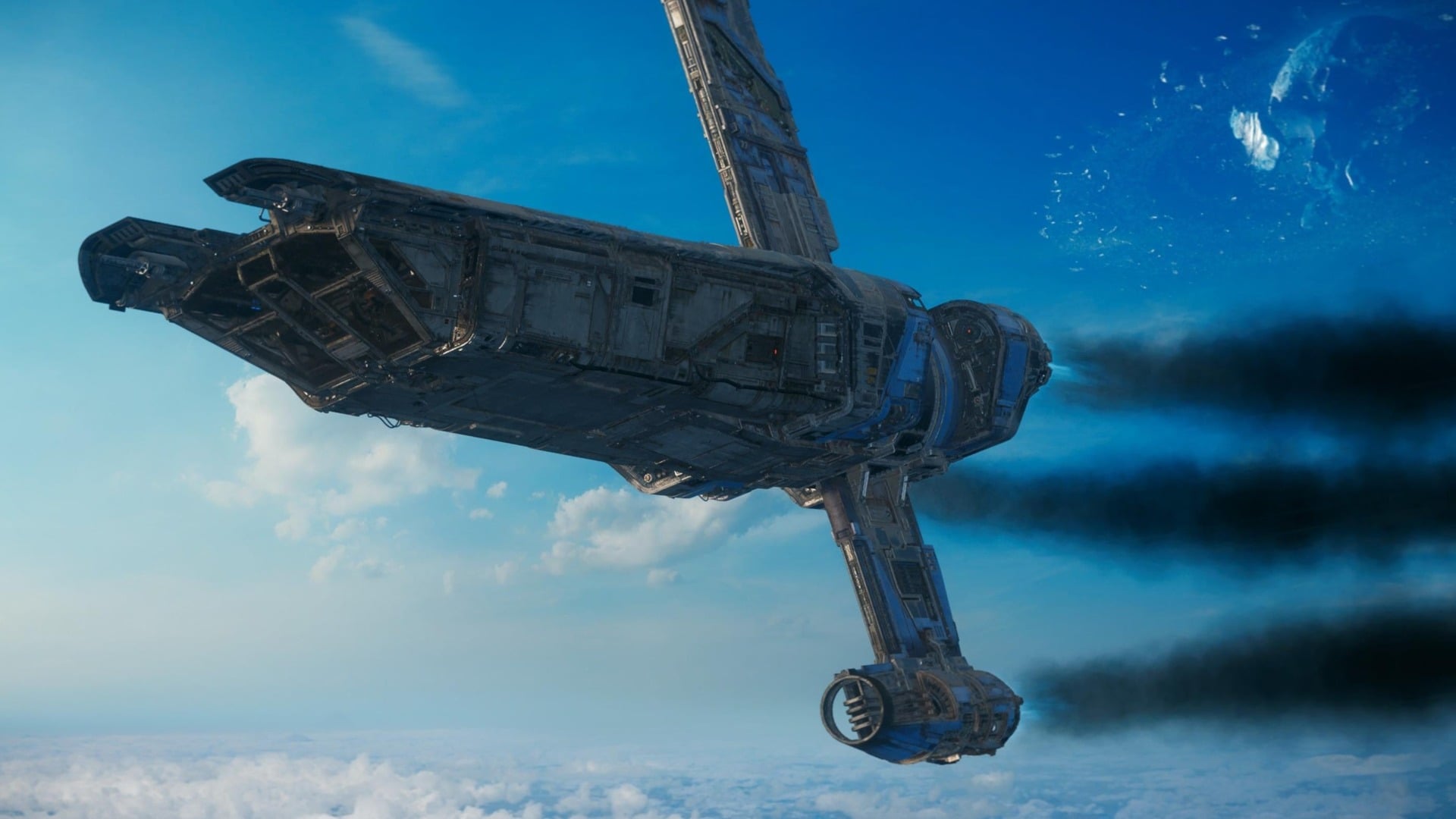
Partly because it’s such a cool ship! Just look at it. It’s got a kind of “weird design presented in a surprisingly functional way” thing that Star Wars does so well, like a B-Wing but bigger, only it’s a “wing” that’s also kinda like a keel or a sail that pivots “upright” while in flight (there’s no upright in space, I know, but it’s upright relative to the rest of the ship) and then rotates flat when landing. A little excessive, I know, but it used to be a luxury yacht, so it’s allowed a big flourish or two.
That “surprisingly functional” thing continues through to the details and interior of the ship. Despite its premium heritage it’s a heavy and dense vehicle, with cables and pipes and vents everywhere, and landing gear that would look more at home on a bulk freighter than an Old Republic Roadster. The inside, meanwhile, is as far from luxury yacht as you can get; it was designed with the series’ rugged adventures in mind, with a team of Respawn and Lucasfilm artists looking to old submarines and the Millennium Falcon for that mix of adventure and cramped practicality.
I mostly love the Mantis, though, because of the way it ties the games together. The Jedi games are based across distinct levels, and it would have been the easiest thing in the world to simply shuffle the player from planet to planet with nothing but a loading screen in between.
Instead, moving between levels in the Jedi games is a whole process. You end up at your ship at the conclusion of a stage, from where you can walk onboard, do some stuff, check out some relics and chat to your friends. Then you walk up to the ship’s map, select where you want to go (you don’t really have a choice, but the illusion helps here) and you’re away. The ship will take off—in real-time, leaving the completed world behind, which always looks cool—and then zoom into hyperspace. Only when the player sits down in their co-pilot’s chair will the ship exit lightspeed, the new planet will fill the windows and you’re ready for your next adventure.
It sounds so pedestrian, but I am 1.5 games into this series and it has been an absolute delight every time it happens, no matter how repetitive it threatens to become. The simple act of turning the end/beginning of a level into a whole thing, rather than just a cutscene, transforms the game. I don’t feel like I’m moving from one set of video game challenges to the next; I feel like I’m on an adventure, one that’s truly galactic in scale.
I sometimes, in the dead of night, wonder why I like the Jedi games as much as I do. When I break them down into individual components I’m not really a huge fan of almost anything that goes into them. I hate Souls games, the Tomb Raider/Uncharted stuff is fine but again, far from my favourite video gaming space, and I’m nowhere near as into Star Wars as I used to be.
But then I think about this ship, and the way it speaks to stuff I am very into, like Elite and Mass Effect and Privateer and Wind Waker (and even Assassin’s Creed’s ships and trains), games that have a central focal point for your journeys that serves as everything from a transport to a conversational hub. There are no Jedi games without Mantis, because so much of the game’s story, character and action revolves around it. Kinda like that whole ship revolves around that one, weird wing…