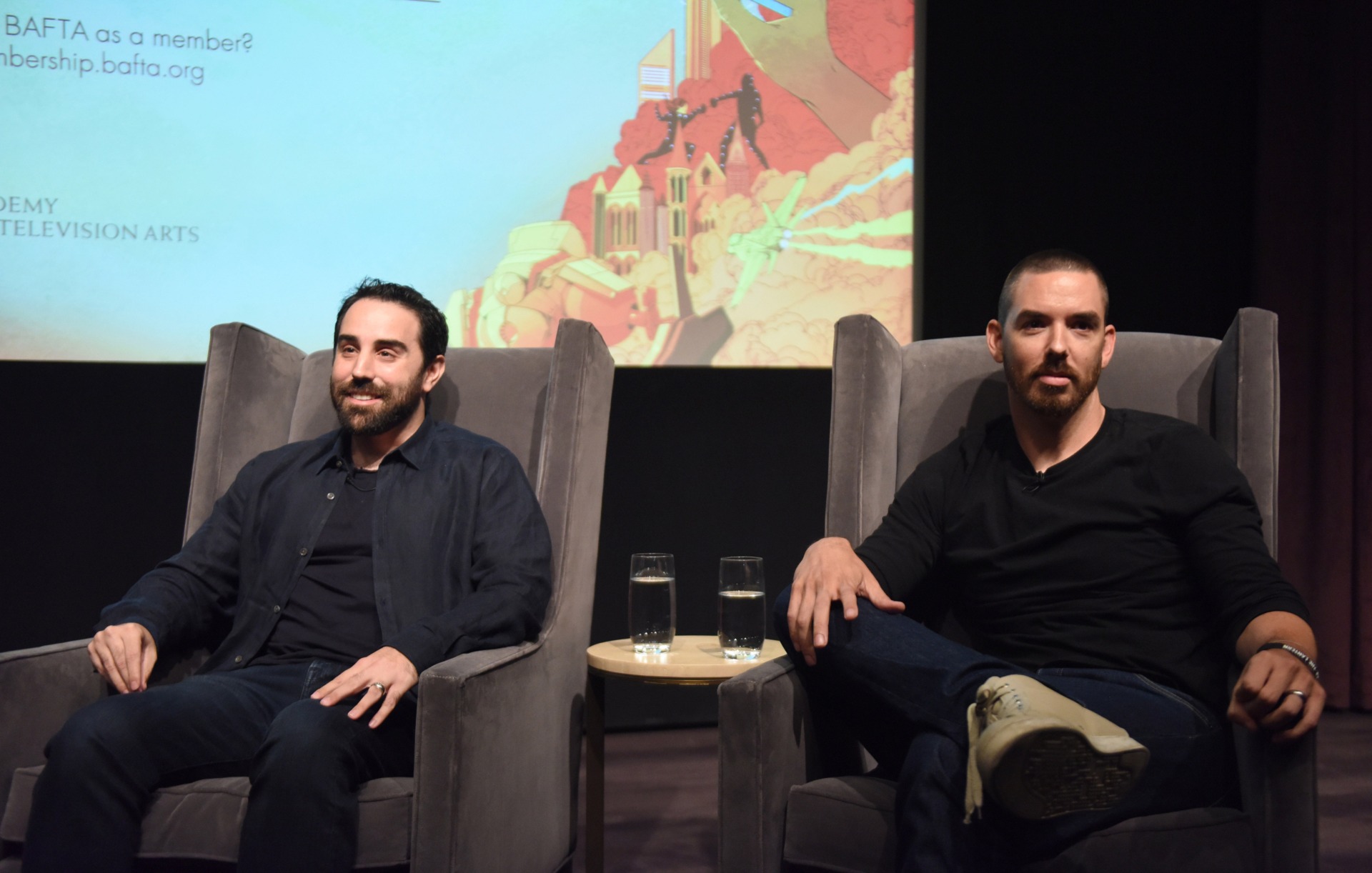
In mid-August, in front of an audience of his own employees, Marc Merrill, a co-founder of Riot Games, the studio behind League of Legends, admitted fault. According to two sources watching, he apologized, his voice choked up, and he began to cry. Twelve years after Riot’s founding, it had become clear to its employees, League of Legends’ community, and the public at large that Riot was not the utopian games company it had set out to be. After Merrill left the stage, the company’s top brass filed in to answer staffers’ questions. One of them was Scott Gelb, Riot’s chief operating officer, the subject of an open secret at the behemoth gaming company: For years, Gelb had been known to fart on, “ball-tap,” and, sometimes, hump colleagues for comedic effect.
After the meeting, one female employee sent an e-mail to the company’s top three bosses, including Gelb, CCing every single employee in Riot’s Los Angeles offices, with a terse, confident subject line: “That was not enough for me.” Responses that immediately followed agreed. One in particular spoke to a bubbling-over concern employees have about Riot’s accountability process: “If we aren’t going to be Zero Tolerance for those leaders or past aggressions we need to own that fact and admit we aren’t zero tolerance.”
On August 7, Kotaku published the outcome of an eight-month-long investigation into Riot Games’ culture, which over two dozen sources described as sexist. In the wake of that publication, several other current and former employees reached out with or published their own stories of gender discrimination at the 2,500-strong gaming company, which is 80 percent male. Women currently and formerly employed by Riot say they have been passed up for promotions that men received, repeatedly questioned about their gamer credibility, hit on often, regularly insulted or talked over in meetings and, in general, systematically disadvantaged by cultural ideas of what an ideal Riot employee looks and acts like. Employees’ career ascension at Riot is, in theory, guided by an ideal of meritocracy that, employees say, looks more like nepotism and cultural curation. (Riot’s two co-founders, three top bosses and 21 out of its 23-person senior leadership team are men.) Men interviewed by Kotaku divulged that, behind closed doors, Riot’s so-called “bro culture” allowed incidents of “ball-tapping” (flicking or slapping testicles), hitting on junior female employees at booze-fueled company parties, and thwarting women’s careers at the company—behaviors that sources say exclude women from the company’s top ranks. In the month since Kotaku’s report, Riot Games has been scrambling to prove to the public and its own employees that it can and will hold itself accountable.
Riot has contracted several organizations and corporate culture experts, includingHarvard Business School professor Frances Frei, who was brought on to fix the alleged sexist culture at Uber. (Riot happened to announce this five hours after we asked about her in our request for comment for this article.) Riot also says it will investigate employees’ claims and is taking a litany of measures to address its sexist culture.
According to sources currently and formerly employed by Riot, who are anonymous due to their fear of retribution, employees up to and including those at the highest level of the company have been the subject of official complaints or implicated in allegations of harassment or misbehavior. Whether or not these men are held accountable should, to some current Riot employees, be the measure of whether Riot is serious about cultural change.
Reached for comment, a Riot representative explained that, while they can’t get into the details of particular investigations for privacy reasons, “This cultural evolution remains Riot’s first priority and we strongly agree that this change needs to start at the top and that everyone is held accountable. We will ensure that we have the right leaders in place to drive the change that we know Riot needs.” If Riot employees reported the behaviors Kotaku references in this article, the representative said, they have been, are being or will be investigated. The representative also pointed to its new board committee, comprising two male directors from Tencent and the Harvard Business School professor Youngme Moon—notably, co-founders Brandon Beck and Marc Merrill, who are also on the board, will not be on the committee—which would field allegations against co-founders or senior executives.
Six current and former employees said work at the company slowed and, in some cases, as in recruitment, briefly halted after the public exposure of Riot’s culture. While current employees interviewed say that, for the most part, Rioters widely acknowledge the tax their culture has exacted on female employees, a small contingent argues instead that employees who are up in arms are over-sensitive. In Slack channels and meeting rooms, employees are hashing out what a diverse and inclusive Riot might look like and educating each other about behaviors harmful to women. Male employees are processing their past actions and self-evaluating, sources say. “In a public-facing Slack channel, there was a rash of ‘I’m here, I have a penis, I decided to pay attention to this for the first time in my life. I’m confident we like each other so we can get past this,’” said one current employee. “There have been 100 or so of those. The common response we started joking about was a dude setting up a one-on-one with a woman to say, ‘But I’m not bad right?’” Three sources independently described Riot as a “powder keg.”
Three days after Kotaku published its investigation, Riot released its first public correspondence to fans—a tweet which read, “To listen, we have to be quiet. You haven’t heard from us, because we’re focused on listening and supporting internally. In the weeks and months ahead, we’ll share the immediate and long-term actions we’re taking to enact real change for women at Riot.” Three weeks later, Riot did. The blog post included Riot’s first public apology: “We’re sorry.” Riot pledged sweeping changes to address allegations of widespread sexism, including expanding its diversity and inclusion initiative and “doubling down” on training. Riot is evaluating its company values, and especially its emphasis on hiring “core gamers.”
In the blog post, Riot wrote, “We are prepared to make big changes and have begun taking action against specific cases, including removal of Rioters, though we aren’t likely to get into those details publicly on a case-by-case basis for legal and privacy reasons.” The post read, “No one and nothing is sacred.” Twenty-three current and former Riot employees interviewed for this story remain unconvinced, as several male leaders at the company implicated in allegations of misconduct toward colleagues, ranging from edgy fraternity-house humor to sexual molestation, are apparently still showing up for work. While Riot and its consultants may still be investigating allegations against the company’s leadership, and these men’s continued employment status may be under scrutiny, some current employees believe their dismissal has been a long time coming.
To collect information for investigations, victims of sexism at Riot are meeting with HR and, in some instances, with Seyfarth-Shaw, the law firm helping with crisis management. Some of these allegations are being fielded by an anonymous tipline. Seyfarth-Shaw is known for its history busting unions and is considered an expert in class action lawsuits. The firm has also represented the company in at least one previous incident involving a claim of sexual misconduct. Reached for comment about whether that presents a conflict of interest, Riot said, “We are working with Seyfarth Shaw, a highly reputable employment law firm that has a history of working with a variety of clients and cases on both sides of many issues. They will support us and hold us accountable to the promises we’ve made and to the processes we’ve worked with them to build. The firm prioritizes D&I [diversity and inclusion] initiatives, and we believe their values are highly aligned with ours.”
“The question we’ve been asking ourselves around the office is, ‘Is there another level of accountability to this? Are we going to punish people for transgressions until we hit a certain level of seniority?,’” said one current employee. Reached for comment about some employees’ skepticism about Riot’s investigation process, a Riot representative said, “We have systems in place to ensure the same level of rigor is applied to all investigations, regardless of the seniority of those involved.”
Two sources report that around 30 employees have left the company over the past month, but Riot would not confirm a specific number. Although some exits may have been planned or unrelated to allegations of bad behavior, several employees have “resigned,” according to e-mails obtained by Kotaku, the most prominent of whom is a vice president named Lance Stites, who was at Riot for seven years. Reached over Facebook Messenger, Stites told Kotaku that he had given notice in April and was “ready for a break,” but when asked whether revelations about the company’s sexist culture played a role, he replied, “Partially. I do believe the company values diversity and fairness, greatly … But I’ve not been perfect and recognize my humor or behavior wasn’t to the standard it should be. And when I think about how that could have set an example for other’s behavior, I feel all leaders have an extremly [sic] high bar.” (Three sources alleged Stites bragged about visiting strip clubs on work trips abroad and in California, although Stites said he has “infrequently been to strip clubs, that was not something done commonly with co-workers. Nor was that even recent.” )
Sources say they have reported at least three other men in positions of leadership—who appear to still be employed by Riot—to Riot’s HR or consultants. One former employee recently sent a list with about a dozen names of alleged harassers or problem employees to relevant parties at Riot.
COO Scott Gelb, whom three sources have witnessed touching men’s genitals and five have witnessed farting near or on male employees, still appears to be at the company. Sources say he was also known to jokingly hump colleagues in the office and commonly made dirty jokes to staffers. “It just became so normal,” said one employee who witnessed Gelb’s style of bro comedy, which several sources described as “homoerotic.” Said another, “The ball grabbing and things like that—that was absolutely well known across the board. Everyone knew who did it. Some people thought it was funny. Some of us looked at it and thought, ‘Uh, is that really how you want to do this?’ But he got promoted. It was well known he did that and no one stopped it.” Other former employees who witnessed this behavior say they believe it trickled down into the lower ranks of the company, where the fraternity mindset alienated or harmed women. When one former employee read in Kotaku’s exposé that a higher-up in the company was known to fart on people’s faces, she said, “I asked everyone I knew who was the ass gas bandit from the article. The worst part was everyone I asked had a different answer!”
Gelb did not respond to a request for comment.
Four former Riot employees have alleged to Kotaku that one male employee in a position of leadership has a recognized history of making sexual comments about or in the presence of colleagues. One former Riot employee alleges he sexually molested her outside of work hours.
Four former Riot employees allege that one manager has verbally harassed employees, sometimes squashing women’s careers when they gain a modicum of upward momentum at the company. According to one source, he has “engaged in systematically destroying the careers of women beneath him in retaliation” for confidently proposing big ideas or challenging him on his strategies, which multiple female sources who say they have experienced this corroborated.

Contact the Special Projects Desk
This post was produced by the Special Projects Desk of Gizmodo Media. Reach our team by phone, text, Signal, or WhatsApp at (917) 999-6143, email us at [email protected] , or contact us securely using SecureDrop
These employees still appear to be employed by Riot Games, and have been reported to Riot’s HR or relevant parties at least once, and in some cases, several times. Riot would not comment on these specific allegations and, asked for comment, these employees did not respond.
What these men and others like them have in common is thriving in and, sources at the company say, contributing to Riot’s “bro culture,” which dozens of sources say has disadvantaged women. When leaders at the company engage in edgy behavior that might alienate or objectify women while at the same time preferencing employees they can pal around with, women are disadvantaged. One current employee summed it up well:
“Where you have a lot of the original members of the company who recruit people into their club, it’s sort of a frat mentality. And all those people seem to be men. There are varying degrees of how their behavior is abhorrent, ranging from abhorrent all the way through disappointing. All of it stems from [the idea that] in order for your project to move ahead or get ahead at this company, you have to be friends with a certain person in a higher position. And that person has an exclusive club … I have not been able to see [women] join that club.”
What shocks two current employees is the fact that some of the men in leadership who have allegations against them are still coming to work. “In a normal company you’d see people put on leave while investigations happen,” a current employee said. “You’d expect to see more people stepping down and taking full responsibility. There seems to be a subtext that leadership would very much like to remain in charge. There’s an unspoken assumption that even though they’re the ones who created this mess they should somehow be allowed to stick around and clean it up.”

Reached for comment, a Riot representative told Kotaku that investigations take time. “We collaborated with experts to build an investigative process that we believe will lead to the right conclusions. To ensure our investigations generate fair and just outcomes, we must be consistent and comprehensive with every case, including by making a thorough and unbiased evaluation of all available evidence. This takes time and needs to follow a process. This way, we can speak to all witnesses as they emerge, and can also protect complainants from potential interference or retaliation. We will not accelerate this process, take shortcuts, or jump to premature conclusions with only a portion of the facts, regardless of internal or external pressure to do so.”
Late last week, two Riot employees who had been outspoken about women’s issues at the company exited the company following a controversial Riot session at Seattle convention PAX West. The session was meant to help women and non-binary people get into the games industry and excluded men, which sparked a huge outcry among League of Legends’ Reddit community, many of whom referred to the session as “sexist.” After Riot asked employees not to engage with these angry fans, Riot employee Daniel Klein called those fans out on Twitter. He attempted to explain why the panel was not sexist, and was intended to empower women and non-binary gamers, at one point calling angry fans “manbabies” and the Reddit thread a “toxic landfill.” Klein received some significant harassment online, and former employee Mattias Lehman, who had been outspoken about sexism at Riot in the past, stood up for him on Twitter. Lehman subsequently exited the company under hazy circumstances and, on that same day, Klein told The Verge, he was fired for “violating social media policy.”
At the time, Riot told Kotaku, “These departures are independent from our efforts to evolve our culture. Our culture remains our top priority, and we remain committed to taking the steps that we need to become a leader in Diversity & Inclusion. We will always encourage Rioters to share their perspectives, and we fully support efforts by Rioters to further our Diversity & Inclusion initiatives.”
The exits sparked outrage among some current Riot employees who believe it sends a negative message to employees desperate for a cultural shift. Said one, “Riot Games fired Mattias and Daniel for, it would seem, speaking up against the exact perpetrators of the culture that makes discrimination so prevalent there.”

Riot’s leadership, including its president, CEO and COO, have pledged to step down by the end of 2019 if the company’s cultural problems are not significantly better—a metric by which non-Riot board members will judge. Over a half dozen sources interviewed believe these executives are being overly generous to themselves. “The people at the top are way too insulated,” said one former employee. “Most people get a three-month PIP [performance improvement plan] before they get fired.”
Several sources pointed out that Riot’s leadership isn’t just now learning about the company’s cultural issues. Three years ago, co-founder Marc Merrill sent out an e-mail to initiate a diversity roundtable, which read, “There has been a lot of ‘chatter’ around various diversity subjects recently (in particular around gender), and that seems to be a clear signal that there needs to be more open dialogue about this stuff” (Update: An earlier version of this story claimed this e-mail was sent in 2016, not 2015. We have updated accordingly). That Riot has been aware of this for three years infuriates some former employees who believe that the company’s leadership is not taking responsibility in earnest or has simply not done their managerial job adequately. “They’ve been given so long to fix this already,” one told Kotaku, “and they still haven’t set out any measurable, tangible goals. They haven’t only had three weeks to think about this.”
Some current and former employees interviewed are adamant that Riot co-founders Marc Merrill and Brandon Beck should step down, but most are skeptical that it would ever happen. Merrill and Beck are responsible for Riot’s culture of “core gamers” and for its deeply-entrenched reverence for the idea of meritocracy, which, in practice, sources say, privileges employees who fit in. Fueling these employees’ calls for accountability is an August 27 blog post written by Riot’s former director of product management, Barry Hawkins. It implicated Beck and Merrill in the proliferation of an apparently unintentional rape joke: “No doesn’t necessarily mean no.” It was a comment Beck made about Riot’s ideal recruiting style that, as Hawkins tells it, became an informal slogan. After he brought up his concerns over it, he says, he was called into a meeting with Merrill, Beck and two other Riot employees to discuss “Riot Voice and Sense of Humor” (Hawkins’ colleague confirmed this account in a separate blog post.) Here’s an excerpt from his description of that meeting:
“At some point I think I referred to the slogan as a rape joke. Brandon pulled up a picture of a t-shirt that had an iceberg floating in water on it with the words ‘just the tip’, and said he had that t-shirt, and what did I think of it. I said I didn’t think it was appropriate. This led to a bit of back and forth between Marc, Brandon, and I, followed by Brandon talking for several minutes. I think Brandon felt misunderstood and misinterpreted, and that my email implied that I thought he condoned rape. After he had talked for several minutes, Marc said, ‘So what do you think about what he said?’ I replied, ‘I think he thinks these sorts of things are OK and I don’t.’
“That led to more of Brandon talking about not supporting rape, and also about our culture and having a sense of humor. After he had talked for a good long while, Marc again asked what I thought about what Brandon had said. I answered that as a white male I thought they had gotten all the insight they could get from me, and if they wanted more, they should ask the women who were there. I recall that not going over well.”
Hawkins felt his relationships to his male colleagues changed because he spoke out against the “No doesn’t necessarily mean no” remark and, thereby, signaled that he was not a “culture fit.” He subsequently left, concluding “that I was not going to be able to effectively impact the culture at Riot, and my first significant attempt at raising concerns had put my job in jeopardy,” he wrote in his post.
Reached over the phone, Hawkins reiterated that he believes Riot bosses’ behavior has impacted the company’s culture, which has permitted and even condoned incidents of sexism. “Emulation made it more prevalent,” he said. “It set up fertile ground for sexism to run unchecked.”
While some current Rioters believe that Beck and Merrill should be punished for their role in creating Riot’s culture and allowing it to fester, others feel that their stepping down would feel more like a gesture, and Riot would be better off prioritizing other investigations and diversity initiatives. One current Riot employee, who is sympathetic to the leadership’s gargantuan task ahead, told Kotaku, “I understand people who are asking them to step down because they think they’re not equipped to handle this. I do think that if they ended up stepping down, we would have to spend a lot of time looking for the right fit to replace them. I do think that the D3 [COO, CEO and president] and [co-founders] Marc and Brandon are in their place where they are very committed to changing Riot’s culture to be more inclusive and diverse even if they aren’t the most knowledgeable about it. I think that commitment does mean something.”
One current employee, wondering about the claims that nobody is truly safe from Riot’s investigations, had a simple question for Gelb: “Why are you standing on the fucking stage?”