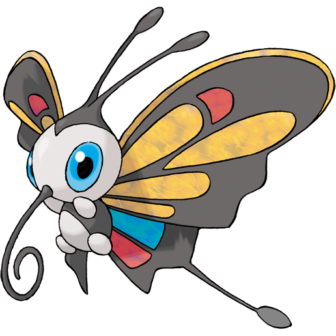
One of my favorite Pokémon of all time is Beautifly, the swallowtail butterfly who debuted back in Ruby and Sapphire. She’s a mainstay of my team in every game I can find her in, and during a regular playthrough she tends to hold her own well enough. However, as I’ve been getting more into competitive play with Pokémon Champions, I’m now vividly aware that my girl’s weak stats would make her the Achilles’ heel of my team. In fact, Beautifly would be an absolute liability in ranked matches whenever she’s added to the game.
For decades, this hasn’t really concerned me. I’ve approached Pokémon games as RPGs with casts of characters I interacted with because I thought they were cool rather than as spreadsheet simulators of min-maxed stat rigging and IV training. There’s a famous quote from Elite Four member Karen in Pokémon Gold and Silver that succinctly gets to the heart of this mindset.
Strong Pokémon. Weak Pokémon. That is only the selfish perception of people. Truly skilled trainers should try to win with their favorites.
This is in line with the philosophy the series has always put forth, whether it be in the games, anime, or manga: Pokémon are friends, not simple fighting machines, and turning its competitive battles into a depersonalized game of math and analytics is not the vibe. Characters have treated “weak” Pokémon like failures, and the story goes out of its way to illustrate that this is antithetical to the ethos of the franchise. But still, it is harder to climb the ranks if you’ve got a little wimp dragging the team down.
I took a long time to warm up to playing competitive Pokémon because I had basically been taught that my favorites weren’t “viable,” and that if I wanted to win matches I would have to succumb to the meta with new Pokémon instead of fighting alongside my preferred critters. With over 1000 Pokémon, they can’t all be “optimal,” and in fact, when I asked players, a lot of them said they don’t really care if their favorite sucks in battle. After a childhood spent being berated by local competitive players for prioritizing the Pokémon I liked most, it’s refreshing to know that, for a lot of people, battle prowess and metagaming are hardly priorities.
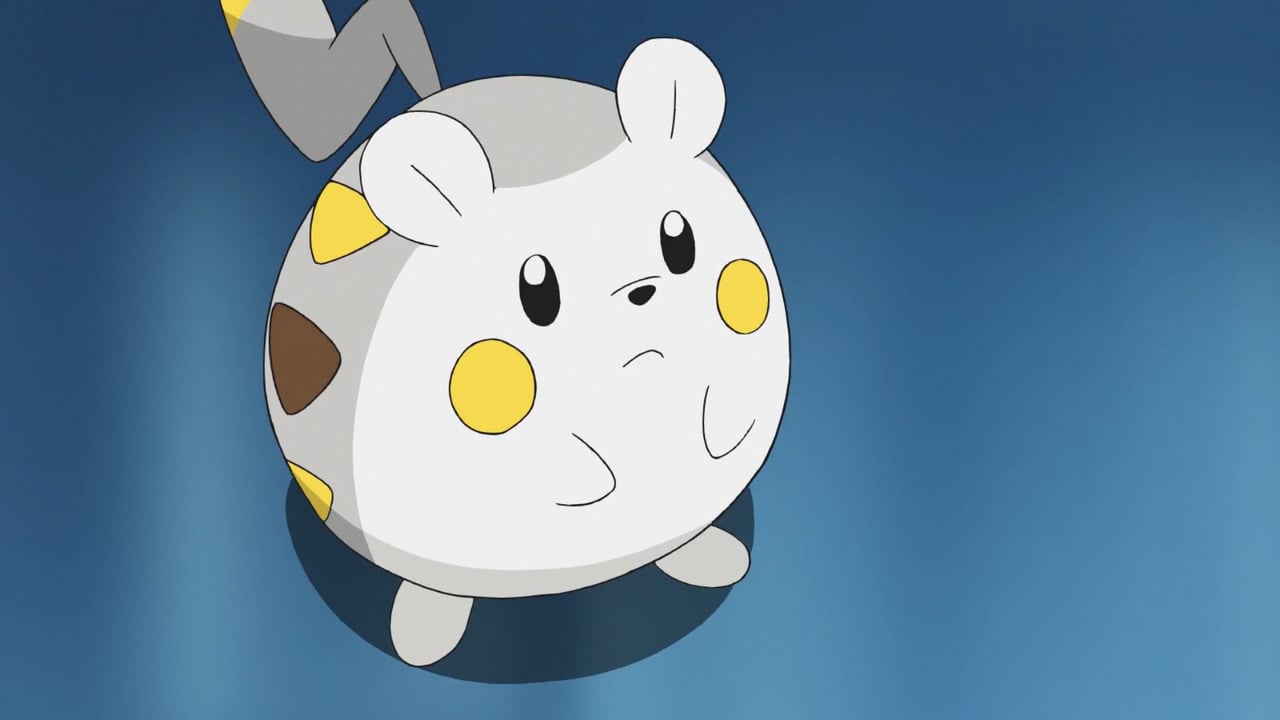
Jay Stevens, a software engineer and “self-professed electric-type stan,” told me about his love for Togedemaru, one of the “Pikachu clones” Pokémon has rolled out over the years. Though he says he initially wrote Togedemaru off because he could tell the electric/steel rodent wasn’t very “good” in a traditional sense, a fanmade Pokémon roguelite he played required him to make do with the little guy and made it “more than dex filler.”
“He’s not the best Pokémon on the team, but he’s the team cheerleader for sure,” Stevens says. “Having him on my team just makes me happy; he’s a cute little guy! I underestimated him before, and now I estimate him properly. (He still isn’t very good.)”
Some Pokémon bonds are forged in the fires of hell, while others are nurtured over years of repeated random encounters. Jacob Bench, a college student and Zubat lover, says that he still keeps the meddlesome bat on his team while holding an Everstone, ensuring that it will never actually evolve no matter how much it levels up. So not only does he love Zubat despite its lack of competitive viability, but he’s actively ensuring it doesn’t become more powerful by evolving into Golbat and then Crobat.
“My love for Zubat runs deep,” he says. “I have six Zubat plush for a full ‘party’ and when my nephew was born earlier this year I bought him one to start the indoctrination.”
Mashfiq Ahmed, a teacher with an affinity for Minun, another Pikachu clone from Ruby and Sapphire, recalls that his friends thought it was “weird” that he was fixated on the rodent when playing through Pokémon Emerald. Minun is a sort of gimmick Pokémon that was made to illustrate the double battles added in Generation III, and is often paired with Plusle, who is essentially the Pokémon’s twin, and each one is pretty much useless without the other. For Mashfiq, the connection tied into his family’s Bengali history, and his “daak name” or “call name,” Minhaz, by which his family referred to him.
“Growing up as someone with an uncommon name in the United States, I never really saw it anywhere in public. You would never find ‘Minhaz’ on a keychain in a gift shop or hear it as the name of a character on TV. So seeing a Pokémon with the same first three letters as my daak naam meant the world to 9-year-old me. I immediately nicknamed the Minun I caught ‘Minhaz.’ Looking back as an adult, I realize that what made that connection so meaningful was a sense of representation. I rarely encountered anything that felt connected to my identity, so finding a Pokémon whose name began with “Min” felt special. Even though it was a complete coincidence, it made me feel seen as a kid who almost never saw his name reflected anywhere.”
Some Pokémon are meant to be weak, and training them is meant to be a challenge. Metapod, Kakuna, Silcoon, and Cascoon are examples of cocoon Pokémon that evolve into fully formed bug-type Pokémon. They have basically no attack moves and their only practical use is as early game tanks that Harden their way to high defensive stats. They don’t have to reach high levels to hatch, but for young players who haven’t learned patience, it can be a real drag. However, that can also be a lesson in its own right.
“When thinking about a Pokémon that may have little utility in battle but I absolutely adore, I keep coming back to Metapod,” Jerrard Wyche, host of the podcast The Very Best, says. “Outside of serving as an early-game defensive stalwart, Metapod is virtually nothing more than a patience skill check for trainers. I remember it being one of the first times in video games where I learned that a little bit of patience and ingenuity (swap-out training method) could be so rewarding. In a lot of ways, I believe both Metapod and Kakuna were intentionally implemented to deliver a lesson to players that would ultimately be paid off through the Magikarp to Gyarados evolutionary line. Teaching young kids that investing time in a task that feels tedious can sometimes yield extraordinary rewards. Also, as with many young kids, I was fascinated with the whole caterpillar-to-butterfly process, and Metapod gave life to a stage that felt lifeless.”
Welcome to Exp. Share, Kotaku’s Pokémon column in which we dive deep to explore notable characters, urban legends, communities, and just plain weird quirks from throughout the Pokémon franchise.
Sometimes it’s not even that deep. James Travis says that Krabby, a fairly weak Pokémon from the first generation, will always be his favorite, even when there are far more powerful monsters to catch.
“He’s just a dumb little crab and I love that there’s room for him in Pokémon alongside sand sharks and psychic fox witches and the actual god of creation,” Travis says. “It only takes three decent Pokémon to beat the elite four in Red and Blue. Krabby will always, literally and figuratively, be in my Hall of Fame.”
Pokémon can look super cool or cute and the odds can still be stacked against them by bad stat distribution or movepools. Ledian, a ladybug Pokémon that looks like it would be able to throw a punch or two based on its gloved hands, is widely considered one of the worst fully evolved Pokémon because of its nonsensical stat distribution of decent special defense and terrible everything else, but it still looks like a friend.
“Love [Ledian’s] design, it’s got moxie (as in attitude, not the ability) but I would never use it in a proper team,” Michael Beckwith says.
Ultimately, most folks don’t play competitive Pokémon, so the numbers and movepools are usually a non-factor in why we love specific critters. The single-player RPGs are more or less balanced in a way that lets you play with who you want without too much trouble as long as you’re training them properly and have good type coverage. Most of these games have players trying to become champions, but realistically, we can’t all be competitive stars. There’s gotta be a place in our hearts for the companions who are there to look cute, help us with mundane things beyond battle, and fill out the world of Pokémon outside of competitive sport. Though competitive players may find niche uses for even the weakest Pokémon, if the series has taught us anything, it’s that not every monster has to be able to fight god to burrow its way into your heart.
https://bsky.app/profile/hadeeljeanne.com/post/3movrixap622u
https://bsky.app/profile/elisarockdoc.com/post/3movrk5cb3c2x