The Marvel Cinematic Universe is, as Deadpool said in Deadpool & Wolverine, “at a bit of a low point” heading into December’s Avengers: Doomsday. Its multiverse saga hasn’t panned out the way it was supposed to, several of its superhero movies haven’t been able to capture audiences like they did leading up to the climactic battle against Thanos in Avengers: Infinity War, and the push for Disney+ series has made the entire interconnected universe such a commitment to keep up with that a lot of more casual fans have either found themselves kind of lost watching the movies as they come to theaters or have just hopped off the train entirely. Spider-Man is still putting butts in theaters, but that’s because people love to watch Peter Parker be sad, even if they don’t care much about the MCU as a whole.
Looking back at Marvel’s nearly 20 years of superhero movies, what we see is a collection of high highs and some real bad lows. All in all, its trajectory from cultural powerhouse to middling, inconsistent, and confused package of movies that can barely form a coherent throughline is pretty fascinating. Let’s rank all the movies so far.
38. Thor: The Dark World
The second Thor flick has widely become the default selection for worst Marvel movie in series rankings. The first two Thor movies are sauceless but the pieces are there for something great, as Thor: Ragnarok would prove six years after the original. The Dark World, however, utterly lacks the personality and zest that future installments would find. Tom Hiddleston and Chris Hemsworth have great chemistry as Loki and Thor and sell some of the film’s heavier subject matter, but they can only carry it so far when it’s weighed down by some of the least interesting lore in the series and a villain I couldn’t identify in a line-up. — Kenneth Shepard
37. Eternals
2021’s Eternals boasted a star-studded cast and an interesting premise following immortal superpowered aliens, but neither could elevate what was ultimately a wooden film that failed to adequately utilize its talent. Additionally, almost everything that happens in this movie has been rendered meaningless by subsequent plot developments, so all that’s left is the interpersonal drama of an ensemble cast that Marvel was quick to cast aside when the audience didn’t latch on. It’s a shame that Marvel had more incredible acting talent on screen than in any film since Endgame, and they just squandered it with a lifeless script. — Kenneth Shepard
36. Thor
The original Thor is better than The Dark World, generating some intrigue as it gradually reveals Marvel’s spin on Norse mythology, but that’s about it. Hiddleston is, once again, the standout in a cast that could have thrived with a better script, but Thor is mostly a dry fantasy film masquerading as a superhero romp. It’s got soap opera dramatics that make the most of some of its actors’ talents, but without the wit and humor of later films, it’s just a forgettable hero’s journey. — Kenneth Shepard
35. Ant-Man and The Wasp: Quantumania
Kinda crazy that this movie was so disastrous, it played a part in derailing the MCU for a few years, huh? Quantumania isn’t solely responsible for Marvel’s years of course correction and pivoting away from Jonathan Majors’ Kang as the big bad, as the actor’s very public legal troubles resulted in him being plucked from the MCU altogether. But if the movie had gone over better, the company might have just recast the multiverse-bending villain instead of pretty much pretending he never existed. Paul Rudd is as likeable a lead as ever, and no one with any taste would ever say no to putting Michelle Pfeiffer on film, but sadly the end result is a chaotic mess of fake science, constant sensory overload, and jokes that go on just long enough to not land. At least Rudd is coming back for Doomsday and can hopefully get a palate cleanser. — Kenneth Shepard
34. The Incredible Hulk
The second movie in the MCU is often forgotten despite being a mostly serviceable origin story for the big green guy. The Incredible Hulk stars Edward Norton, who would be replaced as Bruce Banner by Mark Ruffalo in future appearances, and as such, a lot of people who come in late to the Marvel universe tend to skip it. You’re not missing much if you already know the Hulk’s whole deal, though some references to its characters in Captain America: Brave New World might go over your head. But this was before the MCU became the juggernaut it did, and it’s mostly a bog-standard superhero origin story that Marvel wouldn’t revisit for 17 years. — Kenneth Shepard
33. Thor: Love and Thunder
While Thor: Ragnarok would perfectly adapt Marvel’s take on Norse gods into a whipsmart, slapstick action comedy, 2022’s Love and Thunder is the result of too much of a good thing. Ragnarok director Taika Waititi also brings his signature brand of rapid-fire joke delivery to this follow-up, but it’s devoid of most of the thematic richness that made its predecessor both sugary sweet and filling. Love and Thunder cranks the jokes up to 11 and makes Thor such a goofball that some of the more emotional beats are hard to take seriously. The movie has easily Natalie Portman’s best performance as Jane Foster and Christian Bale makes the most of his appearance as Gorr the God Butcher, but beyond that, the movie is empty calories. — Kenneth Shepard
32. Captain America: Brave New World
The Falcon and the Winter Soldier wasn’t my favorite MCU show, but at least it was willing to reckon with what it meant for a Black man to wield the Captain America shield and represent a country that has done nothing but bring Black people down. Captain America: Brave New World finally gives Sam Wilson the suit, but it’s so preoccupied with maintaining the status quo that it doesn’t so much as touch anything controversial. Rather than advocate for people suffering under a broken system, it fence-sits and suggests we just need to see the good in people. The people who are wielding their power to strangle the life out of the marginalized? No thanks. A more radical version of this story, or even one that was consistent with the one The Falcon and Winter Soldier started, would burn it all down. — Kenneth Shepard
31. Iron Man 2
The second Iron Man is easily the least memorable entry in the Robert Downey Jr. trilogy. Sure, it introduces Scarlett Johansson as Black Widow and brings in Don Cheadle to take on the role of War Machine, but in the grand scheme of the MCU it’s not all that impactful. Downey remains captivating as tortured genius Tony Stark, though. The MCU was still finding its footing as an interconnected web of heroes and villains in this era, and it would reach greater heights with Stark in the future. But this sequel is mostly just a serviceable follow-up to the film that started the whole thing. — Kenneth Shepard
30. Black Widow
Florence Pugh carries Black Widow, one of the most confounding MCU movies to come out this side of Endgame. It’s a prequel that would have felt more appropriate in the first phase of films but mostly exists to give Scarlett Johansson flowers after she’d played a supporting role in everybody else’s movies. She deserved it, at least. Natasha was dragged into every female archetype Marvel could conceive of as she played second fiddle to a bunch of men and then died in Endgame. By the time Black Widow came out in 2021, going back to finally fill out the backstory of one of the MCU’s oldest mainstays felt odd, but the end result is still a pretty fun spy film that introduces a new dysfunctional family to the Marvel mix. Again, Pugh’s performance as Natasha’s sister Yelena is worth the price of admission. Otherwise? It’s fine. — Kenneth Shepard
29. Ant-Man
The first Ant-Man movie was a bit of a risk. Before the movie premiered in 2015, there was a question as to whether or not one of Marvel comics’ smaller (no pun intended) heroes could carry his own film. Paul Rudd, the likable everyman, sells the shrinking, reformed criminal’s rehabilitation from petty thief to heroic dad, and the film’s constant shifts in scale make for some clever action setpieces that are both silly and thrilling. It may not have the same punch as the Avengers-level epics that precede it, but Ant-Man is a pretty good reminder that there’s plenty of heart in Marvel’s nooks and crannies. —- Kenneth Shepard
28. Spider-Man: Far From Home
The middle entry in the MCU’s Spider-Man trilogy isn’t a bad or boring movie. Instead, it’s just mostly forgettable. A big part of the problem is that it is so intertwined with the MCU, and especially with Avengers: Endgame, which hit theaters just 13 weeks earlier, that it almost feels like an Avengers epilogue more than a proper standalone Spidey movie. And sure, Jake Gyllenhaal is great as Mysterio, but anybody even slightly familiar with Spider-Man knew he was a baddie the whole time. Making matters worse, revealing that his villainous origin is directly connected to the original Iron Man movie just makes this oddball European side quest feel even less like a proper Spider-Man sequel. — Zack Zwiezen
27. Avengers: Age of Ultron
The second Avengers film is full of fun moments held together by gum and string. We’re past the catty banter of the first movie and the Avengers are mostly friends now. The bit in which heroes take turns trying to lift Thor’s hammer is a classic MCU scene that riffs on the group’s dynamic without devolving into whedonisms, and James Spader’s monologues as killer AI Ultron are spine-chilling. Age of Ultron’s greatest asset, however, is the introduction of would-be staples like Vision and Scarlet Witch. Unfortunately, it falls apart in its attempts to tie everything that’s happening into a neat bow to later be unwrapped in Infinity War, struggling to balance its ties to the extended universe with being a coherent standalone film. But hey, at least we got the cool moment of Vision picking up Thor’s hammer without breaking a sweat. — Kenneth Shepard
26. Thunderbolts*
Thunderbolts* has some cool ideas. It’s pretty concise in scope, even as a team-up movie. It has some clever espionage set-up that it delivers on with an entertaining swagger, well-choreographed fights, and pretty poignant themes about not giving in to the abyss of one’s lifelong trauma. But it also indulges in the trademark Marvel smarminess in such an unrelenting fashion that I have trouble taking the film at face value. It so often follows up moments of vulnerability that highlight the “power of friendship” by retreating behind walls of insincerity that it’s ultimately disorienting, leaving you unsure if we’re meant to see any of it as genuine or view the whole thing as one big, elaborate bit. Still, Florence Pugh is a delight, and when it’s her movie, it’s great. Unfortunately, though, Bucky and everyone else are basically just along for the ride, swept up in the story’s momentum rather than having any real influence on it themselves. For a movie about a bunch of characters claiming to want to find new lives for themselves outside of the trenches of merc work, it’s disappointing that you never get the sense any of them are actually in control of their own destiny. — Kenneth Shepard
25. The Marvels
Ms. Marvel was, I think, Disney+’s most successful TV series set in the MCU. Obviously WandaVision was stunning, but the lower stakes, smaller scale nature of Ms. Marvel belied a show that had enormous, intricate depth. Its coming-of-age focus, echoing the best of Spider-Man, combined with its portrayal of a loving, complicated, and ebullient Muslim-American family, made it feel so warm. And on top of this, it was an astonishing history lesson about the horrors of the 1947 partition of India. You should watch it. Also, you should watch it as a primer for The Marvels, in which we see the union of Captain Marvel, Ms. Marvel, and Monica Rambeau, in conflict with the Kree.
The Marvels may not have the greatest narrative in the MCU, but it’s bursting with happiness, and that’s something we should grab with both arms. It’s just lovely! It’s lovely people being lovely in difficult circumstances, and it offers the most wonderful opportunity for Kamala Khan’s family to shine once more. I love that this movie exists. —John Walker
24. Doctor Strange
Bringing Benedict Cumberbatch’s Stephen Strange into the MCU gave Marvel an easy magical out it’s overrelied on in situations that followed, but on its own, Doctor Strange is one of the strongest origin stories in the series. Cumberbatch, coming off of his stint as Sherlock Holmes, can sell the insufferable genius humbled by those wiser than he, and watching him go from a selfish bastard to a selfless one is satisfying. This was also the first time the MCU had really delved into the sorcery side of the comics, which leads to some of the most compelling special effects and setpieces the series had up to that point. Doctor Strange may have become a party trick the MCU would whip out in future installments, but his first movie was a breath of fresh air that opened the universe to new possibilities. — Kenneth Shepard
23. Ant-Man and the Wasp
By the time Ant-Man and the Wasp came out, any hesitation fans felt about whether or not Rudd’s size-scaling hero could endear himself to the larger MCU audience was pretty much silenced after he carved out his own space among the biggest heroes in Captain America: Civil War. Ant-Man and the Wasp leans harder into the quantum physics side of Scott Lang’s story and manages to keep it grounded and comprehensible in a way that Quantumania didn’t. Also, shoutout to Hannah John-Kamen’s Ghost, who is one of the coolest villains from this phase, and thankfully now part of the New Avengers after Thunderbolts*, so we’ll be seeing her a lot more. — Kenneth Shepard
22. Iron Man 3
The third Iron Man movie came after the first Avengers, which means it’s the only movie with the name of Tony Stark’s superhero alter ego in the title that gets to really reckon with the bigger picture. By this point, Tony has seen some shit, fought aliens, and met Norse gods. He’s come a long way since his days as a mere billionaire genius playboy philanthropist. Iron Man 3 paves the way for the sacrifices Tony will have to make in Infinity War and Endgame, exposing the broken core underneath the metal suit exterior. On the other hand, its mishandling of villain the Mandarin is one of the MCU’s most notable misfires, though at least Shang-Chi managed to iron out some of those kinks eight years later. — Kenneth Shepard
21. Captain America: The First Avenger
The first Captain America movie is still one of the most interesting takes on an origin story in the MCU. It starts as a period piece in the 1940s showing Steve Rogers becoming a symbol of the wartime American ideal, fighting Nazis and wielding his iconic shield. (Sadly, as the MCU has become more of a fence-sitting corporate product that’s seemingly scared of alienating anyone, the series has gotten less willing to sit with what it means to be a representative of that ideal, as exemplified by Brave New World.) The First Avenger is an idealistic movie led by Chris Evans at his most golden retriever, and it feels strangely classic Hollywood in a way Marvel hasn’t felt in a while. The funny thing about looking at old MCU movies is that you realize just how much of the identity of individual heroes has been lost as the franchise has been put on the assembly line. The First Avenger may not have been a spectacular film but it at least had a voice and perspective, unlike the several dozen other movies in the series that could have been made by anyone. — Kenneth Shepard
20. Captain Marvel
Brie Larson’s debut as Captain Marvel was highly anticipated, admittedly a bit confusing, but on the whole a buoyant entrance. Initially referred to as Vers and stricken with amnesia, Carol Danvers trains among the Kree on the planet Hala until she’s captured by the Skrull and taken to Earth, where she connects with Nick Fury and, with the help of the Rambeaus, manages to regain her memories. Discovering that her long-time Kree mentor Yon-Rogg has actually been manipulating her this entire time to his own ends, Danvers awakens her powers as Captain Marvel and manages to break free of the many forces seeking to control her life and mind. The actual Marvel-y nuts and bolts of the story made my head spin when I first saw it and still confuse me today, but what shines through in Captain Marvel is its heart: it’s about a powerful woman who’s been kept down for a long time, and manages to bust right out with joy, and without apology. Sometimes, you just want to see a cool lady land some good punches, ya know? — Rebekah Valentine
19. Doctor Strange in the Multiverse of Madness
If it were up to me, as it should be, this would be the number one film. Yeah, yeah, it has an almost incoherent plot, and Spider-Man: No Way Home does multiverse cameos vastly better, and it forgets that character development is even a thing…Yeah, I know. But now, imagine if your favorite film growing up was Evil Dead 2. See? Whole different framework.
Multiverse of Madness is, I contend, Evil Dead 4. Everything is there! Obviously, it’s directed by Sam Raimi, the mastermind behind the original Evil Dead trilogy, and of course Drag Me to Hell, A Simple Plan and 2002’s Spider-Man—that’s a great start. Then of course it features all of Raimi’s signatures, from the appearance of his Oldsmobile Delta 88 (the original car from the Evil Dead movies) to a cameo by Bruce Campbell (the star of all three Evil Dead movies), and indeed the camera rushing forward to suggest impending danger (the core camera move in the Evil Dead movies). But more than that—and there are people who pooh-pooh this because they’re wrong—it’s a horror movie!
Sam Raimi somehow snuck a horror movie into the MCU. I know I’m right, because when showing my 10-year-old all the MCU movies, this is the only one he asked to stop watching because it was scaring him too much. So, fact. It’s made like a horror movie, it’s framed like a horror movie, it’s directed like a horror movie. It’s actually a bit scary in places!
But perhaps more importantly than anything else, there’s the scene in which Bruce Campbell plays Pizza Poppa. After insisting that America Chavez pay for her pizza roll, Strange casts a spell on him that causes him to squirt mustard in his own face, then beat himself up with his own hands. Which, as you will know, is a callback to Evil Dead 2’s greatest scene, when Ash’s hand becomes possessed. And that makes this Evil Dead 4, and I don’t care that you think the film shat on Wanda, because none of that matters. Thank you. —John Walker
18. Black Panther: Wakanda Forever
The death of Chadwick Boseman was a profound loss: for his family, his fans, and the Black Panther franchise he carried upon his back. I’m glad he was not recast for the sequel, with Disney choosing instead to settle the mantle on his sister Shuri. Letitia Wright did well enough but the movie was carried by Angela Bassett as Queen Ramonda and Tenoch Huerta’s Namor, the king of an Aztec-inspired underwater civilization who came to the surface to enact revenge on humans for perpetrating genocide against his people. Wakanda Forever suffered not only for Chadwick’s loss but also for its narrative. It kinda sucks that Disney decided to let its most richly designed POC-allegory nations duke it out against each other in some kind of superhero-powered oppression Olympics. The movie also demonstrates a shallow understanding of its audience while playing into the unfounded white anxiety that the POC they’ve wronged throughout history will one day want to come back and kill them all when all we really want are equal rights and to be left the hell alone. — Ash Parrish
17. Fantastic Four: First Steps
Fantastic Four: First Steps is one of the more refreshing movies the MCU has produced since Endgame. Its ‘60s-inspired retro aesthetic carves out its own identity in a series of films that have all started to look the same, but where it really stands out is in being one of the most earnest and optimistic movies in the entire saga. The First Family is an inspirational symbol for everyone on their alternate Earth, and they tackle a world-ending threat with a surprising amount of uncomplicated love for the people they protect. First Steps is idealistic and sentimental, and somehow manages to get those feelings across while galaxy-ending threats loom over its heroes. This movie feels more evocative of the breezy origin films of the early MCU than the series’ more weighty, self-important later entries, and as such, it’s a bit understated and might feel like filler if it didn’t star such important characters finally making their official entry into this series. But at its heart, it’s a feel-good movie about a family just trying to keep it together. I can’t fault it too much when it marks the first time in a hot minute that an MCU movie hasn’t had me leaving the theater feeling like I need to go wash off the snark my body has accumulated over two hours. — Kenneth Shepard
16. Deadpool & Wolverine
Ryan Reynolds and Hugh Jackman came barreling into the MCU right through the fourth wall in 2024, and the meta-action comedy that emerged as a result has some standout moments. Deadpool & Wolverine serves as a sort of eulogy for all the old Marvel movies that existed outside the “official” canon of the MCU, and the resulting cameos are pretty great. But the best part of the movie is its two leads, who finally get a redemptive team-up after the crime against comics that was X-Men Origins: Wolverine. If you can’t stand Reynolds’ brand of rapid-fire raunchy one-liners, even when it’s balanced by Jackman’s brooding angst, the third Deadpool probably won’t do it for you. But if you can, you should; rather than just wiping the slate clean, Marvel took an opportunity to merge its disparate universes together and ran with it, and the results are as unexpectedly poignant as they are hilarious. — Kenneth Shepard
15. Iron Man
Rewatching 2008’s Iron Man, the movie that kicked off the entire MCU, is wild. After nearly 20 years of movies, TV shows, and spin-offs, the first Iron Man feels so small and contained, with only a few tiny nods to the greater Marvel universe. And then it ends with a post-credits scene setting up The Avengers and the next 20 years of MCU movies, even if we didn’t realize it at the time.
As a result, Iron Man is a very important piece of the MCU, but it’s a solid sci-fi action flick, too. Iron Man also feels very much of its era, terrified to reveal that it’s a comic book superhero movie at a time before such movies had completely taken over the multiplex. That doesn’t matter because of Robert Downey Jr. and his incredible performance as Tony Stark aka Iron Man. The dude nailed it so hard that every version of Iron Man since has copied him. Meanwhile, Stark has gone on to become—for better or for worse—the most popular character from the MCU. – ZZ
14. Spider-Man: Homecoming
Bringing Spider-Man into the MCU after two earlier franchises still fresh in moviegoers’ memories was also going to be tricky. Thankfully, Marvel realized that the key to making Spider-Man work in the MCU was to focus on what made him so different from the other heroes. The MCU is filled with a lot of folks who don’t have secret identities or even traditional powers. It’s a lot of gods, aliens, robots, mercenaries, and enhanced people. But for Spider-Man, Marvel producers kept the character a teen trying to balance crimefighting with high school while living in NYC. It’s a winning formula that is helped out a ton by the fact that Homecoming skips the origin story that everyone knows already. Add in one of the best villains in the entire MCU and arguably one of the most tense scenes ever included in a comic book movie and you’ve got yourself a damn fine Spidey flick. — ZZ
13. Shang-Chi and the Legend of the Ten Rings
Shang-Chi and the Legend of the Ten Rings might be one of the most criminally underrated movies in the MCU’s catalog. Its sequel has been mired in development hell and swallowed up by Marvel’s shifting priorities, but the studio’s take on a superpowered martial arts film is still quietly one of the studio’s most impressive outings. Shang-Chi starts with mostly practical, well-choreographed action set pieces, all framed in a dramatic family soap opera that maintains its grounded humanity even as the otherworldly elements ramp up in the second half. By the time it turned into Marvel CG sludge, I was already too invested to be annoyed at the film’s distinct voice falling victim to the same nonsense plenty of other Marvel movies do. And can we also talk about that soundtrack? I know Black Panther gets a lot of love for its Kendrick Lamar-curated music, but Shang-Chi’s is also full of bangers. Good film. Gimme a sequel, Marvel. — Kenneth Shepard
12. Guardians of the Galaxy
I may be an outlier in thinking the Guardians of the Galaxy movies only got better as they went, but I’d argue that the first is the least of the three. Star-Lord and friends’ intergalactic adventures benefit from having one director in James Gunn across all three films, the same cast whose chemistry only grew stronger with each installment, and a clear arc for its heroes that didn’t have to bend to the whims of the MCU’s overarching storyline. The first movie effectively brings five heroes together who should have wanted nothing to do with one another and makes you believe they could become more tight-knit than any other team in Marvel’s catalog. That being said, its villain is forgettable and I don’t think the movie is as funny as it thinks it is. But hey, it led to the other two films which are some of the best in the MCU. — Kenneth Shepard
11. Spider-Man: Brand New Day
After the near-cataclysmic ending of Spider-Man: No Way Home, Peter Parker gets a tragic reset as he walks through a world that has forgotten him. He lives a solitary life, essentially becoming Spider-Man and no one else to the rest of the world. So by the time that his spider-DNA starts to overtake his human side, he’s also become so tunnel-visioned on his superhero life that he forgot to be a person. Brand New Day scales back from No Way Home and gives us a Spidey who feels the closest to the “friendly neighborhood Spider-Man” Peter said he wanted to be. It has its moments of MCU crossover and larger-than-life threats, but the movie manages to bring in familiar faces without losing sight of the lessons Peter has learned, and that he helps Jean Grey (Sadie Sink) learn tas well. It can’t undo the damage the events of No Way Home did to Peter’s life, but it does a lovely job of illustrating that there is a path forward. — Kenneth Shepard
10. Captain America: The Winter Soldier
Looking back on The Winter Soldier after having just seen Brave New World only makes this earlier entry look even stronger. Whereas the latest Captain America loves to sit on the fence and say we should find the good in America, The Winter Soldier is all about how deep the rot goes. The espionage thriller explores parts of Steve Rogers’ buried past and how the same monsters he fought in the 1940s have persisted decades later. It was bold of Marvel to completely upend the foundations it had built and force Captain America to make hard choices. What a shame that, when a Captain America who stands against corruption would really hit, Marvel’s put the gloves on and given us a version of the character who doesn’t live up to that part of the legacy.— Kenneth Shepard
9. Guardians of the Galaxy, Vol. 2
Guardians of the Galaxy, Vol. 2 is about as close as the MCU has come to doing a one-shot comic storyline. It’s mostly disconnected from the rest of the films but uses all that freedom to really dive into its heroes’ deepest traumas, and its best moments come when people are just talking to one another. Mantis touches Drax and feels his grief with her empath abilities, Rocket and Yondu get into a shouting match because they’re two bullheaded men who can’t see past their own noses, and Gamora and Nebula stop trying to kill each other and hash out decades of unresolved sisterly trauma. Then there are the moments that are expressed without words at all, like Star-Lord opening fire on his own father after he nonchalantly confesses to killing his mother. Vol. 2 is not a subtle film. It bluntly has every character look into the camera and tell you how they’re feeling, essentially making it a vibrant two-hour therapy session for them to talk about the things they were afraid to in the first movie. Yeah, they’d still have some raw wounds to poke at in future movies, but the Guardians of the Galaxy are truly united after Vol. 2, rather than a bunch of weirdos drawn together by circumstance. And come on, you can’t tell me you weren’t hyped when “The Chain” dropped in the final fight. — Kenneth Shepard
8. The Avengers
I never ever thought this movie would happen. Sure, now it seems like nothing. Marvel characters (and, separately, DC characters) pop up together in films all the time. But in 2012 the MCU wasn’t even five years old and the idea of a shared universe of comic movies was still new; for years before, superhero movies had never crossed over as all the rights were kept separate between different studios.
And then, Marvel pulled it off. Hot damn, Avengers is fun. It’s not the best MCU movie and the pacing is a bit odd in the middle, but whatever, Marvel did the big comic book team-up movie and it rocked. The action is exciting, each character is given plenty of screen time, and we finally get to see these heroes interact and it’s just the best. Thor fighting Iron Man! Cool shit! I remember seeing this movie twice in theaters because I couldn’t believe it was real. And while the success of The Avengers and the greater MCU contributed to Hollywood becoming a superhero- and IP-obsessed slop machine, it doesn’t change that the MCU’s first big crossover movie was a blast. – ZZ
7. Spider-Man: No Way Home
Yeah, No Way Home is basically 90 percent fan service. I mean, there was no way a Spider-Man movie that brings together the last three actors to play Peter Parker alongside villains from past movies in one big Doctor Strange-filled multiverse adventure was ever going to be anything but a massive fan service extravaganza. But that doesn’t diminish the fact that, in the midst of all that fan service, there’s a really good superhero movie with big stakes and some punishing losses. Watching the three Spider-Men (Tobey Maguire, Andrew Garfield, and Tom Holland) together on screen is enjoyable, and not just because they are spitting out references. Instead, we get new insights into these characters and what they’ve been doing since their last film. In one scene Garfield’s Parker is even able to get some much-needed closurein an emotional moment that I still tear up watching. And by the end, Marvel resets Peter’s life in a way that could lead to some really interesting new Spider-Man movies. -ZZ
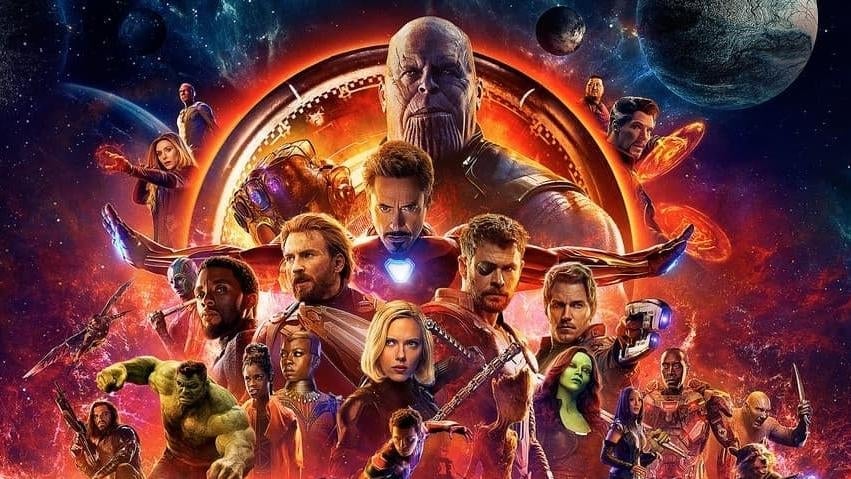
6. Avengers: Infinity War
Ideally, Infinity War and Endgame would be judged as a single work, considering this film was very clearly written as a Part 1 to Endgame’s Part 2. But Marvel released them as separate films, so we will address them as such. Infinity War is the culmination of everything the MCU had been building to at this point, but as its own movie, it’s mostly a bleak setup for a payoff that wouldn’t come for a full year. It is two-and-a-half hours of watching heroes that fans had been following for a decade face their greatest defeat at the hands of Thanos. Portrayed by the charismatic Josh Brolin, Thanos believes so wholeheartedly in the wisdom of his delusional plan to wipe out half the universe that some of the dumbest motherfuckers you’ve ever seen on YouTube are making videos about how he was right, actually. Infinity War feels like half of a film, but it doesn’t feel half-baked. It manages to bring disparate sides of the universe together in a way that is satisfying dramatically and comedically, and that paves the way for some of the most entertaining action scenes in the franchise. It was a huge pop culture moment to see the Avengers, the Guardians, and so many others come together to face a threat unlike any they’d ever faced. Even the most jaded filmgoer had to have felt something being in a theater with people who had watched every movie up to this point applauding as Evans showed up as a vigilante Captain America, or hearing the dead silence as, one by one, heroes were lost to Thanos’ snap. — Kenneth Shepard
5. Avengers: Endgame
While Infinity War was a major crossover event, Endgame mostly goes back to basics, putting the spotlight on the original Avengers as they try to fix the world Thanos broke. Because we always knew that the first film’s ending was a cliffhanger and that much of what transpired was likely to be undone, Endgame is the movie with the higher stakes and the more dramatic goodbyes. It starts out with the MCU putting on its best Oscar-bait face as everyone collectively grieves the events of Infinity War. Yeah, some of it is laughably hokey, like putting one of the Russo brothers in front of a camera to be the series’ first gay character, but when it’s sitting with the core cast of Avengers, it’s genuinely affecting. From the nostalgic time-traveling tour of the past decade to the climactic final battle, Endgame feels like a goodbye, one meticulously led to and earned over a decade of great films and mystifying stumbles. It’s a shame that the MCU hasn’t been able to capture that magic since. — Kenneth Shepard
4. Thor: Ragnarok
The stars aligned for this one. We know that now, after the dull thud of Thor: Love And Thunder. That or the writing team of Craig Kyle and Christopher L. Yost was utterly vital to Ragnarok’s incredible success—neither returned for the Taika Waititi-penned follow-up, although he directed both movies. Where Love And Thunder was a misfiring joke machine, putting plot behind a desire to just endlessly show off, Ragnarok was a dense, engrossing tale that couldn’t help but leak squillions of top-quality gags.
The stakes are incredibly high in a film that sees the loss of an entire homeworld, all while juggling the myriad of arcs from within the MCU in a way that somehow made sense. The extremes were a joy to be flung between, from an Earthly, dying Odin and the imminent release of Hela, to the camp pantomime lunacy of Thor and Hulk battling on the garbage planet Sakaar for the entertainment of Jeff Goldblum’s adorably awful Grandmaster.
This is also the movie that best handles the flip-flopping love/hate relationship between Thor and Loki, in which the inevitability of Loki’s betrayals is not something for the audience to sigh at as they see them coming but rather is integral to the plot.
Perhaps more than anything else, Ragnarok is a collection of wonderful performances. Hemsworth finds the perfect pitch for Thor’s vanity and heroism, Hiddleston is gleeful as Loki, Goldblum is the most gloriously Goldblum he’s ever been, and Cate Blanchett is just fucking incredible as the villainous Hela, the scene-chewingly wicked Disney witch Angelina Jolie wishes she could be. It’s a movie that, despite being a cog in the infinite MCU machine, works brilliantly as a standalone action comedy in its own right. —John Walker
3. Guardians of the Galaxy, Vol. 3
The third Guardians movie is an animal lover’s worst nightmare and also a beautiful culmination of the spacefaring scoundrels’ adventures. Like its predecessor, Guardians of the Galaxy, Vol. 3 has the advantage of being mostly separated from the dumpster fire that is post-Endgame MCU, and just has to focus on wrapping up the titular group’s decade-long arcs. Thank god Marvel wised up and re-hired James Gunn to wrap up the trilogy because I can’t imagine anyone else sending off the original Guardians with this much love and understanding. The crew’s journey to save Rocket Raccoon from the demons of his past is heartfelt and raw, incredibly funny, and most importantly, earned. Working together helped each of the Guardians become the best versions of themselves, and after one final mission to save one of their own, the group decides that if they’re to keep growing, they have to forge their own paths. It’s sad to see the band break up, but at least they do so having learned so much about themselves and each other. Guardians of the Galaxy, Vol. 3 is perhaps the most appropriate finale the MCU has yet created, and that’s including Infinity War and Endgame. — Kenneth Shepard
2. Captain America: Civil War
Nearly every Avengers movie has the members of its organization arguing about some shit. It was about time that all that tension came to blows as the core of a full film. Captain America: Civil War adapts one of the most iconic comic book stories into something that should not have worked within the MCU’s smaller scale, but manages to make the most of its smaller roster. Though Cap’s name is in the title, Civil War is effectively an Avengers movie that introduces some of the most important characters to the MCU and sees them stand tall alongside heroes we’d been following for a decade. Black Panther and Spider-Man’s intros are some of the most effective in the series, adding compelling dramatic wrinkles to an already complex conflict between Captain America and Iron Man. The end result is some of the most gripping interpersonal drama in the MCU, punctuated by memorable action sequences that make the most of each of the heroes. It also leaves the Avengers in shambles when their greatest threat is still looming in the distance. As a setup for Infinity War, it’s excellent. As a character study of Captain America and the lengths he’ll go in order to do what he believes is right, it’s unmatched. — Kenneth Shepard
1. Black Panther
I remember when Black Panther was first announced. I ran to my personal website on Medium and published a blog that was essentially a euphoric keysmash in all caps. In my entire life up to that point, there had been no piece of media with that kind of budget and backing that was so thoroughly, overwhelmingly BLACK AS FUCK that wasn’t also centered on our pain or exploitation. The movie itself packaged familiar Black-culture narratives in a superhero fantasy wrapper that did not shy away from darker truths. The fictional setting of Wakanda and its leader, T’Challa, represent the fantasy of an uncolonized Africa, one where Black people were able to exercise self-determination without imperial oppression. Meanwhile, T’Challa’s cousin and the film’s villain, Killmonger, is emblematic of the descendants of enslaved Africans, who won their freedom after bitter and bloody struggle and who now, like Killmonger in the film, demand respect by any means necessary. By every definition of the term, Black Panther was a cultural reset, one that gave us memes still in use today and an unforgettable performance by Chadwick Boseman. There was a reason we showed up by the busload in our Sunday best—right after church no less!—to see it. — Ash Parrish