The longevity of League of Legends is astounding. Across the industry, developers are trying to grab a share of the lucrative live-service games pie. Since 2009, the enduring popularity of this multiplayer online battle arena (MOBA) game has made it a golden goose: often imitated, but never replicated.
So how does developer Riot Games keep fans engaged after so many years? By deploying the League of Legends IP in unexpected ways. Back in 2013, the new character Jinx became the subject of a dedicated music video, and the resulting fan fervor proved there was an audience these kinds of ventures. Just a year later, Riot introduced Pentakill, a virtual heavy metal band in the League of Legends universe, which went on to release three albums.
The true watershed moment came with the launch of virtual K-pop group K/DA and hip-hop group True Damage. Members included world-renowned pop stars like Soyeon from the K-pop group (G)I-dle, Becky G, and Madison Beer. This year, Riot introduced HeartSteel, a virtual boy group that features artists ØZI, Tobi Lou, and Cal Scruby, as well as Baekhyung from the wildly popular K-pop group, EXO.
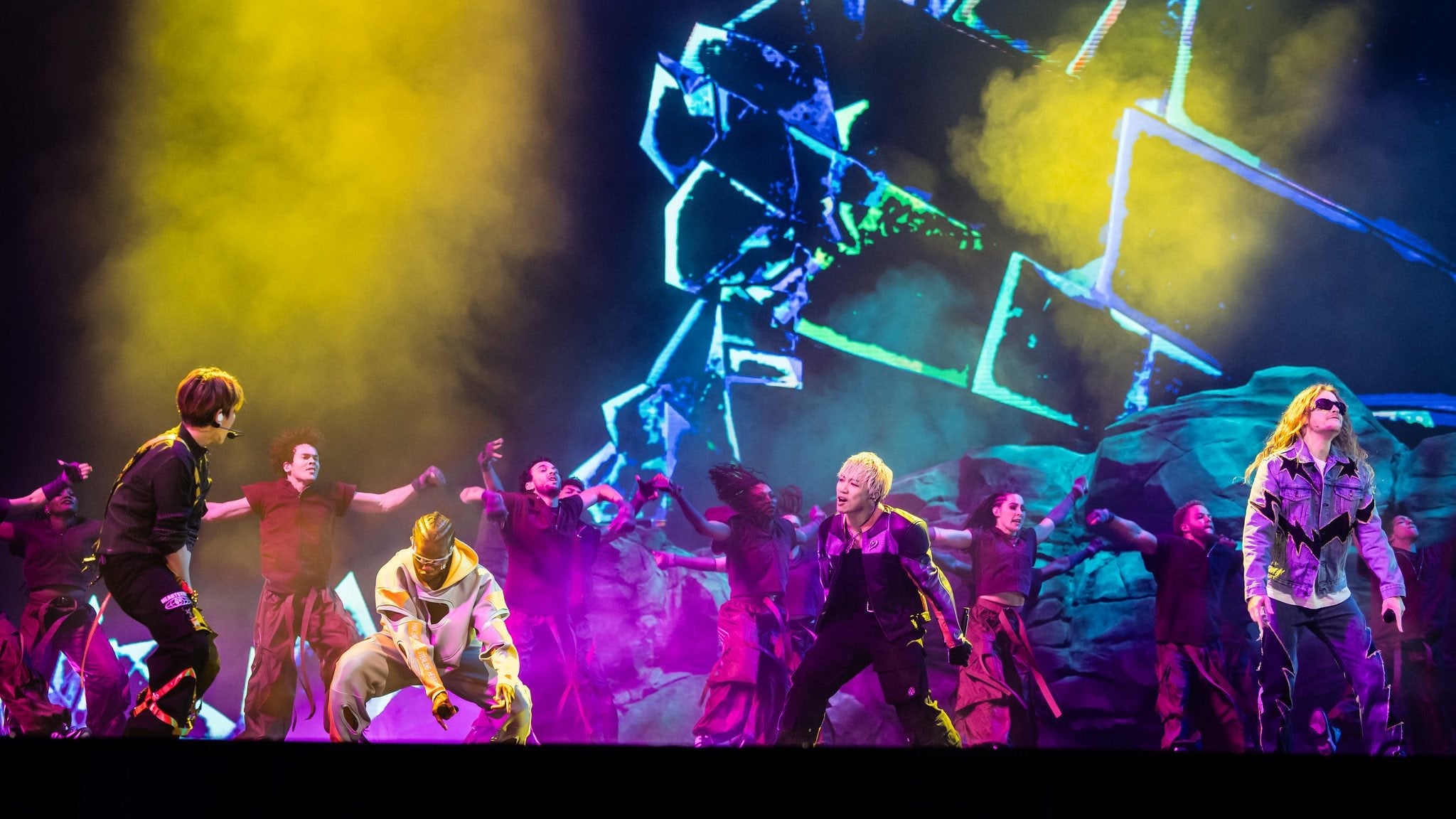
Now, on the League of Legends YouTube channel, 29 of the 30 most popular videos on the channel are music videos. And this year’s World Championship in Seoul was a perfect example of the ways in which the game has managed to transcend the medium to become a broader cultural phenomenon. It’s another way in which League is often imitated, but never replicated.
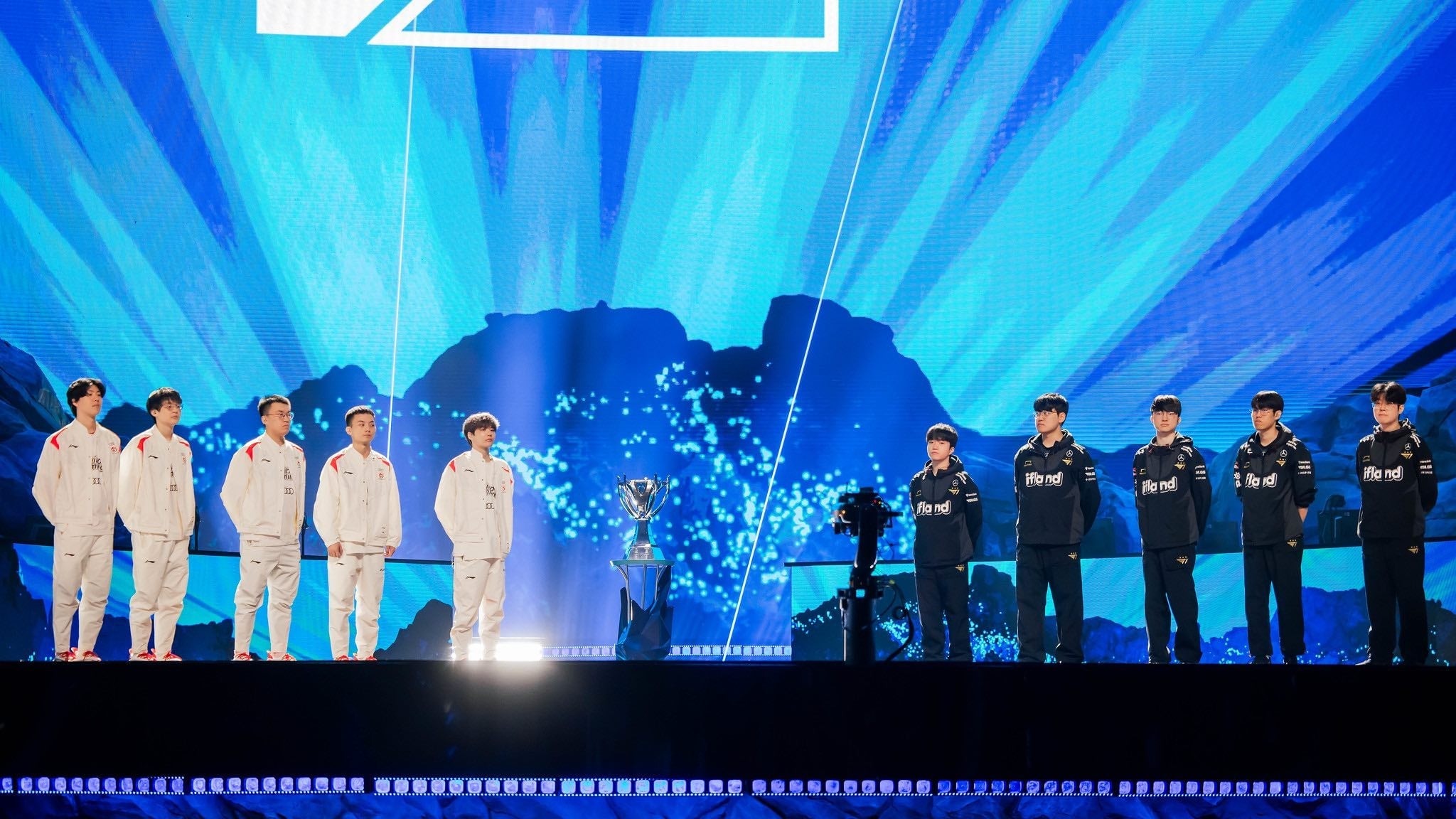
South Korea is widely known as the “capital of esports.” Of the 110 players competing in Worlds 2023, an overwhelming 40 of them were South Korean nationals. The two teams competing in the Worlds 23 Finals were China’s Weibo Gaming and South Korea’s T1, the latter featuring star player Lee Sang-hyeok, also known as “Faker.” Faker is considered the GOAT of League of Legends, and him representing South Korea is a point of national pride . When I walked into the Gocheok Sky Dome to see the Worlds 23 finals, the stadium was filled to the brim. It was as close as I’ve ever been to the Super Bowl.
Given the nation’s passion for esports, hosting the event in Seoul felt like a homecoming—even for a development team that’s largely based in Southern California.
“When we were coming back to Korea, it felt very important to have K-pop artists represented on the anthem,” said Maria Egan, Riot’s global head of music and events.
That’s why Riot reached out to collaborate with K-pop girl group NewJeans on the opening anthem for Worlds 23, “Gods.” The group’s trendy Y2K sound in songs like “Super Shy,” “OMG,” and “Hypeboy” have skyrocketed them to global fame since their debut last year. “Gods” was a left-field collaboration and a huge departure from a typical NewJeans track. Instead of bubbly pop, “Gods” is a larger-than-life anthem with soaring vocals and dramatic instrumentation. On the other hand, its subject matter is also a perfect fit for a band on the rise.
“At that time, NewJeans were really just starting to break out and become this global phenomenon,” Egan explained. “And it felt like the right story to tell—of an artist that was taking the world by storm, coming out of Korea.”
The song has drawn more than 40 million views on YouTube since its release, and NewJeans also performed the song live during the Worlds 23 opening ceremony. The music video for “Gods” tells the story of Kim Hyuk-kyu, also known as Deft. He’s part of DRX, another South Korean esports team that went on to win Worlds 22 last year against T1. DRX was the underdog in that matchup, and the end of the “Gods” music video depicts Deft and his team overcoming T1 and Faker.
NewJeans’ opening ceremony performance was also about overcoming obstacles. An actor portrayed a typical player, taking down a giant green monster. Thanks to some elaborate props and computer graphics, it made for an impressive display of storytelling and grandiose atmosphere. It was the kind of stagecraft that you couldn’t help but be inspired by.
To an outside observer, Riot’s K-Pop collaborations might seem purely transactional, an eye-catching gimmick to draw attention to the game. And sure, that element doesn’t hurt. However, these projects have drawn a devoted following among the player base, and their impact runs far deeper than just another exercise in branding.
“We’re not trying to go into the artists’ audience and borrow them. It’s really about bringing incredible music and pop culture into our world and mixing those elements together,” Egan says.
Riot’s music arm has become another way to bring in new people to the game’s universe. Despite not having lengthy catalogues, K/DA and True Damage have garnered massive fan bases—even among those who’ve never played League of Legends.
“Our players are incredibly diverse, and interested in music, fashion and pop culture in many different forms,” executive producer Jeremy Lee adds. “It’s not about creating something that will attract a new audience, but creating something that will really resonate.”
K/DA’s “POP/STARS” song was released back in 2018 and its music video on YouTube has a staggering 576 million views. “I don’t play League like… at all, but those cinematic clips and trailers make me so satisfied and I can’t handle it,” one commenter said. “Now, four years later [I’m] once again listening and most importantly watching this clip. And it’s still amazing.”
On True Damage’s 2019 “GIANTS” music video, another commenter wrote, “I don’t play LoL but I would always listen to this, idk what made me come back 3 years later but it still slaps so hard.”
“Music has this way of transcending time,” Egan adds. “Finding that audience is not the challenge. It’s just expectations and exceeding them.”