Genres are broken. Broken, I argue, beyond repair. We need to crumple them up and throw them all away.
Genres always were broken, of course. They are, as with any other form of human-invented categorization, arbitrary. The notion of labeling any specific game as one “type” is inherently nonsensical, all art existing on an infinite spectrum, the boundaries of labels drawn utterly subjectively. That’s been the case forever, and it’s notable that about 15 years ago there were growing calls to abandon genre titles altogether as they felt so needlessly restrictive and confusing.
Of course, instead, we went in exactly the opposite direction and quadrupled down on the concept, as we entered the Era of Tagging. As we desperately tried to maintain some sense of order while the number of games released swelled from “a manageable few” to “thousands a month,” we relied on genre tags to try to establish some notion of control. Except, oh dear God, it was done with no sense, understanding, meaning…it’s been sheer semantic vandalism, and the result is carnage.

It’s really important that everyone’s on the same page regarding the subjective nature of genres. And for help, let’s look at fruit! You have, no doubt, either been the person, or been subjected to the person, loudly announcing that tomatoes are, in fact, not a vegetable actually, because they have internal seeds and so they’re a fruit. But, of course, tomatoes are actually a berry. Although a berry is a type of fruit. But it’s eaten, to quote Wikipedia, “as a vegetable.” Because “vegetable” is the word for the part of any plant that’s eaten as food. So all fruit are vegetables. So tomatoes are, of course, vegetables. And fruit. And berries. And broccoli is a flower. Pistachios and coffee beans are drupes, which are fruit. Avocados are maybe a drupe, maybe a berry, but definitely a fruit. Figs are an infructesence, filled with a multitude of single-seeded fruits (well, drupelets) created as a result of the pollination from specialized fig wasps, all surrounding the central “false fruit.” And peanuts are a legume. Let’s call the whole thing off.
The point is, none of this is real. These are all arbitrary categories invented by humans, into which the subjects do not usefully fit. Vegetation was just getting on with it, until we came along and tried to divvy them up into supermarket sections. And so it is for video games. Apart from the already existing bit.
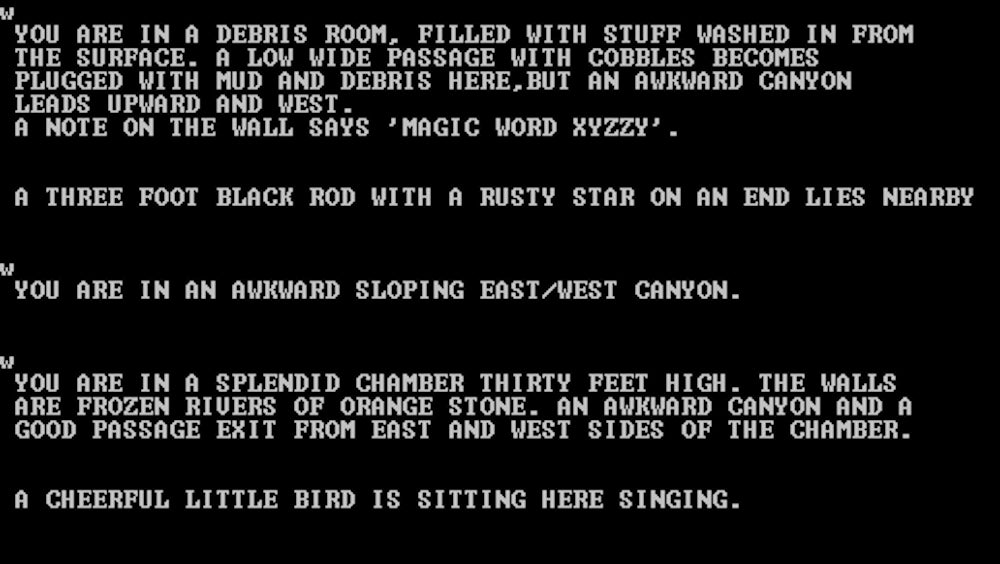
At the very start of gaming, it just made sense to say, “Oh, those games are all adventures written entirely in text. Let’s call them ‘text adventures.’ And these ones are all about making that pixel blob jump between these platforms. They can be ‘platform games’.” That was useful for a good, solid ten minutes, before the imaginations of developers allowed for the merging of ideas, taking inspiration from here and there, and seeing what the results might be. In fairness, there were a fair few years when games could be quickly understood as “graphic adventures,” “god games,” “role-playing games,” or “strategy games,” albeit alongside the always-confusing category of “arcade games,” which originally meant games that were first released for arcade machines, and thus spread across a multitude of genres, but sort of came to mean games where things went “pew pew” and there was a high score table.
But even then, people were combining strategy and RPG, or including what were always called, in the snarliest of tones, “arcade sections” in graphic adventures. And then first-person shooters came along, so we needed “third-person shooters” to be a thing, and then the angle you looked at something from became a genre, hence “isometric,” and down into the madness we spiralled. I would say the moment all hope was lost was the point at which anyone, anywhere, thought “action game” might be a useful descriptor for anything
So, as I mentioned, post-millennium people began talking about the need to ditch genres as a concept entirely. I remember being involved in heated discussions at various gaming magazines over whether they would stop listing a game’s “genre” as part of the review, given how the decision was really being made based on the personal view of the reviewer, rather than anything inherently born of the game itself. When we were running Rock Paper Shotgun, the team would frequently argue over the useful/uselessness of tagging games by genre. It seemed, across the industry, that this terminology might be on the way out.
And then Steam arrived.
So, obviously genres never went away. Some games just are the next big first-person shooter, or the real-time strategy game that—oh so ironically—“redefines the genre.” People like to know if something’s a fruit or a vegetable, even if neither term means anything useful in context, and we all knew that this new Monkey Island game was a “point and click adventure” whether we wanted to or not. They served a function, even if it was wildly imperfect, and often deeply unhelpful. (I always think of Grand Theft Auto as the perfect example of a game series that can never be usefully classified, hence the absolute blithering nonsense of “action-adventure,” as if that isn’t a term that could be ascribed to just about anything short of a puzzle game.)
Up until this point, genres were pretty much decided by the developers, even if it was often begrudgingly. The need for a press release meant they had to call their game something, and “defying genre” too quickly became associated with extremely off-putting braggadocio. Most instead opted for hyphenates, picking two of three genres their game sort of loosely fell into, describing their game as “first-person-strategy-adventure-typing-sim” or what have you. It was only more proof that the whole conceit was nonsense.
But then the floodgates opened, and everything got flipped upside down. In the last 15-or-so years the explosion of online stores, most especially Steam, and the ease of access to development tools like Unity and Unreal has caused the numbers of games released to grow explosively. From 2008 to 2012, around 300 games were releasing a year onto Steam. In 2012, Valve launched Steam Greenlight, via which games could be voted for to be allowed to release on store, and by 2017 that number had reached 7,000. That year, Valve ditched Greenlight and replaced it with Steam Direct, where anyone could release a game on Steam if they paid $100. In 2020, around 10,000 games were released. By 2023 it was 14,000. Last year, 2024, that number hit 18,892.
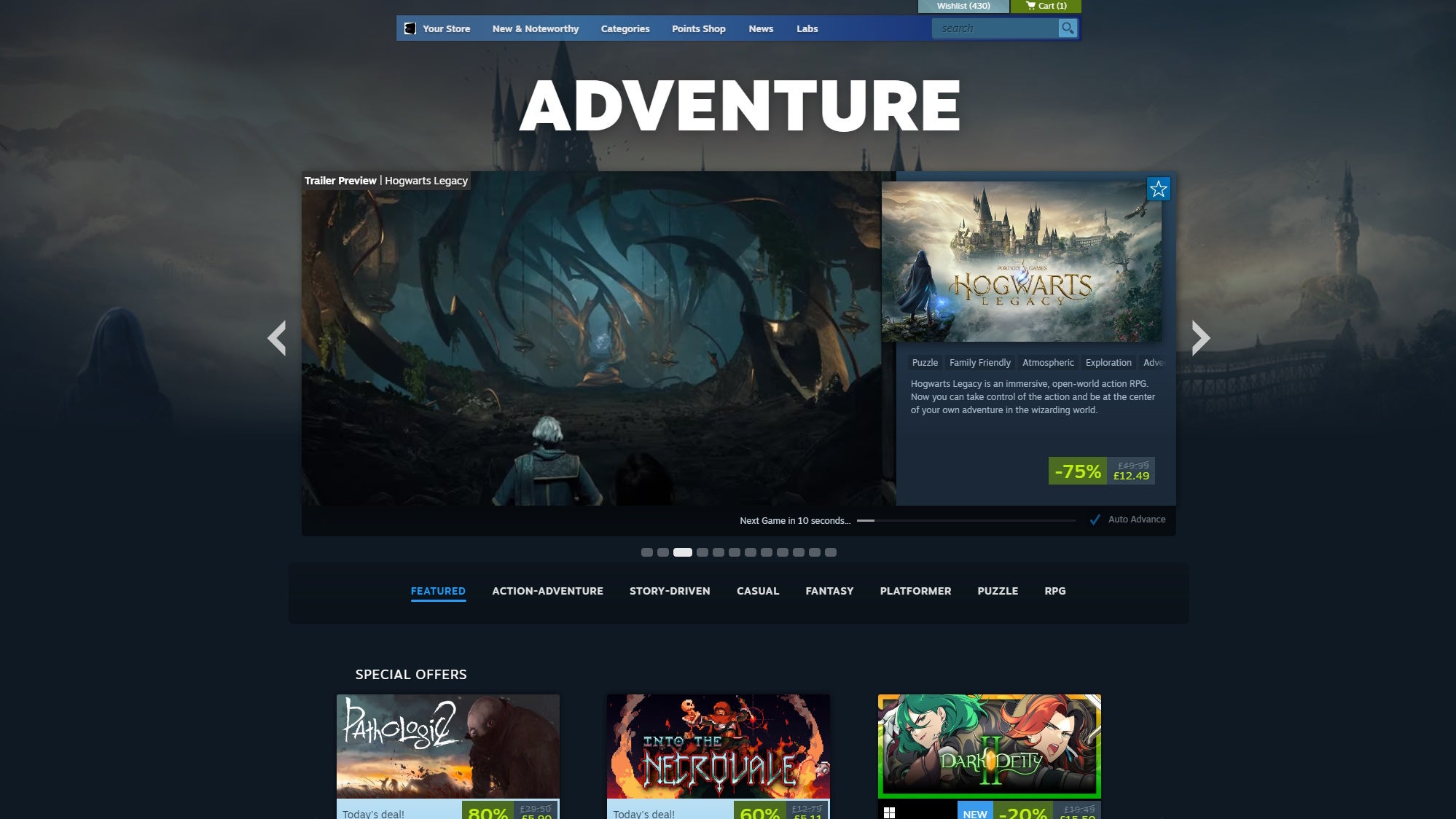
While developers can select their own genre categories, Steam, as Valve is so wont to do, handed over much of the responsibility for the labelling of genres to its users. And as anyone who’s ever met a group of other people will know, they’re idiots, and giving them the ability to tag games on the online store has led to a whole new form of chaos. Where a decade-and-a-half ago we were taking steps toward a beautiful genre-free future, we’ve now instead just taken a sharp left and jumped off a nearby cliff. Genres now mean nothing whatsoever
I first became frustrated by this phenomenon by the demolition of the “adventure” genre. It was, for my entire life, used to describe…well, “adventure games”! These began in the late-70s, early-80s as text adventures, and during the ‘80s evolved into graphic adventures which, once mice became commonplace, would become known as “point-and-click adventures.” (The term has a rather quaint, anachronistic tone nowadays, given that the act of pointing and clicking is hard to remember as revolutionary, but it was meant to distinguish these games from those graphic adventures in which you primarily engaged via a text parser. To this day, among decent-minded people, “point-and-click” has semiotic meaning, a game of the ilk of Monkey Island, Day of the Tentacle, Gabriel Knight, or The Longest Journey. You move a character around scenes, gather items into an inventory, chat with other characters, and solve puzzles by using inventory items on the world.)
Yet, click on the “Adventure” tag in Steam and you might as well have clicked on a tag for “Game.” The first few games it suggests to me are Pathologic 2 (a first-person RPG), Into The Necrovale (a top-down hack-and-slash roguelite), Dark Deity 2 (a turn-based strategy RPG!), and Hogwarts Legacy (an open-world action-RPG). See! Those are literally the first four I saw under the tag, each a wildly different type of game, and none of them in any sense an “adventure.” With half of them, it’s hard to even argue that they’re about having an adventure
But it’s so, so much worse than that. Because, you might say, “Oh get over it, old man. We cool kids use ‘adventure’ to describe…games…that exist! Use something more specific!” So OK, I know, I’ll search for something far more precise, the unimpeachably clear “Point & Click Adventures.”
Mr. Prepper: A survival crafting sim.
Steps of Debauchery: A porn visual novel.
Urban Jungle: A “relaxing” puzzle game about growing plants.
Let’s Minesweeper: An online multiplayer tile puzzle game.
SERIOUSLY?!
However, I absolutely cannot deny that all these games contain the ability to point a mouse and click. Much like Doom Eternal and Civilization VII

And so, my opening thesis is proven correct, all opposition is demolished, and everyone in the whole world owes me and everyone else an apology.
The same phenomenon is true across all genres on Steam, and it’s just the same on Microsoft, Sony and Nintendo’s online stores. These terms have become, for want of a better word, clickbait. People search for this genre term, so stick it on the game. I just looked up “Real-Time Strategy” on Steam (a genre for which I have no interest) and it immediately offered me DOTA 2, then threw in a good handful of turn-based strategy and tower defence games, and so many city builders.
15 years ago we were arguing that genres were useless because they needlessly boxed in creativity, applying artificial labels to a medium that inherently defied them. It felt reductive to describe a game as Type C instead of Type F, a process that failed to usefully communicate nuance. We are now so bloody far through that looking glass, and have emerged in a place where it’s the genres themselves that defy classification, where they’ve all become gobbledegook words that mean nothing and can be applied to anything. We wanted to be post-genre, but we’ve instead become post-meaning.
Why does it matter? Well, because I want to be able to find new point-and-click adventures on Steam, for one thing, and cannot find them buried beneath an avalanche of games that let you use your mouse on the menus. But beyond that, it matters because it’s just more empty cacophony in a world where those with power are trying to destroy any sense of meaning.
Is there a fix? No, I don’t think so. Sorry, that’s not very satisfying, is it? I think, like vegetation, we’ve just muddled ourselves to the point where we don’t know where we’re supposed to go in the gaming supermarket to find the games we want to consume. It’s too late. We broke it. We’re stuck with some useless nothing now.
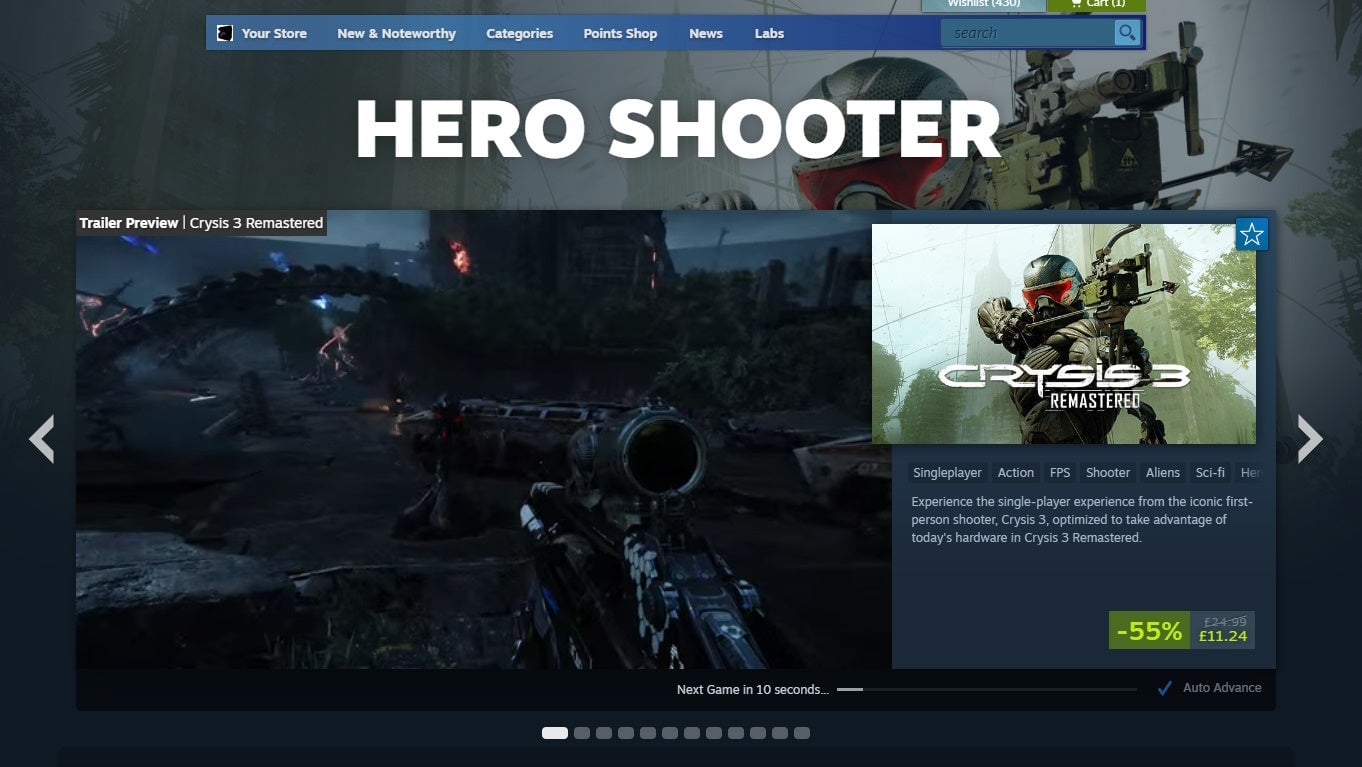
Although, if you want a pithy closer, you could argue the AAA publishers are doing their bit by only investing in open-world action games, soulslikes or hero shooters. That certainly refines things a little.