About Dragon's Dogma 2
Dragon’s Dogma 2 is no newcomer. Released on March 22, 2024, it aimed to iron out the flaws of its predecessor while bringing back ideas that had been shelved during the development of the first game. Although critically acclaimed and a commercial success, with 2.5 million copies sold in just a few weeks, Capcom’s title was undermined by its own ambition, and the game suffered from significant technical problems at launch.
The reason? Dragon’s Dogma 2 constantly simulates the behavior of a vast number of NPCs, including their routines, movements, and reactions to events. This is compounded by the artificial intelligence of the Pawns, which is particularly resource-intensive. The creatures themselves interact with one another and adapt to their immediate surroundings. It’s a bit like Shenmue on the Dreamcast, but ten times more complex. Suffice it to say that CPU usage in the capital of Vermund, the stronghold of humankind, was through the roof. Over the following months, the developers rolled out updates to optimize the game, and the experience improved significantly. With the release of Dark Arisen, Dragon’s Dogma 2 finally delivers the performance its ambitions demand.
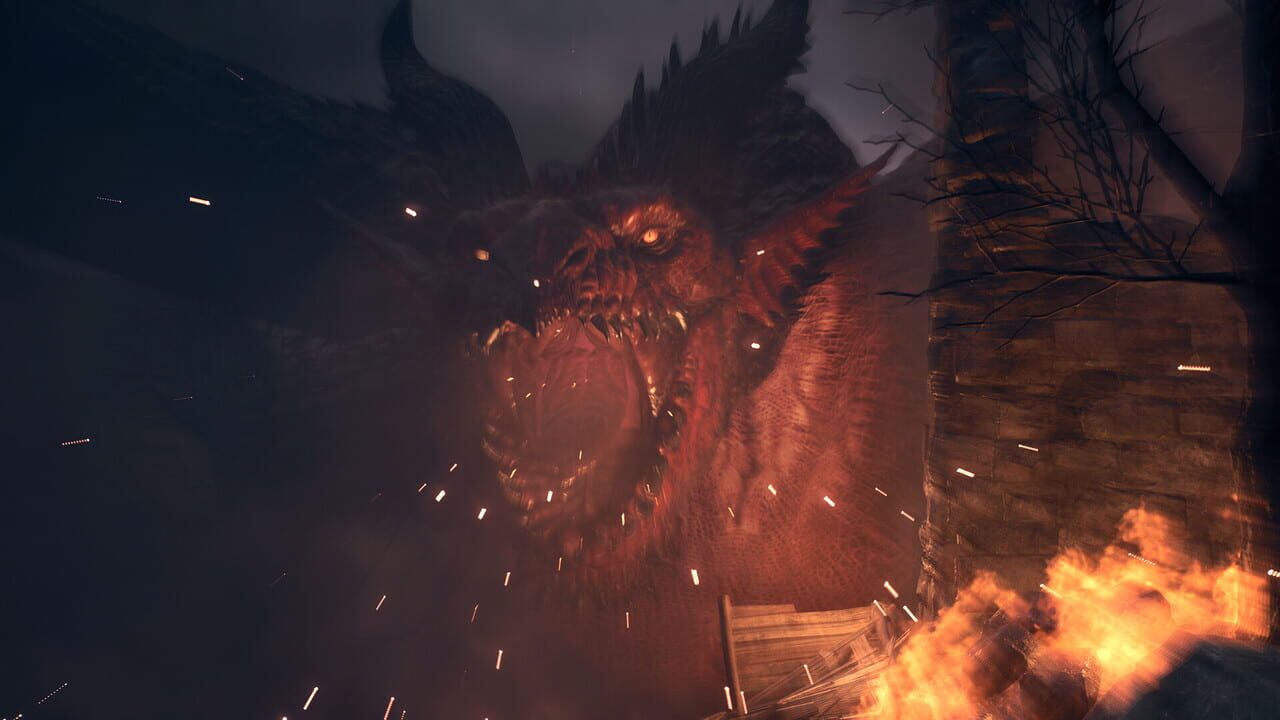
In Dragon’s Dogma 2, players take on the role of the Insurgent, a chosen one whose heart has been stolen by the Dragon. According to tradition, the Insurgent is destined to ascend to the throne of Vermund. But there’s a catch: Queen Regent Disa has other plans. She intends to place her son on the throne and has had an impostor crowned in the Insurgent’s place, allowing her to rule from the shadows. The real Insurgent suffers from amnesia and finds himself wandering through a world he must learn to navigate. After a daring escape, he arrives in Vermund in an attempt to recover his memories. Meanwhile, the game pits two rival peoples against each other. On one side stands Vermund, the kingdom of humans, where the Insurgent is revered. On the other is Battahl, the nation of beastmen, whose territory consists of arid and hostile lands. Amid palace intrigues, shocking revelations, and legendary creatures, the road to the truth is long.
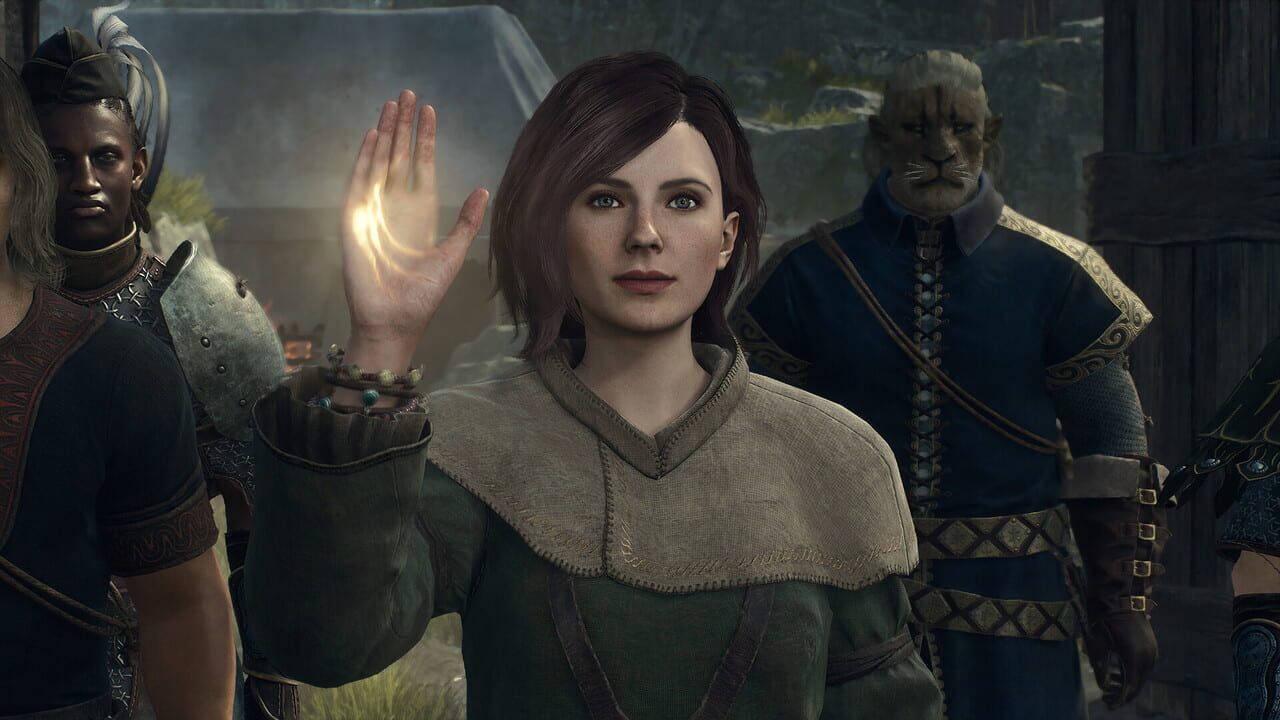
Pawns are essential to the Dragon’s Dogma series. Hailing from the Rift, a parallel dimension, they serve the Insurgents by fighting alongside them and offering advice. These traveling companions learn and grow more confident as the game progresses. Behind this concept lies a source of frustration for the series’ creator, Hideaki Itsuno. After spending thirty years at Capcom, Itsuno became weary of the constraints of online gaming: having to coordinate schedules with friends, putting up with snide remarks in chat rooms, and hoping he wouldn’t have to step away to use the restroom while exploring a vast dungeon.
Pawns were his solution. They create the illusion of moving through a fully connected world without the constraints of online play. In reality, the Pawns accompanying players belong to other players, who have shaped and trained them before sending them off to worlds beyond their own. The concept is brilliant, allowing players to encounter a wide variety of companions throughout the game. By adopting this so-called asynchronous multiplayer model, popularized by Demon’s Souls and Dark Souls, Dragon’s Dogma established a tradition that other games have since carried forward, including Death Stranding and Elden Ring.
Why Should I Play Dragon’s Dogma 2?
If you love medieval fantasy worlds filled with goblins, griffins, dragons, and even cyclopes, you’re in for a treat. Dragon’s Dogma 2 is an open-world action-RPG from Capcom, played from a third-person perspective. Often described as a Japanese-style Skyrim, the game puts you in the shoes of an amnesiac Insurgent who must reclaim his rightful place by confronting the Dragon that stole his heart. To achieve this goal, players are free to explore the world, accept quests, and hunt down gigantic, hostile creatures.
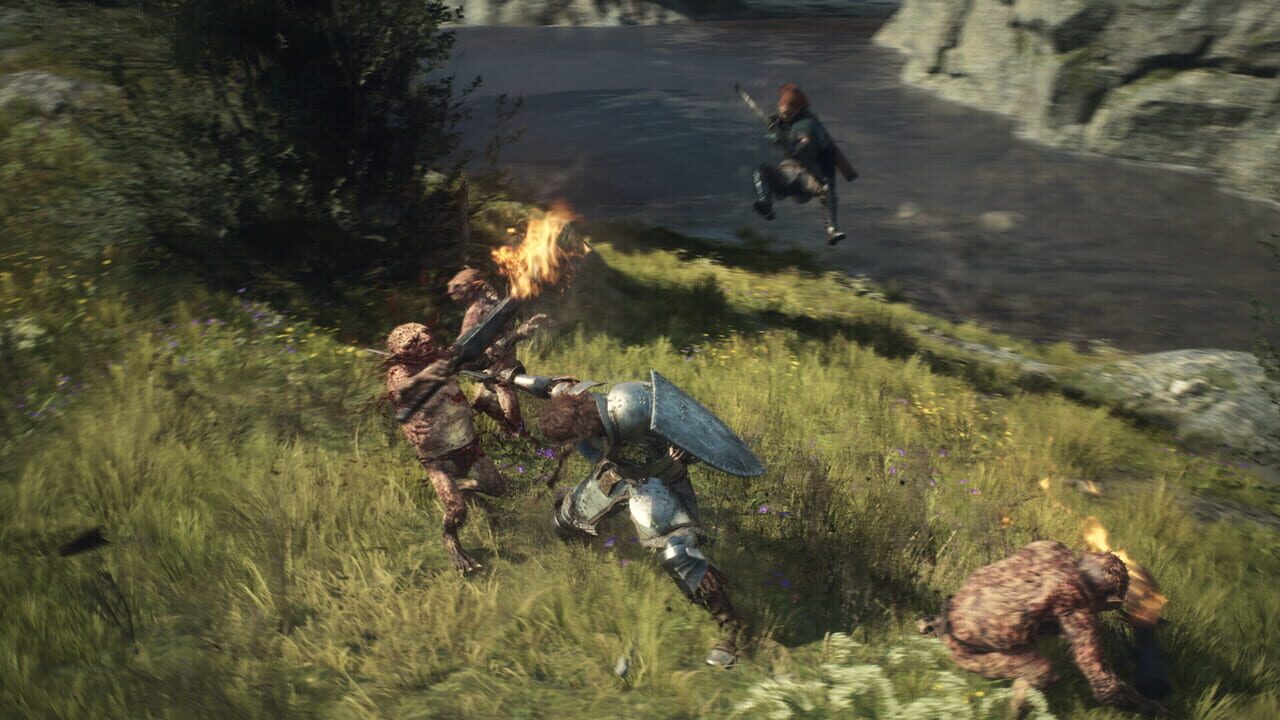
At the start of the game, you’re invited to create your avatar. The character editor is comprehensive, and the game features a class system known as “vocations,” with four options available from the outset: Fighter, Archer, Mage, and Thief. You can change your vocation at a dedicated guild as you progress through the game. Since the latest updates, you can equip six weapon skills instead of four, greatly expanding the tactical possibilities of each playstyle. Combat, meanwhile, is the beating heart of the adventure. In addition to light and heavy attacks, the Insurgent can cling to even the most imposing creatures, climb onto their backs, and strike their weak points, much like in Shadow of the Colossus. Be careful, though: a stamina gauge, similar to the one in The Legend of Zelda: Breath of the Wild, governs your character’s stamina and mobility, whether you’re sprinting or climbing.
Next comes the feature that sets Dragon’s Dogma apart: Pawns. At the start of the game, you create a Main Pawn, an AI-controlled companion who accompanies you throughout your journey and grows alongside you. You can also recruit up to two Auxiliary Pawns, which are other players’ Main Pawns who have come to lend you a hand. However, you must be wary of the Dragonplague. This disease can infect Pawns and cause them to become aggressive. If left unchecked, it can turn your faithful companion into a scourge capable of decimating an entire city. Fortunately, Capcom has since made this mechanic less punishing, although it still contributes to the game’s sense of unpredictability.
What makes Dragon’s Dogma 2 so charming is that progression isn’t based solely on scripted events. The game establishes rules governing monster behavior, physics, and the day-night cycle, then lets these systems interact with one another. No two playthroughs are alike. It’s not uncommon to be attacked while traveling by oxcart or to be ambushed by an ogre while fighting off bandits. This element of unpredictability remains one of the game’s greatest strengths.
As mentioned earlier, the game faced serious criticism upon release for frame-rate drops, poorly received microtransactions, and lengthy journeys. The 2026 updates have largely turned the tide. Thanks to the Eternal Transstone, you can now teleport at will. The number of save slots has increased, inventory management is much more enjoyable, and Performance Mode runs at 60 frames per second on PS5 and Xbox Series consoles. The developers have even added a Hard mode for players who enjoy a challenge. Suffice it to say, there’s plenty to keep you busy.
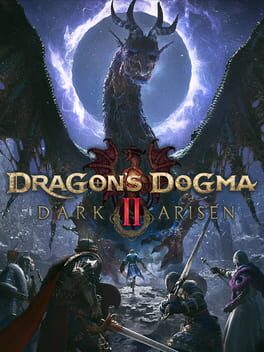
Finally, a word about Dark Arisen, the new expansion. It invites you to explore the northern region of Norgan, a snowy and hostile area. What sets this environment apart is its unpredictable weather, with blizzards that can reduce visibility to zero. The bone-chilling cold affects your stamina, forcing you to bundle up. On the other hand, the environment can also be used to your advantage in combat, particularly by causing icicles to fall on enemies. Dark Arisen also introduces a feature that has been warmly received by the community: relic hunting. Once brought to Jiera, the village elder, these relics are appraised and can be exchanged for specific weapons and armor. This system is reminiscent of the loot mechanics in Diablo and offers a unique way to rediscover the world of Dragon’s Dogma 2. Meanwhile, twelve brand-new dungeons, known as the Forgotten Rites, are scattered throughout Vermund and Battahl.
Is Dragon’s Dogma 2 Free-to-play?
Dragon’s Dogma 2 is a paid game. Whether you play on a Windows PC, PS5, Xbox Series X, Xbox Series S, or Nintendo Switch 2, you’ll have to purchase it. The Dark Arisen expansion can be bought separately by owners of the base game, except on Nintendo Switch 2, where the game includes the base experience and its additional content.
Where Can I Download Dragon’s Dogma 2?
You can download Dragon’s Dogma 2 on Windows PC through Steam or the Xbox app, or get it from the digital storefronts on PlayStation 5, Xbox Series X|S, and Nintendo Switch 2. Availability and purchasing options may vary by platform and region.
What Games Should I Play If I Enjoy Dragon’s Dogma 2?
When it comes to exploring the great outdoors, Capcom is no stranger to the genre. Another major franchise from the Japanese publisher, Monster Hunter, returned in 2025 with Monster Hunter Wilds, a game that invites you to explore the Forbidden Lands. As a hunter, you must traverse this untamed territory, where living ecosystems and changing weather conditions influence wildlife behavior. Observation, tracking, and combat are all essential, as every creature presents a formidable challenge. Materials and resources allow you to forge new weapons and armor to take on increasingly powerful monsters. To travel faster, you can rely on the Seikret, an agile mount, while the famous Palico, a mischievous little feline, is also there to help. As in Dragon’s Dogma 2, the core gameplay revolves around facing colossal creatures, although hunts in Monster Hunter Wilds can be shared by up to four players.
If wide-open spaces get your heart racing, Crimson Desert is a game you won’t want to miss. Developed by the creators of Black Desert Online, this adventure puts you in the shoes of Kliff, captain of the Gray Mane, a band of mercenaries traveling across the continent of Pywel. With an open world that impresses in both scale and diversity, Crimson Desert takes immersion to new heights. Its combat is highly physical, blending swordplay, wrestling moves, and interactive environments. To make exploration easier, you’ll have access to a grappling hook, a glider, and various mounts. Packed with side activities and boasting impressive production values, Crimson Desert is a game of boundless ambition.
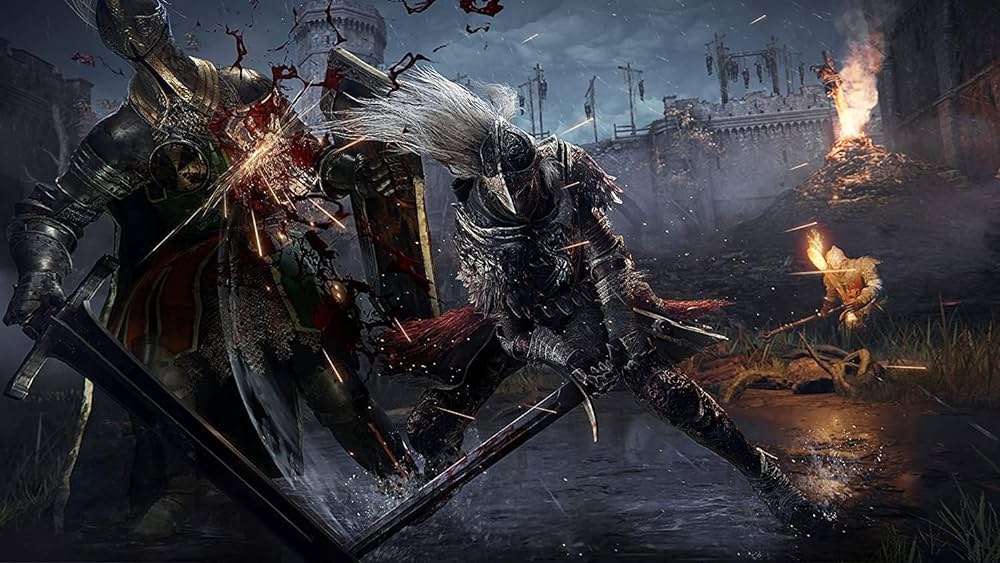
We’ll wrap up with a classic of heroic fantasy: Elden Ring. Now one of the biggest hits of the decade, this game was conceived by Hidetaka Miyazaki in collaboration with George R. R. Martin, author of A Song of Ice and Fire, the book series that inspired the Game of Thrones TV show. The game puts you in the shoes of a Shardless wanderer exploring the Betweenlands, a broken and mysterious realm. Whether on foot or riding Torrent, you’ll explore castles, catacombs, and haunted ruins while facing bosses and formidable enemies. The game also features an asynchronous multiplayer mode similar to that of Dragon’s Dogma 2: other players can leave messages on the ground, offering hints or sharing their thoughts. It’s even possible to summon other players to help you through some of the most challenging battles. Beautiful, immersive, and demanding, Elden Ring is one of the best games in its genre.