
Despite offering a unique take on 3D fighting focused on counters and holds, the Dead or Alive franchise has never quite taken off within the fighting game community. It has a small but dedicated fanbase, but the game also struggles with public perception as the genre’s “boobie fighter” (probably thanks to old but memorable commercials featuring slack-jawed dudes checking out the game’s female fighters). The game has never quite shaken off that reputation, meaning most folks assume Dead or Alive is all about titillation rather than hardcore competition.
Dead or Alive was actually one of the very first franchises to adopt the esports model. A collection of events hosted by the Microsoft-sponsored Championship Gaming Series in the early aughts put Dead or Alive competition on live television and launched the careers of many incredible players (not to mention a handful of women, even as female players remain a minority in the fighting games scene).
So, when the Dead or Alive 6 creative team told IGN that the characters in this new game would be “less sexualized,” I wondered if the change signaled an effort to put the series back in the esports spotlight. I asked Dead or Alive 6 director Yohei Shimbori about that at Evo 2018, and the answer is, as always, complicated. The game does want to ramp up its esports scene, but that’s not the only reason why the game has changed.
According to Shimbori, the game is still in very early stages. Although the team has been developing on a new engine for years, work on Dead or Alive 6 has only really ratcheted up in the last couple of months before its reveal at E3 2018. The game announcement came as quite a surprise to fans, who quickly dissected every bit of footage they could find.
The shift to more realistic graphics, Shimbori noted, is thanks to the new engine. Characters visibly take damage during fights, with bruised faces and blood making combat feel more visceral in the process. Shimbori also said that they are thinking about adding in an option to disable those details for players less interested in violence. While Dead or Alive has always featured some of the best visuals in the genre, Dead or Alive 6 is ramping things up while still showing its silly side in “fantasy” stages, which the developers plan to start showing off soon.
Shortly after announcing Dead or Alive 6 two months ago, Shimbori discussed the decision to move away from the heavy sexualization that’s been ubiquitous with the license since 1996. This meant designing more conservative costumes for characters like the busty ninja Kasumi, as well as trading in the boob-jiggling physics in favor of more subtle movement. When asked if this was a play to get back into the esports world, given that some broadcasters have cracked down on sexy character costumes in the past, the directors said their goals are much larger.
“Toning down the sexual expression doesn’t relate to esports,” Shimbori said. “It’s more of a world trend. We’re considering how to make this franchise well-received everywhere.”
Team Ninja creative director Tom Lee jumped in, echoing and expanding upon Shimbori’s sentiments. “Beautiful characters” are part of Dead or Alive’s DNA, he said, but the team is dedicated to making sure Dead or Alive 6 is more than “just a pretty picture.”
“The game, we feel, has always been very deep,” Lee continued. “We want to emphasize those areas. That doesn’t necessarily mean we’re going to change, that all these beautiful figures will be changed completely. I think the attention will also be placed on a lot of the fighting game mechanics. People that have never considered Dead or Alive to be a ‘true fighter’ will see that.”
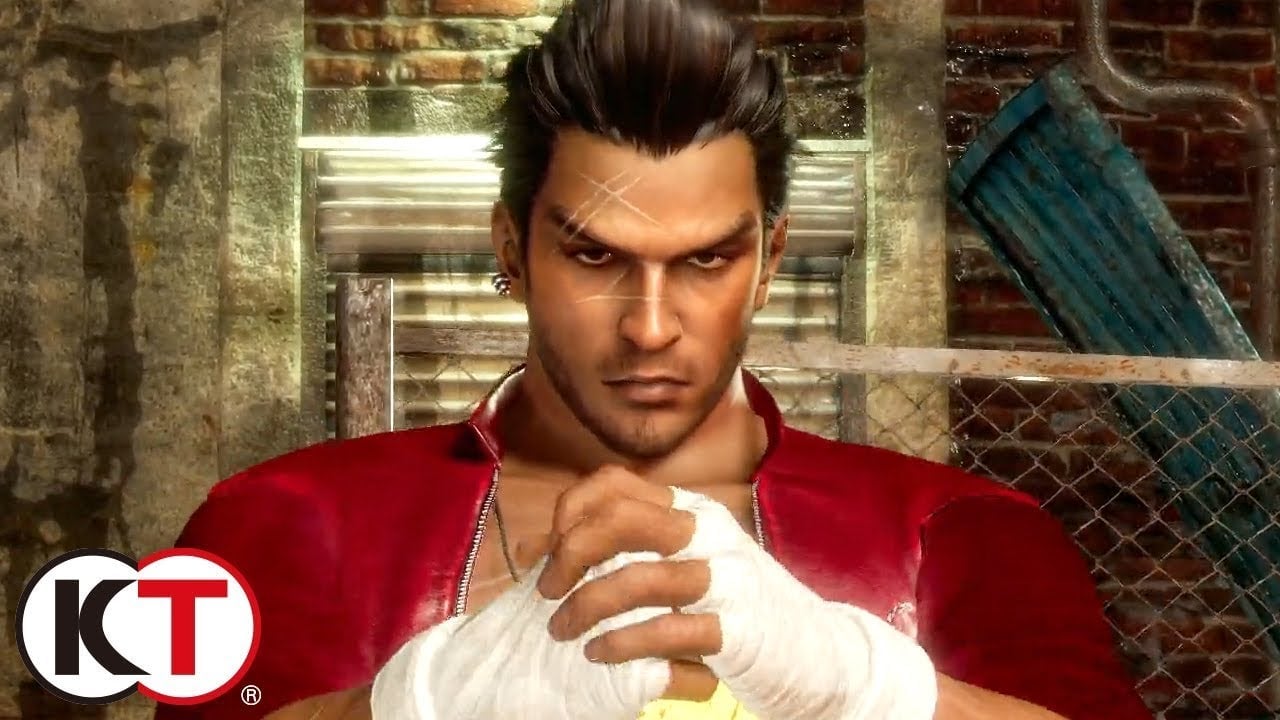
This move to appeal to a wider audience also factored into the development of Diego, a Dead or Alive 6 newcomer that was recently revealed and playable on the Evo 2018 show floor. Shimbori approached Lee for his feedback on developing a new male character around the age of 25, and Lee saw this as the perfect opportunity to add some more diversity to the franchise’s cast.
“We were looking for a character that would really appeal to the West,” Lee explained. “We realized as a team that we were under-representing the Hispanic community, and we felt that was something that was needed in the Dead or Alive roster. From there, [we picked] the region of New York City and [made] this cool street fighter-type guy who kind of figured things out on his own. I thought that would be really appealing to the casual audience as well as the audience in the West.”
Fighting games have long struggled to bring in newcomers due to the often intense learning curve required to play them at a decent level. Like many of its genre cousins, Dead or Alive 6 has implemented a one-button auto-combo system that allows beginners to pull off cool combos with very little execution. The super meter, which has never been a part of Dead or Alive’s core mechanics, is another way to give newcomers access to big attacks with less effort. Shimbori is also thinking of developing an “enjoyable” tutorial mode that doesn’t feel like sitting in class.
Dead or Alive 6 still feels very much like a work in progress because, well, it is. But the developers emphasized their goal for the upcoming release to be something touted just as much for its gameplay as for the beauty of its fighters. Team Ninja is already in the process of discussing a competitive circuit, which Lee described as “more robust” than the tours organized during the tail end of Dead or Alive 5’s lifespan.
“We obviously want to be taken seriously as a competitive fighter—that’s why we’re kicking things off here at Evo,” Lee added. “We definitely want to have a big presence in the esports scene, and hopefully if all goes well, we’ll be back at Evo next year as an official game.”