Like you, I received the news that horror supremo Mike Flanagan was working on a TV series based on Stephen King’s Carrie with confusion and an eye roll. I love Flanagan’s work—Netflix series Midnight Mass, The Fall of the House of Usher and The Haunting of Hill House are all utterly extraordinary—and his passion and understanding of why Stephen King’s books are special shone through in Gerald’s Game, The Life of Chuck, and even the peculiarly Kubrick-besotted Doctor Sleep. I also can’t wait to see what he does with The Dark Tower, especially after Nikolakj Arcel’s absymal 2017 attempt starring Idris Elba and Matthew McConaughey. But if Flanagan is going to adapt more of King’s work for television, why not books that have never been tried like Insomnia or Rose Madder, or those that were done atrociously like Needful Things and Dreamcatcher?
But why Carrie? The 1974 novel is a stunning debut from King, and only two years later it received its definitive on-screen interpretation via Brian De Palma’s extraordinary movie of the same name. Every subsequent adaptation of the book has been an embarrassment, a pale imitation of De Palma’s masterpiece. 1999’s execrable The Rage: Carrie 2 went so far as to actually include short clips from the 1976 movie, cruelly teasing audiences with reminders of the film we weren’t watching. In 2002 NBC had the usually excellent Bryan Fuller (Wonder Falls, Hannibal) write a TV movie which was cheekily turned into a backdoor pilot, and that bombed. Then in 2013 it was adapted yet again, this time by Kimberly Peirce (Boy’s Don’t Cry), and once again the results created cries of “Why did they bother?” Can’t we just accept it’s been done, and leave it at that?
Of course I still watched Flanagan’s version. I’ll watch any King adaptation, no matter how abysmal, often because I feel like not watching them would be letting them get away with it. (Hello, Under the Dome.) And given Flanagan is such a brilliant writer and a decent director, I wasn’t expecting it to be bad. But my god, I wasn’t expecting to be so delighted, either. Not only was Flanagan’s Carrie not bad, it was actively brilliant. Not perfect, and I have big issues with the final episode, but it was so much more than I was expecting. And more than anything else, it answered the question of “Why bother?” The answer was because it had something else to say.
It knows you know
From here on there will be spoilers for the Amazon Prime show, and I really do encourage people to watch its eight episodes without knowing how the show is different from the novel and previous adaptations. At the same time, this is a TV show that knows you already know how the book ends, and I’ve done my best to not actually give away any of the key changes.

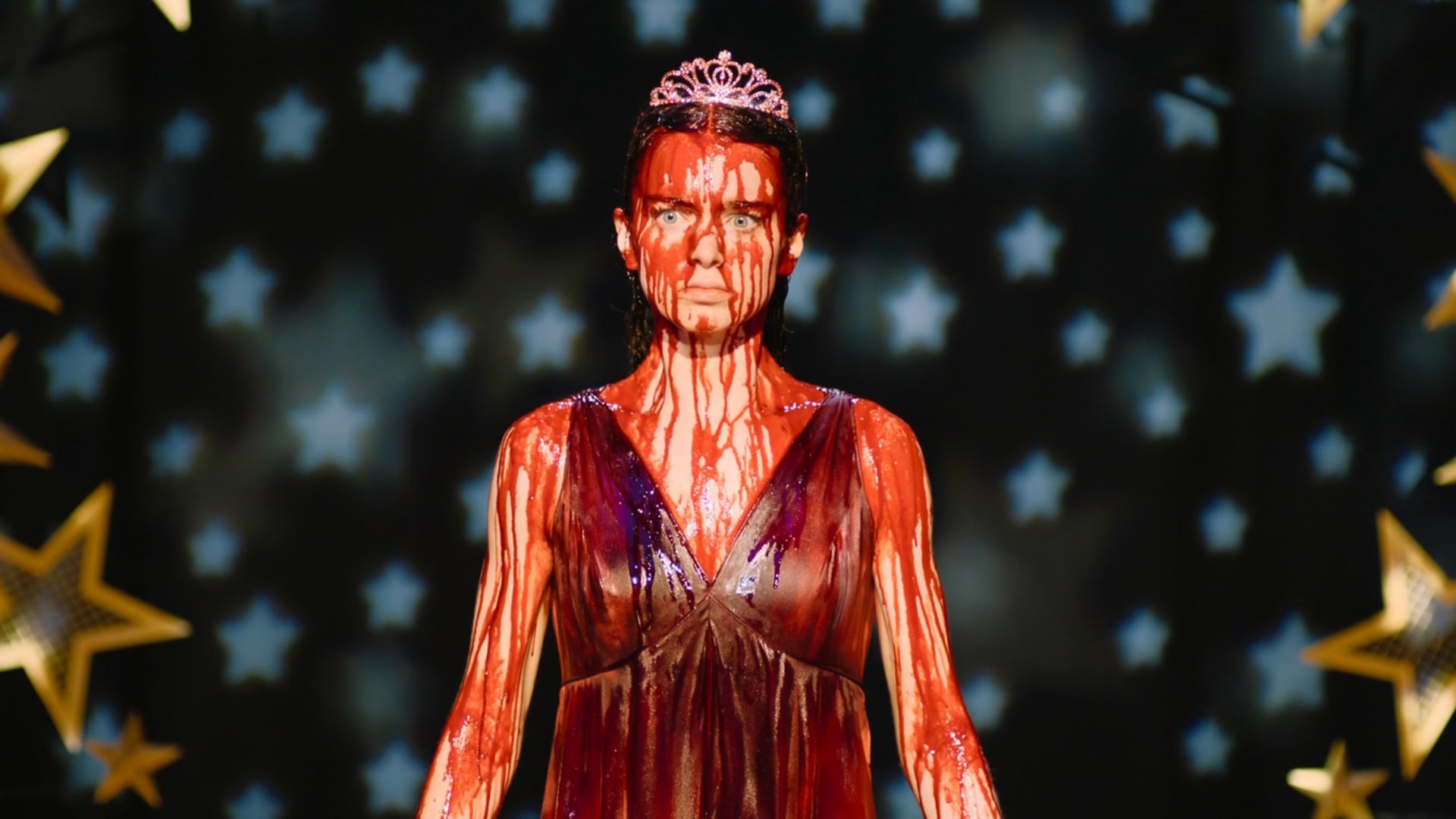
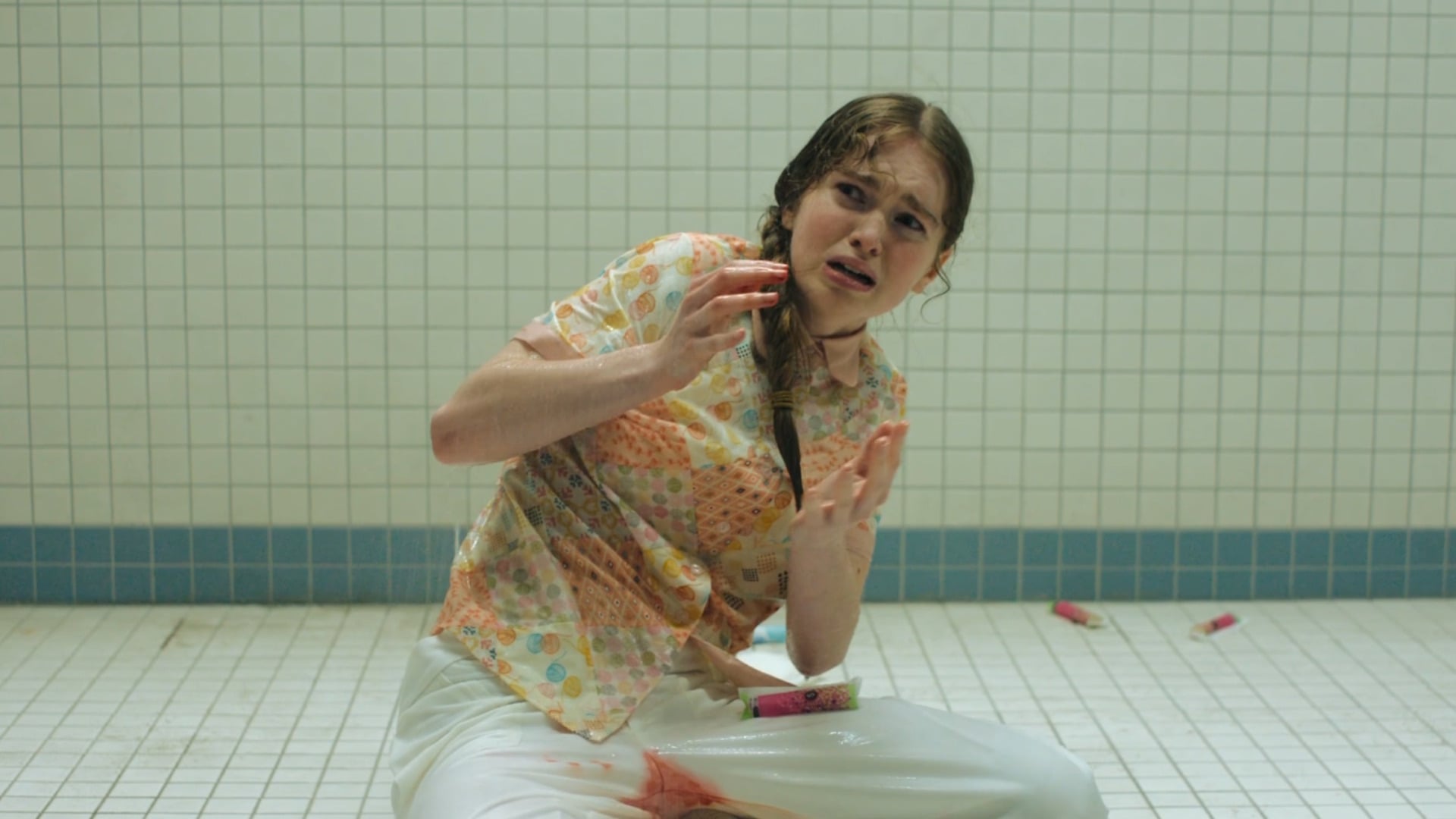
The opening episode of 2026’s Carrie begins by letting its audience know it knows you know. The very first thing we see is a news report from the aftermath of the prom, where the school has burned down and great stretches of the town are on fire. Many are dead. In the next moment, we see Sue Snell being interviewed after the climactic events. Later we see glimpses of Carrie streaked in pig blood. This isn’t here to patronize you, to make you play along by pretending you never saw John Travolta rigging the bucket. Heck, just like with De Palma’s film, promotional material for the series showed Carrie’s face coated in blood. We all already know this is the story about the pubescent girl with the cruel, religious zealot mother, who gets bullied after starting her period, and that it ends with Carrie murdering almost everyone in her school using her developing telekinetic powers.
It’s by the end of that first episode that Flanagan lets you know he has something else in mind.
Each subsequent episode begins with narration from Kate Siegel, delivering sardonic essays about the misogyny that has led to women with telekinetic powers being branded as frauds or witches for the last few hundred years. We immediately get told that there’s something larger at play here, some sort of organized group of women with powers who are somehow aware of Carrie. It’s utterly different from anything in the original book, and gives us a reason to be deeply intrigued by how this is all going to play out.
Mother knows best
Summer H. Howell is a wonderful Carrie. She’s younger than Sissy Spacek ever looked in 1976 (despite the actor being 21), and is so incredibly innocent. This innocence is also adapted by Flanagan, updating the story for the present day in a way that’s far less crude than previous attempts. The introduction of a father figure, who dies in the first episode’s first proper scene, teaches us that he kept his wife and daughter completely off the grid, a secret, unregistered anywhere, in order to protect them from the network of anti-government conspiracies in which he believed. His and Margaret White’s Christianity is also so much more contemporary, less Catholic dogmatism and far more the MAGA-coded individualistic solipsism that dominates today. As such, it feels more insidious, more threatening, while being far less overt and heavy-handed. And that brings us on to Samantha Sloyan’s Margaret White.
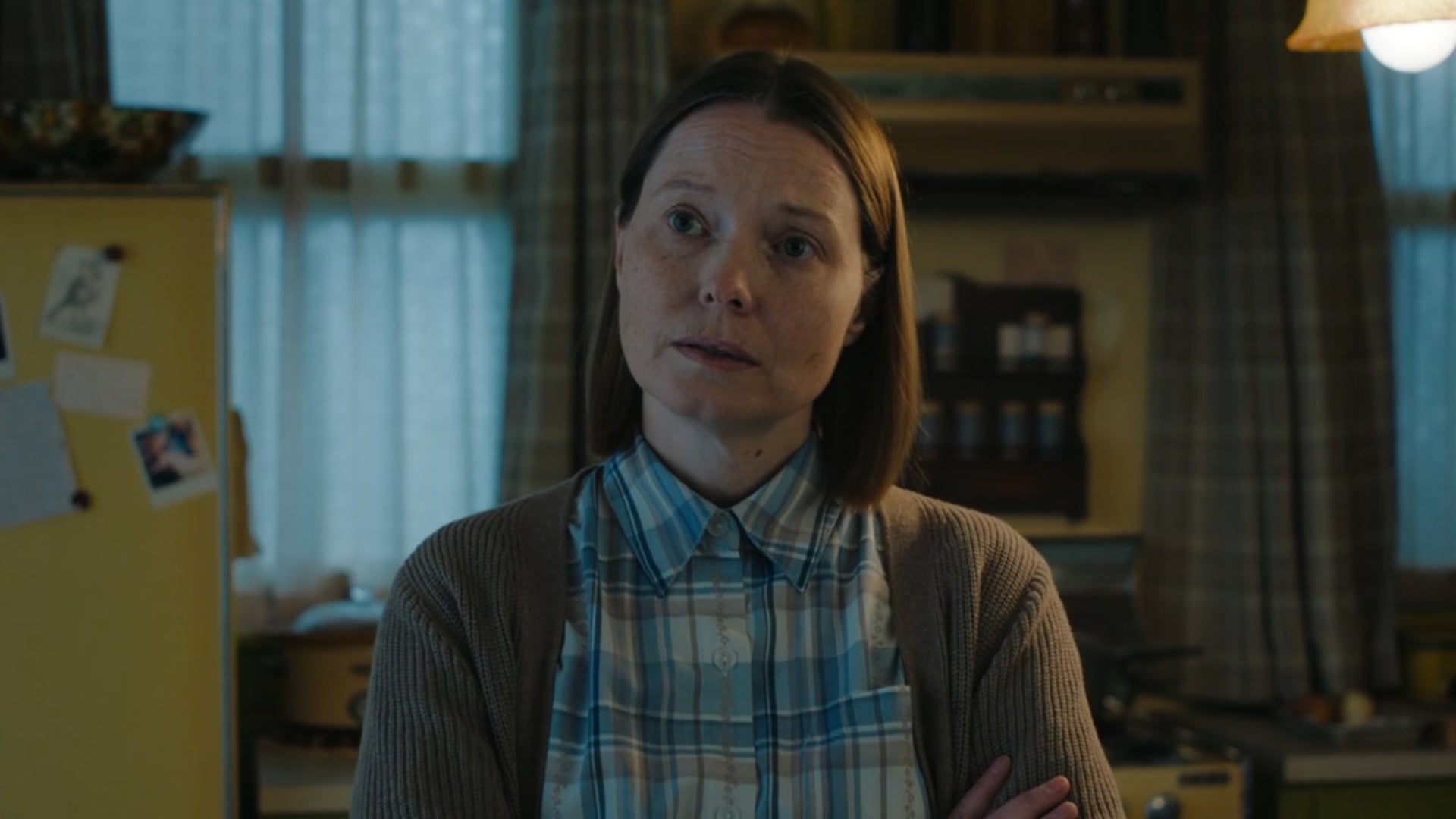
Flanagan’s regular repertory cast are here in force, with so many familiar faces from previous shows (Michael Trucco, Tahmoh Penikett, Rahul Kohli, Kate Siegel, Ruth Codd, Katee Sackhoff, Mark Hamill…), and Sloyan was the most perfect casting as mama White. I was fully expecting a fresh round of her performance as Bev Keane in Midnight Mass, with her astonishing capacity for delivering cold, cruel piety. And yet that’s not what we get at all. Sloyan’s Margaret White is a whole other creature, a phenomenally layered and complicated figure, filled with contradictions and conflicts. She’s absolutely cruel, but she’s cruel in a way that makes it hard to pin down, hard to point at and say, “THAT!” She’s a religious zealot of sorts, but as quickly becomes apparent, she’s willing to compromise her previous values if it allows her to pursue her goals. She believes in the conspiratorial rubbish her husband taught her, but clearly never followed his strict rules to remain unaware of the wider world. She’s vengeful and cunning and vulnerable and driven. And most fascinatingly of all, she doesn’t hate Carrie. She loves her.
I think, more than anything else, more than the brand new storylines about external influences and women with supernatural powers, it’s this that made Flanagan’s Carrie so compelling and brilliant for me. She loves Carrie. King’s White thought she loved Carrie, but she only ever hated her. She detested her daughter for becoming a woman, for desiring independence, for wanting to grow up. Flanagan’s White does none of those things. She never utters the words “dirty pillows,” nor screams at her daughter that her puberty is the result of sin. Her cruelty is far more subtle, more undermining, disguising control as performed support. Margaret White is the stand-out character from this whole series, and that’s not something I was ever expecting.
I could write paragraphs more about the similarly inspired reinterpretation of Carrie’s nemesis, Chris Hargensen, who is far more interesting a character than simply “the school bitch.” While her background story isn’t nearly so subtle, it still gives her spite and viciousness a source, and there are moments in which you try to sympathize with her, even if she ensures it can never connect. Or how Sue Snell isn’t nice because someone cast a niceness spell on her, but rather because she has a safe and loving home, a mother who loves her unconditionally, and her being pulled between Chris and Carrie makes much more tangible sense. Then there’s Amber Midthunder (Prey) as teacher Rita Desjardin, who gets her own arc via a relationship with Rahul Kohli’s fellow teacher, Seth Peist. Tim Bagley (Somebody Somewhere) is wonderful as the school counselor, and Matthew Lillard makes for a fun, broken school principle. It’s a superb cast, and the eight episodes ensure everyone gets to develop in interesting ways.
Outside influences
Then there’s Emaline. Thalia Dudek (The Running Man) is great, but their character is a confusing addition that, I think, takes away from the story. Emaline appears properly for the first time when Carrie is in the school bathrooms, screaming in rage. They’re something of a cliche, a rebel with their punky hair and smoky mascara, and it’s just so abundantly obvious from the very first moment that they’re not really there. No one else interacts with them, they say things that should get reactions, and during a party scene in the third episode, we’re shown a shot that just clears away any doubt. But, apparently, we’re still supposed to be surprised by the big reveal later on, shown a whole compilation of what are clearly supposed to be “aha!” moments showing that people see Carrie talking to herself, and have a whole other reason to bully her. Further, the “twist” on this “twist” is equally telegraphed, obvious if you’ve been paying attention to the thread about supernaturally powered women at all, and it ultimately becomes this undermining moment that drains the terror and the meaning from the events at the prom.
I get who the character is, at least as much as the plot wants us to ahead of the now-commissioned second season. But I just don’t know why they’re there. The power of Carrie, from the original book to the majority of this new series, is that she’s a girl who life just shits on, and eventually she takes control. I can see strong arguments for how this is, ultimately, a somewhat misogynistic portrayal of taking control, one in which a woman must become a monster in order to have power. I can see why Flanagan might want to at least question that, play with the concept. But at the same time, Carrie is a tragedy, and it’s because we love her so much, because we’re so desperate for her to just get a tiny break, that her eventual snapping is so brutal and upsetting.
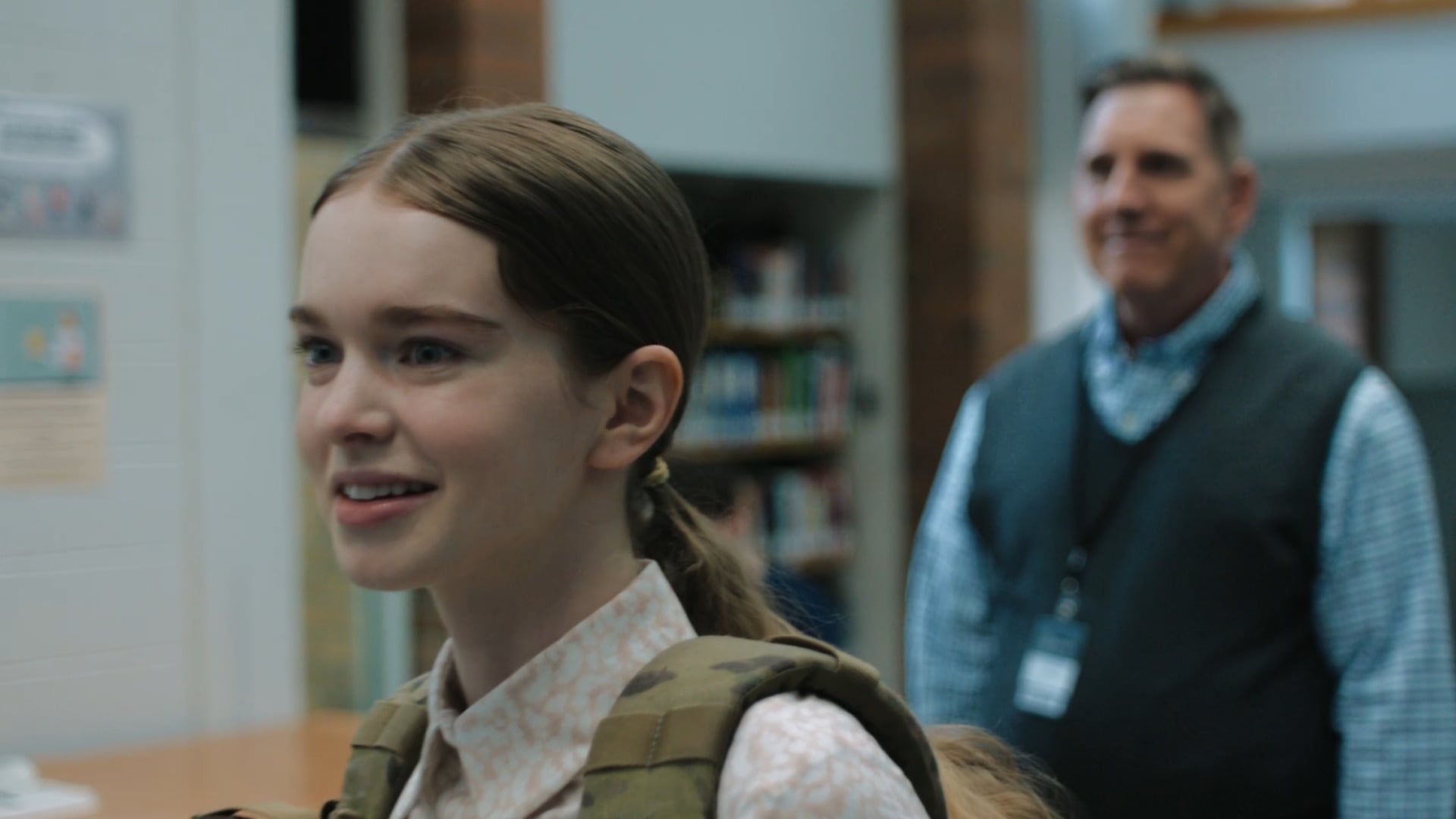
Flanagan does such an exceptional job of generating that love in so many moments, like in the terrific scene when Carrie visits the school library for the very first time. Up until now, the only books she’s read are those that have been snuck to her by her neighbor, and suddenly she’s in a room lined with them, and is in compete awe. In this moment Carrie sees hope, sees a world she could be happy in, and the strength of the novel, the first film, and most of this series is in knowing that it will all be taken from her again. The more she finds hope, the more it hurts us. And in the show’s bizarre decision with Emaline (which I’m deliberately not going into detail about), this is stripped and undermined, betraying the rest of such a wonderful piece of television.
But, crucially, it is a wonderful piece of television, and this odd choice does not undo it all. Carrie is marvelous, and the new ideas are, mostly, intriguing and worthwhile. The reasons for making it again are there, and there’s potential for it to connect to a wider King-verse. I can see how elements of Firestarter and The Institute would fit in neatly to a second season, as well as The Shining (which is overtly referenced at one point) and The Dead Zone. There are also those who see lots of links to The Dark Tower. This show features so many incredible performances and so many beautiful, quiet moments, while reimagining the relationship between Carrie and her mother in ways that were majestic. Yeah, I kind of hated how it ended, but I remain fascinated to see how it continues on. It turns out, there was a good reason for making Carrie again.