
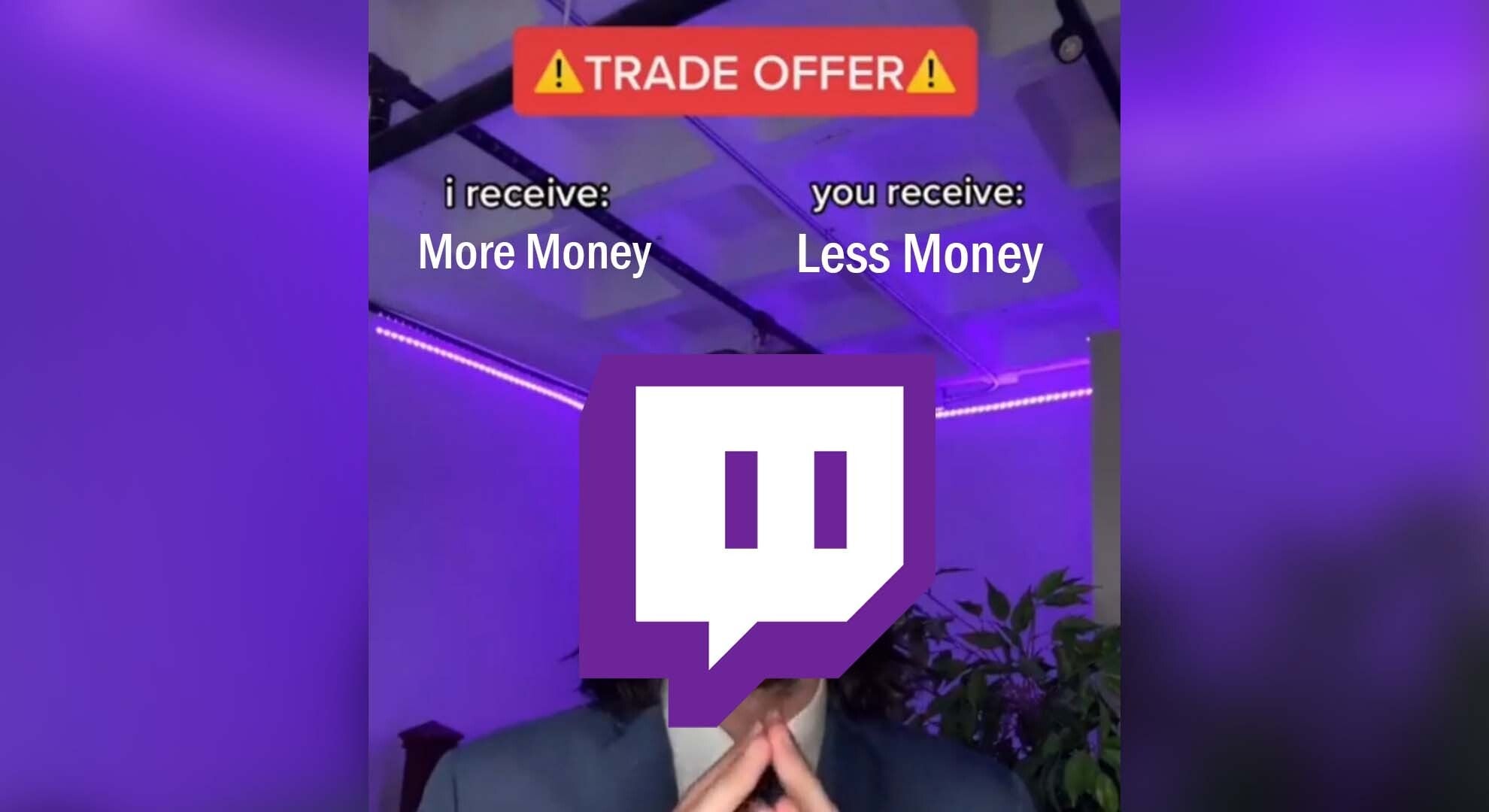
Twitch is reportedly considering major changes to the monetization practices that streamers are upset about because the potentially lopsided percentages work out to pad Twitch’s bottom line.
According to a Bloomberg report, Amazon, Twitch’s parent company, is considering multiple changes to its partner program in order to boost its profits. These changes include a new revenue split from subscriptions, a new tier system, and bolstering advertisements.
One of the monetization changes under consideration is a revenue cut from subscriptions for partnered streamers, Twitch’s most popular streamers. The proposed cut would decrease the revenue partnered streamers make from subscriptions from 70% to 50%.
Another proposal Twitch is considering is adding a tiers system for partnered streamers. According to Bloomberg, these tiers detail the criteria a streamer must meet to receive 50% or 70% of revenue from their subscription. In exchange to this proposal, anonymous sources told Bloomberg that Twitch might release streamers from their exclusivity in their contracts, which will allow them to stream on Twitch’s competitor sites like YouTube and Facebook Gaming potentially to recoup any cut revenue.
Twitch is also reportedly considering incentives for more advertising through “revenue-sharing arrangement,” that Bloomberg says will present “a more lucrative model for streamers.”
Twitch streamers haven’t taken kindly to the news of Twitch’s proposed changes to its partnership program. Twitch streamer PleasantlyTwstd told Kotaku that she isn’t surprised by Twitch exploring these changes. If changes hit the website this summer as they are now, PleasantlyTwstd said smaller streamers will have “little to no incentive” to grow their channels on the platform.
“Smaller streamers I think are going to have little to no incentive at this stage to really push for growth,” PleasantlyTwstd said. “It’s going to start feeling like to make a payout you have to hit more subs and the struggle at current is discoverability at all.”
PleasantlyTwstd said she would like to see streamers be brought into the conversation about Twitch’s monetization changes so they are advocated “in earnest.”
“Twitch has been kind of in a holding pattern where their priority is making the platform more money but until they actually try to work more closely with the people who make them money or freely create tools, they’re just going to keep throwing out ideas and ‘initiatives’ that fall flat,” she said.
Leftist streamer Hasan “Hasanabi” Piker took to Twitter saying the reason Twitch made these changes is due to the company not viewing itself as having competition within the livestreaming space, so there’s little reason to offer something that’s truly compelling for its users.
when i negotiated my contract i knew this was coming & wanted to lock in 1 min of ads per hour. this ad density is the lowest out of the top streamers. twitch still served prerolls cus it wasnt 3 mins. love twitch but it seems like they’re moving away from cc to fix their profits https://t.co/cfQK6qb20g
— hasanabi (@hasanthehun) April 27, 2022
“[I] love twitch but it seems like they’re moving away from [content creators] to fix their profits,” Piker said in a tweet. “Nearly my entire revenue comes from subscribers who elect to give me $5 a month. Twitch doesn’t consider the 50/50 split it takes from smaller creators in that process profitable enough. That’s wild.”
“Subscriptions are more important to the life of every streamer than almost any other utility Twitch offers and to touch the split is to financially devastate and potentially remove thousands of full-time creators from your platform it immediately,” JERICHO said.
“What a joke. Makes it worse for everyone except Twitch themselves,” Jacksepticeye said.
“Twitch is INSANE if they think this will go over well,” Max “Gassy Mexican” Gonzalez said. “Like actually will shake the platform in the worst way possible.”
Kotaku reached out to Twitch for comment.
While these proposed changes are reported to hit the website as soon as this summer, anonymous sources told Bloomberg none of these changes have been finalized.