
One Friday afternoon a few weeks ago, the developers at Treyarch held a happy hour event to welcome the summer interns. There was pizza, beer, and jubilation for everyone at the studio behind Call of Duty: Black Ops 4—except the quality assurance testers, who had to leave shortly after they got there.
“QA was told we were only allowed down at the party for a max of 20 minutes, and we ‘really shouldn’t drink anything’ because we still had to work,” said one tester. “It sucks, but honestly we’re pretty used to getting these sort of ‘rules’ when they do any parties here.”
It was a small affront, but it felt indicative of a bigger problem: At Treyarch, many contract employees, especially the testers, say they feel like second-class citizens. Testers work on the second floor of the office, while most of the other developers are on the first. Some testers say they’re told not to speak to developers in other departments, and one told me they’ll only do so surreptitiously, out of fear of getting fired. When they get to work, testers have to park their cars in a different parking lot than other employees, one that’s further away from the office. When lunch is catered, testers are told that the food downstairs is for the development team, not for them. Sometimes, they’re allowed to scrounge for leftovers an hour later, once the non-testing staff have gotten to eat.
Put another way: When I asked a non-tester at Treyarch about the party, they responded, “Surprised they were invited at all.”
Call of Duty: Black Ops 4, released last October, is the latest entry in Activision’s massively popular first-person shooter series. It made more than $500 million in its first three days on sale, helping ensure that Activision’s 2018 financial results were what chief executive Bobby Kotick called “the best in our history.” It was also a turbulent production, marked by a drastic reboot, the last-minute addition of a battle royale mode, and what one developer described as “perpetual crunch” that perhaps hit the QA team hardest. Many of Treyarch’s employees are not full-time staff but contractors, which means that, among other things, they don’t qualify for the bonuses that full-timers might get from all those Black Ops 4 sales.
According to Glassdoor aggregates and testimonials from employees to Kotaku, Treyarch’s QA testers are paid a base wage of around $13 an hour. For the past year or so, some say they’ve been working around 70 hours a week. So it was a gut punch to at least a few of them when, in January of this year, news broke that the video game publisher Activision had given a cash and stock bonus worth up to $15 million to its new chief financial officer, Dennis Durkin. They didn’t even qualify for a $15 bonus.
“That broke a lot of people,” said a tester who left shortly afterwards. “We’re getting paid these very minimal amounts working these ridiculous hours, yet these people are getting paid absurd amounts of money. It’s just a culture of not being cared about.”
This account of Treyarch’s studio culture, and of the development of Call of Duty: Black Ops 4, is based on interviews with 11 current and former staff members, all of whom spoke anonymously in order to protect their careers. They described a company in which contractors, and particularly testers, feel like they’re perceived and treated as inferior. Throughout Black Ops 4’s rocky development, testers said they worked under unfair conditions—a theme that’s common in the video game industry, but one that remains worth scrutinizing. Those who spoke to us for this story said they did so because they hope that public pressure will lead the studio to change.
When reached by Kotaku, Activision would not make Treyarch’s management available for interviews or comment on the specifics of this story, but did offer a broad written statement, attributed to the studio:
Black Ops 4 represents three years of hard work, creativity, and passion from hundreds of talented individuals across Treyarch, Activision studios and publishing teams, as well as agency partners around the world. It represents the culmination of a wide variety of development initiatives, the best of which comprise the game that our fans are playing today.
The teams who created this game are diverse and widespread. It’s important to us that everyone working on the game, or any of our projects, is treated with respect and that their contributions are appreciated. If there is ever an instance where this standard is not met, we work to remedy it immediately. We constantly strive to provide a rewarding and fun development environment for everyone.
Everyone at Treyarch is extremely proud of Black Ops 4. We love bringing games to life, and we always want to do the best work of our careers. We realize this is only made possible through the varied perspectives and contributions from every individual working on the team.
At the beginning of 2018, about two years into development on Call of Duty: Black Ops 4, Treyarch employees were called into a conference room for some bad news: The game’s campaign mode, which was to be centered on an ambitious two-versus-two multiplayer mechanic, was canceled.
For some studio veterans, it felt like history repeating itself. Treyarch’s last game, Black Ops 3, was planned to feature an open world until the team rebooted midway through production, scrapping the open-ended map in favor of a traditional linear campaign. This overhaul had led to a difficult period of crunch for many Treyarch employees, who had to make up for all the lost work with extra hours. Now they were worried they might have to do the same on Black Ops 4
“For this to happen twice… The morale drop that happened in the studio can’t be understated,” said one former employee. “They’d been promised, ‘After Black Ops 3, we’re not going to do that again. We’re not going to scrap all this work that you’ve been putting in.’”
This time, the plan had been to do something very different from previous Call of Duty campaigns. Black Ops 4 was set after Black Ops 3’s story, but rather than play through the campaign yourself, you’d play alongside a partner, battling against a pair of human opponents. (If you wanted to play single-player, they’d all be AI-driven bots.) Each side would pick a faction, and you’d compete to gun down enemies and battle over different objectives in a post-apocalyptic world. One side might try to destroy a convoy, for example, while the other side worked to protect it. Or maybe one faction would set off to protect a journalist while the other faction tried to assassinate them. Each mission would give you chances to get into shootouts with the other team, hampering their progress if you did well. During different moments throughout the story, you’d also get the chance to defect and switch sides if you weren’t happy with the choices your faction was making.
In the waning months of 2017, the campaign team put in extra hours to finish a demo of this 2v2 campaign for an Activision milestone just before Christmas. They got a few missions working, complete with full art and voice acting, then went off to their holiday break. “Everyone crunches really hard to get that done, and we do,” said one person on the team. “We go to the holiday party in Las Vegas. The studio heads come up and say, ‘Hey guys you did a fantastic job, everyone’s really excited.’”
After that break, however, the mood started to shift. Over the first few weeks of 2018, Treyarch’s leadership began informing groups of employees that they were cutting the campaign. There were technical concerns, timing issues, and, according to one person who was there, negative feedback from playtesters, who felt like the gameplay was too repetitive. So they decided to pivot. They’d take all of the work they had put into the 2v2 campaign and morph it into a traditional single-player story. “The idea was: What if we spruce it up, put more explosions in, set pieces,” said one Treyarch staffer. “Then maybe people will get that classic Call of Duty feel from this.”
But there wasn’t much time left. They’d originally scheduled for a Black Ops 4 release in November, as was traditional for Call of Duty games, but Rockstar put a wrench in that one, bumping the highly anticipated western Red Dead Redemption 2 from spring 2018 to October 26. To try to preempt the cowboy game, Activision decided to shift Black Ops 4 forward to October 12, which meant Treyarch’s developers had one fewer month than they’d thought.
“People were saying: How can we do this, create an entirely new campaign that takes everything we’ve put in this other mode that was unsuccessful, and still tells our story,” said one person who worked there. After a few weeks, it became clear that developing a brand-new campaign wasn’t practical. “Everyone realizes at this point: This is absurd. This is impossible.”
So they made a second scope change, this time eliminating the campaign entirely, which left Black Ops 4 with two main components: traditional player-versus-player multiplayer, and the supernatural Zombies mode, in which players would gun down hordes of undead. Call of Duty fans would expect more than just those two modes, so Treyarch’s leadership had to come up with something else. As it turned out, many of the staff had been playing a lot of PlayerUnknown’s Battlegrounds, the mega-popular battle royale game that had launched in 2017, and Fortnite’s free take on the game had just morphed into a cultural phenomenon. Why not do a Call of Duty-themed battle royale?
What emerged was Blackout, a 100-player death match set on a massive map that could salvage some of the campaign’s assets, but needed a whole lot of work from scratch.
“Now we have an even shorter amount of time to put in work on a new mode,” said a developer. “Actual development work on Blackout didn’t start until nine months before launch. That mode came together by the seat of its pants. It’s kind of a miracle that it did.”
It was February 2018, and the game had to be out in October. What that meant for Treyarch, as anyone who follows the video game industry can probably guess, was lots and lots of crunch—long nights and weekend hours that, while not technically “mandatory,” were expected of developers on the Black Ops 4 team.
Employees of Treyarch spent most of 2018 crunching to finish Black Ops 4, according to all of those interviewed for this story. One developer estimated that during crunch time, they’d work 12 hours from Monday through Thursday, a standard eight-hour day on Friday, and then another eight hours on Saturday, for a total of 64 hours per week. “If things got bad,” they said, “you’d do 12-hour Fridays, maybe even a Sunday.”
Those interviewed who were paid hourly worked in a range of departments and said they made anywhere from around $13 to $30 per hour. They were paid time-and-a-half when they worked past eight hours, and double time when they worked past twelve hours, so the tail end of Black Ops 4’s development led to fatter paychecks for most employees. “The way it’s presented, it’s kind of seen as a gift,” said a former Treyarch developer. “They’re doing a service for us by asking us to come in extra hours, which is I think a little twisted, but the reality is, it was more money in each paycheck.”
In fact, for those on the lower end of the salary spectrum, getting that overtime money was the only way to live in Los Angeles. Some current and former Treyarch employees shared anecdotes of themselves or colleagues running into financial difficulties once crunch had ended, despite the fact that they had helped make one of the most lucrative video game series on the planet. “Some people have extra jobs,” said one. “After their regular eight-hour shift they go work something else.”
For some on the team, even getting paid double overtime wasn’t enough to make up for the months of sustained crunch throughout 2018. Some described seeing colleagues sleep in the office, while one described a culture of “drinking to cope” with the crunch. “There were weeks straight when I was not taking weekends,” said a former Treyarch developer. They described the effects of these hours: “Panic attacks, burnout, dissociation. You feel like your boundaries are being violated. You lose all passion for what you’re doing and forget why you were doing it in the first place. It’s a nightmare.”
Treyarch has long embraced a culture of crunch to make Call of Duty games (and, before that, Spider-Man games), but for many on the Black Ops 4 team, the last year has been particularly brutal. “I was told crunch would end after we released the game,” that developer said. “Then I was told crunch would end after winter break. Then I was told crunch would end once we got into [the summer].” That developer left the company in hopes of finding a better work-life balance elsewhere.
Different departments at Treyarch faced varying levels of crunch. Toward the end of Black Ops 4’s development, and in the months after its release, the company asked its testing department to put in the most hours. “The people who I felt sorry for and really bore all that brunt were QA members,” said a former Treyarch employee. “Sometimes we were pushing updates twice in a week, which is absurd… As Black Ops 4 was live, it progressively got more broken and buggier, not because the developers didn’t know what the problem was, but because they didn’t have time to fix it.”
From Black Ops 4’s release in October 2018 until early this year, Treyarch was putting out new patches constantly. With each of these new updates came a brand-new build, and with every brand-new build, the quality assurance testers had to jump in, pushing the game’s boundaries in hopes of finding all the bugs before that update went live.
As a general rule, the video game industry does not treat testers well. QA is perceived as the bottom of the development hierarchy, with many viewing them as unskilled labor. But testers at Treyarch say that even by video game standards, they have it especially bad.
In the summer of 2018, as temperatures in Los Angeles surged to the 80s and 90s, many of the testers at Treyarch found themselves facing their own heat wave.
The QA department at Treyarch is broken up into day and night shifts. During crunch time, those two shifts would cover the full 24 hours. The day shift would come in at 10 a.m. and leave at 10 p.m., while the night shift would do the inverse, arriving at 10 p.m. and exiting at 10 a.m. One thing that added to the stress of this extended schedule, according to three people who have worked in testing at Treyarch, was that the office kept turning the air conditioning off at night once all the other developers had left. Although the night air was cooler, the rows of computers and consoles ran no less hot.
“We’re still there and have all these things running, so the temperature would basically spike to 90-something degrees,” said one tester. “A couple of jokes were made about sweatshops and all that, but it’s terrifying, because it kind of was sometimes, especially in the dead of July.”
“They told us the AC was broken, even though it worked all day and turned off at the exact same time each day,” said a second tester. “No matter how much we pressed them to do something or get it fixed, nothing would happen.”
“I had co-workers who were literally sweating through their clothing,” said a third.
It took two months of QA leads desperately emailing the office before Treyarch started leaving the air conditioning on for the night shift, the first tester said. “Even then they would forget sometimes.”
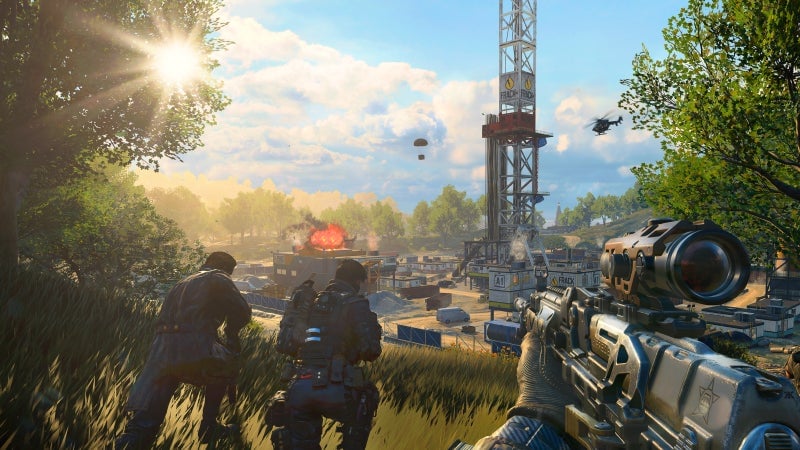 Treyarch’s office building is in Santa Monica, California, just down the street from Activision corporate headquarters. Most of the development team—the artists, the designers, the programmers—sit on the first floor, other than some members of the animation team. They park their cars in the main parking lot, get fed free meals often, and are regularly looped into company meetings, where they get updates on Treyarch’s projects and briefings about the state of the studio.
The testers operate in a different world. They all work on the second floor, crammed together as groups of 10 or 12 people in bays meant for six or seven. They are told to park in a different lot, about a 10-minute walk from the office. (“You guys have to walk a long way, so add that to your commute,” one tester recalls being told when they were hired.) Instead of getting to take breaks for lunch and dinner when they feel like eating, they have mandated (and unpaid) break hours, and although they get catered dinner during crunch, they’re told not to eat the lunch provided to non-testing developers until an hour after it’s been served. Sometimes, they’re told not to touch it at all.
When Treyarch sends out surveys about company health, testers aren’t included. When the company holds all-hands meetings, testers aren’t invited. Often, testers say they’re asked to work crunch hours with little notice or transparency, which makes it difficult for them to have lives outside of the office. “Frequently,” said one, “we wouldn’t know if we worked weekends until Friday night.”
The studio keeps so much information from its QA department that when we reported last month that Treyarch would be taking a lead role on a new Black Ops in 2020, testers say they learned it from Kotaku. “We didn’t know about the new title until your article dropped,” one tester told me. “A couple days later we received an email that wasn’t meant for us, confirming the new title… When we tried to ask about it, they said, ‘Don’t worry about it.’”
One major reason for this secrecy may be a lack of trust in the QA department, in the wake of a massive leak last fall from a fired tester. That fired tester took to Reddit to spill details on all of the Easter eggs that Treyarch had put inside Black Ops 4’s zombies mode, secrets that the team hoped it would take months if not years for players to discover. The leak left a sour taste in many developers’ mouths, and drove resentment toward the QA department from others at Treyarch. But testers say they felt isolated even before that.
There’s a perception within Treyarch, like at many other game studios, that QA testers are unskilled and easily replaceable. Even some non-tester Treyarch developers interviewed for this story said they felt that way. Throughout the development of Black Ops 4 and in the months afterward, the frequency of game updates led to lots of bugs, some of which the QA department missed during their testing. Some of those misses might have been due to mistakes or lack of skill. Others were undoubtedly due to the pace of the work. “A new update would go live, and then people would look at Reddit,” said a Treyarch developer. “Reddit would say, ‘This is broken, fucking Treyarch, do they not care about us?’ That gets passed to QA. Then a meeting is held with QA leads: ‘How did that go through?’ QA would say, ‘We didn’t get enough time.’”
It all adds up to an atmosphere in which testers feel mistreated. “You’d constantly overhear remarks and jokes about QA,” said one non-QA developer at Treyarch. “People blame them for issues in our game, not catching something… QA is the butt of everyone’s joke.”
Perhaps there would be better relations between developers and QA if they were allowed to fraternize—or if the testers could spend more than 20 minutes at company parties. But testers at Treyarch say they’re told not to talk to the developers, and vice versa.
“When I started, I was told explicitly not to interact with members of QA, but instead to go directly to the QA leads for any questions that I may have,” said one Treyarch developer. “You could look at that as a way to funnel key information to the appropriate leads for members of the QA department so there aren’t any redundancies, or different people coming to different members of the team with the same request. But the explicit phrasing was that you were not supposed to interact with or talk to them. Which was very strange to me.”
Testers shared anecdotes of only communicating with their developer colleagues through the bug-tracking software JIRA, or keeping friendships quiet so the company can’t find out and let them go.
“QA was for the most part completely removed from any interactions with the development team,” the developer said. “I think at a lot of studios you’ll have members of QA that are spread across the studio, embedded with certain teams. At Treyarch it’s just one department, sitting by themselves.”
The developers I spoke with said that this sort of isolation isn’t just bad for morale, it makes for a buggier game. Testers who feel like they’re ostracized, like they can’t communicate with the rest of the team, and like they aren’t really part of the Black Ops 4 development staff will inevitably fail to perform at a level that they might under better conditions. Treyarch staff interviewed for this story also emphasized that conditions in the QA department have also led to a great deal of turnover.
“It seemed like every other month, every other three months, there’d be members of the QA team who were leaving, and new members brought on,” said one developer. “There was a lot of churn. You’d always have these fresh faces in QA. It always felt like someone was leaving and someone was joining. I think the result is you had a lot of people who just weren’t trained, who were just expected to perform.”
Testers at Treyarch aren’t actually employed by the studio or its parent company, Activision. Like testers at many other big game studios, they technically work for an outsourcing company called Volt. And they’re not the only ones. If testers are located on the bottom of Treyarch’s hierarchy, the rest of Volt’s contractors aren’t too much higher.
Earlier this year, the staff of Treyarch received bonuses for their work on Call of Duty: Black Ops 4, as is typical at big-budget studios. For the upper echelon of directors, leads, and executives, the money could be substantial. For the contractors, it didn’t exist. Anyone who worked for Volt—a list that included not just testers but some coordinators and associates across all departments—wasn’t eligible for a bonus.
“When we see a bunch of new Teslas come in after the bonuses go out, that kinda feels bad for us,” said one Treyarch contractor. “Our company parking lot is all flat, so we can see Jaguars and Teslas and then you’ve got the beater cars around—you can tell that’s probably a contractor.”
Contractors at Treyarch get different badges than full-time staff—the full-timers are blue; the contractors are orange—and are reminded that technically, they don’t actually work for Activision. They work for Volt. “As a contract employee, I guess you could say you do feel a little different than everyone else in the studio,” said one Treyarch contractor. “It’s not outspoken, but it’s the general demeanor in how things play out.”
For example, the contractor said, during an all-hands meeting earlier this year, Treyarch HR and management went over the results of quality-of-life surveys they’d given out to the studio. The surveys were designed to address internal issues after Black Ops 4 and try to figure out how they could all improve for the next project. Problem was, they’d only given the surveys to full-time staff. Contractors weren’t included.
“We don’t even get to be part of it and talk about how we’re being treated,” the contractor said. “It’s a common theme between contract employees, feeling like their voices aren’t being heard. And then you feel like you can’t talk to a senior artist or managerial lead because you’re a contract employee. You feel like your job is at risk if you say anything. Nobody says that, but that’s just how you feel.”
Although some of these contract employees were junior-level staff, completely new to the industry, others had several years worth of experience, which made it insulting when they received, as one called it, “pretty low pay for pretty skilled labor.” Without getting too specific so as not to identify those who spoke to us, we reviewed resumes of some Treyarch contractors who had multiple years of experience but said they were paid around $20 an hour, not too far off from California’s minimum wage ($12 per hour). Some said that when they asked for more money, they were told that Volt’s restrictions made that impossible. One said that the full-time Activision equivalent of their current role would pay $6 to $7 more per hour, an especially significant difference when accounting for all the crunch.
When reached for comment, a Volt spokesperson said they would be making management available for an interview but then did not do so by publication time.
 Treyarch contractors get a limited number of sick days, but no paid time off. Taking vacations means giving up a salary for those days or weeks. Contractors are offered holiday pay for six days a year including July 4th and Thanksgiving, plus either Christmas or New Year’s—not both. In December of 2018, however, they all received an email explaining a complicated new change in policy. Among other things, the email noted that in order to receive holiday pay from now on, Volt contractors “must work at least 510 straight time hours within the 13 weeks preceding the particular holiday” and “must work continuously for 13 consecutive weeks prior to the holiday week.”
The new policy left many contractors confused, but in short, “straight time” meant core hours, meaning that overtime wasn’t included. In other words, if you got sick or had to leave early one day, you were out of luck. “Even the most punctual testers would miss a day or come in late which would result in them not getting the holiday,” said one former Treyarch tester. “Once the policy change happened, I didn’t know of a single person that received holiday pay after that, even testers who had been there for well over a year.”
Contractors do get benefits, but not the same ones as Activision employees. “Our benefits suck,” said one tester who recalled signing up for health insurance only to find themselves getting charged several hundreds of dollars a month with no warning. And even these meager benefits are temporary. When the employees’ contracts expire, they’ll either leave or be asked to stick around. Developers interviewed said the promise of full-time employment is, as one described it, “the carrot they’re always dangling in front of all the contractors,” and that very occasionally, Volt employees will get hired full-time by Treyarch.
One of the biggest points of contention, something that Treyarch staff say has been brought up multiple times in company meetings over the past few months, is the lack of communication. “A lot of people felt like their voices weren’t being heard, and they had no say in how things were handled,” said one staffer. “There’s no cohesion between different departments like multiplayer, zombies, and Blackout. It’s like we’re all working on the same stuff but we’re all in different worlds. People said they felt like they couldn’t talk to leads or seniors about issues that were affecting them.”
In the months following Black Ops 4‘s release, Call of Duty players grew frustrated withthe gradual implementation of microtransactions and loot boxes, and some Treyarch developers said they felt that pain. In interviews, many said they were just as frustrated with publisher Activision’s never-ending quest for increased revenue, and they were frustrated with the lack of influence they had on it. (“It makes you wonder, where does all the money go? Obviously it’s not to Volt employees.”) One of the most common complaints I heard from lower-level Treyarch staffers was that despite putting in night after night and weekend after weekend, they were rarely allowed to offer creative input on the game.
The sudden upheavals faced on both Black Ops 3 and Black Ops 4 epitomize the struggles that Treyarch’s developers say they feel. Lack of communication leads to big creative reboots leads to excessive crunch. And it all leads to an environment in which both testers and contractors feel underappreciated.
“People who are making the managerial decisions, the hiring managers, people in charge of all the departments who make the decisions day to day, they’re the ones who benefit from the bonuses, the higher pay, the benefits,” said one Treyarch contractor. “At the end of the day we’re all still there together working on the game. And yet we’re all treated differently.”
Many of the issues covered in this report are common in the video game industry. Several Treyarch staffers said that when I contacted them, they had been expecting to hear from me, as the problems detailed in our Anthem investigation earlier this year echoed what they’d been through. They said they hoped the continual exposure of these issues will help push for change, especially given the prolonged success of the series they work on. It’s not like Activision has been hurting for cash.
Last month, Treyarch informed staffers (except QA) that they would be taking a lead role on a new Black Ops game in 2020, one that takes the series back to its Cold War roots. There are concerns in the studio that returning to a two-year development cycle (after getting three years for each of the last two games) will exacerbate the crunch and worsen the issues that Treyarch has been facing. Even with sister studios Sledgehammer and Raven working on the game alongside Treyarch, will the development team be able to finish a new Black Ops in the next year and a half without killing themselves along the way? Without burning out all of their employees? Several Treyarch employees said they’ve grumbled about the long-running shooter series feeling stale, pointing to Ubisoft’s Assassin’s Creed as an example of how taking off a year can revitalize a franchise. There’s been a new Call of Duty every year since 2005, and so far, Activision has not shown any willingness to give the series a break.
Those are complicated problems to solve. Some at the studio, however, have a simpler desire: to feel like contractors and testers are part of Treyarch rather than a stratified lower class.
“More pay would be nice,” said one tester when I asked what they wish would change about Treyarch’s work conditions. “But I think a majority of us just want to be treated equally. All of us give a shit about this game. We give away our days to work on this game. None of us would be here if we didn’t like Black Ops and the series as a whole. Why treat us like subhuman even though we work just as hard as you guys?”
UPDATE (12:45pm): This morning, Treyarch studio heads Dan Bunting and Mark Gordon sent the following e-mail to staff, obtained by Kotaku:
Team:
Today, Kotaku published a story that explores a number of reported behind-the-scenes issues in Black Ops 4 development. The first and most important statement that we want to make to the team is that, as managers of this studio, we take the well-being of every single individual working here very seriously.
We have a vision for the future of this studio that includes significant improvements to work/life balance, and we plan to achieve that through better project planning, streamlined production processes, and rigorous decision-making timelines. It is also our intention to maintain our commitment to increased transparency.
Getting there will require time, hard work, and commitment — most of all, it will require open communication. If you ever feel like your needs aren’t being met, please do not hesitate to communicate actively with your manager. No one should ever feel like they don’t have options, can’t talk openly, or that the only choice is to take their concerns to the public. These conversations should always start with an honest dialogue with your department manager, and if that’s not working, feel free to reach out to one of us.
Game development is a wildly complex art and it requires a diverse set of people and skill sets to do it successfully. It’s important for all of us to foster a studio culture that treats all team members with respect.
We appreciate the contributions made by all parts of the team in the name of the games we make.
Sincerely,
Dan & Mark
Note: an earlier version of this update said it was co-signed to Treyarch chairman Mark Lamia, but it was actually Treyarch co-studio head Mark Gordon. Our apologies for the error.