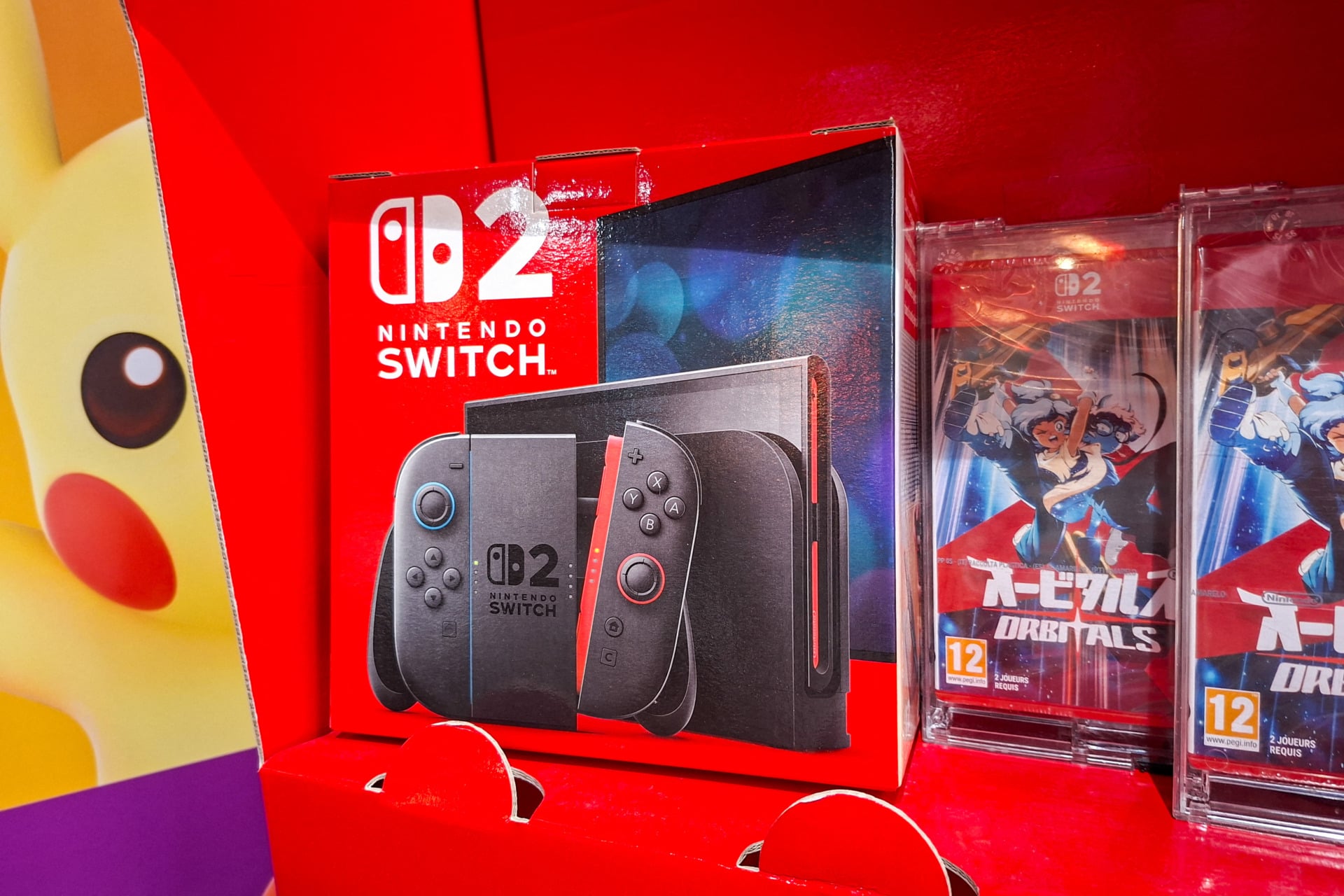
At least four GameStops were refusing to sell the Nintendo Switch on its own without a warranty or game attached, Kotaku has learned. And although GameStop’s corporate office says stores shouldn’t be doing that—and that, after being contacted by Kotaku, they have asked those stores to stop—an employee tells us that stores are incentivized to sell the Switch with add-ons.
Yesterday, Kotaku reached out to a dozen GameStops across the country. Most of those stores said they were happy to sell us a Switch on its own (only one was out of Switches). But four GameStops in New York City refused to sell the Switch without a warranty or bundle, raising the price of the $300 console to $350, $360, or even $475 (before tax).
“GameStop was disappointed to hear about the 4 GameStop stores that were misrepresenting our mission of providing customers the best service and products they want when visiting our stores,” said GameStop’s corporate headquarters in a statement. “We appreciate Kotaku bringing this to our attention. These stores have been contacted and this should no longer be an issue.”
One GameStop employee, speaking anonymously to avoid career repercussions, told Kotaku news editor Jason Schreier that the company is pushing stores to attach games and warranties to all Nintendo Switch sales. “It’s not necessarily a quota per se, but it is heavily addressed and ranked between stores in districts,” said that employee.
We stumbled upon this trend by accident yesterday, when Kotaku editor-in-chief Stephen Totilo called up our local New York store to ask whether they had any Switches in stock. Sitting next to him, I heard a short argument and, then, a beep. A little peeved, Stephen turned to me and explained that the GameStop would only sell him the Switch if he also purchased a $50 warranty.
That sounded like a shakedown to me, so while Stephen went to the Nintendo Store to buy a bundle-free Switch, I made a few calls and visited a store. Local employees said that they had Switches in stock, but only sell them in bundles, which could include simply a warranty and a game or a warranty, two games and a case. Many said it was something they “had” to do.
Since its March release, the Switch has been a hot and rare commodity. Back in a March earnings conference call, GameStop COO Tony Bartel noted consumers’ demand for the Switch, adding that “As soon as we get any in our stores, it’s out within hours. We anticipate we’re going to be chasing supply this entire year.” Going against that narrative, in July, Nintendo Senior Director of Corporate Communications Charlie Scibetta told Ars Technica that the shortages were “definitely not intentional.” He explained that Nintendo had simply underestimated how much people wanted the Switch.
“We sold 2.7 million worldwide in that first month, said we’re going to have 10 million [more] by the end of the fiscal year,” Scibetta said. “Unfortunately, we’re in a situation right now where as quick as it’s going into retail outlets it’s being snapped up. It’s a good problem to have, but we’re working very hard to try and meet demand.”
This year has been rough for GameStop, which is struggling to keep up with a video game industry that is increasingly going digital. Earlier this year, a series of Kotaku reports exposed the company’s controversial Circle of Life program, which incentivized GameStop employees to sell used games instead of new ones. In August, following its second-quarter earnings report, GameStop shares fell hard, with CEO Paul Raines saying that the Nintendo Switch has been a major strength for the retailer this year