Life doesn’t often let you know when your brain will flip. If you ever do receive such a heads-up, you’d be wise to heed it. I learned so while playing Renaissance Faire, a massively multiplayer real-world role-playing game that is only nominally about the Renaissance.
Rewind to 2019: Some friends and I were booting up Renaissance Faire for the first time (read: sitting on a bus, apocalyptically hungover, at 10:15 a.m. on a Saturday), discussing whether it’d be a blast or a bust. That’s when we met the most magical man I’ve ever seen in my life. A guy in a sleeveless tunic and leather bycocket, holding a Bud Light glistening with cool condensation in one hand. He turned to face us, and started explaining how Renaissance Faire can shift your perspective so subtly you don’t even register the change.
“You’re hangin’ out, and you’re pounding mead, and your brain just, like, flips,” he said, rotating his empty hand in a motion that I think suggested a human brain doing a cartwheel. “You don’t really realize it. But your brain just flips, man.”
He was absolutely correct. I just didn’t know it at the time.
I recently gave Renaissance Faire, affectionately called RenFaire by diehard fans, another spin.
RenFaire draws heavily from an older game called Renaissance, But Also Many Other Eras From Human History For Some Reason. Blessedly, the more modern versions of Renaissance Faire have completely done away with most of what made Renaissance, But Also Many Other Eras… such a drag—the wars, the famine, the illness, the public executions, the chamber pots.
Since the latter half of the 20th century, Renaissance Faire has come out on an annual release schedule, though it was inadvisable to play last year due to an unprecedented number of bugs. Each subsequent version doesn’t iterate much on form. To you, that might sound like creative inertia for the express purpose of easy profit. To me, it suggests that Renaissance Faire has achieved true mastery of form: It’s confident in what it is, knows exactly what it wants to deliver, and then delivers on it reliably.
Renaissance Faire
-
Back-of-the-box quote
"Hey Jesus, can I get a photo?"
-
Type of game
Totally accurate history lesson
-
Liked
Chill vibes, great food, fun mini-games
-
Disliked
Long lines, pricey microtransactions
-
Developer
Capitalism
-
Platforms
The Matrix
-
Played
Over the course of two sessions, each nine hours, dozens of mini-games, shows, snacks, and an incalculable amount of mead
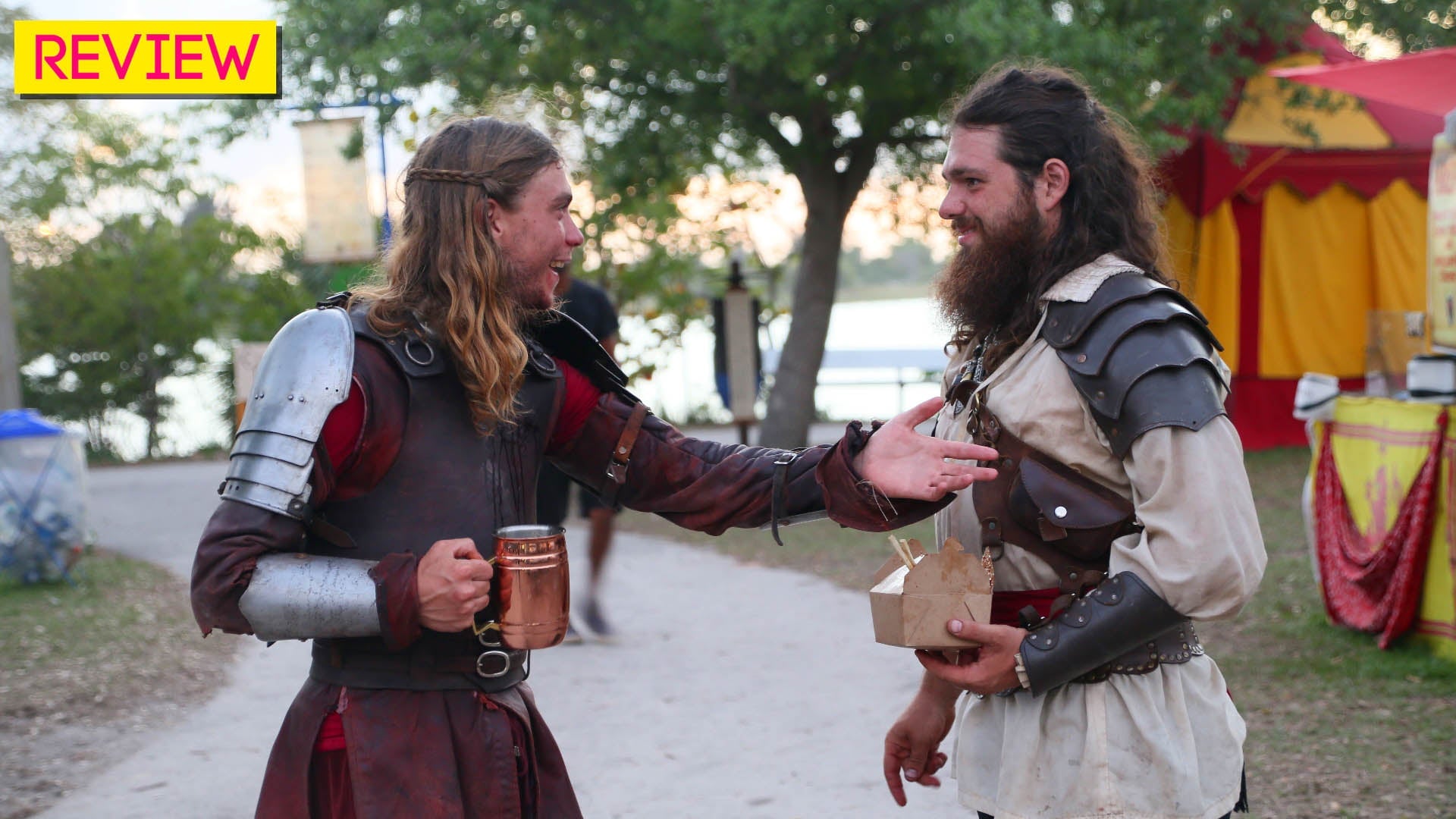
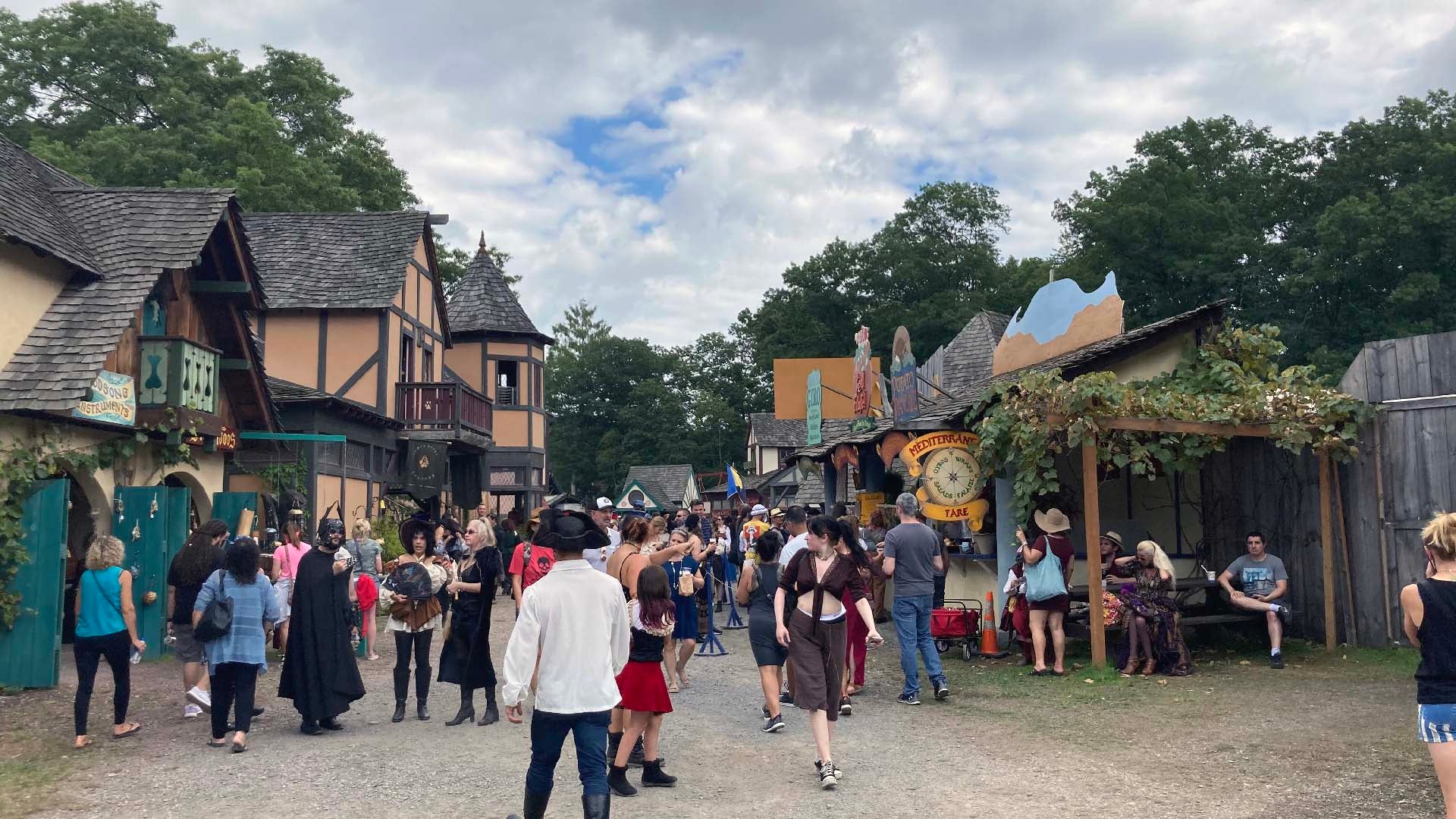
Renaissance Faire sets you and thousands of other people in a makeshift village designed to look like a town (sorry, towne) from an indeterminate period of history. Your goal, ostensibly, is to steadfastly pretend like you live in that indeterminate period of history, but it’s most fun if you simply go with the flow. You can play various mini-games, you can hand over money to buy stuff, you can watch in-game concerts and performances. About two-thirds of attendees are dressed in their snazziest costumes and other optional cosmetic options. The rest are just there, in blue denim and pima cotton T-shirts, for shits and giggles (and turkey legs). They’ll come back next year in full costume.
Like Fortnite, Rocket League, and other live-service games, Renaissance Faire features a hodgepodge of characters from across the spectrum of popular fiction. For instance, at the knife-throwing mini-game (which rules), you can see a cavalcade of Genshin Impact heroes. Over at the tests of strength (which also rule), you might see Link or Zelda smash a hammer into a metal thing that sends another metal thing up a third metal thing whereupon it then goes claaaang
It’s also a place where you can see one member of a fictional globe-spanning conspiracy assassinate another member of a different fictional globe-spanning conspiracy:

Eat your heart out, Super Smash Bros
Many of these characters coalesce in Renaissance Faire’s central hub, which is structured like a village green from an olde-timey town, surrounded by shops (sorry, shoppes) and restaurants. At any vendor, you can fork over in-game currency for a class of restorational items known as “food.” (This currency looks a whole lot like, and converts to the same exact amount as, USD. No place accepts what NPCs refer to as Lady Visa, but there are various magical machines that allow you to use said Lady to source currency, if you’ve the patience for queues (sorry, queueses).) The developers clearly went to lengths to include cuisine that’s meant to evoke the era—y’know, stuff like chicken fingers, hot dogs, falafel, fried calamari, beef gyro, French fries, bloomin’ onions, nachos, and, of course, turkey legs.
In nearly all cases, those items cost an arm and a (turkey) leg. The lone reasonably affordable item on the menu is something called a BBQ sundae, which looks like this:
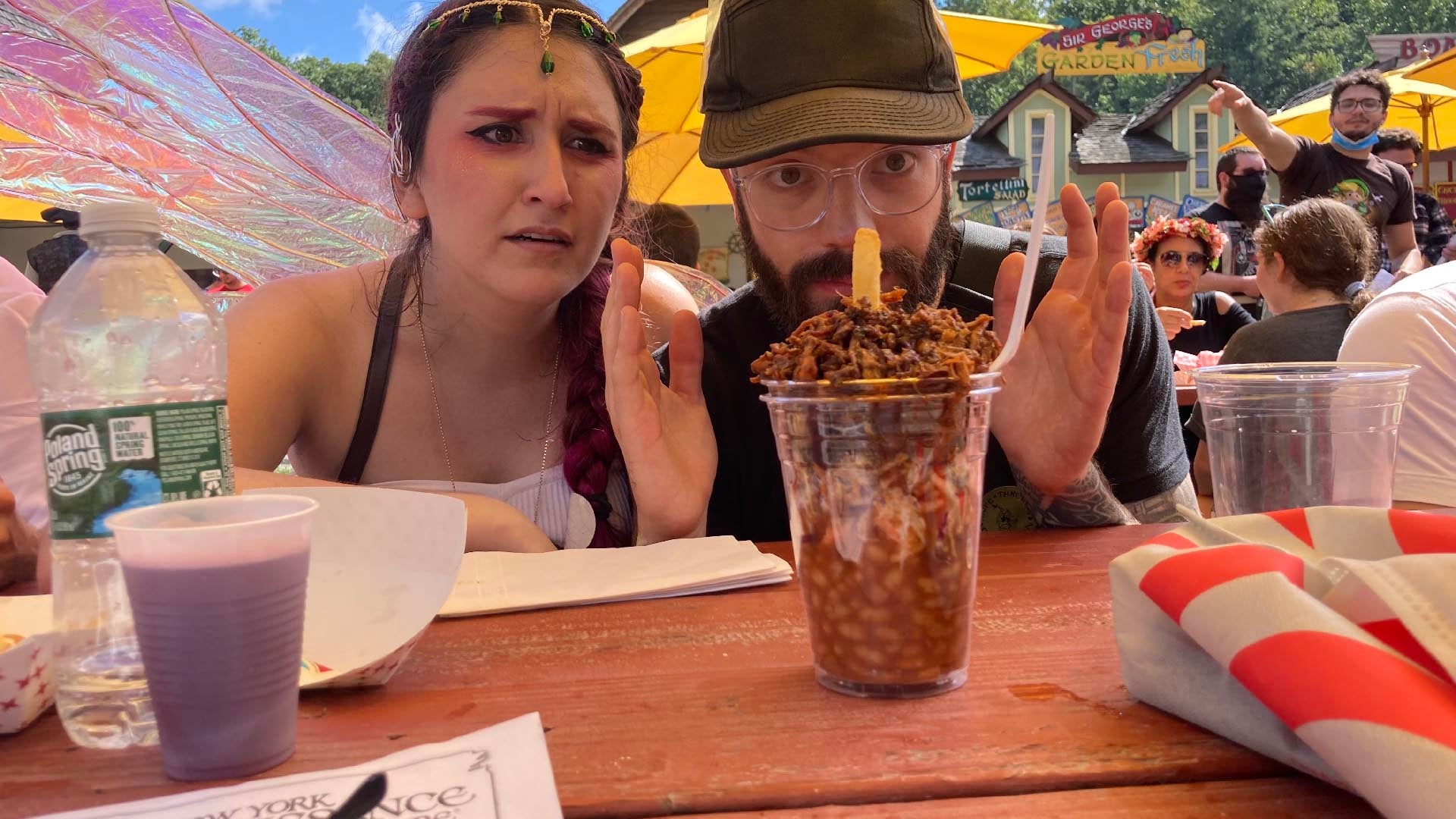
Honestly? Delicious. Instant 100/100 HP.
On the fringe of the green, and sprinkled throughout Renaissance Faire’s densely packed world, you’ll find various pubs. Many of these sport names that are totally innocuous on paper but could easily be referred to incorrectly “by mistake” for laughs (to wit: the Cock and Bull, or the Puss’n’Boots). Despite Renaissance Faire being rated E for Everyone, you’ll of course come across no shortage of players who mess those names up in a decidedly T-for-Teen-rated manner. These pubs sell era-appropriate beverages like mead, wine, and cider. You can also imbibe the so-called Lady Sprite. Water costs an egregious five bucks.
Yes, that’s one catch of Renaissance Faire: It’s utterly rife with microtransactions, few of which seem set at a fair price point. In fact, you could make a reasonable case that the microtransactions are the point.
Pretty much anywhere you go in Renaissance Faire, you’ll see something to buy. Along roads called Tinker’s Trail and Spende Penny Lane, you can buy rings, charms, bracelets, necklaces, and other gem-adorned accessories. By Lakeside Market, you can buy wool cloaks and leather boots and musical instruments that would fit right in at your local Guitar Center.
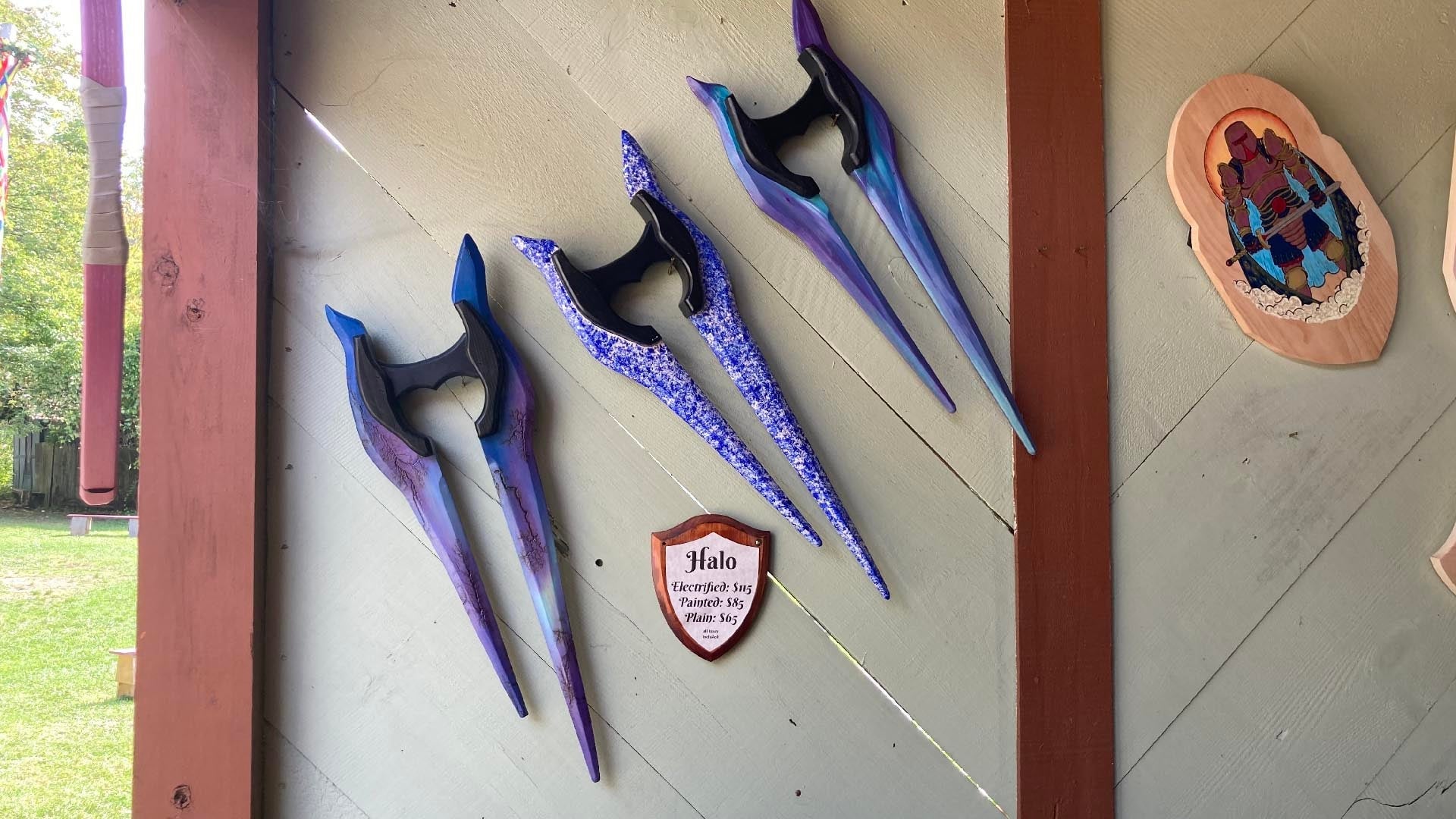
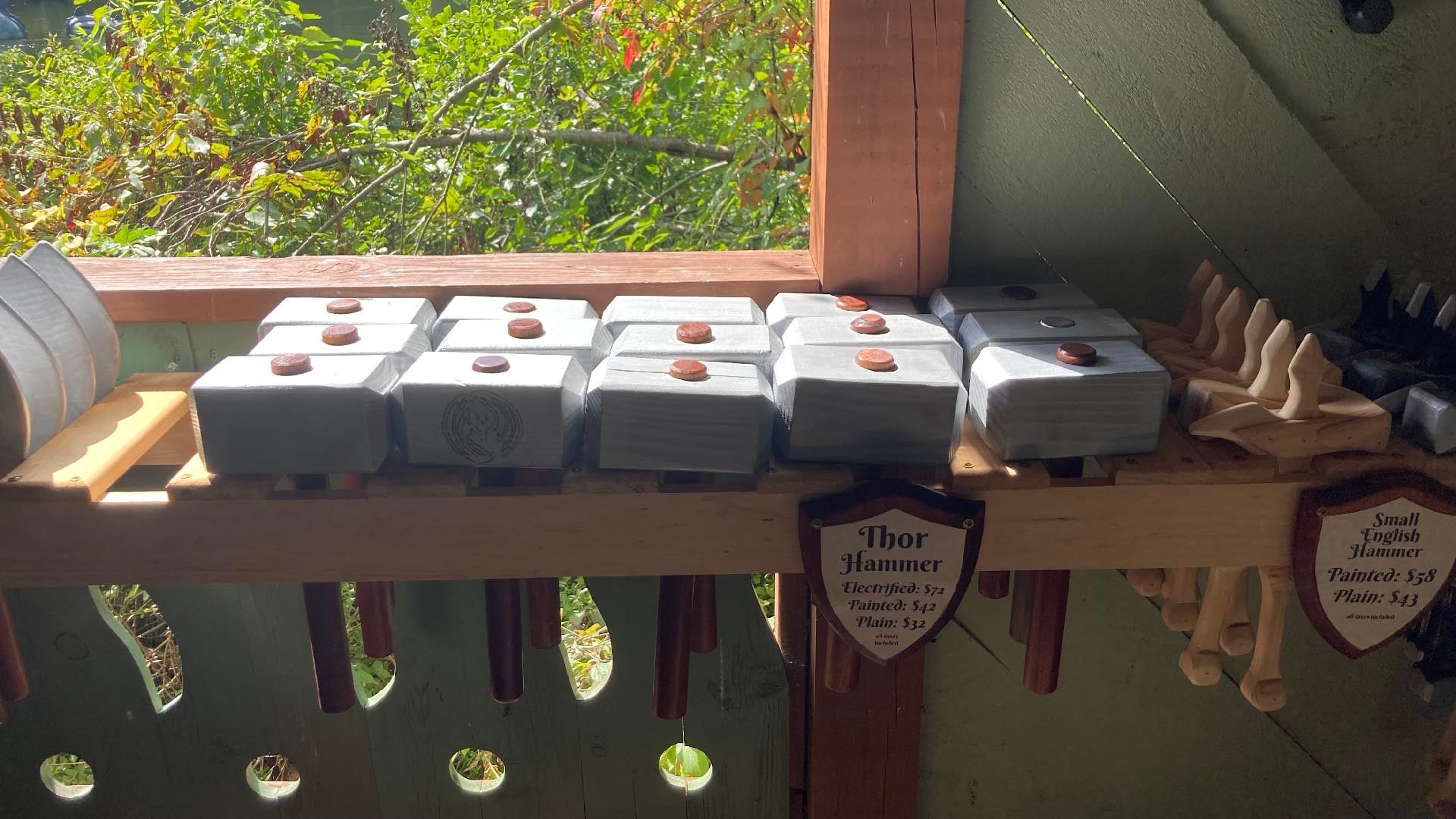
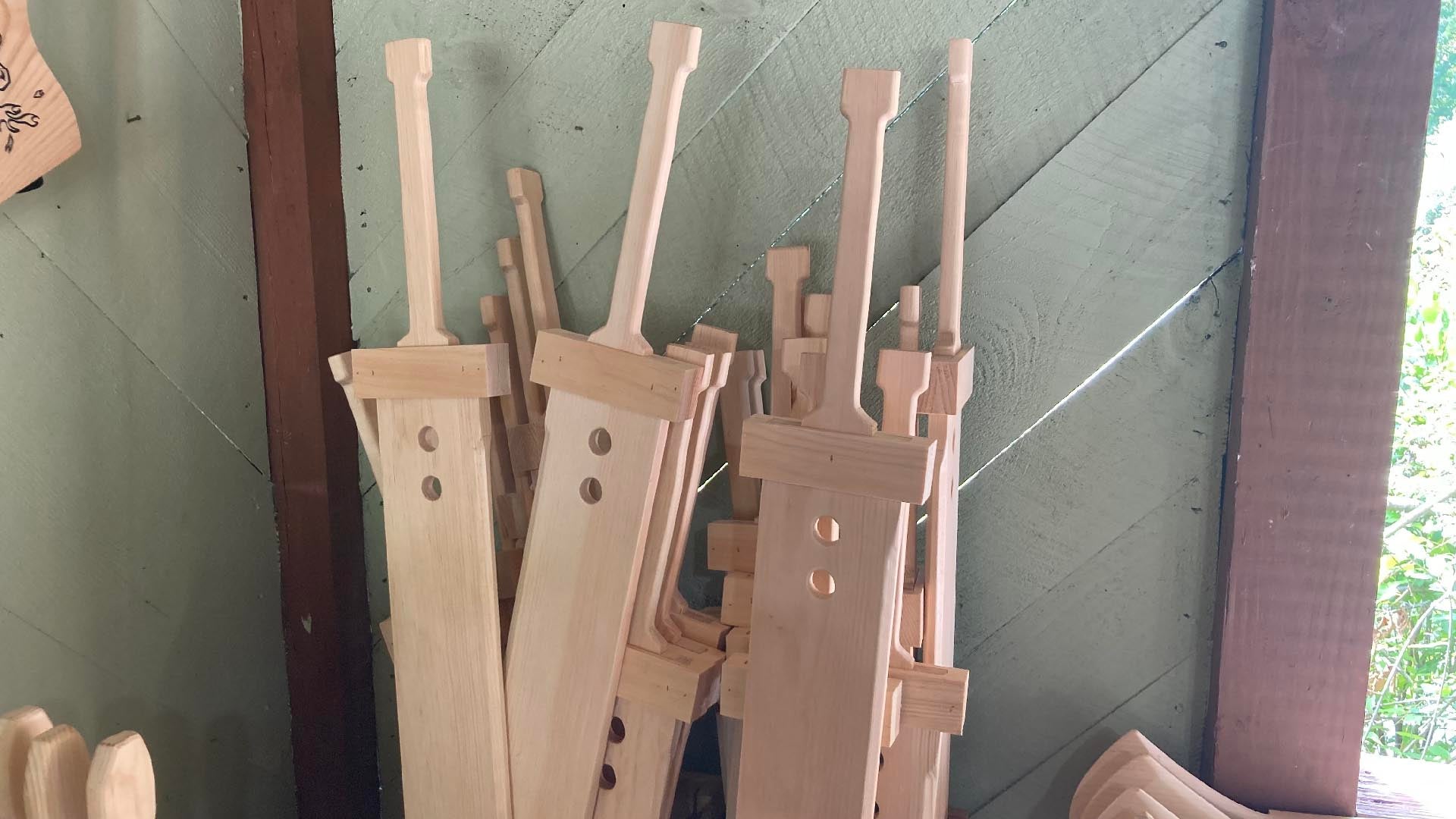
You needn’t look hard to find tapestries of housepets or chalices shaped like dragons. At the weapons shop, as with the vast cast of characters, you’ll see wares commonly associated with popular characters from video games: an energy sword from Halo, a buster sword from Final Fantasy VII Remake, Mjolnir from Marvel’s Avengers
Despite the self-evident ode to capitalism, Renaissance Faire’s vendors aren’t the slightest bit pushy. It’s the fellow players you have to watch out for. As our game was winding down, one of my party members picked up a drinking horn that would make Eivor proud: carved from bone, lacquered, a foot-and-a-half long, sheathed in a burnished leather harness. The thing could probably hold an entire pint—an entire British pint, at that! I, clearly afflicted by the “peer pressure” status effect, didn’t want to spend $65 on a microtransaction, but also didn’t want to walk away empty-handed. So I settled for a smaller horn. $45.
I later learned it could hold just one-third of one bottle of beer.
Also, it was cracked.
These cosmetic items are all optional and don’t offer any notable gameplay benefits for Renaissance Faire, so if you’re not a sucker like me, you can get by just fine without them. But considering you can’t go elsewhere to source the necessary healing items (like water, which, again: five freakin’ bucks!), the entire microtransaction system feels exploitative by design, to put it charitably.
There are also inconsistencies in dialogue among NPCs. For every bartender who asks to see your “drinking parchments,” you’ll meet another who says, bluntly and with modern cadence, “ID?” Whenever you leave a tip, as you should if you’re role-playing a Paragon hero, the bartender clashes a cymbal and rallies the crowd for hoots and hollers. Some NPCs get into it. Others merely offer polite thanks. Personally, I far prefer the latter, as the former can get cloying—both for the patron and, assuredly, the bartender, who’d have to do so dozens if not thousands of times over the span of the game. It’s an unmistakable sign the developers didn’t scrutinize the script as well as they could have, and perhaps didn’t fully consider what they’re asking of their NPCs (who I desperately hope are paid a fair wage).
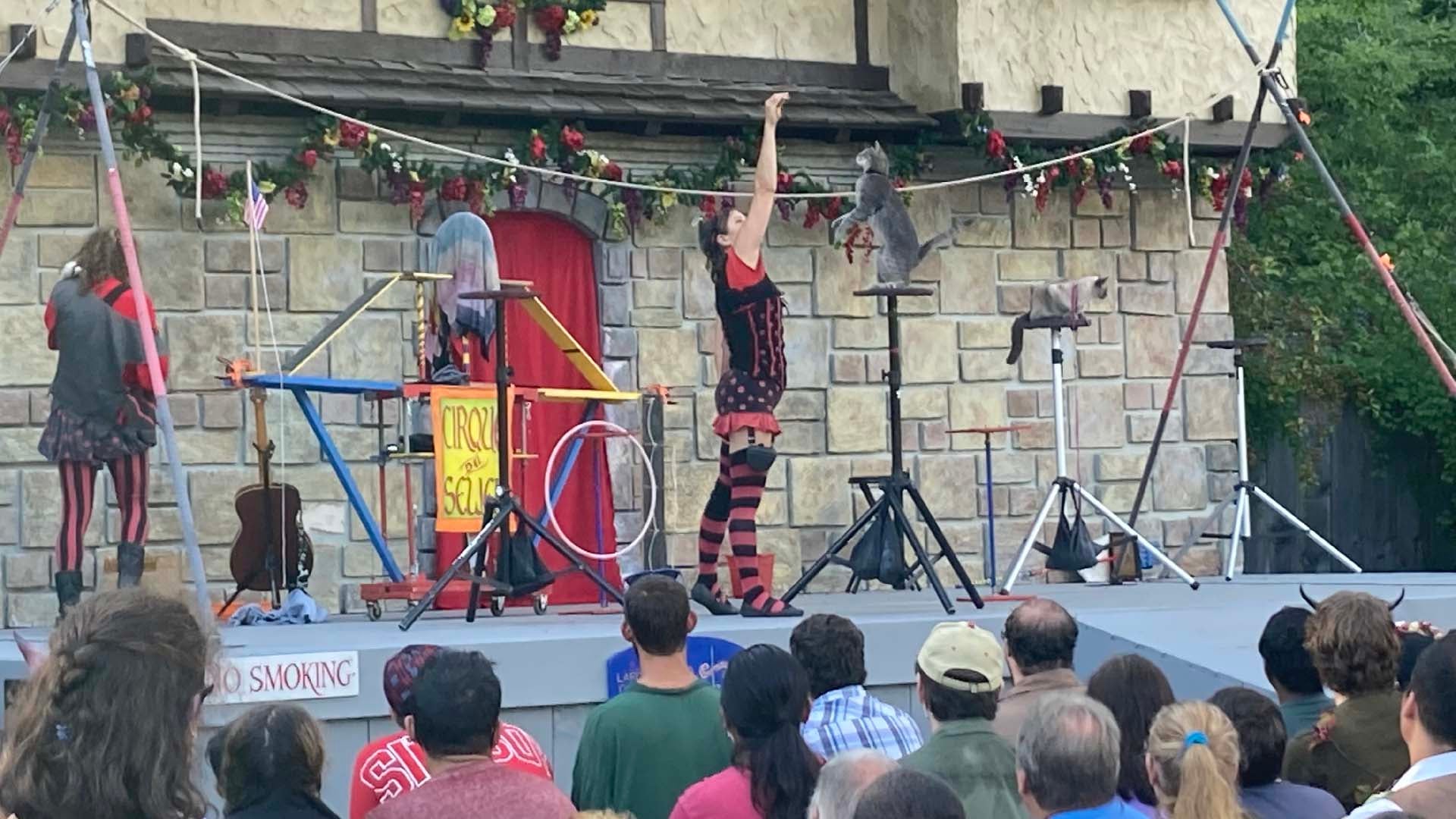
Other NPCs are always on their game in the various shows you can see. Renaissance Faire is played in real-time, dictated by a complex schedule divided into 15-minute blocks (10:00 a.m. to 6:45 p.m.) spread out over 19 levels. At Queen’s Grove, you can catch historical lectures and performances of Shakespeare. Pagon Wagon Stage hosts comedy shows throughout the day. The Fortune Stage, meanwhile, is home to four daily showings of a variety event called Cirque de Sewer, which stars three cat NPCs performing stunts as directed by a human NPC. (Surely this won’t surprise you, but the cat characters barely comply with instruction. It’s hilarious.) Elsewhere, you can catch demonstrations of glass-blowing, falconry, and acrobatics.
It’s impossible to see everything; playing Renaissance Faire means making strategic assessments about where you should be and when you should be there (and rallying your party to follow). If you’re a micromanager who loves games like Cities: Skylines, Surviving Mars, or the job-designation subsystem in Bravely Default 2, you’ll feel a similar thrill from RenFaire
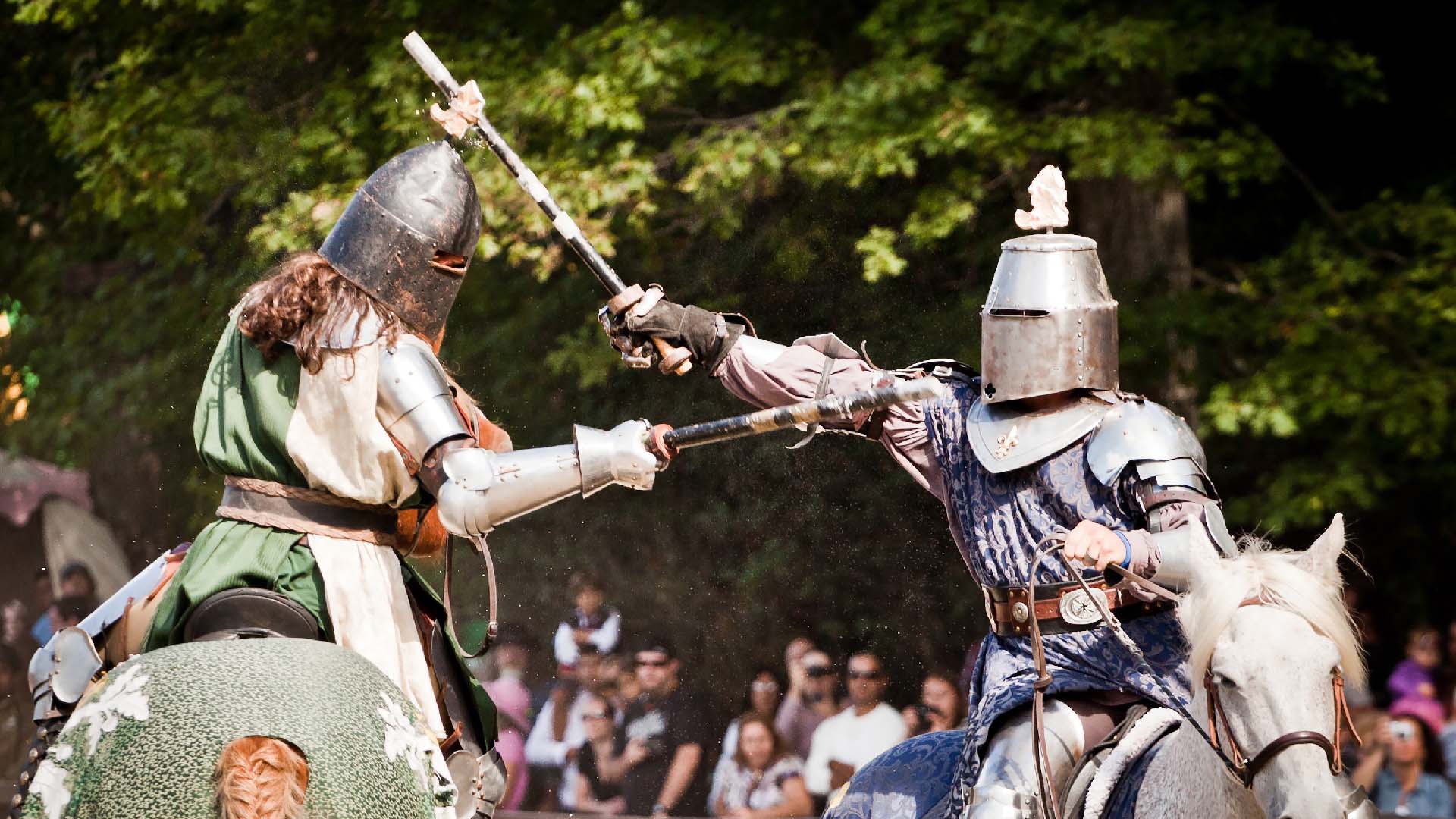
The crown jewel, at least per crowd size, is the Roselawn Tournament Field level, where you can see the Joust of Skill, the Royal Joust, and the Joust to the Death (PG-13). I’ll let you in on something: It is not, in fact, to the death. Actually, in none of these events do any riders even fall off their horses! Whichever rider taps the other rider with a big stick first wins. Game of Thrones: The Game (of Thrones) this is not. The developers of RenFaire clearly sanitized any wisp of violence from their game, presumably to ensure prime shelf placement in Ye Walmarte.
But that’s such a minor note, as you do not play Renaissance Faire for the violence. (Please, please do not play Renaissance Faire for the violence.) You play for the camaraderie, for the turkey legs, for the brief but all-consuming and ever-lasting sense of escapism—a whirlwind tourist’s trip to a place, untethered from time and responsibility, where you can do nothing but go with the flow. How rare. How beautiful.
Two years ago, the idea to play RenFaire ‘19 started as an inside joke among some friends and me. We showed up in jeans and plain shirts. Strolling down Storybrook Lane, we reflected on Mr. Brain Flip’s eloquent bus soliloquy and, I’ll confess, teased him a bit.
By the middle of the afternoon, as my party and I were sitting in a circle with a dozen people dressed as pirates, all of us shouting along to a rendition of “Drunken Sailor,” it hit me: Our brains were well and truly flipped. And they weren’t gonna un-flip. (Pleading the Fifth on how much blackberry mead we’d consumed at that point—the drunken effects are surprisingly realistic.) It’s not so often you get to experience a paradigmatic intellectual shift over the course of an afternoon.
That experience colored my and my party’s approach to RenFaire ‘21, namely to take its intoxicating effects seriously. This time, we came prepared. This time, we decked out our characters in our Halloween Sunday best. This time, we made sure to bring extra currency. This time, we modded in several flasks of high-proof booze because those mead vendors are so damn expensive and also have excruciatingly long lines.
In this, RenFaire reminds me somewhat of Destiny 2. There are the players who devote their weekends to the game, hundreds if not thousands of hours spent farming patrols for glitter. Then there are the players who dip in and out for the annual expansions. The latter play the new campaign to the end, or grind up to the soft-cap Power level of the season. Then they call it quits, and return the following year.
RenFaire, I believe, is going to become that for me, an intention that’s crystallized after playing the latest iteration. I’m genuinely looking forward to playing every annual release, so long as circumstances allow for it.
But I’d be remiss not to mention the one thing players widely cite as a glaring imperfection, a flaw that conversely pulls double duty as perhaps my favorite feature: Playing Renaissance Faire madeth thine author of doth post writeth all of his texts like so. For about a weeketh.
What can I sayeth? Your brain just flips, man.