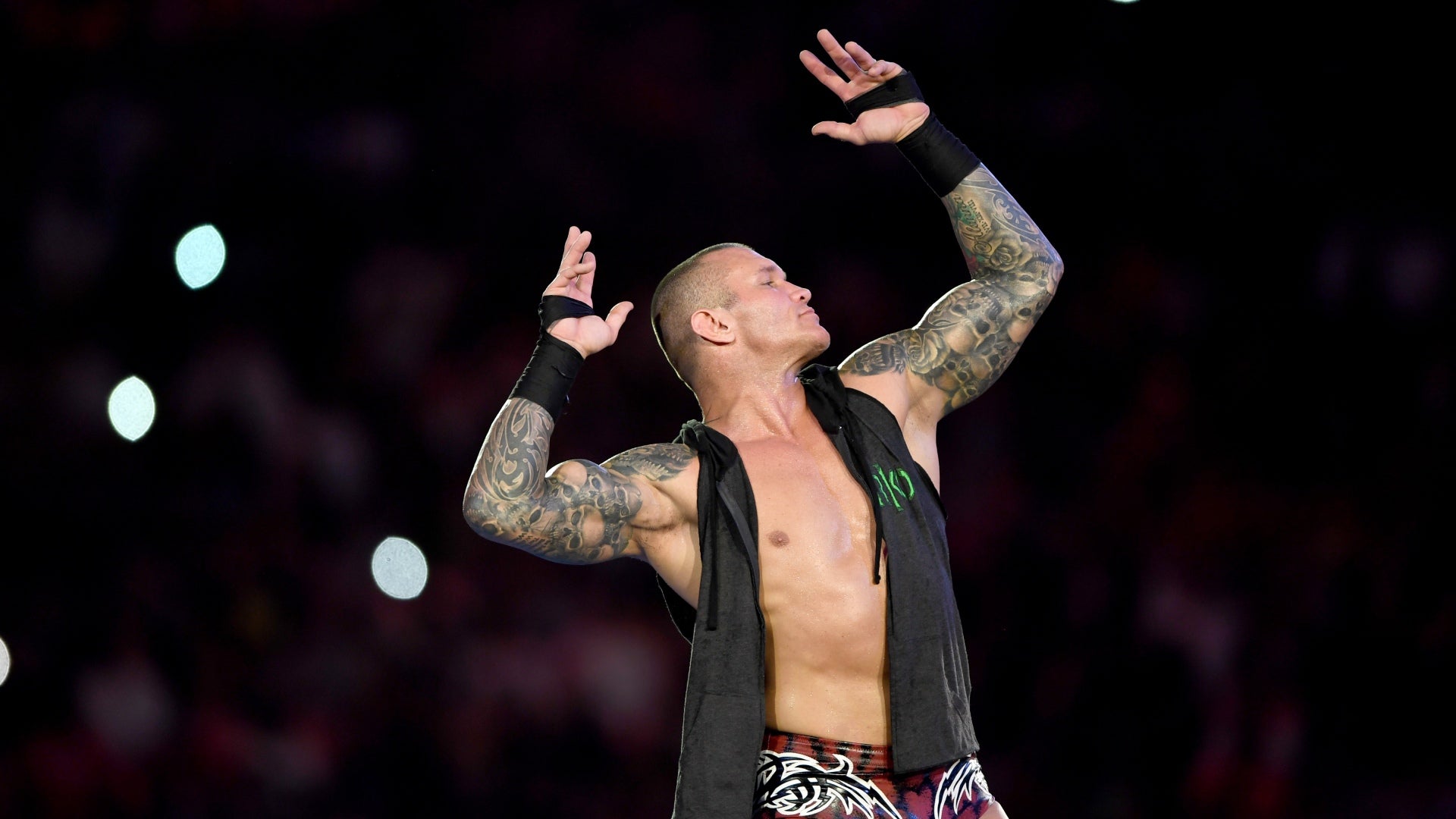
For any bystander looking at the worlds of professional wrestling and video games from the outside, what’s happening inside can look like a veritable circus. In 2022, each has had more than its fair share of ongoing legal litigation and backstage drama. Now, however, a new lawsuit has seen the two worlds and all their tendency toward drama and upheaval collide, as WWE wrestler Randy Orton’s tattoo artist has successfully sued WWE 2K22 publisher Take-Two Interactive for reproducing her tattoo art in-game without permission.
Back in 2018, tattoo artist Catherine Alexander filed a lawsuit against Take-Two claiming the video game publisher used her tattoo designs on models of Randy Orton in its WWE 2K games without permission. Those designs, which include tribal tattoos, skulls, a bible verse, and a dove and rose, are all featured on Randall Keith Orton’s viper-like frame.
According to her deposition, Alexander claimed WWE contacted her offering to pay her $450 to use Orton’s faux-tattoo sleeve design for merchandise, which she turned down. According to Video Games Chronicle, Take-Two argued that its reproduction of Orton’s tattoos was fair use in order to recreate Orton in the WWE 2K video games. Turns out the jury at the US District Court Southern District of Illinois didn’t buy that argument and ruled that Alexander was entitled to compensation. She will receive $3,750 in damages.
Read More: Community Review: WWE 2K22 Is Good Again?
This isn’t the first time that a video game company, let alone Take-Two, has been sued for not asking for permission before replicating a celebrity’s tattoos in a video game. Back in 2016, Take-Two was sued by tattoo artists at Solid Oak Sketches, who own copyrights for tattoos they’ve done for LeBron James and Kobe Bryant, for using LeBron James’ tattoos in the NBA 2K games without permission
In that instance, Take-Two won the case. King James even chimed in on the legal scuffle, saying “I always thought that I had the right to license what I look like to other people for various merchandise, television appearances, and other types of creative works, like video games,” according to The Hollywood Reporter
Further back in the lore of video game tattoo legal litigation, THQ was sued in 2012 for unlicensed use of tattoo art on the body of MMA fighter Carlos Condit in UFC Undisputed 3. Movies got some of that tattoo litigation action as well. In 2011, Warner Bros. settled a lawsuit with Mike Tyson’s tattoo artist for reproducing Iron Michael’s face tattoo in The Hangover 2.
In wrestling terminology, I guess we might call this a litigious squash match. Time will tell if Alexander’s case will become a watershed moment, opening the door for tattoo artists to sue video game companies for not asking permission to reproduce their art. Let’s just hope THQ Nordic doesn’t follow by example and not ask permission from wrestler Brody King’s tattoo artist for its upcoming All Elite Wrestling video game. The dude is absolutely covered. This just goes to show you that asking for forgiveness instead of permission can have legal ramifications.