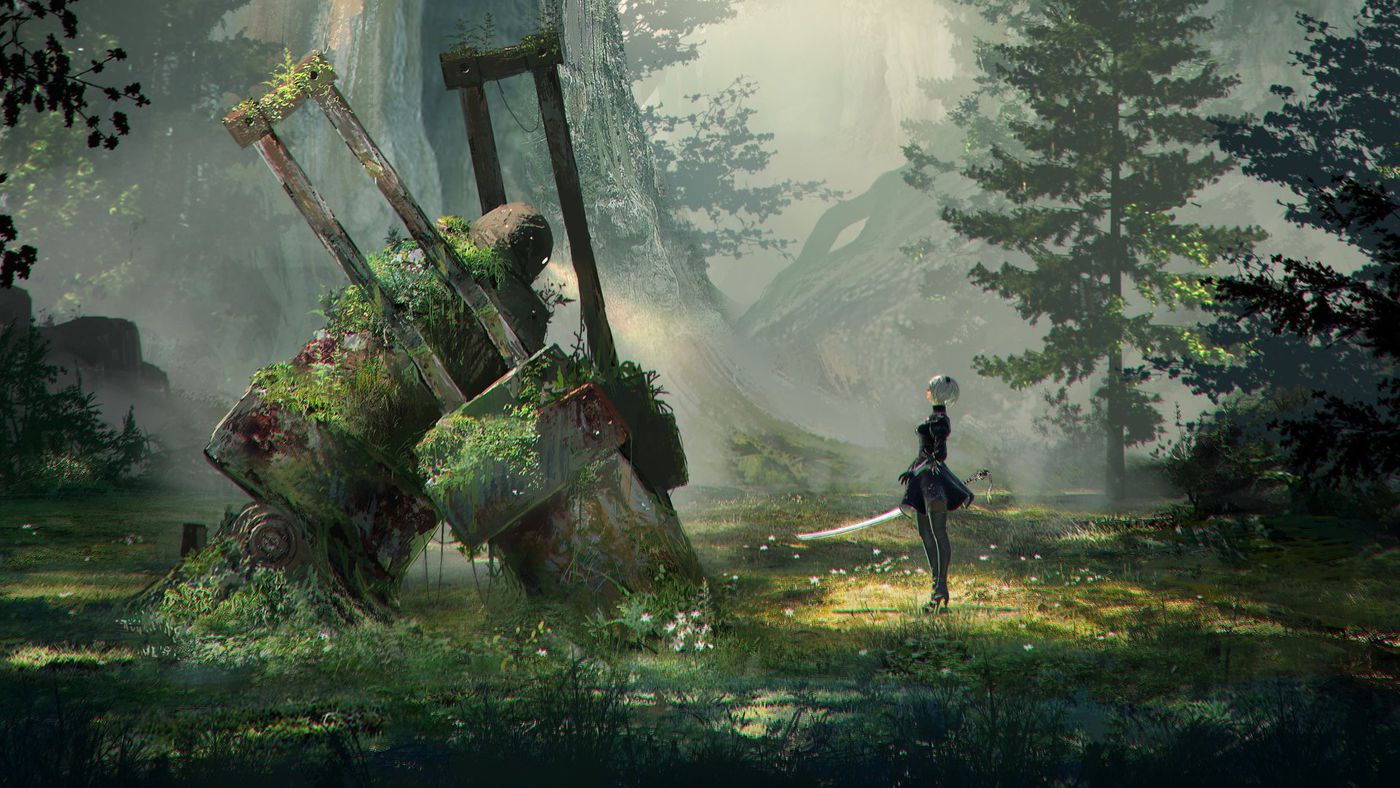
Cogito is the NieR game that Square Enix doesn’t want you to know about.
NieR has always been the odd one out in Square Enix’s stable of JRPGs, but the latest (unofficial) addition to the franchise is so out there that the lawyers had to get involved.
This story originally appeared on Kotaku Australia
Earlier this year, developer Applibot and publisher Square Enix called on fansto celebrate the rollout of NieR: Re[in]carnation via a content creation competition. Winners were promised a unique title in the official Discord server and recognition of their work via NieR: Re[in]carnation’s social feeds.
The contest itself attracted a ton ofgreat fan art, cosplay and animationfrom the NieR community, showcasing both the talent and passion of series fans. One Australian fan of the game took things one step further, building a fully-fledged game inspired by Yoko Taro’s sprawling science-fiction universe.
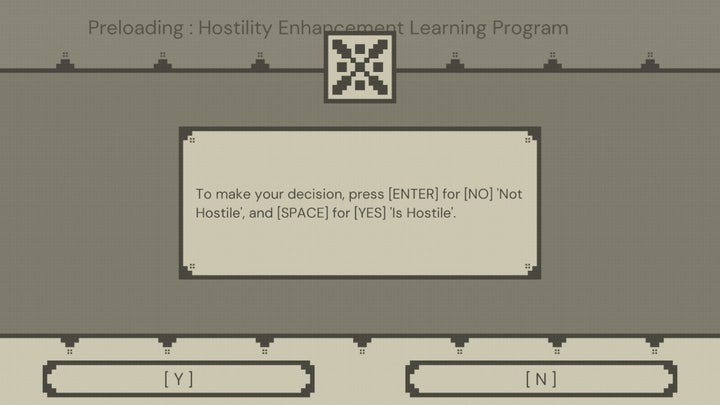
In NieR: Cogito, players initially take on the role of an artificial intelligence (AI) designed to help machines discern between threats and non-threats. Things escalate with each act, but the core gameplay loop here does a great job of taking what’s familiar about technologies like image recognition and using them as an off-ramp into broader questions about existentialism.
Cogito hones in on whether machines have souls in a way that feels right at home with the questions posed by previous NieR games such as Automata and Replicant.
Cogito went on to win the competition, but that victory was quickly soured by an intervention from Square Enix’s legal team.
As a result, developer Matthew Lucis is in the weird position of winning a promotional competition that Square Enix and Applibot no longer wants to promote. Their work is still live and playable on Itch.io, but it’s hardly the ideal ending to what seemed like a dream come true for Lucis.
“Large AAA game development and publishing companies will not often promote outside or fan content, unless of course they had previously produced workshop or modding tools alongside a community eager to create,” Lucis, a member of Australian game developer co-op Inflorescent Games, said.
When Square Enix and Applibot announced the competition on July 29th, Lucis thought it was a cool idea, but didn’t think too seriously about entering. Eventually, perhaps inevitably, the possibility of developing and entering a game into the competition began to “poke” at them.
“Games are content. You make games. 3 weeks is plenty of time. You’ve done worse,” Lucis jokes.
“When an idea gets in my head, it evolves, grows, and I work on it. Do I always finish these projects? The stack of half-complete works on my hard-drives says no. But I love telling stories and making games, and with such a short deadline, this was absolutely an all-or-nothing job,” they explained.
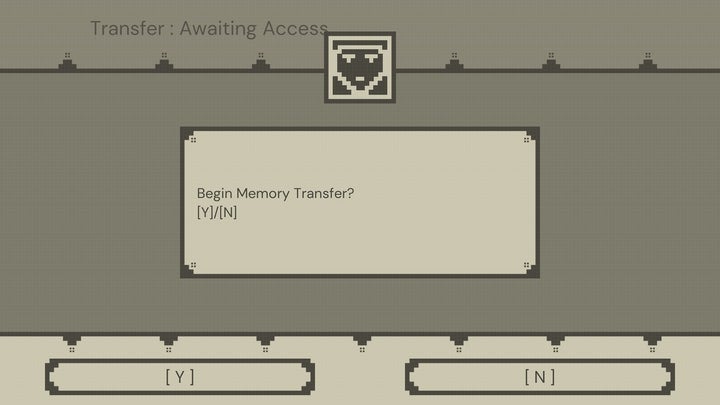
Lucis, who started out making Flash games on Newgrounds, said their entry was a chance to make their own “officially unofficial” addition to a series they loved as both a fan and a developer.
“From transitioning into a text adventure in Replicant to reflect a dream-state, to the upgrade system of Automata where you can literally disable your UI to make room for character upgrades, the NieR games continuously open my eyes to how I can be a better developer,” Lucis says.
To be safe, Lucis double-checked the rules and ran through all the legal fine print that Square Enix and Applibot had provided before moving forward.
“I feel like it’s a back-and-forth battle for indie devs who make fan-content; one day we see a large company hiring an outstanding modder, the next day a wildly popular fan-game is getting forcefully removed purely because it was a non-commercial fan-game,” they said.
Lucis described the three weeks it took to develop Cogito as non-stop. Once they settled on the game’s structure as a text-adventure/interactive novel, they immediately got to work.
“After 4 days of brain-storming and script-writing, I had the story done and I knew everything that I would need to do for the remaining 2 and a half weeks.”
“Every day from that point was writing code, drawing art, generating audio, contacting people for photos for Cogito‘s intro sequence, getting a voice-actor for the character ‘Terminal,’ working with the musician, and more.”
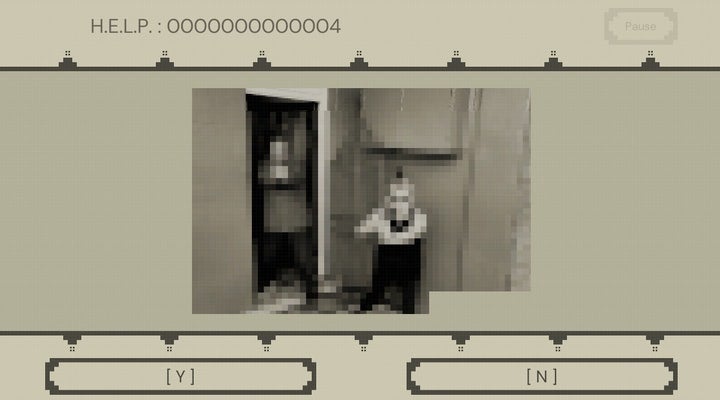
Even if it’s not officially sanctioned by Square Enix, Cogito covers a lot of the same tone and themes found across the wider NieR franchise. Set in the non-specific period between Replicant and Automata, Lucis chose Descartes’s “Cogito, ergo sum”—better known as “I think, therefore I am”—as the core thesis of Cogito’s story.
“A perfectly simple idea about awareness and existence, in this case within computers, and an idea I already love exploring personally.”
Lucis split the game up into different acts and endings, with each segment loosely focusing on a different aspect of Descartes’ philosophy.
A development team of one, Lucis speculates they were averaging around 12 hours of work a day.
“I was writing code in my phone while I took ‘breaks’, taking notes while I was trying to sleep, and even in that last week I would dream about the project,” Lucis said, adding that they were still fixing bugs, releasing the OST and publishing new builds even after submitting their entry.
The feedback from NieR fans, the Re[in]carnation community and Applibot themselves was especially validating for Lucis.
“People in the group were loving it, comparing endings and ideas, while friends and streamers alike were telling me how much they enjoyed it,” they recall.
After winning with “the most votes out of all the entries by a bit of a stretch,” according to Applibot, Lucis and all the shortlisted entrants got a shock from Square’s legal team. The lawyers had been brought in to review the entire competition, eventually making two demands.
The first was easy: the NieR logo, which was part of Cogito‘s website, game and trailer, had to be removed. The second was a little harder to solve.
“The other major issue I was told was that because Cogito was a downloadable executable file, it could not be verified as safe,” Lucis explained.
Lucis says that they were given 24-hour deadline to try and resolve both issues. It was a tall order, but they managed to get it done.
“After a couple of hours of tweaking code, rebuilding audio and art, and fixing countless new problems, by some miracle I had a stable and good-looking build of the game that could be played entirely from [a web] browser, without any files or downloads necessary.”
“I sent this all over to the staff-member who was helping me; they were thrilled to see this work-around, and told me they would give this new build a push.”
“Sadly, a few hours later, I was informed the legal team simply refused to link to a project they themselves could not, with absolute certainty, confirm was safe.”
At this point, Lucis said it was clear that no matter what they did, their work would not be approved by Square Enix’s legal team.
“I was assured however, that my entry was not disqualified by any means, that I was still officially the winner, and that I would be receiving the Discord title,” they said.
In the end, Cogito wasn’t the only entry that Square Enix’s legal team had issues with.
Lucis noted that any entries that the legal team had issues with have all been substituted for the runner-ups, which were promoted on the NieR: Re[in]carnation socials.
NieR ceiling tile painting by TerraByte: https://t.co/Aa0QNu3zON#NieR #NieRReincarnation
— NieR Re[in]carnation EN (@NieRReinEN) September 2, 2021
'All Prayers Lead to The Cage' by Vyh: https://t.co/3ty35L0KJK#NieR #NieRReincarnation
— NieR Re[in]carnation EN (@NieRReinEN) September 2, 2021
The original winners, whether they had been promoted or not, have all received the Discord group titles in their usernames.
But Lucis doesn’t blame Square Enix—which was contacted for comment, but did not reply by the time of publication—or Applibot for how things unfolded.
“I completely understand and respect their choice, both from a view of safety, and a view of carefully managing their products. Publicly promoting a game (or anything!), even if you strongly enforce it is not associated with you, will still be associated with you in the public’s eye, and I understand that they could not run that risk with my project.”
Even though Square’s lawyers ensured that Cogito will never get the promotion it deserves, Lucis doesn’t regret the three weeks of crunch it took to carve out their contribution to the NieR universe. They’re not just proud of what they made, they’re thrilled that they got to make it at all.
With or without the social media muscle and legal go-ahead of Square Enix and Applibot behind it, all art is fleeting. The same can’t be said of Cogito’s warm reception among the Re[in]carnation community, nor the joy it brought to Lucis.
“It is the experience we give our audience that lasts.”