
https://www.youtube.com/watch?v=ydfGuagKcYM
It seemed like Mortal Kombat was dead for a while there. No games, no movies, no Fatalities. But now, the gory fighting franchise is back, with a movie in development and season two of a slickly-made web series making its debut today. (The first episode is above.) The same guy is in charge of both, but he says the streams won’t be crossing.
When all looked lost for the human and Outworld warriors of the fighting franchise, an impressive short film called Mortal Kombat Rebirth helped reignite interest in the long-lived series. Kevin Tancharoen was the mind behind Rebirth, which later spun into Mortal Kombat Legacy. Tancharoen’s work with the MK universe also netted him the director’s chair for the upcoming film adaptation. He—along with Casper Van Dien, who plays Johnny Cage in the Legacy episodes—took some time to talk about Mortal Kombat Legacy season two, the movie and the other game property he’d love to bring to the silver screen.
Kotaku: Can you bring everyone up to speed in terms of the continuity that you guys set up, and where you left off, and where season two is going to pick up?
Tancharoen: With season one, it was more of an anthology. There were very separate episodes that didn’t connect with each other. For season two it’s a linear storyline, and it has a beginning, middle and an end.
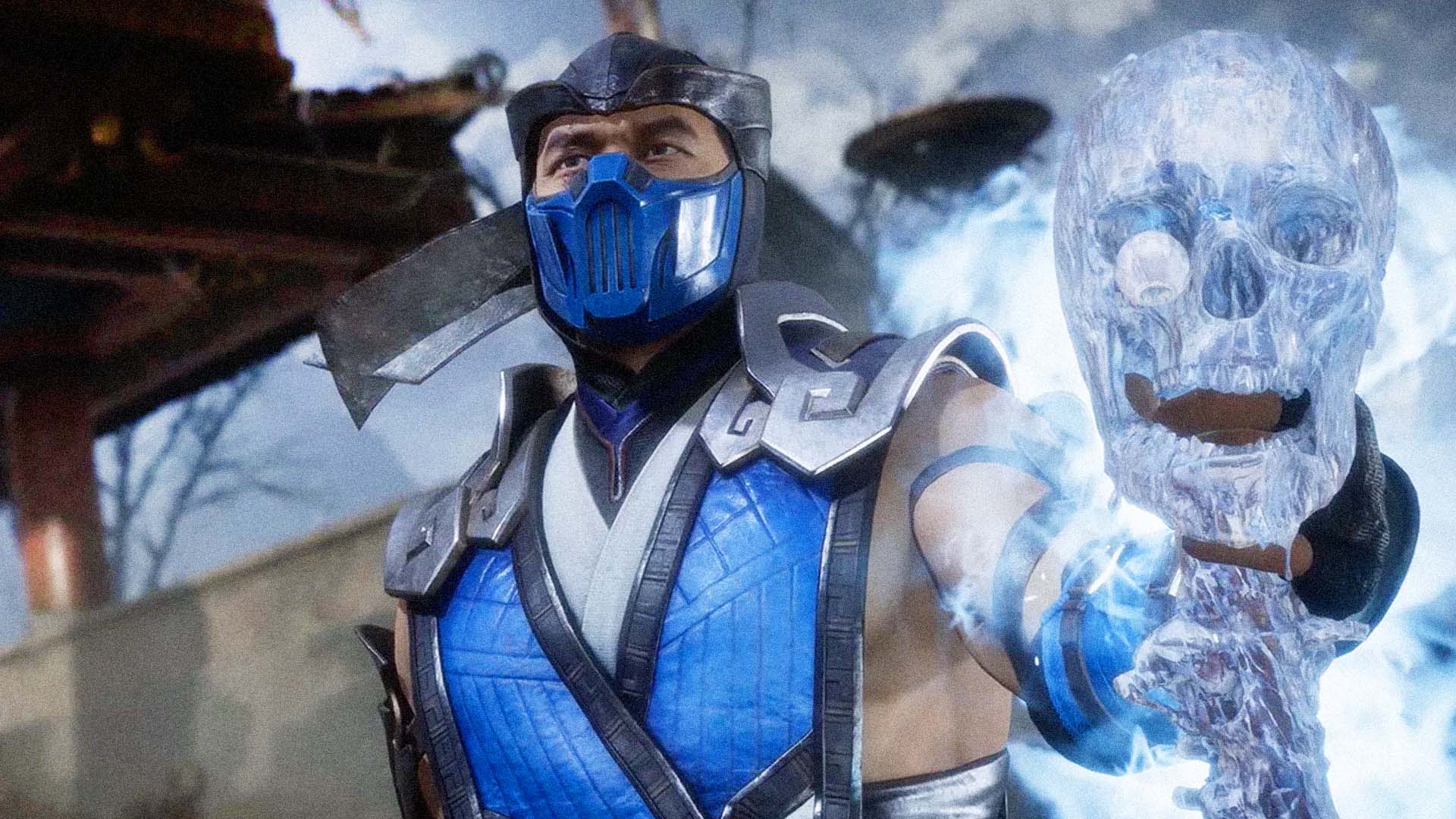
We are tracking off of certain storylines that were introduced in season one, like Scorpion and Sub-Zero will continue, Kitana and Mileena will continue. Then you’ll get to see how it pays off in season two. But yeah, season two is definitely a straightforward narrative with overarching character development and payoff.
Kotaku: That seems like that’s got to be little bit harder, because the first one could be a little bit more fan service. You could give glimpses of individual fighters and make it really cool without having to worry about sustaining a throughline.
Tancharoen: Absolutely. Yes, it’s definitely more challenging. But it was more fun because we get together in a writers’room and we plot out the characters, and just how it tags through the whole entire season. It’s more like traditional television or feature film storytelling.
Kotaku: Speaking of feature films, how are you going to try and make the Mortal Kombat movie feel distinct from Legacy?
Tancharoen: Well, they’re going to be completely separate storylines. It was something we were very conscious about. I don’t want them to rely on each other because there’s going to be a lot of people who go see the feature who are not necessarily going to have watched 20 episodes of the online series.
Tancharoen: “… the gameplay story structure is meant to get you from fight to fight to fight to fight to fight to fight. That’s not necessarily the case when it comes to telling a live-action series.”
I also feel like Legacy should live on its own. In a perfect world, I’d be doing longer episodes and plotting it out like a Game of Thrones type show where main characters do die. If I attached the movie to it, I think it would hurt the chances of it doing that.
With the film we wanted to do its own universe, and it’s going to have a lot of the mythology that’s from the game, but multiple layers that we’re adding on top of it so that the Mortal Kombat mythology can push forward. Because it’s been around for 20-plus years and we just want to add new developments so that it stays fresh.
Kotaku: What are some of the other ways that Season Two represents an evolution of what you were trying to do in the first chunk of shows?
Tancharoen: Well, I definitely wanted to do more action and I also wanted to push the drama a lot more this go around. The first season had some dramatic elements, but it was a lot more focused on action.
This time, I wanted to make sure that I wanted to put Mortal Kombat in a light where the characters could live as something as compelling as any other film that you watched, and push the stereotype that video game adaptations are very cheesy and silly.
I want to get away from that and say, “No, we can actually make a really good strong, compelling storyline even though it is a video game adaptation.”
Kotaku: Something else that struck me when I was thinking about this is I remember that whole first wave of love you got with that conceptual teaser, that came out at a time when Mortal Kombat was essentially dormant. Midway had folded. Then nobody knew what was going with Mortal Kombat. Warner Bros. had acquired the intellectual rights…
Tancharoen: Oddly enough, my timing worked out perfectly. My trailer went out and two days after that they announced the Mortal Kombat game at E3.
Kotaku: I remember people were reading some kind of connection in between the two, and you were like, “No, there’s no connection.”
Tancharoen: No connection at all. I couldn’t believe how well it worked out. I had no idea that they were going to release a trailer at E3. A lot of people thought I timed it out according to that and that wasn’t necessarily the case. It just kind of worked out and Mortal Kombat became a topic again.
Kotaku: You kind of had a blank slate to work on when you were ramping up to finally release the teaser and the beginnings of season one and. But now that Mortal Kombat and NetherRealm have gotten their groove back, what is their challenge for you now? You have actual games to stand shoulder to shoulder next to. How do you differentiate with what you’re doing with that mythos versus the games that are back and stronger than ever?
Tancharoen: They’ve been very cool with having them be separate, because in the video game mythology, the storyline is very tailor made for gameplay. And they know that I can’t just take that and turn it into a live-action format because it doesn’t work.
Because at the end of it all, the gameplay story structure is meant to get you from fight to fight to fight to fight to fight to fight. That’s not necessarily the case when it comes to telling a live-action series. They let me take liberties and keep it separate while maintaining the spirit of some of the deeper mythologies and hardcore origins. But I’m in no way having to be tied to what’s being developed for the video games.
Kotaku: It’s funny that you talk about the differences in the two iterations of these things because you were at the vanguard of generating more interest in filmed adaptations of video game properties. Now, we’re seeing these series that are getting picked up on Machinima, like the Halo series and Fallout: Nuka Break and a bunch of these other web series that are centered on video game properties. What do you think has changed in that space since you started doing this?
Tancharoen: I’m very happy to see that there’s been this resurgence of the fan film. People are taking known brands and franchises and doing their version of it. I love that. When Portal: No Escape came out, I thought that was great. I saw that somebody do a Naruto fan film. They’re doing a Street Fighter series. They’re doing a Tomb Raider series.
https://www.youtube.com/watch?v=k7FdikZ_Uwg
These are all not made by the companies who developed the games necessarily, just being made by people who are inspired to go and make their own thing. I really like that there is more of that now and people are really getting inspired to do it because it’s made all of this stuff way more interesting.
Kotaku: You’ve got obviously history with TV shows and productions that center around dance. It also felt to me like Mortal Kombat and fighting games in general are a sort of really complex choreography. That’s not a new comparison. People have been saying that about kung-fu movies for a while. Is there any part of your brain that works on one and then the other that tries to make the things fuse together?
Tancharoen: Yeah. At the end of the day fight choreography or dance choreography is just choreography. When you watch a fight come together, it’s very much like choreographing a dance sequence with two people.
That kind of background has certainly helped me in designing camera movement and choreographing the camera within the fights so that it’s not just like, “Yeah, it’s a couple handheld cameras and you shoot a wide and you shoot a tight and then we’ll cut it together later.
I really like designing the camera movements within the choreography and designing the choreography around camera moves that I like. That kind of background has helped me.
Kotaku: You’re obviously a big Mortal Kombat fan, but if you had to gravitate towards another fighting series and give the same kind of take to it, what would it be?
Tancharoen: Fighting series? I’m not so sure.
Kotaku: You have only one love in the genre?
Tancharoen: Well I’m trying to think of the other ones that I remember playing. Killer Instinct was one. Virtua Fighter and Tekken were the others. I believe that made a Tekken movie. I’m not sure how I would adapt another fighting franchise because I’m so knee deep in one right now.
Kotaku: Let’s go outside of fighting, then.
Tancharoen: Another franchise I always wanted to redo in a real grounded and just terrifying way is Resident Evil. Because the movies that are currently out right now are action spectacles. I want to make the horror movie version.
Kotaku: The psychological kind.
Tancharoen: Exactly. I want to do the really dark, twisted, scary-as-hell version of Resident Evil. I think it would be great. Would they let anybody re-adapt Resident Evil right now, though? Absolutely not. That franchise makes way too much money for anyone to touch it. But I would love to see a version like that.
Kotaku: Maybe Milla Jovovich could probably beat you up, too. No offense to you, Kevin.
Tancharoen: Yeah. [laughs]
https://www.youtube.com/watch?v=j1Cb-vh3JTE
Kotaku: But you are in luck because the guy who created Resident Evil, Shinji Mikami, he’s got a new survival horror series coming out next year called The Evil Within. Thats might be something like a person like yourself would want to look into.
Tancharoen: Absolutely. Horror has taken a big resurgence in the past couple of years with the Conjuring and Insidious stuff. And I like that the Japanese style of horror is coming back which is great because I was never a fan of the torture porn style horror. I liked Rosemary’s Baby, The Exorcist, The Omen and those other things that I was in love with and I was terrified over. That style is coming back.
Kotaku: What are the games that are taking up your time right now?
Tancharoen: Without a doubt, The Last of Us. I can’t stop playing it. I keep restarting it because I love that game so much.
Kotaku: You’ve done multiple playthroughs at this point?
Tancharoen: Yeah. I catch different parts of the story every single time. I’m just waiting for them to release some additional content. I am thinking I’m going to be brave enough to go to GameStop later today and pick up Grand Theft Auto V. I’m sure I will love it. I’m also looking forward to Beyond: Two Souls.
Kotaku: What were your thoughts when you were first jumping into the role of Johnny Cage? Had you thought about the game often in the last couple of years? Was it something that you were aware of that people were still playing and making?
Casper Van Dien: I was aware that it was popular. I have a 19, almost 20-year-old son. He even came to the set with me and played Mortal Kombat games that they had. But I remember playing the game when I was younger.
I knew a little bit about some of the rumors about who was supposed to be Johnny Cage in the past. I wanted to meet the director that was interested in me playing this. I was really grateful to meet Kevin Tancharoen and have this opportunity.
Kotaku: Now, Johnny Cage is kind of known as the jerk in the series. He’s like the Hollywood asshole.
Van Dien: What are you trying to say?
Kotaku: [laughs] Hopefully not what you think. Are you drawing off anybody in the real world to make that part of his personality come alive?
Van Dien: When I went to meet Kevin Tancharoen I said more or less just what you said about Johnny Cage. I went, “What are you trying to say?” He goes, “Oh my God, you’re perfect for this.” I guess I don’t have to draw off anybody. Which I don’t know if that’s a good or bad thing.
Kotaku: You’re a natural?
Van Dien: Yeah, I guess so.
Kotaku: In terms of the special effects work and the kind of weirdness of Mortal Kombat stuff like people throwing fireballs and stuff like that, how off-putting is that for you to kind of try and embody that part of the role?
Van Dien: Well, I fought giant bugs in Starship Troopers so I guess it kind of fits right in with what I’m used to.
Kotaku: So the special effects is not something you need to wrap your head around.
Van Dien: Not really. I was really impressed with the quality of what they’re able to pull off, especially for the Internet. It was so good. It felt like a big film when I was on the set, the production value and everything. I don’t think it was sold short in any way, shape, or form. I think having all these people that really like this enhance the project.
Kotaku: What’s your son’s favorite character to play?
Van Dien: Johnny Cage, of course. C’mon, man!