
One of the first places I wanted to fly in Microsoft Flight Simulator was the Grasberg Mine, an open pit mine high in the Sudirman Mountain Range of Indonesia.
That might seem like a strange destination. But when Microsoft Flight Simulator was announced at E3 in 2019, it came packaged with a signature promise: the ability to “fly anywhere” on the planet. Yes, the trailer for the latest installment in one of gaming’s longest-running franchises was plainly gorgeous—wide vistas, sparkling cities, and gleaming aircraft, all rendered in crisp 4K—but so were all the other flagship titles debuted at gaming’s biggest show. What made Microsoft Flight Simulator special was the scale of its world—our world, a frankly Icarian bit of posturing that, if somehow true, signaled an evolutionary leap forward for games, built on and out of Microsoft’s suite of “next-generation” services. And when journalists and YouTubers received alpha access to the game earlier this year, many of them fixated on calling Microsoft’s bluff by finding their houses–which was really falling into its trap by looking towards the densely populated areas the game’s designers likely assumed they’d want to visit.
(Correction, 7:20 p.m.—An earlier version of this review mistakenly stated that the Grasberg Mine was not in the game. The article has been updated to reflect that it is, with text changed throughout. Kotaku regrets the error.)
It’s a delight, to be sure, to see one’s house. But a game that lets you fly anywhere also lets you see places that are easily forgotten. And one of those places is the Grasberg Mine, an open pit mine on the isle of Guinea, wider than a mile and deeper than the World Trade Center, that happens to be one of the world’s largest sources of copper, silver, and gold ore. And while these elements have always had a range of industrial applications, they have been in particularly high demand over the last 30 years to manufacture computer hardware, including, one presumes, the cloud computing infrastructure that makes Microsoft Flight Simulator’s to-scale simulacrum of the world computationally feasible. Mines like the Grasberg Mine, in other words, are funded in considerable part by the developed world’s endless appetite for new computing hardware to power (among other things) increasingly elaborate games. In a strange way, then, this makes them feel like a kind of point of origin for Microsoft’s latest game.
It would have been wholly understandable for the remote mine not to have been included; despite the role its real-world counterpart plays in the existence of a game like Microsoft Flight Simulator, it’s not a tourist destination. And there are plenty of oddities and absences in Microsoft’s to-scale model of the world. By any reasonable standard, Microsoft Flight Simulator wouldn’t be a different game if those minute errors were resolved.
But there isn’t anything “reasonable” or “standard” about a game the size of a planet. And the points where the simulation breaks down, as in the bizarre texture mapping of Buckingham Palace that makes it look like a drab, postwar office building, are a reminder that this virtual world is not given, but made. When the game’s illusion of completeness fails, it raises the question of which “anywheres” get to be a part of everywhere. Here, the illusion of the game as a hyper-realistic recreation of the real world falls away and we can start to see the technology and motivations of the people and businesses behind it.
The first iteration of Microsoft Flight Simulator, in 1982, was intended to showcase IBM’s 16-bit processor, an upgrade against the newly-released Apple ii. Subsequent versions of the program added texture mapping and true three-dimensional graphics, slouching towards photorealism as computers grew in sophistication. In the 1990s, recognizing the potential emerging modding communities built up around games and the ease of digital distribution, Microsoft began packaging tools with Flight Simulator 1993 that allowed players to create airports and upload them to the internet for free, massively increasing the amount of content available to players at little to no additional cost to Microsoft. Most recently, 2006’s Flight Simulator X (and its subsequent, interminably wacky Steam Edition) marked the transition of Microsoft’s venerable franchise to a bonafide game-as-service, a platform for would-be pilots and ATCs to sim, role-play, and build lucrative YouTube careers.
The latest iteration of Microsoft Flight Simulator continues this history by suturing itself to the services Microsoft now sees as its most valuable assets. Today, the novel technologies include photogrammetry, high resolution satellite imagery, and machine learning. At the center of the new Microsoft and its latest Flight Simulator is the “cloud”—so much so that CEO Satya Nadella devoted a considerable chunk of his 2017 book Hit Refresh to the origins, success, and future of the company’s “cloud strategy.” And it’s primarily that kind of cloud that ties the Grasberg Mine to the design of Microsoft Flight Simulator and its picture-perfect clouds, a game whose existence, in this form, would not be possible without the minerals extracted and refined, at almost incalculable environmental and human cost, in Indonesia.
Intense breakdowns of the technical wizardry that powers Microsoft Flight Simulator are readily available online, and I encourage you to check them out. But a short version of what makes Microsoft Flight Simulator into the earth-striding marvel it is goes something like this: satellite imagery from Bing Maps forms the basis for an enormous, AI-managed photogrammetry project, transforming digital images into three-dimensional objects. Photogrammetry isn’t new to video games—it was used to create Death Stranding’s gorgeous, haunting landscapes, as well as the uncomfortably real meals in Final Fantasy XV—but the scale of its use in Microsoft Flight Simulator is. This all makes for some extremely impressive numbers—millions of cities and towns, billions of buildings, and trillions of trees—along with making good, more or less, on Microsoft’s promise of being able to “fly anywhere.” Microsoft’s proprietary artificial intelligence and machine learning services are key here, automating the heavy-lifting of photogrammetry and texture mapping billions of buildings worldwide.
It’s not perfect, but it’s pretty damn close, which is also why the failures might be more interesting than the successes. The game’s to-scale map of the planet is, of course, limited by its source data on Bing Maps, which in turn reflects the priorities and capabilities of that service. Some areas are more detailed and accurate than others, with extremities like Antarctic ice plains being almost completely untextured due to the limited satellite imagery. Urban centers, by contrast, tend to be substantially more , even if the texture wrapping of buildings isn’t always 1:1. Likewise, some areas are clearly more up to date than others: My own recently-built apartment complex, for example, appears as a construction site in-game. In other areas, especially well-trafficked urban space, a more hands-on approach is utilized, ensuring that popular landmarks look a little better than the good-enough approximations an algorithm spits out. In stitching together the sampled, the algorithmically generated, and the human-crafted, the weave of Microsoft’s world makes for a product of earth-striding ambition, even when it comes up a little short.
All told, the resulting texture files for Microsoft Flight Simulator are enormous—some 2.5 petabytes, or several thousand consumer-grade computers worth of storage. Since it’s impractical to store that data locally (duh), constant connectivity is more or less a must for the “full” experience. Similarly, creating exquisite skyscapes and fluid dynamics that look and behave naturally is a serious computational challenge, one that simply isn’t viable on all but the most powerful CPUs. But by outsourcing much of the computational load to Microsoft’s state-of-the-art server banks rather than consumer-grade hardware, new kinds of in-game representations become computationally feasible. Through this clever distribution of resources, Microsoft Flight Simulator (at least when it’s working as intended) is able to generate extraordinarily high-quality images. Often, the results are miraculous, as players’ real-time flights “through” Hurricane Laurashow. All told, it’s hard to disagree with critics like Polygon’s Charlie Hall, who claimed that Microsoft Flight Simulator is “easily the most magical thing [he’s] ever seen on a computer screen.”
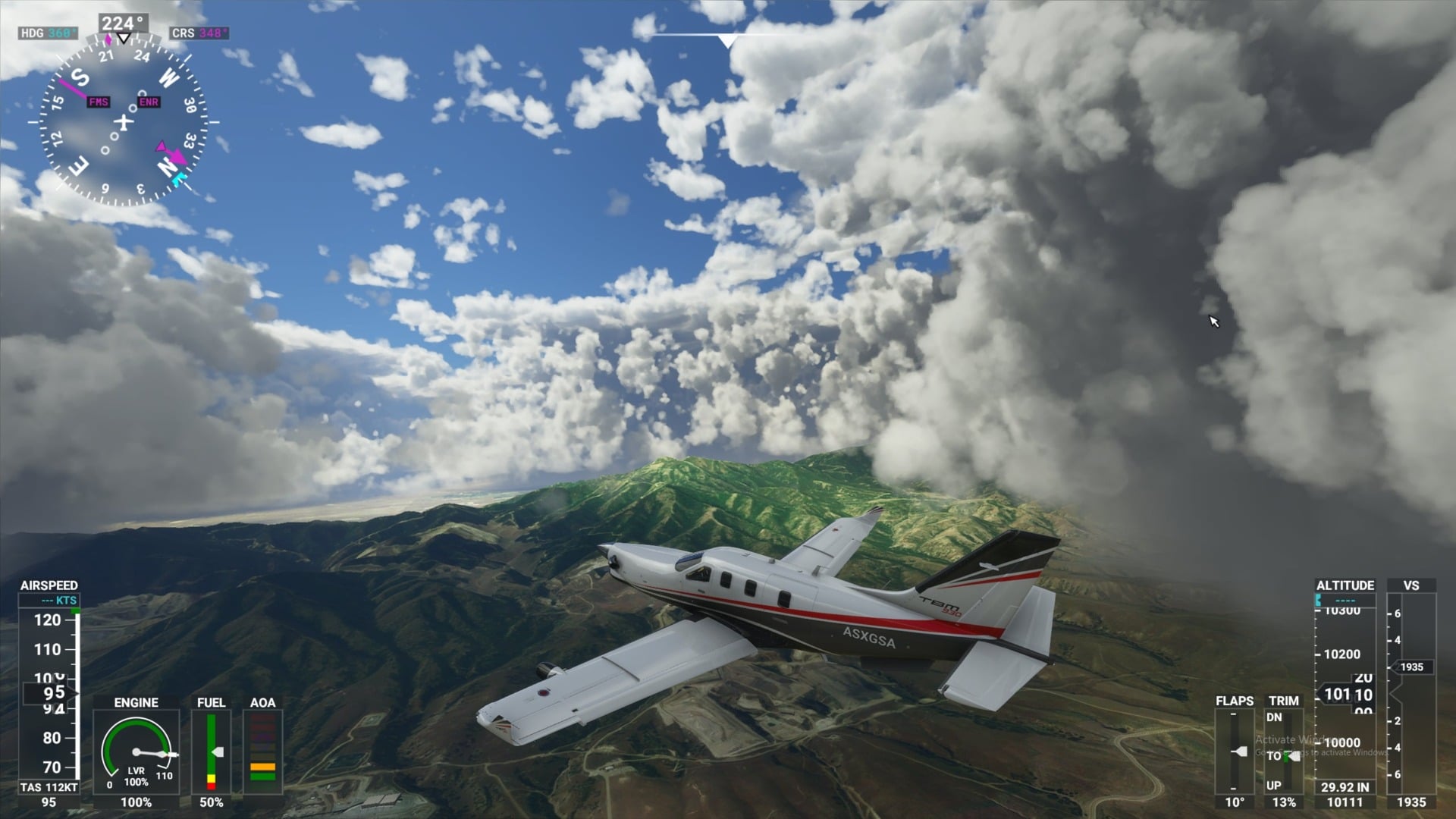
But what if that—the magic and the screen—is exactly the problem? While what’s on Microsoft Flight Simulator’s screen is, obviously, sublime, what the game is—how it exists, how it looks, what it does, and what it lets players do—isn’t possible without the cloud, machine learning, and the rest of the technology silently working behind the screen. Flight Simulator wouldn’t be a different game without them; “it” wouldn’t exist at all. So these Microsoft services aren’t just what makes the game possible; they are, to some degree, the game itself. This cuts to the intractable, ontological question of what a video game is, what can really be called a “part” of it, and where the game properly begins and ends. Is it simply the dynamic between a player and a particular set of rules? Their computer or console? A billion lines of code? Zeros and ones on a hard drive? A server in Tysons Corner, pumping data into your home from the heart of spy country? The despoiled landscapes and the exploited labor that make all of this possible?
There’s no right answer to these questions, as if any one of these is inherently more “real” than the others. Instead, there are only partial perspectives that offer different questions to ask, and whichever one you choose likely says a lot about your relationship to the game. But focusing only on what we can see and do in Microsoft Flight Simulator erases what’s happening behind the scenes, where profound transformations in the computational architecture powering games are taking place. So let’s go one step further. If we take not just the world of Microsoft Flight Simulator for granted, but also the technologies that make it possible, the map of what we can discuss when we talk about Microsoft Flight Simulator expands considerably. And, then, something more troubling appears on the horizon.
Arguably, the most significant transformation in the game industry over the two decades has been the shift towards “games as service” as the dominant design philosophy and business model. Generally, the prototypical “game as service” can be split into two mutually-shaping elements: software as a service and hardware as a service.
The software part of the “game as service” model does a few attractive things for game publishers. Financially, it gets them away from the boom and bust cycles of games as a product, in which publishers spend wildly on development and hope to heaven that they make it back upon a game’s first few weeks of release. Service games offer the promise of monetizing over time through constant content updates, DLC, season passes, subscriptions, and microtransactions, all supported by vigorous data collection protocols that can inform new design decisions that maximize player engagement. Not only does this offer a more reliable revenue stream for publishers, it ostensibly allows for the efficient allocation of developer resources and better management of the risk inherent to game development and live operations. Second, by offering consumers a license to access a particular game, rather than transferring ownership, the game as service model ensures that the publisher squeezes out “pirates” and aftermarket (i.e., used game) sales, taking full control over a game’s lifecycle and cutting out, say, the Gamestops of the world.
Unsurprisingly, the new Microsoft Flight Simulator exhibits all of the hallmarks of a game as a service. In many ways, it’s among the best possible examples, given that the game’s rendering of the world is ostensibly “complete” but can always be made “better” via content updates. This carefully managed gap between what a game is and all the things it could become creates a world of (market) opportunity for hand-crafted airports, planes, buildings, and landmarks to pick up wherever artificial intelligence has fallen short of realism. This economy of content is already reflected in the pricing for the three editions of Microsoft Flight Simulator, the primary distinction between which is the number of human-designed airports and planes in each one. Through the surveillance of player behavior—where they fly, what they do, and for how long—Microsoft can identify what places are most “deserving” of a makeover.
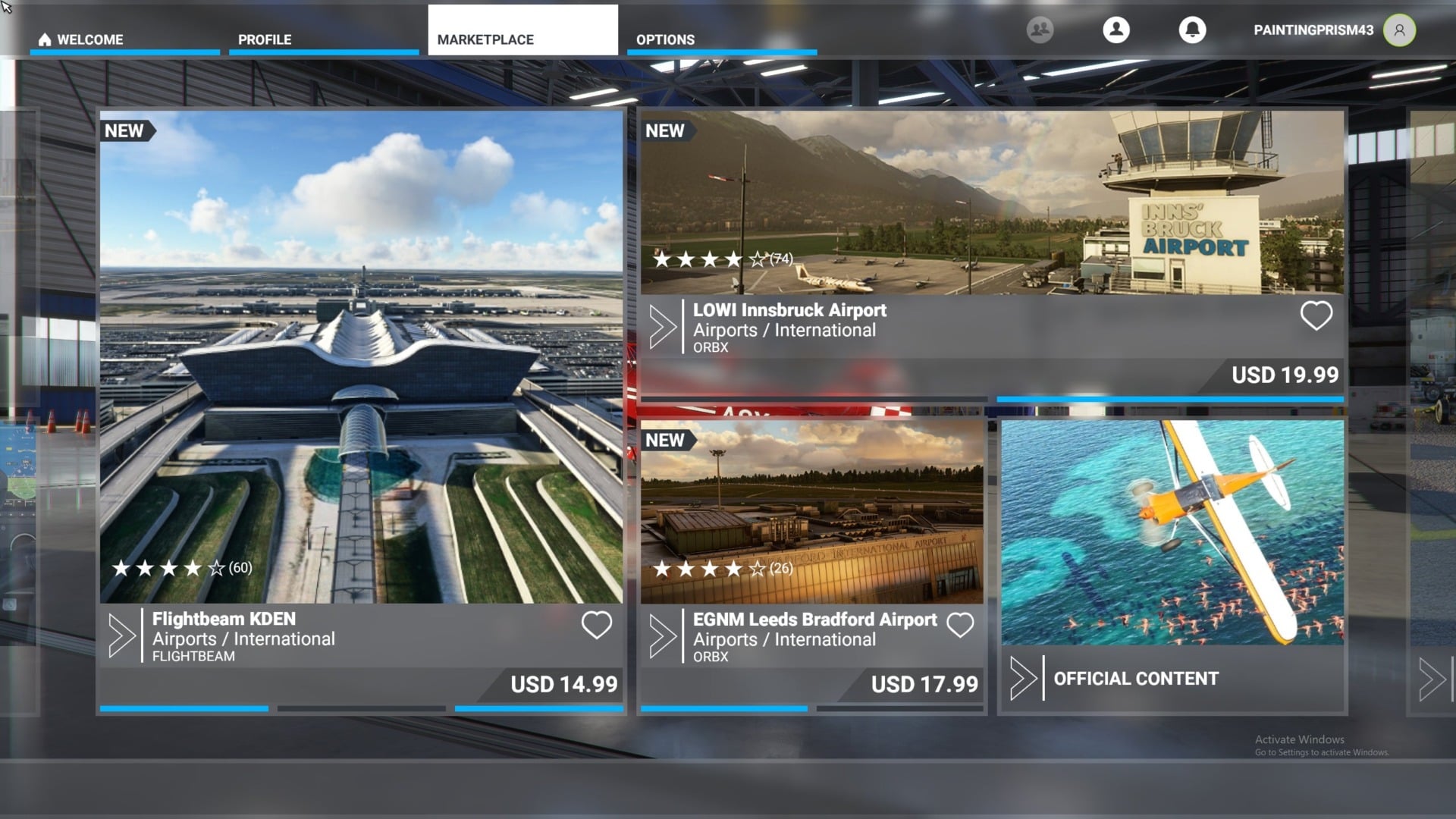
Microsoft Flight Simulator comes packaged with a Marketplace, where enterprising users can upload their own models for purchase, similar to Valve’s extraordinarily complex (and precarious) Steam Marketplace for CS:GO and Dota 2 virtual goods. Here, what is billed as a digital game starts to look a lot more like Etsy or Amazon, blurring the boundary between consumption and commerce. While some might respond that this Marketplace gives talented artists a chance to be paid for their work (which is true), it also represents the enclosure of what was, not all that long ago, a “freeware” system for sharing user-made assets among passionate players. And though these kinds of markets are often billed as empowering to creators–“get paid to do what you love!”–they rarely work out for anyone but their owners in the end
But if the software-centric elements of games as service have ultimately been adopted by most gamers, hardware has proven significantly more troublesome. Obviously, nearly all multiplayer games now rely upon cloud servers for match-making services and any kind of social games, and Flight Simulator is no exception. Most of the computational work required to play digital games still takes place on players’ own machines, whether a console or a personal computer. As a result, the technical demands of newly developed games are still matched to high-end consumer-grade hardware, rather than the spectacular capacities of remote computing that already predominate in many other industries (e.g., shipping conglomerate A.P. Moller-Maersk Group’s reliance on Microsoft Azure to manage its logistical network).
Enter cloud gaming (sometimes called gaming on demand), a holy grail for the gaming industry going back (at least) to when G-Cluster Global Corporation debuted a Wi-Fi based handheld at E3 2000. Then and now, the pitch is pretty simple: make consumers’ internet connection, rather than hardware, the bottleneck for computing performance. By taking ownership of the hardware needed to power games, these services could attract consumers by cutting out the need to continually update one’s own CPU and GPU to keep up with increasingly demanding games. Cloud gaming providers, meanwhile, benefit from economies of scale and strategic allocation of computing resources (i.e., only having to provide hardware when someone needs it). Any expenses saved through efficiency can be pocketed as profit, while also retaining ownership over hardware assets and setting the terms on which consumers can access them. In essence, it turns what was once an ownership economy into a rental one.
For a long time, the barriers to cloud gaming were mostly technical and financial. In the 2000s, consumer broadband infrastructure in the United States wasn’t advanced enough to make cloud gaming a viable substitute for local computing. As a result, most of the companies that gave it a go, from InstantAction to GameFly to OnLive, either went bust or were acquired for parts by game publishers. Post-2008 recession, though, the enormous size of large tech companies, their prolific amounts of cash-on-hand, and historically low interest rates made enormous capital projects like cloud computing infrastructures much more viable. Out of that context, consumers “finally” got services like PlayStation Now, GeForce Now, and, most (in)famously, Google Stadia.
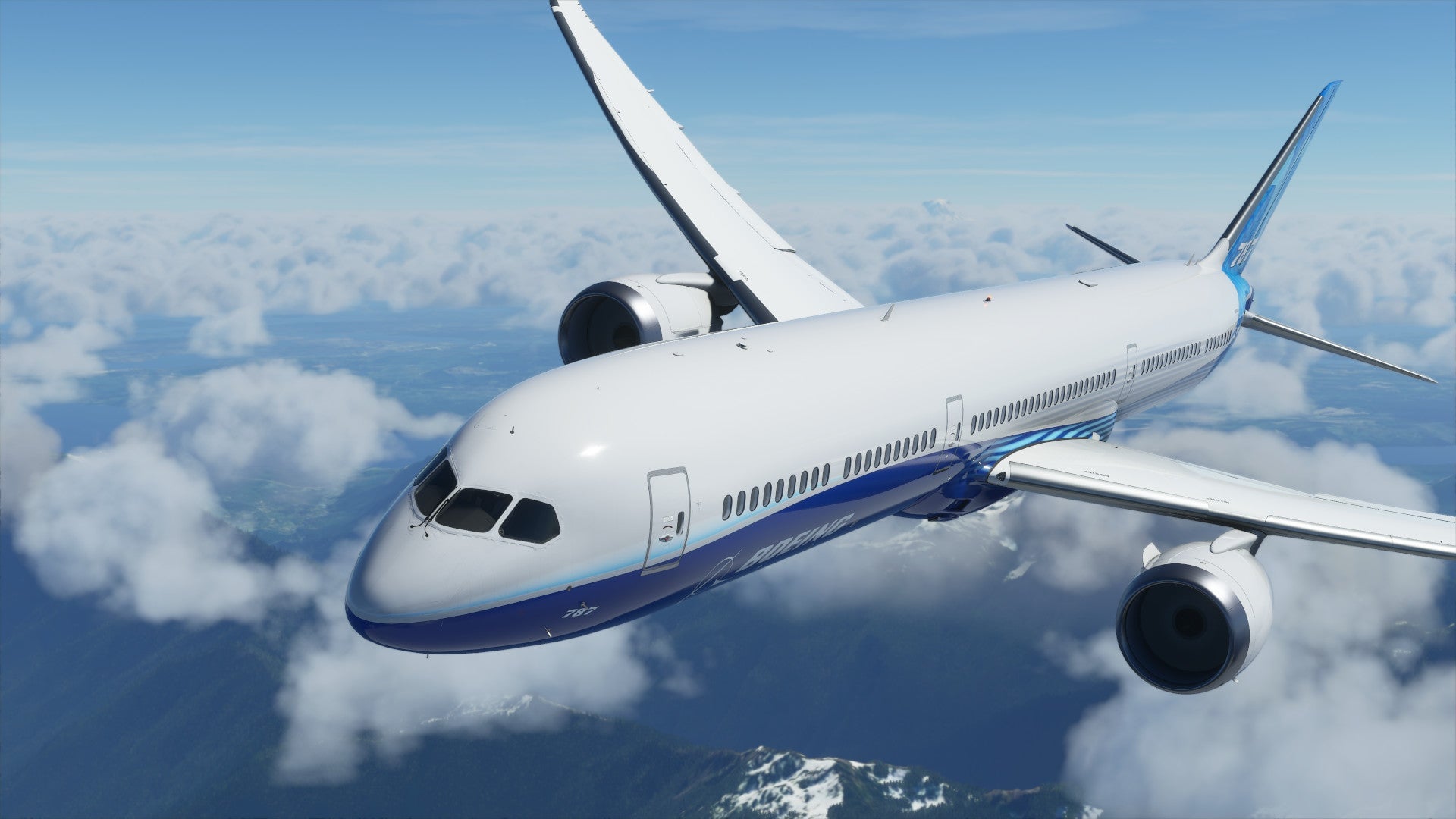
Microsoft Flight Simulator
-
back of the box quote
Fly anywhere (some restrictions apply)
-
type of game
Flight simulator
-
liked
An extraordinary technical achievement that signals a new era of game development.
-
disliked
Accelerates the control of large technology firms over every aspect of our lives.
-
developer
Asobo Studio / Microsoft
-
platforms
PC, xCloud, Bing Maps, and Azure
-
release date
August 18, 2020
-
played
41 one way flights, all ending in disaster
The bungled launch of Stadia shows that if most of the technical hurdles to cloud gaming were cleared by the late 2010s, other, more cerebral challenges remained to widespread consumer adoption. Even if Stadia offered a new way to play, there wasn’t anything special about what could be played on Stadia. For consumers who already owned high-end PCs or Playstation Pros, Google’s supposedly revolutionary service didn’t offer anything new from a consumer point-of-view. Artistically speaking, there wasn’t any special relationship between Stadia’s hardware and the design of the games it offered, nothing to indicate that cloud gaming offered a different, more desirable experience than local play. So the real genius of Microsoft Flight Simulator is to muster the uniqueness of its infrastructure in service of a game that is anything but hardware agnostic. The game is thinkable and playable only in the context of Microsoft’s own suite of proprietary services—xCloud, Azure, Bing, etc.—which shaped its design philosophy into something that could exist nowhere else, at least for now.
In doing so, what Microsoft might really be selling is hardware as a service by designing a game that only hardware as a service could provide. Whatever the hiccups that have accompanied its debut, it’s clear a rubicon has been crossed, pointing towards new futures for game design and development whose technical limits lie not with consumer hardware but with those of remote computing. “We can spin up as many virtual machines as we want. If we want to have a million-animal caribou herd where every caribou is running its own AI, we can do that. The boundary of the local machine is broken,” Microsoft Flight Simulator’s executive producer Jorg Neumann put it in an interview with Protocol’s Seth Schiesel. “[It’s] no longer a barrier for us to do things. Now it really just comes down to, ‘What do you want to simulate?’ We dream about these things a lot. Now, the dream is no longer some vapor that goes away. It is all totally possible.”
Not every game studio, of course, will try to recreate a whole world or simulate a million caribou doing whatever it is a million caribou do. And we ought to take these kinds of claims with a grain of salt, just as the “fly anywhere” business needed an asterisk. But Neumann’s underlying point—that the era of game design centered on local computing is coming to an end—is perfectly sound and other publishers are likely to follow suit. Whether it’s teeming crowds, real-time weather, enormous maps, complex NPC AI, or ultra-dense textures, the kinds of things new games can simulate is also changing “where” gaming happens. In this way, Microsoft Flight Simulator isn’t just a whole earth to play around in (over?), but a Trojan horse for the shift of computing assets from end users to providers.
Why does that matter? The core of games as service has always been a Faustian trade-off between access and ownership. Put differently, how much autonomy are consumers willing to give up for the sake of something new and convenient? Microsoft Flight Simulator, from this perspective, is both bait and trap, not in spite of but precisely because of what makes it remarkable. These novelties come at a hidden price, ceding a little more control over the means of digital culture to a company already worth (as of this writing) $1.6 trillion dollars. The disappearance of the Scott Pilgrim game over a licensing dispute between Microsoft and Ubisoft is a small example but an instructive one–a reminder that, once ownership of cultural goods has been shifted out of consumers’ hands, these goods are offered only at the convenience of capital. Yielding control over hardware only intensifies this dynamic, making everyone a little more dependent on some of the most powerful corporations in the world. (The age-old issue of backwards compatibility, for example, becomes significantly more fraught when the hardware upon which games can run becomes centralized).
In its extreme, some critics are beginning to call this arrangement “digital feudalism,” a future in which everything is owned by a small cadre of technology firms and rented out to everyone else. We tend to say that the absurdities of big tech are symptoms of “late capitalism,” but it’s probably more accurate to say that they have quite a bit more in common with the societies that preceded it. Transformations like this don’t happen overnight, of course–there are no direct flights to the future. Rather, they happen slowly, giving them the air of inevitability. Microsoft Flight Simulator might be seen as a turning point–a layover, perhaps–in the journey towards that dismal future. But, seen from behind the screen rather than in front of it, it might be taken as a reminder that you can’t be neutral on a moving … plane
One of the lesser-discussed aspects of the new Microsoft Flight Simulator is that it’s the first game in its franchise to be shipped without a number. (Even the original, 1982 version was billed as Microsoft Flight Simulator 1.0.) On one level, this is perfectly reasonable: Microsoft Flight Simulator is as much a platform as a game, and the inevitable updates to it–bug fixes, performance updates, a “fix” for Buckingham Palace, etc.–are more evolutionary in character than the wholesale upgrade implied by the transition from 1.0 to 2.0 and beyond. But the lack of any numerical identifier might also be read as a statement of ambition, or even permanence: what’s on offer, here, isn’t the final flight simulator so much as it is the forever one. From the Grasberg Mine to Redmond to your computer screen, it’s Microsoft’s world; we’re just playing in it.