
Do you ever feel like there are too many open-world games, and too many of them take up too much time? Just consider some offerings from this year alone. There’s Ghost of Tsushima, the gorgeous samurai action game, which can take you more than 60 hours to check off every objective. Ubisoft released not one nor two but three map games this fall: Watch Dogs Legion, Assassin’s Creed Valhalla, and Immortals Fenyx Rising (though the latter, admittedly, clocks in at around a mere 30 hours, at least per our reviewer). And that’s to say nothing of this week’s much-anticipated Cyberpunk 2077, an open-world discourse generator that allegedly demanded nearly 200 hours from one CD Projekt Red staffer—for a single playthrough.
So, what’s a time-strapped gamer to do? Some players love an hour count that hits triple digits. For others, it’s tiresome. According to the PlayStation trophies list, just 48.6 percent of players have made it to Ghost of Tsushima’s ending. Go back several years—plenty of time to have finished the game by now—to The Witcher 3: Wild Hunt, and you’ll find that just 29.8 percent have completed the game. The similarly carbon-dated Horizon Zero Dawn sits at 34.4 percent. These figures suggest many players tend to pick up an open-world game only to put it down before reaching the credits. In other words: burnout.
Obviously, playing 80 percent of a game and tapping out before the endgame is not ideal. But burnout isn’t a foregone conclusion, despite what those completion rates listed above insinuate. I’ve played a whole lot of open-world games over the years; they’re kind of my jam. I’ve also read a whole lot into burnout: how it manifests, how it can creep up on you, and how you can mitigate its advance. The following advice should help you power through to the credits of any game on your backlog, no matter how staggering the scale.
Start light.
To the best of my knowledge, no peer-reviewed studies exist about how gamers approach and then tire of open-world games, but researchers have been studying general human burnout for decades. The same tricks can apply to how you play games.
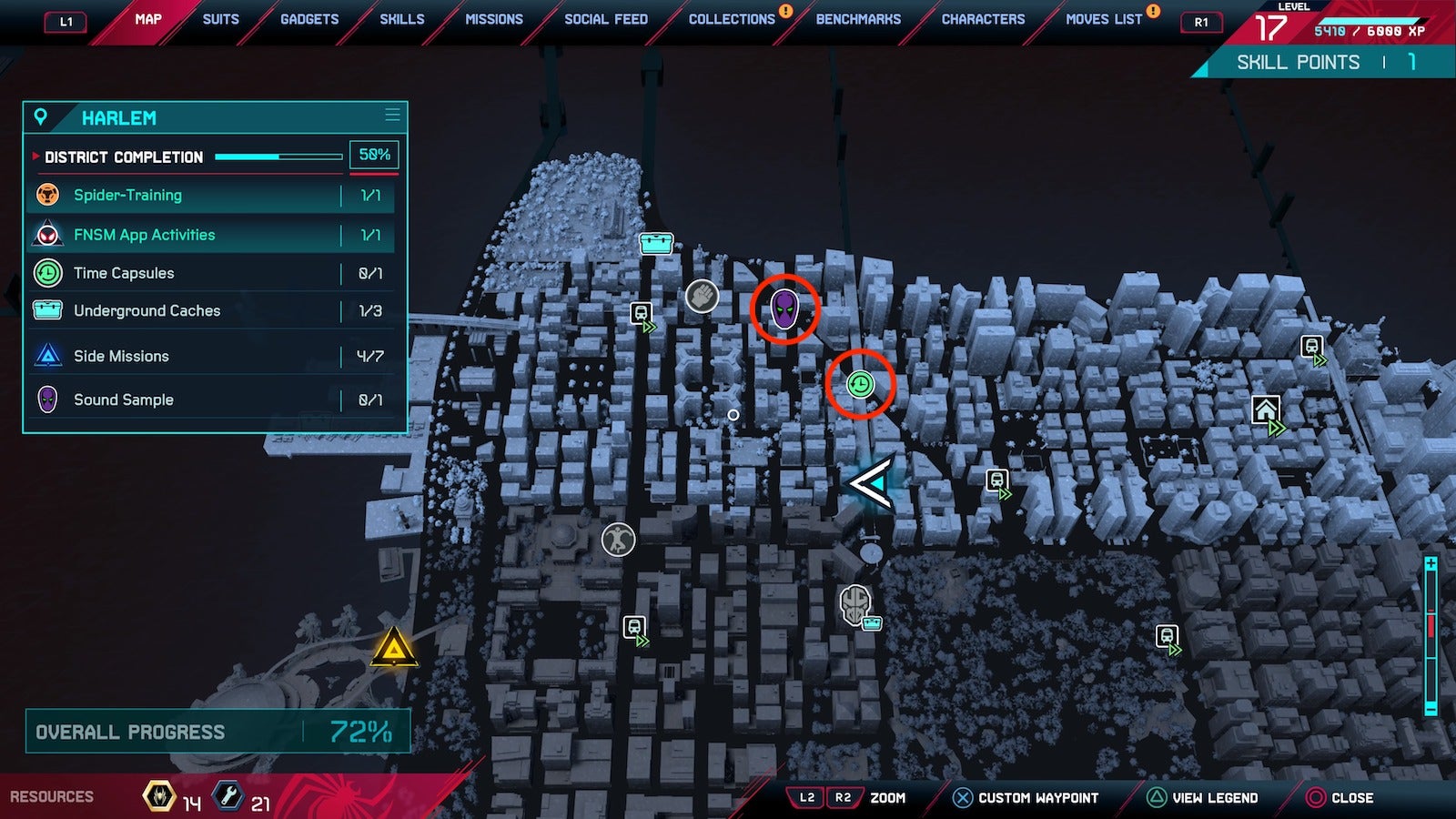
The first is the most basic trick in the book: Start slow. Ask any productivity expert, and they’ll tell you to start your days with easy tasks. If you refuse to think of video games in terms of working—an understandable position—then think of it like working out. You wouldn’t immediately push yourself to the limit, right? You’d warm up first. In terms of video games, that means knocking out small tasks, like side-quests or even errant points of interest, before tackling a beefier main mission.
Of course, this raises another quandary: If playing a game starts to feel like work, maybe it’s not so much a game anymore.
Ignore entire mission types.
Assassin’s Creed Valhalla has a dizzying 15 different types of optional objectives. On top of that, there are more than a half a dozen various types of collectible items, most of which are locked behind some sort of environmental puzzle or combat challenge. While this is all terrific for immersion and other open-world buzzwords, it’s an undeniable lien on your free time.
Not to harp too much on the game—okay, maybe to harp a little bit on the game—but let’s use some of those eight gazillion activities as an example. Choose an activity type that’s either not fun or not worth your time. Maybe it’s the Fly Agaric puzzles, which tend to be maddeningly confusing and also give you pittance in terms of EXP. Maybe it’s the Legendary Animals, because killing a majestic beast that was simply minding its own business is the furthest thing from noble. Once you try an activity type once, you’ll get an idea of whether or not it’s worth your time.
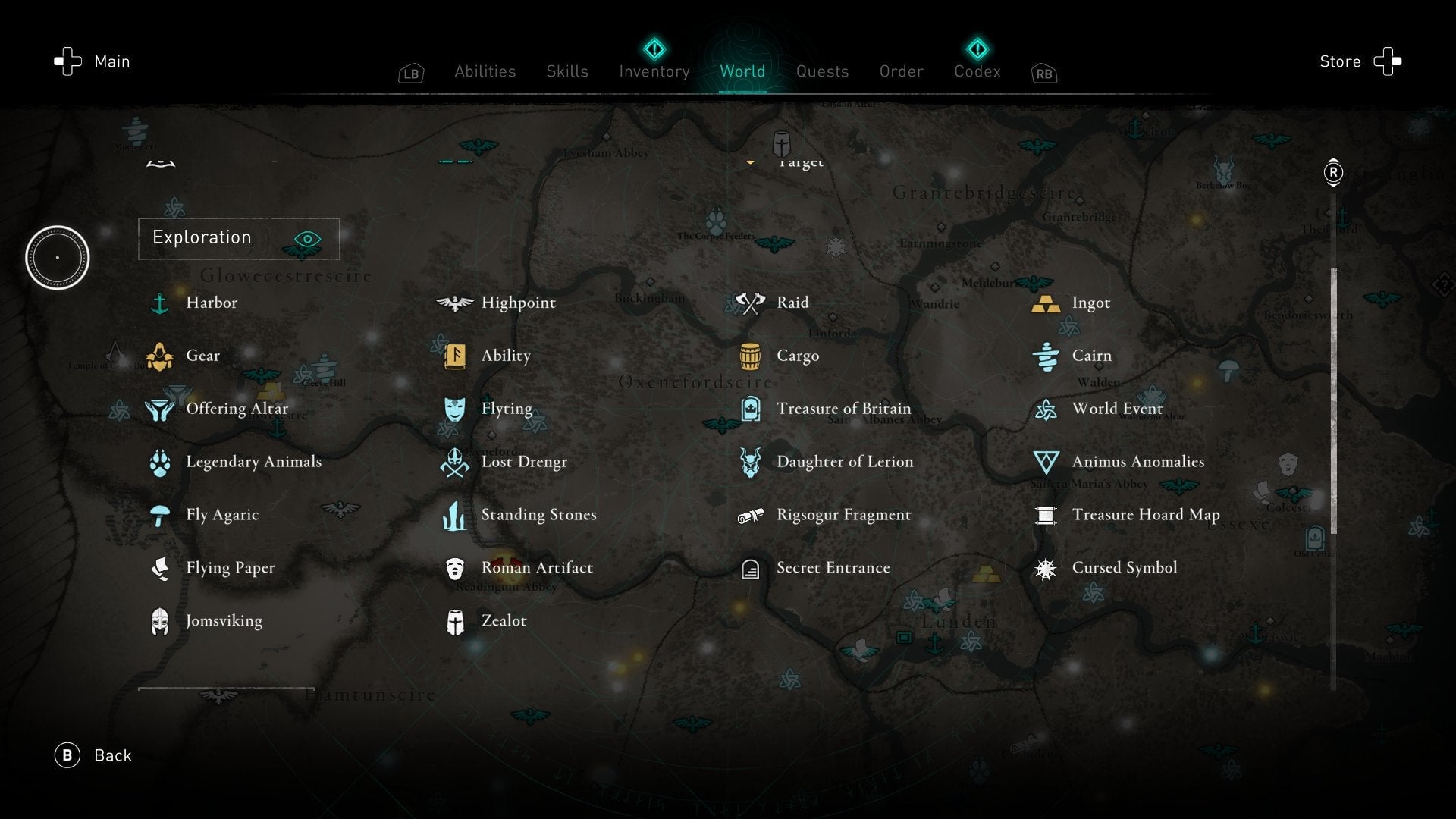
Now, this isn’t to say you shouldn’t play the entire game that’s at your fingertips. But if you try to explore every question mark on a boundless map, you’re bound to burn out sooner rather than later. By thinning the herd, you’ll have an easier time actually making it to the end. And hey, whatever you skip, don’t sweat it. These things will still be there in the endgame.
Consider what you’re getting out of it.
Burnout isn’t as simple as finding yourself overwhelmed by what’s on your plate and throwing in the towel. According to the “Areas of Worklife” model—detailed in a landmark 1999 study published in the Journal of Health and Human Services Administration—burnout can be attributed to six broad factors. Yes, “workload” is one, but there are five others that shouldn’t be counted out: control, reward, community, fairness, and values. All six together contribute to a sense of burnout.
Think of it like this: If you’re tackling a whole lot of missions at once (workload), that won’t necessarily fry your circuits, so long as you’re receiving due recompense—items, gear, and, of course, money—for your efforts (reward). You’ll be even less likely to get bored if you can choose what missions you do (control), and when you feel they’re at a reasonable difficulty level (fairness). As for community? Well, that’s what your favorite video game blog is for!
Don’t concern yourself too much with values. Neither science nor video games, nor even a video game blogger, can decide for you what those are. But hey, five out of six isn’t so bad.
Take three-day breaks, not week-long ones.
It’s more than natural to want to step away from a bloated game—to take a week or two off, and come back with fresh eyes. That’s arguably not the best approach. Instead, you’re better off taking sporadic three-day breaks. As social psychologist Heidi Grant Halvorson told the Harvard Business Review in 2015, you’ll reap more rejuvenative benefits from repeated three-day weekends, rather than one or two week-long breaks. Each rest period is enough time to give your brain a reset but not so long as to cause you to get rusty. The same principle can apply to meaty video games. Take a few days to play something else, something smaller, before returning to the grind. Such breaks can go a long way toward ensuring you don’t burn out on a massive game.
Also, if you find yourself wanting to retreat from a game for an entire week, maybe that’s because it’s not grabbing you.
Mess around with the difficulty.
Many instances of burnout can simply be boiled down to one factor: boredom. Once you start to tire of the slog, you’ll be less inclined to return. But changing the difficulty can help shake things up. And that’s not to simply say you should ramp up the challenge. Instead, look for other gameplay modifiers.
For instance, over the summer, Sucker Punch added a “Lethal” difficulty mode to Ghost of Tsushima, which increases how much damage both you and your enemies dish out. You can mess around with Assassin’s Creed Valhalla to make the game feel more like the old-school series entries. Such tweaks like that are more interesting than simply, “Oh, this is hard now.”
At the end of the day, burnout is part of the human condition. You can’t conquer it for good, especially when you’re repeatedly running through game worlds with more explorable nooks and crannies than a real-world city. But these strategies can help. Who knows: You might even be able to clock 174 hours into a sprawling, cynical, divisive, neon-lit metropolis without calling it quits.
Related Stories
https://kotaku.com/how-to-chip-away-at-a-massive-games-backlog-1845794480
https://kotaku.com/when-to-give-up-and-try-again-in-a-game-1843447355
https://kotaku.com/how-to-play-video-games-without-messing-up-your-body-1824219174