For a long time, when we thought of Capcom, we thought of its big franchises like Resident Evil and Street Fighter, but Monster Hunter always lurked in the background, waiting for its due. In 2018, Monster Hunter’s ambitions were finally realized when the fifth main installment in the series, Monster Hunter World, reached 10.9 million copies sold, making it Capcom’s best-selling single game ever. What happened?
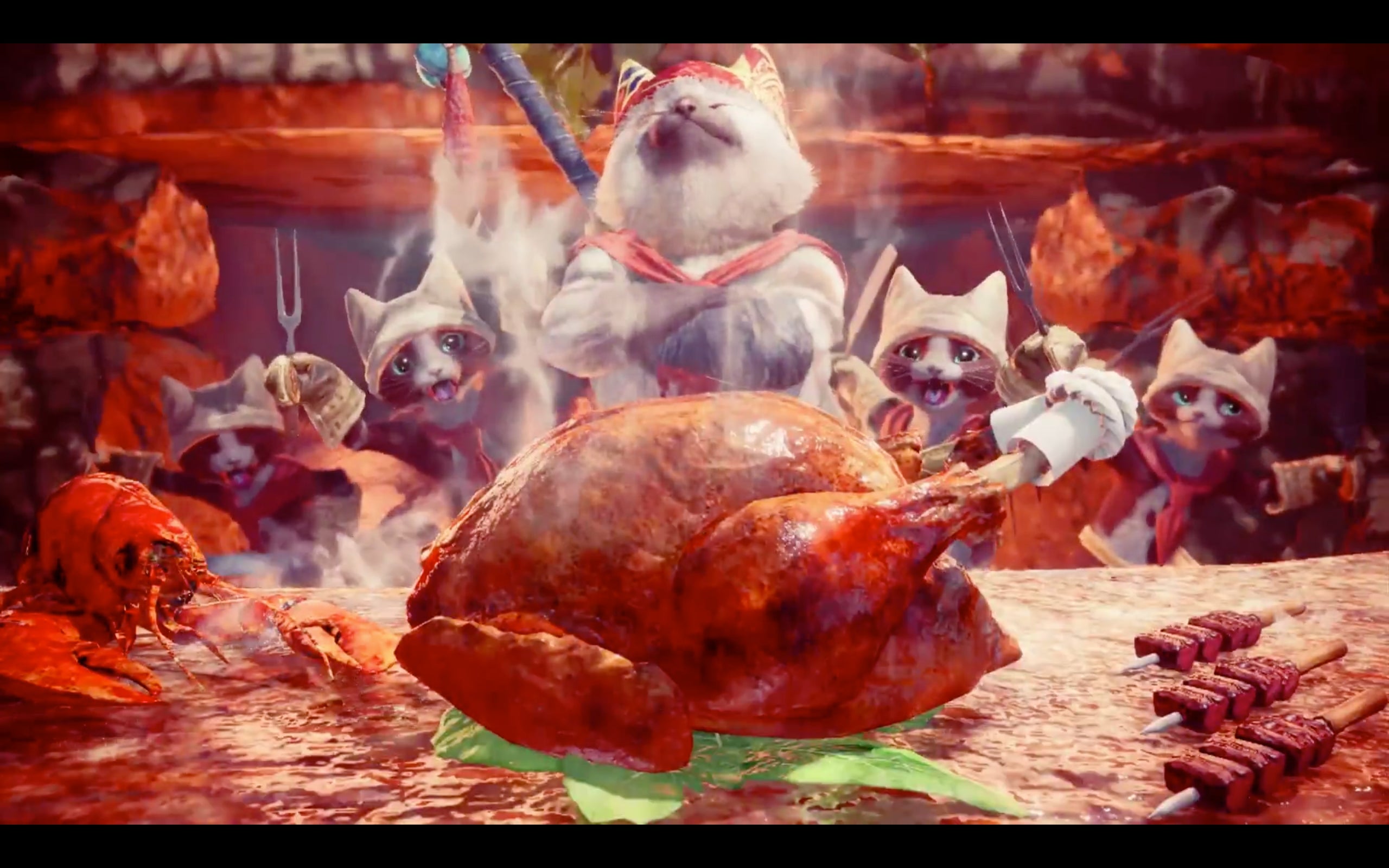
There’s so much to say about the series, from the luxurious, inviting sounds of cooking a great meal to the world’s awesome aesthetic to the amazing cat puns. The first entry, released in 2004 as a PlayStation 2 exclusive, wasn’t like anything else out there. As a hunter, you would venture out into a world populated by creatures reminiscent of dinosaurs or dragons, fight them, butcher them, and bring the parts back to camp. You’d turn those parts into new armor or weapons, which you’d take out into the world to fight bigger and better monsters until you reached the maximum hunter rank.
But it wasn’t until Monster Hunter World released that the series became such a runaway success. As with any game, there’s no one answer, but two crucial elements stand out: first, the way Monster Hunter sets itself apart from other RPGs, and second, the way it took advantage of modern online systems in a way no Monster Hunter entry had prior.
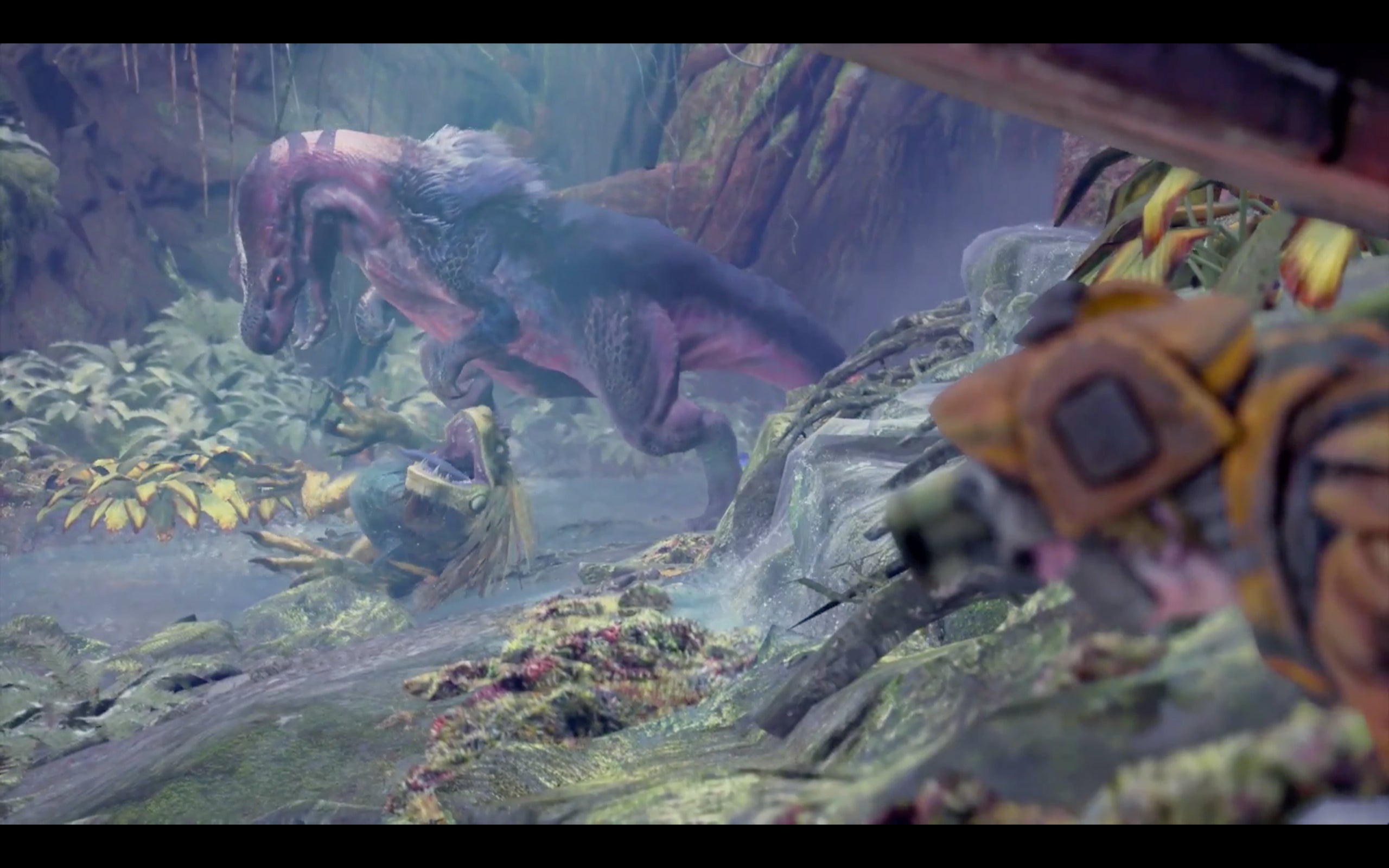
The secret is that Monster Hunter is more like a simulation than traditional games. You might be hunting a Diablos when a Deviljho shows up, and since those monsters hate each other’s guts, they’ll forget about you for a moment and start going at it. Diablos wins most fights it gets into, but Deviljho is a far more fearsome opponent. In the chaos, you can pick up some dung pods and slingshot them into Deviljho’s face, and he’ll run away in disgust, letting you refocus on Diablos.
 Instead of sticking to a class system or predictable skill trees like many games, Monster Hunter’s entire structure is based around your gear and your target; your decision-making process is more realistic. You do what you do because of what you have equipped and what you’re hunting down on any given day.
Soren Johnson, the lead designer on Civilization IV, once said, “given the opportunity, players will optimize the fun out of a game.” Experience point systems incentivize players to find easy, quick activities to farm for experience points so they can get the optimum number of points to level up the fastest. This can rob the game of its fun; farming tends to be mindless and repetitive.
Monster Hunter doesn’t allow this mindlessness because the only way to progress is by getting materials you need from actually playing the game. You can’t go farm a bunch of boring little monsters until you level up; you have to kill a specific monster who has the parts you need. To get better at Monster Hunter, you have to play Monster Hunter. There’s no way around it.
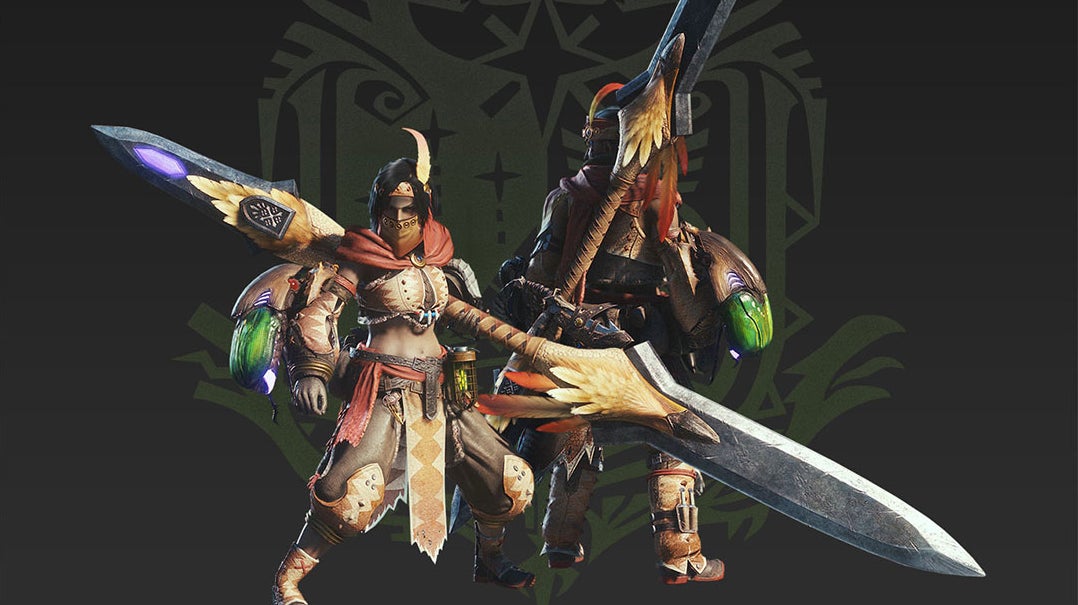
Monster Hunter’s weapons each boast fundamentally different play styles. A long sword user is all about using frequent slashes to build up meter for attacks that ultimately lead to a tail cut and thus additional materials. A hammer user’s job is to break monster horns and plating. An insect glaive user mounts and topples monsters to expose their weak points. Depending on what one weapon you bring into a hunt, Monster Hunter can feel like a completely different game every time.
Weapons, of course, are just one half of the equation. Monsters are the other.
Take Nergigante. He’s a big, angry dragon who has only one goal in life, which is to fuck up your shit until the end of time. To this end, he grows spikes all over his body while you are fighting him. When the spikes are lightly colored, they are weak points, but when they turn black, they provide him with extra armor. When he’s enraged, he gains a new attack and start Superman diving all over the arena, hoping to destroy you in a single hit.
The best games are often the ones that communicate the most. Capcom does a great job of communicating what a monster is feeling at any given moment. When a monster is tired, it looks tired, limping around the arena, crying to itself. When it’s enraged, it might glow or start huffing smoke. If you poison it, you’ll see purple poison dribbling out of its mouth. Monster Hunter is a game about planning out an encounter and adapting to your opponent based on what you know about its strengths and weaknesses, the environment, the weapons you have, your team composition, and everything else.
Most of Monster Hunter World’s changes don’t significantly alter that formula. It’s super nice that we no longer have to farm for whetstones and that all of our basic equipment, like fishing nets and pickaxes, are now part of the loadout. Grinding for those resources and remembering to bring the right gear along didn’t make Monster Hunter more fun. It just padded the experience with hours of brainless busy work. The levels has changed, too. Instead of small rooms connected by loading screens, World gives players several open worlds to explore, like the seaside jungles of the Ancient Forest or the blistering-hot deserts of the Wildspire Waste, with unique monsters in each ecosystem. By eliminating the boring stuff, World is a much more fun game. But are the open world and streamlining really what made World perform so well?
I don’t think so. Let’s go back to the very first game in the series, Monster Hunter. It was released on the PlayStation 2, which didn’t have great online support—no accounts, no matchmaking, none of the features that would eventually become standard—and even though Capcom did a great job with what they had, console multiplayer wouldn’t take off in a big way until the next generation with the relaunch of Xbox Live and the launch of the PlayStation Network. But as Capcom shifted from home consoles, the problem persisted: The PlayStation 2’s online service was bad, the Wii’s was bad, the Wii U’s was bad, the PSP’s was bad, and the 3DS’ was tolerable, at best.
 The PSP and 3DS entries were probably great for people who spent a lot of time on public transit in urban areas with high population density. Living in a small town largely devoid of public transportation, I was not one of those people, so the likelihood I would ever turn on my PSP and find out that I could play a Monster Hunter game with someone hovered around zero. It wasn’t until World that Capcom actually tried to make their online, multiplayer-focused series for a global market, one that preferred to sign into a single account, go online, find lobbies, and get to work hunting monsters.
The series always had brilliant design, but it was so difficult for potential Monster Hunter fans to actually engage with the series that most people never checked it out. When World finally released on PC, Xbox, and PlayStation consoles, players embraced it with open arms. The market was always there—Capcom just released its games in ways that made it really hard to connect to other hunters around the world.
There are ways to tap into that market even more; both the console and PC versions of the game launched with serious connection issues that took ages to resolve, for example, and game flow is sometimes hampered by the clunky way campaign missions work. But Capcom already solved the real problem by releasing World on platforms that could properly support it.
A lot of game designers I’ve known over the years believe in the maxim “if you build it, they will come.” There’s an expectation that if a game’s mechanics are great, it will find its audience, but that’s not always true. Monster Hunter games have always been great, and while they performed admirably, it wasn’t until World that the millions who wanted to play were finally able to give it a try. Releasing a game on the right platform is just as important as having brilliant mechanics.
As more and more of my friends get into Monster Hunter, I’m hopeful. Maybe I’ll finally be able to take on monsters like Lagiacrus with my friends on Steam. Capcom has announced a new expansion, Iceborne, releasing this fall, and it looks exciting. The future of Monster Hunter has never been brighter.
GB Burford is a freelance journalist and indie game developer who just can’t get enough of exploring why games work. You can reach him on Twitter at @ForgetAmnesia or on his blog. You can support him and even suggest games to write about over at his Patreon