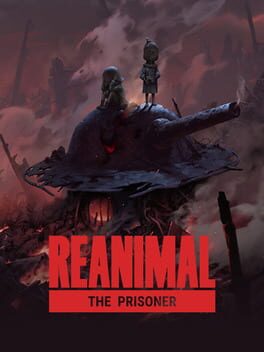
About Reanimal
Reanimal is a horror adventure game developed by Tarsier Studios and published by THQ Nordic. It is the first new title from the studio since Little Nightmares II, and it carries forward the atmospheric dread and environmental storytelling that made those games resonate with so many players. Released in February 2026, it follows a brother and sister who must survive a twisted island to rescue their missing friends and find a way home.
The game is built around cooperative play from the ground up. You can play solo, switching between the two siblings, or team up with someone on the couch in local split-screen co-op. Each character brings different abilities to the puzzles and encounters, and the game is designed so that both players feel essential rather than one simply tagging along. The cooperative structure affects puzzle design, exploration, and even how horror moments land, since having a partner shifts the tension in unexpected ways.
Visually, Reanimal pushes further than Tarsier's earlier work. The island is filled with oversized, grotesque creatures and environments that feel handcrafted to unsettle. The camera work has been specifically noted for its role in building dread, pulling in tight during claustrophobic moments, and pulling wide to reveal the scale of the threats ahead. Our review of Reanimal explores this in more detail for anyone weighing whether the experience is worth the investment.
Why Should I Play Reanimal?
Tarsier Studios built its reputation on crafting horror worlds that feel alive and hostile without relying on gore or jump scares as a crutch. Reanimal continues that tradition. The island is filled with creatures and set pieces that communicate danger through design, sound, and movement rather than cheap shocks. Puzzles are woven into the environment, often requiring both siblings to work together to move forward, which makes progression feel earned.
The co-op design is more than a bolted-on feature. Tarsier built the entire game around two characters with distinct roles, so playing with a partner changes the pacing and tension of each encounter. Solo players still get the full experience through character switching, but the game is at its best when two people are navigating the horror together and reacting in real time.
The campaign runs roughly three to five hours, which keeps the pacing tight and avoids the padding that can drag down longer horror games. Every area introduces new mechanics or threats, so the experience rarely repeats itself. A Deluxe Edition includes a Season Pass covering three additional DLC chapters, a digital art book, and the soundtrack for those who want more after the credits roll.
Is Reanimal Free-to-play?
No. Reanimal is a paid game. A Standard Edition and a Deluxe Edition are available. The Deluxe Edition adds a Season Pass with three planned DLC chapters, a digital artbook, and the game's soundtrack. There are no microtransactions or in-game purchases in the base game. At launch, the game is not included in Xbox Game Pass, PlayStation Plus, or any other subscription service.
Where Can I Download Reanimal?
You can download Reanimal on PC through Steam, on PlayStation 5 through the PlayStation Store, on Xbox Series X|S through the Xbox Store, and on Nintendo Switch 2 through the Nintendo eShop. All versions launched simultaneously in February 2026.
On PC, the game requires Windows 10 or later, a 64-bit processor, DirectX 12, and approximately 18 GB of available storage. A GeForce RTX 2060 or Radeon RX 6600 XT is recommended for the best visual experience. Console versions are optimized for their respective hardware, with the Switch 2 version offering both handheld and docked play. A playable demo is available on Steam, PlayStation 5, and Xbox Series X|S.
What Games Should I Play If I Enjoy Reanimal?
Little Nightmares, Little Nightmares 2, and Little Nightmares 3 are the most natural companions. Developed by Tarsier Studios before their departure from the series, these games established the formula that Reanimal builds on: small, vulnerable characters navigating oversized, nightmarish environments filled with grotesque creatures and environmental puzzles. Little Nightmares focuses on a girl named Six escaping a mysterious underwater vessel, while Little Nightmares II expands the world with a second playable character, Mono, and a more interconnected story. In the third installment, the game introduces two new characters: Low and Alone, while still putting them in a strange, big, and dangerous world. If you played Reanimal first, going back to these is well worth the time. They are available for download on PC, PlayStation, Xbox, and Nintendo Switch. The first game is also available on mobile platforms.
Limbo is a side-scrolling puzzle platformer from Playdead that tells its story entirely through atmosphere and visual design. A young boy wanders through a dark, hostile world searching for his sister, encountering deadly traps and disturbing creatures along the way. The black-and-white art style and wordless storytelling create a mood that fans of Reanimal will recognize. Limbo is shorter and more minimalist, but its influence on the genre is enormous. You can download it on PC, PlayStation, Xbox, Nintendo Switch, iOS, and Android.
Inside is Playdead's follow-up to Limbo, and it refines every element of the original. A boy runs through a bleak, authoritarian landscape, solving physics-based puzzles and avoiding capture. The environmental storytelling is richer, the puzzles are more inventive, and the final act goes in a direction that is genuinely surprising. Inside shares Reanimal's commitment to telling a dark story through gameplay and world design rather than dialogue. It is available to download on PC, PlayStation, Xbox, and Nintendo Switch.