Final Fantasy VII Rebirth’s in-universe card game Queen’s Blood has taken players by storm. Whether it’s the thrill of the hunt for a new card, or besting your opponent with a broken deck, the Final Fantasy series has another standout card game to go alongside Final Fantasy VIII’s revered Triple Triad and Final Fantasy IX’s Tetra Master.
Kotaku recently spoke to Director Naoki Hamaguchi to discuss the inspirations behind the hit card game, how the team developed the ruleset, and how Queen’s Blood fits into the larger worldbuilding of Final Fantasy VII Rebirth
Queen’s Blood pits two opponents against one another in an all-encompassing battle for control of the board. Each player takes turns placing a card to either score points, claim territory, or weaken their enemy’s cards. The board space fills with each passing turn, such that each move means more than the previous one. At the end of the day, the goal is to obtain the highest score possible, by any means necessary.
Buy Final Fantasy VII Rebirth: Amazon | Best Buy | Target

The Rebirth team looked to other successful RPG card games like The Witcher 3’s Gwent, but also had some unexpected sources of inspiration. “I was greatly inspired by the concept of creating combos with your cards while still playing by the fundamental rule of whoever has the highest score wins. Although in a different genre, Splatoon offered some good pointers in terms of territory battles,” Hamaguchi tells Kotaku. “The game rules for Marvel Snap were a helpful reference in many ways when we were deciding how to adjust the balance for Queen’s Blood in the final stages of development.”
While Nintendo’s competitive shooter may sound like an oddball pick, Splatoon’s focus on claiming board space is embedded in Queen Blood. Both games have matches with a strong push-pull feel, and there are moments when you’ll feel like you’re on the back foot and need to pull out a trump card to shake things up.
Developing a card game from scratch is a tall order, especially if you don’t have the board in front of you for reference. So Hamaguchi and the team came up with practical solutions to ensure Queen’s Blood lived up to their hopes and expectations.
“We made prototypes using physical paper media and by creating a simple Windows app,” he says. “We spent about a year in the planning phase to firmly establish the gameplay before moving on to the implementation phase for the main game.“
However, that wasn’t where it ended for the team. As development on Queen’s Blood began to wrap up, the team cooked up a special surprise to commemorate their love of the game.
“There was a lot of love for Queen’s Blood among the development staff as well, and toward the end of development when the workload lightened for some members, they used a 3D printer to create an actual real-life board,” Hamaguchi explains.
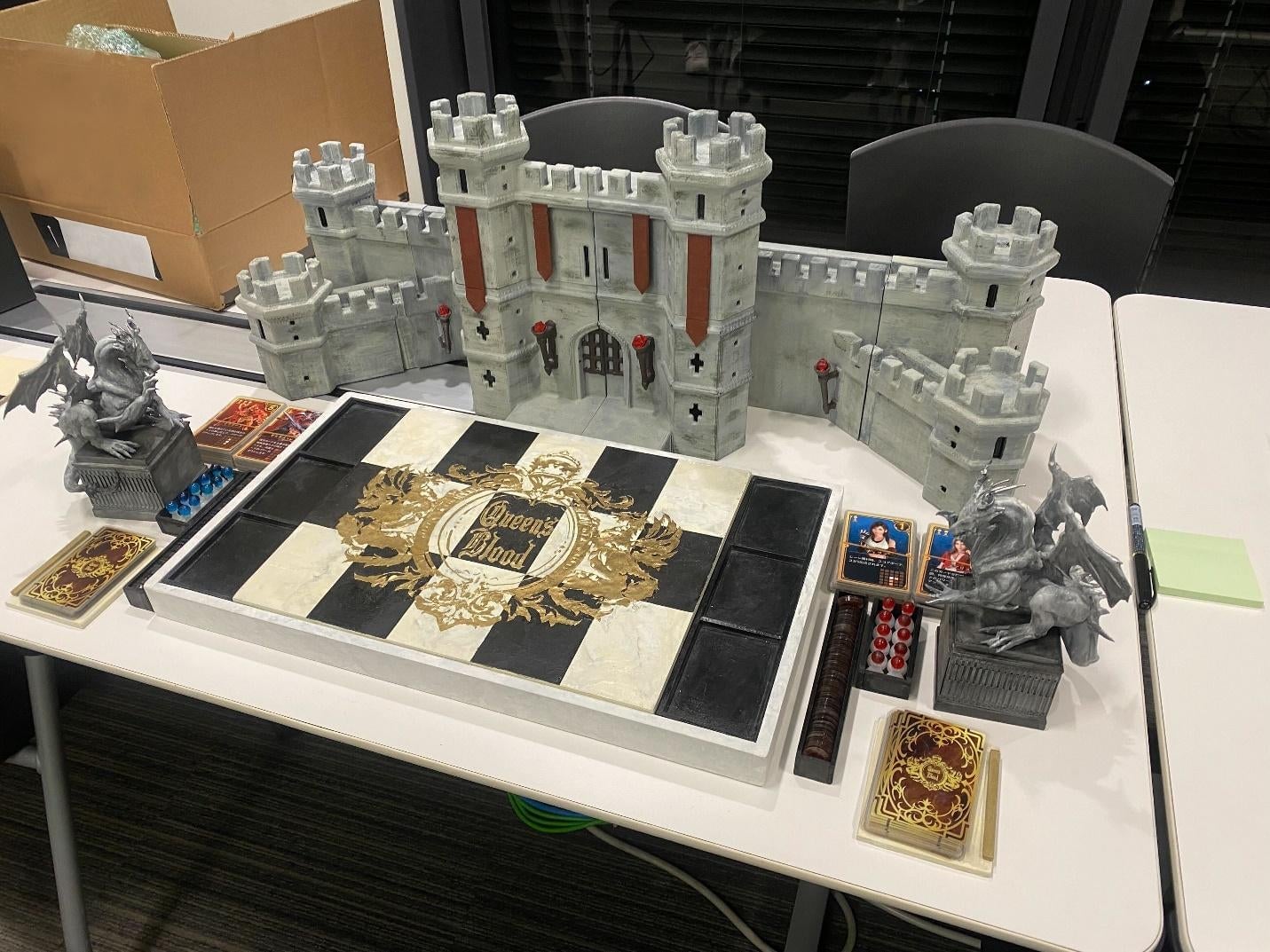
A 3D-printed Queen’s Blood board is a huge step up from a simple Windows app and paper cutouts. Using the physical space to test out game mechanics and readability of cards was vital to perfecting the experience for both new and veteran card game players. Queen’s Blood isn’t just another mini-game in the RPG’s large pile of diversions—it’s a focal point of Rebirth’s world and a cultural touchstone for the people of Gaia.
Rebirth’s main story thrusts the card game into the spotlight on multiple occasions. From the moment protagonist Cloud gets his first deck of cards in Kalm, Queen’s Blood is a pillar of every location, and even makes up the bulk of an entire chapter of the game. Encouraging players to engage with Queens Blood without overshadowing Rebirth’s other side activities was a balancing act.
“You may be surprised to learn that the mini-games team, which was responsible for creating the rules of the Queen’s Blood card game and its development, and the levels team, which added a story layer to the mini-game and incorporated it into the overall world of the game, operated separately.” Hamaguchi says.
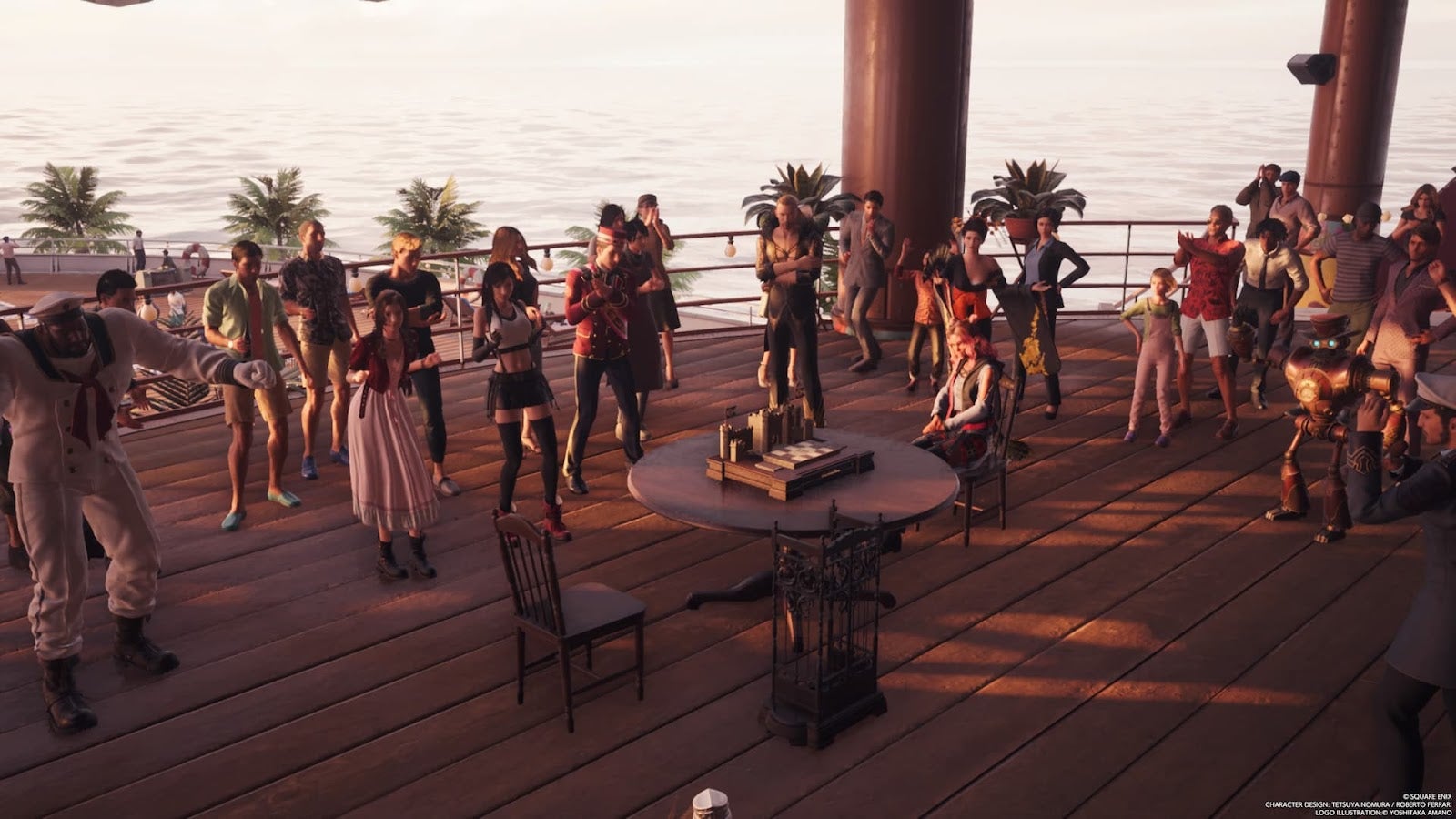
It’s a unique approach, and one that culminates in one of the most memorable side stories in all of Rebirth: the Shadowblood Queen storyline. This totally optional quest includes a whole lot of new and familiar faces, and the levels team was tasked to find places for where “30 or so” Queen’s Blood players instrumental to this storyline would appear, and come up with unique stories for each of them. The aim of handpicking the locations was to make Queen’s Blood feel like a real-world viral sensation, like Pokémon Go back in 2017. Hamaguchi adds, “we did this by ensuring that each and every opponent who appears in the Shadowblood Queen storyline was presented as a uniquely individual character.”
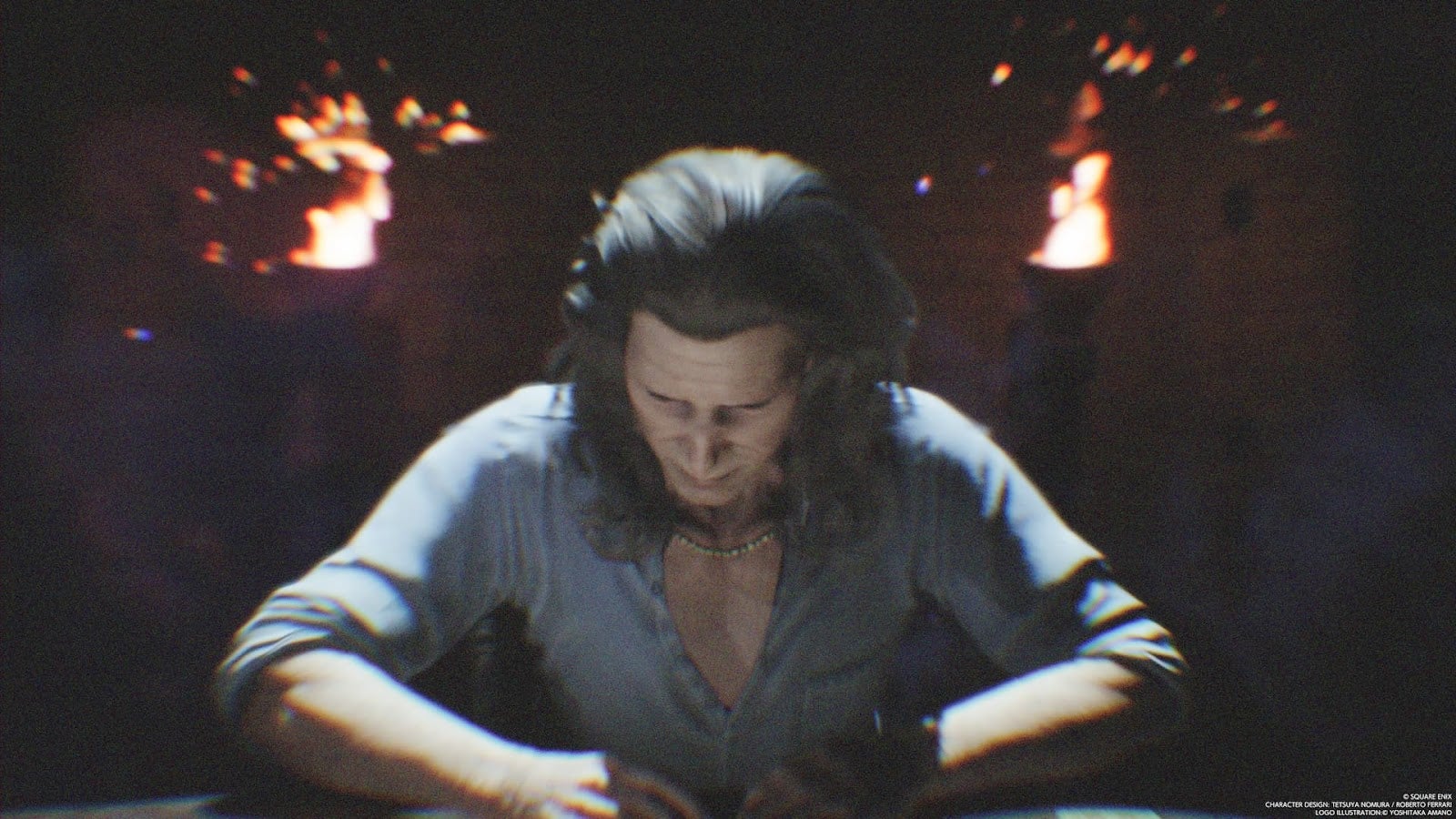
The Queen’s Blood team intentionally drew parallels between the game’s in-universe popularity and one of Rebirth’s central narrative concerns: the urban legends surrounding Sephiroth and the mysterious men in the black robes.
“I believe that the phenomenon of Jenova spreading through SOLDIERs and the Black Robes has both a viral aspect and an urban legend aspect,” the Queen’s Blood team told Kotaku via email. “With Queen’s Blood, [we] focused on the urban legend aspect and wrote the scenario thinking about what might happen if the legacy of Jenova spread in the form of lore and card games.”
In other words, there’s a whole lot more to Queen’s Blood than your typical RPG minigame. If you haven’t checked out Rebirth’s compelling minigame, now’s the time. There’s plenty to chew on for both deck-building diehards and FF7 lorehounds.
Buy Final Fantasy VII Rebirth: Amazon | Best Buy | Target
.