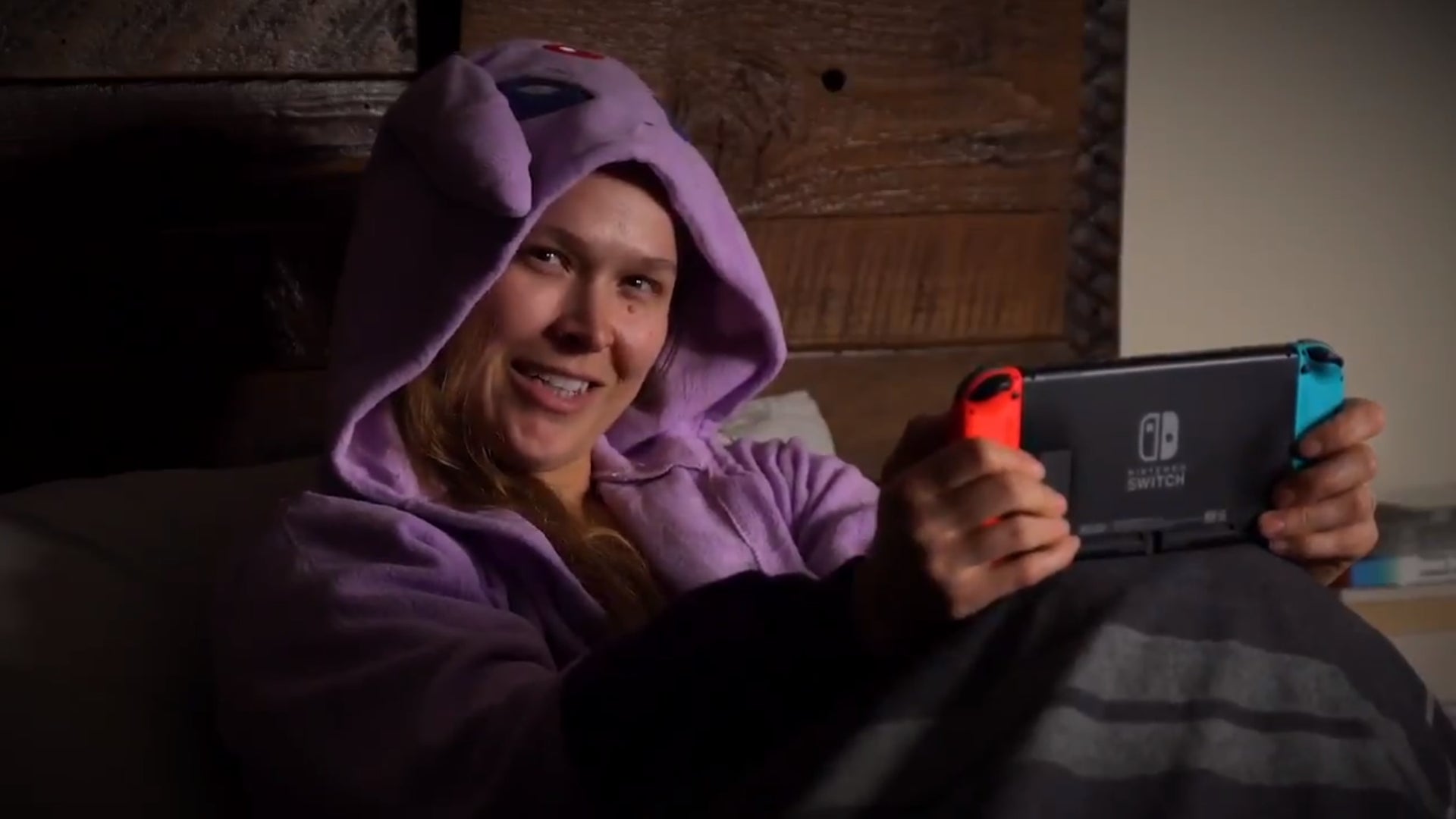
Noted World of Warcraft fan, Mortal Kombat character, person with bad opinions about trans rights, and also WWE wrestler Ronda Rousey is diving headfirst into the lucrative world of video game streaming. She’s announced that, beginning next week, she’ll be doing it exclusively on Facebook.
In a post on Instagram, Rousey described video game streaming as “one of the rawest and most authentic mediums,” which is why she’s decided to try her hand at it. In a press release, she said that streaming will let her take off the figurative mask she’s crafted as a fighter and wrestler and just be herself. “Through my streams, people can hang out with the real me, not the ‘character’ version of myself they’re used to seeing,” she said. Of course, streamers are still playing characters, given that they have to dial their personalities up at least a small amount to keep viewers entertained, so your mileage might vary if you’re hoping to get an authentic front row seat to the real deal.
Rousey will debut on Facebook with an Australian bushfire charity stream next Tuesday, with regular streams following every Monday morning.
Rousey hasn’t hid her love for gaming over the years. She said that, even after she became an MMA and wrestling star, games remained an important part of her life as a “way for me to keep my mind active when my body is too sore or tired to move.” She also told a kinda out-of-nowhere story about Pokemon that strikes me as too specific to have been fabricated by the publicist who wrote the press release: “One of my favorite gaming memories happened when I was 11 years old, and [I] encountered an Articuno on Pokemon Blue for the first time. I was awestruck and thought she looked like an angel. Looking back at that same image now, I’m amazed how powerful our imaginations can be and how gaming encourages us to imagine what our reality could be instead of just accepting it for what it is—a skill that has helped me in my fighting and entertainment careers countless times.”
Facebook has been making big moves in the burgeoning livestreaming wars, snatching up names like Jeremy “Disguised Toast” Wang, Corinna Kopf, and Gonzalo “Zero” Barrios in the past few months. And while the most notable multi-million dollar streaming exclusivity deals so far have gone to ex-Twitch stars like Tyler “Ninja” Blevins and Michael “Shroud” Grzesiek (both of whom moved to Mixer), the world of traditional celebrity is increasingly taking notice. Rousey’s signing is evidence of that, and it follows on Drake’s partnership with livestreaming platform Caffeine, which he announced earlier this week. Video game streaming is changing rapidly, its days as the exclusive domain of nerdy 20-somethings in their bedrooms seem long gone. Now rich 30-somethings in sets designed to look like their bedrooms are also getting in on the action. Heaping gobs of money from several of the biggest companies on earth, it turns out, will do that. What all of this means for streamers who aren’t fabulously rich and famous remains a bigger, more complicated question.
Recommended Stories
https://kotaku.com/top-streamers-are-leaving-twitch-amidst-big-money-and-s-1841338875
https://kotaku.com/twitch-stars-are-becoming-more-like-regular-celebrities-1838789785
https://kotaku.com/why-twitch-fans-donate-money-to-already-wealthy-streame-1841456196