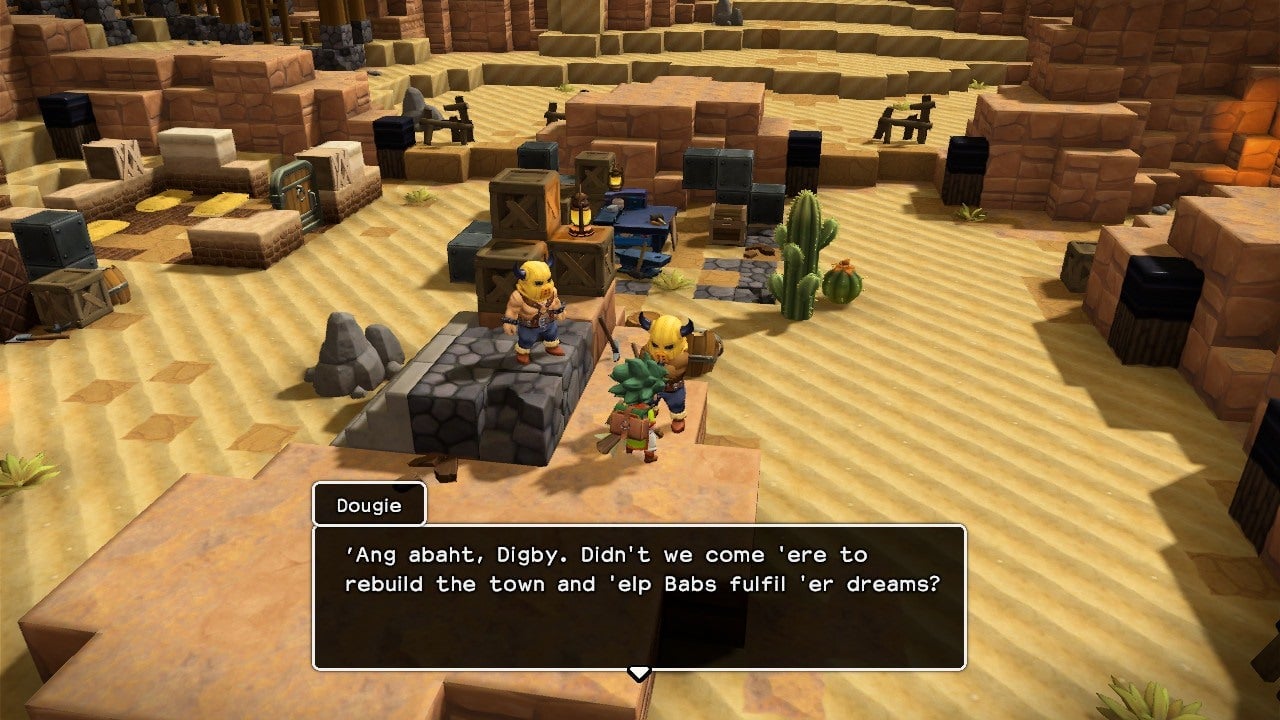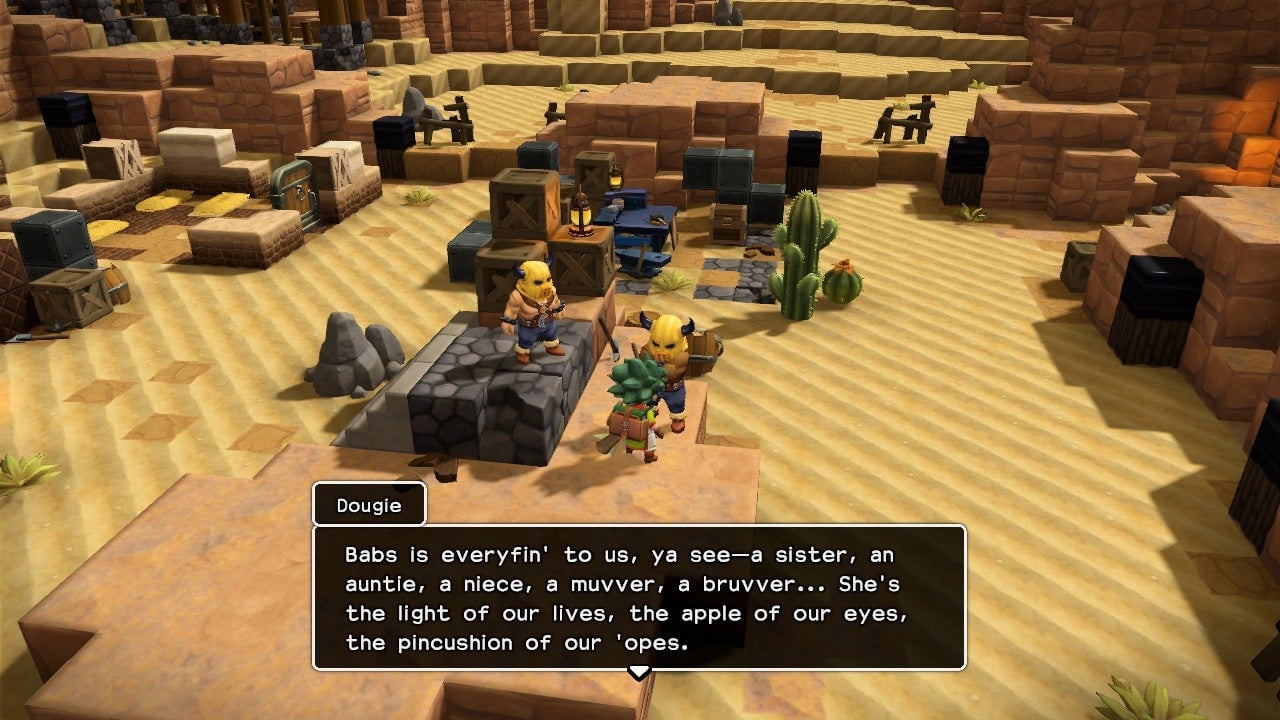
The first Dragon Quest Builders was an underrated gem, a delightful game that proved that Dragon Quest and Minecraft go together as nicely as peanut butter and pickles. The second game, which comes out Friday, is even better.
I’ve played a couple dozen hours of Dragon Quest Builders 2 on Switch so far thanks to an early copy provided by Nintendo, and I’m pleased to report that it’s fantastic. While there are still a few things to complain about—some tedium, some repetition, those terrible transliterated accents—it’s got everything you’d want from a sequel to Dragon Quest Builders. It carries over what worked so well in the first game, like the quirky personalities and that satisfying feeling of busywork that can only come through moving little blocks around to make bigger blocks. It also fixes most of the first game’s flaws.
The most griped-about thing in the first Dragon Quest Builders, for example, was the structure. The game was divided into four chapters, each set on an island with a different theme. Each one required you to visit a new village and get to know its residents, then solve their problems by building rooms and eventually defeating some sort of massive boss. Once you finished a chapter and moved to the next one, you had to hit the reset button, starting from scratch on your town, items, and equipment. You even had to relearn some of the item recipes you’d already sorted out the last time around.
Dragon Quest Builders 2 is a little different. You’ll still travel between themed islands, but you’ll also get a main base to call your own. In fact, the conceit is that you’re traveling around the world in order to find new recruits and techniques to use on your home island, the Isle of Awakening. Then, when you pick up ingredients and building blocks on other islands, you can bring them home and use them to turn your main island into a sprawling empire. (Or, as will no doubt be inevitable, a big phallus.)
So the rhythm looks like this: You go off to an island and spend a bunch of time there, helping the villagers and getting to know their quirks and character traits. The first island, for example, is all about farming. It’ll teach you how to plant crops like pumpkins and tomatoes, irrigate them, and cook them. You’ll spend a bunch of hours on this island building bedrooms and kitchens, making your base look tidy, and helping revive the farmlands. You’ll help out people like Britney, a soldier who speaks in memes, and Rosie, an idealist who just wants to learn how to be a good farmer. Then, once you’ve beaten the boss and solved all of the people’s problems, you can head back to your home island, taking your farming knowledge—and, story-depending, even some of the villagers—back with you.
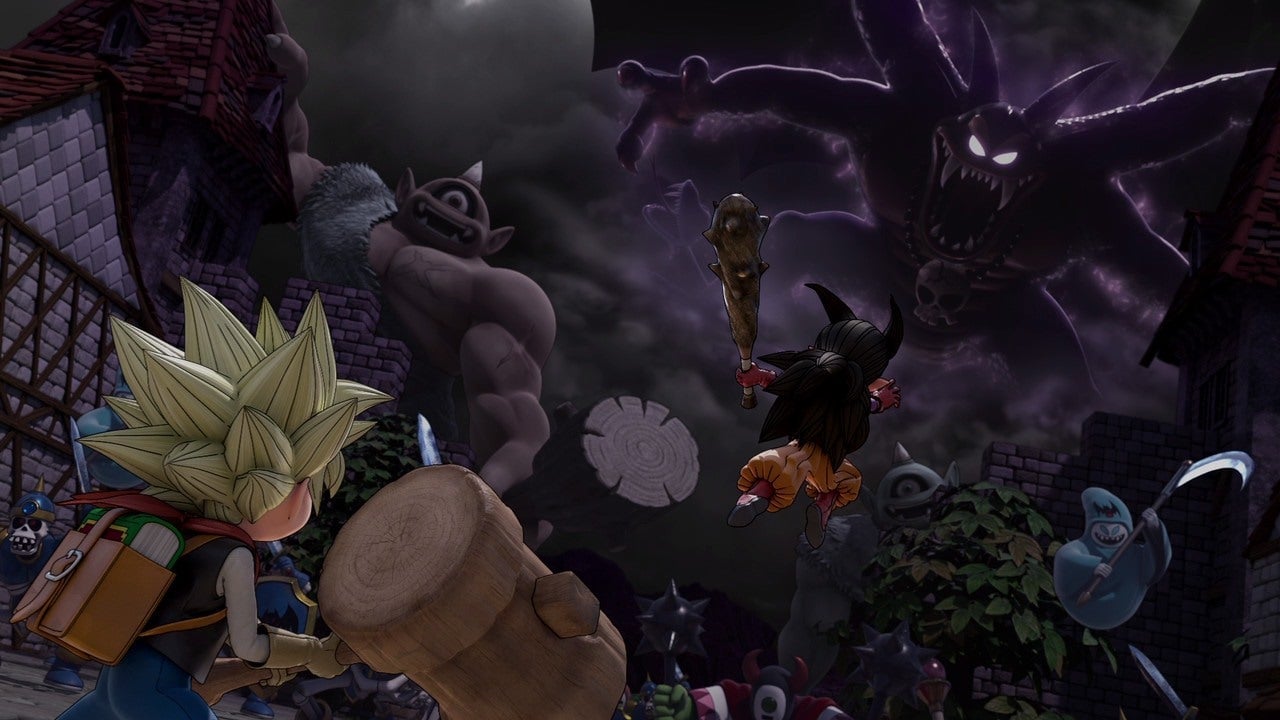
It’s a smart structure, allowing you to maintain a single thriving base without sacrificing the self-contained stories that worked so nicely in the first game. There’s also an overarching narrative about a world in which the malevolent (if adorable) Children of Hargon have outlawed building in favor of destruction. Alongside your partner, a combat-loving amnesiac who goes by Malroth and may or may not be related to the Dragon Quest demon with the same name, you set off to fight the Children of Hargon and proselytize the wonders of building to everyone you meet.
Here are some other improvements Dragon Quest Builders 2 has over the first game:
Whereas in Dragon Quest Builders you had to worry about your hammers and swords disintegrating over time, in this one, you don’t even have to give them a second thought. Your hammer is assigned to a button, your sword is assigned to a button, and that’s the end of it.
Dragon Quest Builders 2 also introduces some new tools to make building more convenient, like a jug of endless water (for making pools and rivers) and a pair of gloves that lets you move blocks around manually without having to destroy and collect them first.
Another example of the little improvements that really help Dragon Quest Builders 2: When you’ve got a quest or blueprint that requires you to make specific items, those items will now be highlighted when you open up your crafting station. Instead of just having to memorize the items you need to craft for, say, a small bedroom, you can now get a quick refresher in the crafting menu. Anyone who’s played the first game will understand how nice this is.
You can make multiple items at once. Game-changing.
In the first game, you’d level up each island’s village by building rooms and sticking decorations to rack up city points. Gain enough points and you’d gain a level, allowing the village to expand and thrive. In Dragon Quest Builders 2, you level up by collecting the little hearts your townspeople drop after you do them favors and build them conveniences. It’s far more flexible and satisfying, rewarding you more regularly than the last game’s rigid points system.
There’s multiplayer! I haven’t tried it yet, but hey, multiplayer!
You can get a glider, Breath of the Wild-style, to fly across long distances and land safely from great heights without taking any damage.
There’s fast travel this time around, too. Each island has a number of points to which you can painlessly zoom with the single press of a button.
You can carry a basically unlimited number of items in your bag, which is very, very nice.
In addition to the main islands, there are a handful of tiny areas with procedurally generated maps and goals that you can use to get new stuff to upgrade your home base, in case you were worried about running out of things to do.
Under the right conditions, when you set down a construction blueprint, instead of having to place down every block yourself, your villagers will actually do it all for you, allowing you to play Construction Boss as your minions follow your every whim. Hope they don’t unionize!
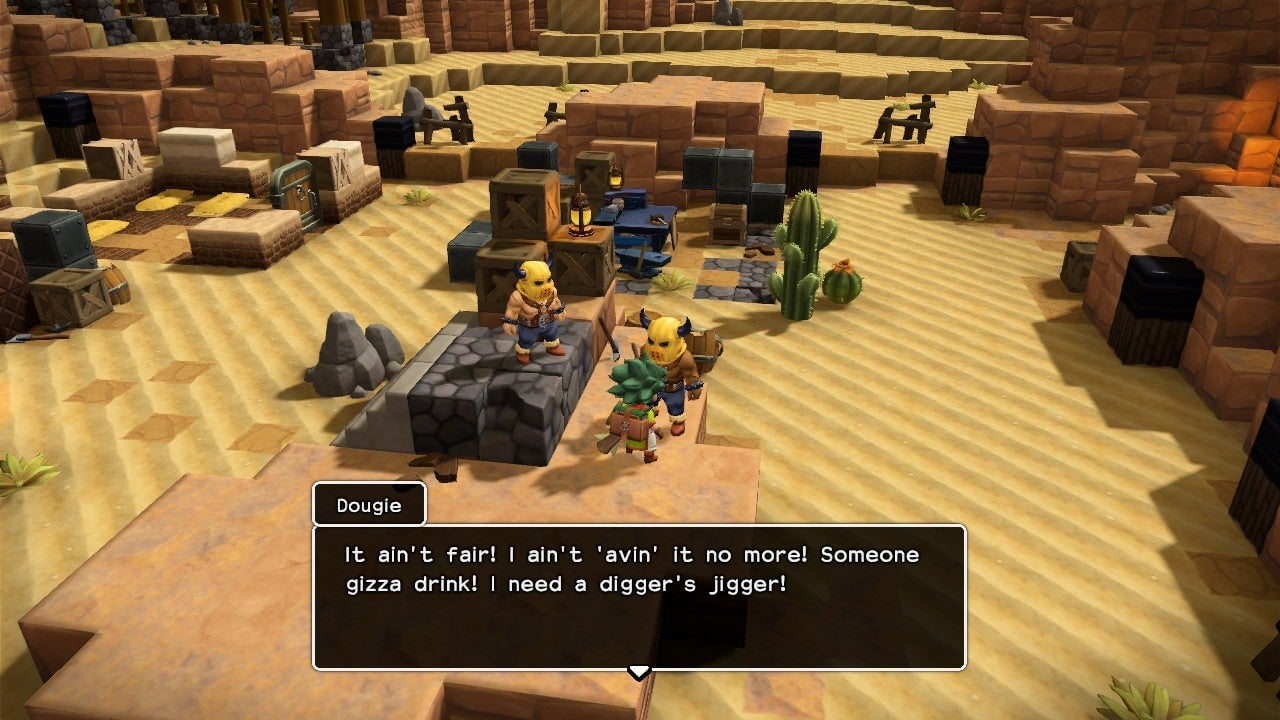
It all works very smoothly, and from what I’ve played so far, I highly recommend Dragon Quest Builders 2. It’s just a shame about the damn accents.