Saying “history will not be kind to [thing or person]” is a practice that has always fascinated me. Who are we to judge the future’s thoughts on the topics of today? That’s the future’s problem. All we can do in the present, as historians or otherwise, is evaluate what has come before us.
It’s impossible for us to say what the future’s history will or will not be kind to, just as it would have been impossible for people 50 or 500 years ago to imagine what inseparable part of the fabric of their daily lives we would find indispensable (or unpalatable) in the 21st century.
I think about this a lot when it comes to video game reviews. A lot of my reviews for Kotaku end up being for big strategy games because that’s my passion, and they’re games I’ve poured decades of my life into playing. But every time I sit down to review one, I’m plagued with doubts and uncertainties.
Big strategy games are often played (continually, I mean) well beyond the lifespans of many other genres. Fans will clock up thousands of hours on the battlefield or world map, developers will release countless patches and updates and expansions and the experience of playing something like Crusader Kings might change dramatically in the weeks, months and years after release.
What the hell am I writing about, then, when I sit down to review one of these games? How can I hope to definitively give my verdict on an experience if the future has the power to change—or even undermine—the way people ultimately end up playing it?
Allow me to confess: I have said some strategy games are great in a review on this website, only to find that over the months and years to follow—through updates, or changes to systems that only break after hundreds of hours of use—that I don’t actually like them that much. In my Company of Heroes 2 review, for example, I end by calling the game an “overwhelming success”. By the time I was writing my Company of Heroes 3 review, I had downgraded my opinion on its predecessor to “dogshit”.
I’m sorry! It’s not my fault. It’s a structural, inherent flaw in reviewing video games at launch, and while strategy games are far from the only genre vulnerable to this (MMO players, I see you), it’s the one I specialise in, so it’s the one I’m taking responsibility for here. And it’s not to say those initial reviews are worthless, far from it. They’re useful and correct for the time, it’s just that as strategy games evolve and bed themselves in over months and years, those day-one thoughts can become increasingly irrelevant.
Of course while timely reviews can be a problem in this instance, they can also be the solution. In an attempt to atone for my critical sins I’ve spent the last few years re-reviewing some of the biggest, grandest strategy games on the PC, from Crusader Kings to Hearts of Iron, weighing their expansions and updates and shifting mechanics against the games we were able to play at release.
I also wrote one in 2016 for Sid Meier’s Civilization V, a game first released in 2010. Which leads us to the subject of today’s re-review: Sid Meier’s Civilization VI, a video game released back in 2016 and which has been updated—though not necessarily improved—since.
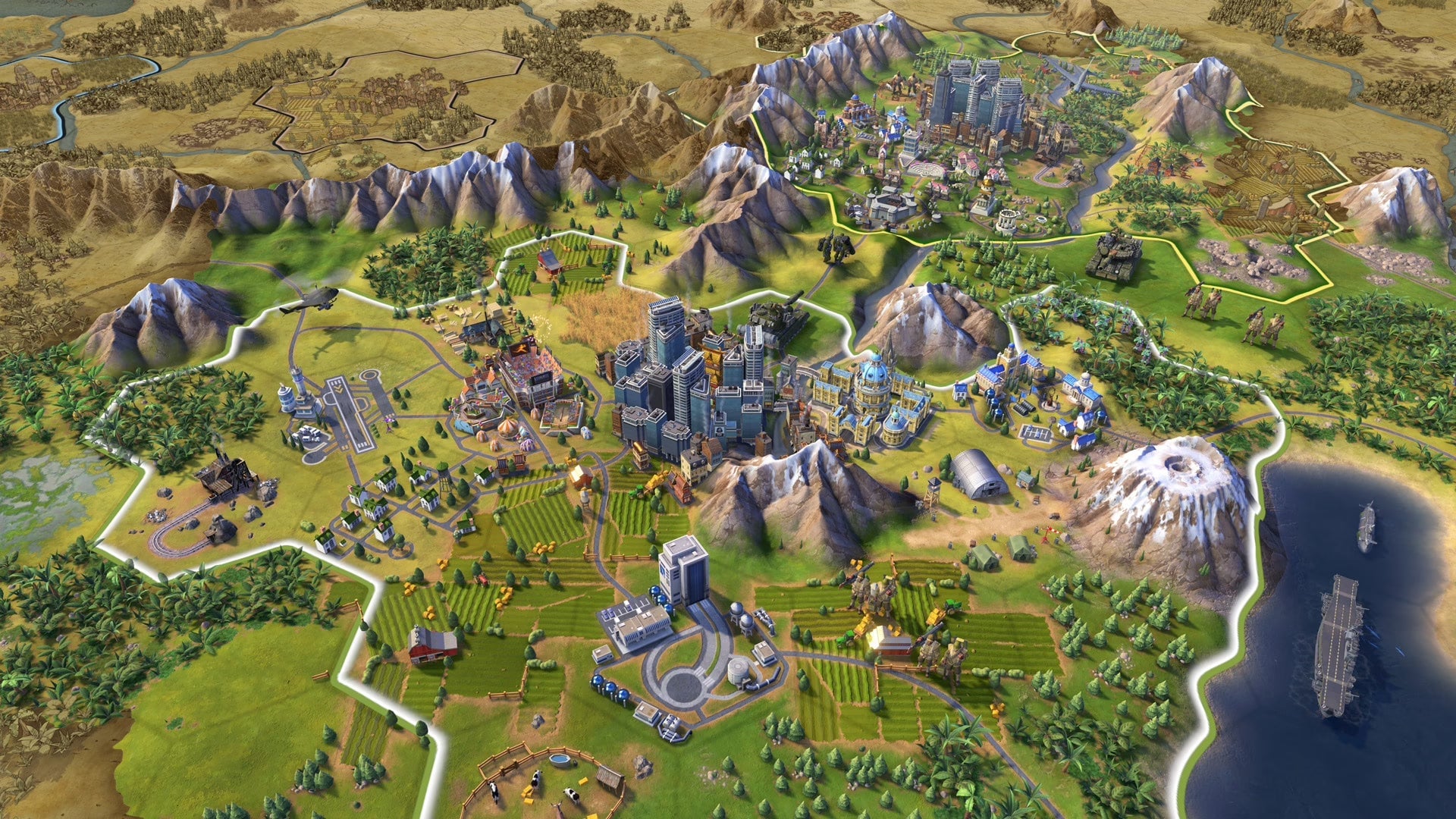
I was kind to Civilization VI at launch, with some predictable caveats. I knew from my Civilization V experiencethat these games no longer released whole, and that it would like take an expansion or two for the full grandeur of Firaxis’ planned experience to take shape.
That’s exactly what happened, and when it did I had some more kind words to say. But while Civilization V received two expansions that helped cement its legacy as one of the best strategy games ever made, Civilization VI hasn’t hit quite the same heights.
Let me be blunt: in 2023 I think it’s the worst mainline Civilization game. That’s a deeply relative thing, of course. I also think it’s a wonderful strategy game, full of depth and nuance, oozing with character and a modern standard-bearer for the series’ classic “one more turn” addiction.
But it’s also the first Civilization game that I have ever stopped playing. From the original to V, through spin-offs in space and the 16th century, I have always played Civ games for as long as they were the most recent, as long as that ended up being the case.
Yet until revisiting it for this re-review I hadn’t reached for Civilization VI in years. And it wasn’t down to genre fatigue, because I got very excited forHumankind and loved every second I spent with Endless Legend, so my fire for the 4X genre itself is definitely not dying out. Indeed I’ve gone back and played more Civ V in recent years than VI. It’s not me, babe. It’s you.
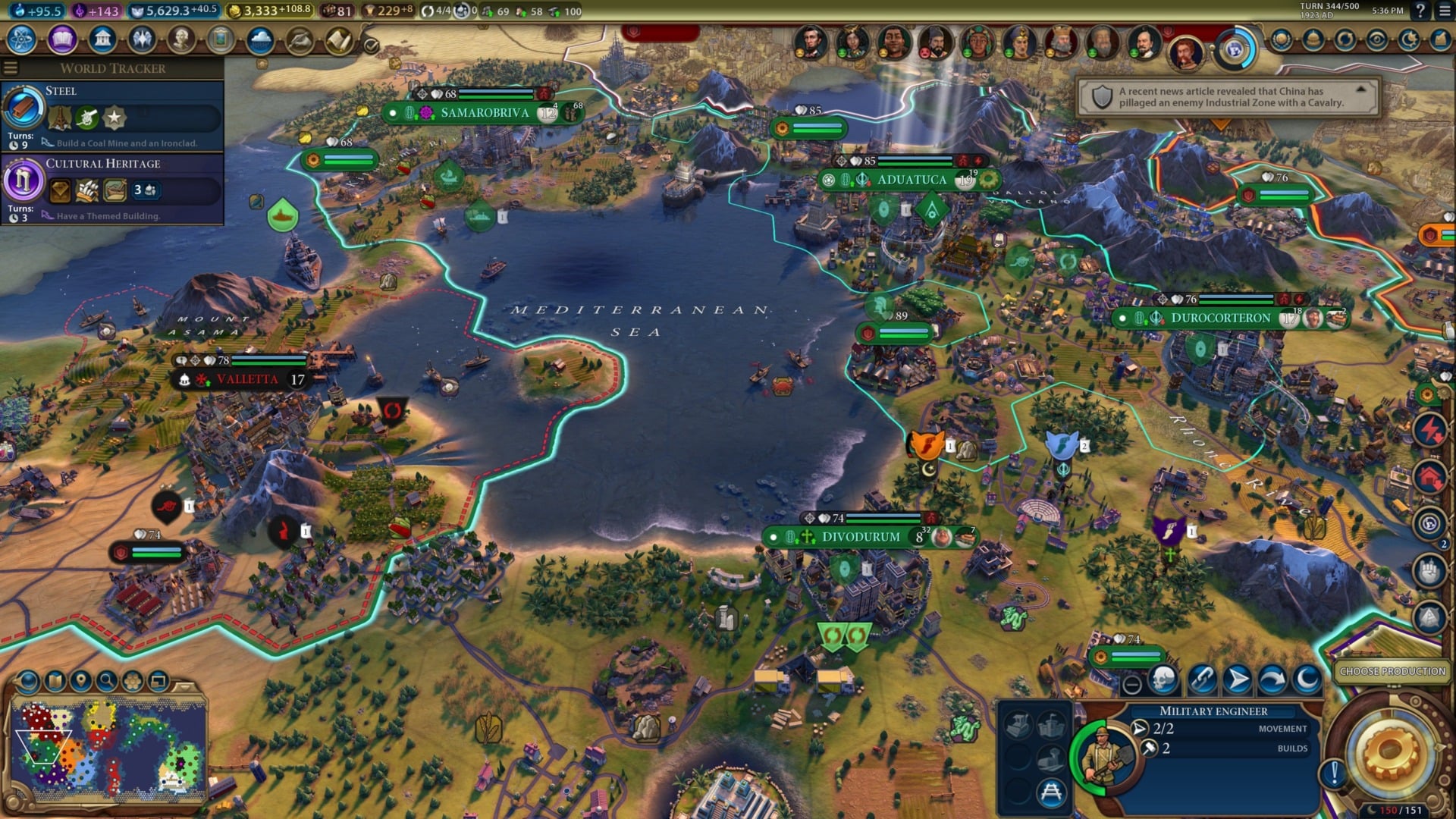
At first play Civilization VI is just like every other Civilization game. It features charismatic world leaders, you explore a map, you develop technology. You expand the borders of an empire, you exterminate enemies, you let off some nukes, you go into space, it ticks every box on the Civilization checklist. When I say “it’s a wonderful strategy game”, it is, in that I think it’s impossible to take this well-established formula and make a bad video game out of it.
Regardless, Civilization VI realised, like V before it, that the series was still in need of some innovation. That it needed to set itself apart from its predecessors, many of whom remain very playable even now, decades after their release. Where Civilization V did this with hexagonal tiles and the abolition of army stacks, which have proven to be a monumental upheaval, Civilization VI tried to get bookish.
Civilization VI’s lead designer, Ed Beach, is also a board game designer of note, having released stuff like Here I Stand. Even if you didn’t know that, the board game influence on Civ VI is inescapable. It’s everywhere, from the game’s visuals to its systems, and as someone who also reviews board games for a living, bringing the series full circle—the original Civ was itself heavily inspired by the classic board game of the same name—must have seemed like a no-brainer.
But in practice, as a pivot for a long-running strategy series that was already dangerously close to being perfect, I don’t know if making Civ more board gamey—or at least this particular kind of board gamey—has proven to be the right decision.
When you break them down, a lot of board games are just elaborate means of working with, and adding up, numbers. Players do things to earn points, sometimes you do a few in a row to score a combo, sometimes you build an “engine” to start building points for you. Most board games will have a winner, and that winner is the person who got the biggest number. It’s naked, and simple, and would be utterly boring in the same way using a calculator for hours on end would be if not for the themes the games are wrapped in and, even more importantly, the fact you’re playing alongside friends in a physical space.
Civilization VI takes a similar approach. It burdens the game with numbers, numbers everywhere, expressed in their rawest and least immersive form, and after seven years those numbers have buried many of the things I enjoy the most about Civilization
The defining aspect of Civilization VI, the thing we will remember it for the most, is its district system. It’s a huge part of the game, based around the idea that after you build a city—which occupies a single one of the world’s tiles—you can then strategically expand it across the map, placing “districts” based on things like science or entertainment or the military, and these provide adjacency bonuses based on things like their proximity to other districts, or which natural resources they contain. It’s a system that is absolutely essential to getting the most out of your empire, and you can’t play Civilization VI without at least trying to master it.
It’s very much the kind of thing you’d expect to see in a board game, one where you would deliberate for ages between turns looking at arrows and icons and tiny numbers, lay a little cardboard token down on a hex then do some counting afterwards. And it sucks! Civilization is not a city-builder, nor is it a puzzle game, but the district system reduces much of your planning time—usually an imperial glance across a map, or a fun little act of construction—to agonising over numbers. I just want to build something, man, I don’t want to bethe Math Lady meme every time I need a new harbour.
That’s just one example, but this board gamey emphasis on combos and sums, on systems layered over ideas layered over systems, is everywhere. There is–and I can’t believe I’m saying this about a strategy game–just too much going on. The World Congress is an absolute chore to click through, reducing what could have been a chance for delicate global communication to a series of simple +/- decisions. The entire civics concept, so great on paper, is another I just click straight through. Same for era scores, and diplomacy, and and gah!
There’s so much of Civilization VI that I simply don’t care about, that exists as a system for a system’s sake, and the fact you can win games on higher difficulties by completely ignoring almost everything I just mentioned says a lot about how much they’re really adding to the experience.
Had this been an actual board game the Catan-like experience of putting little districts down on the map would have been amazing, and stuff like its dense visual design, and tactile tasks like making the player build farms and some roads by hand mean this is in many ways the most hands-on Civilization game ever. Yet by reducing so much of our interaction with its world a numbers game it’s also the Civilization that makes you feel the most removed from the action.
I don’t want to make it seem like I’m attacking numbers here for number’s sake. Like their tabletop counterpart all video games are just numbers, strategy ones especially, but Civ’s greatest strength as a series—and a big reason for its continued mainstream success that rivals like Paradox simply haven’t been able to match—has always been about the way it has dressed them up, hid them behind visual cues like happy and sad faces, little crab icons, the slow expansion of cultural borders across the map, the marching (and demise) of armies and the ever-jarring (and hilarious) contrast between spearmen and tanks existing at the same time. So much of Civ’s number-crunching has been hidden under this visual layer, creating worlds that felt truly alive and always in motion.
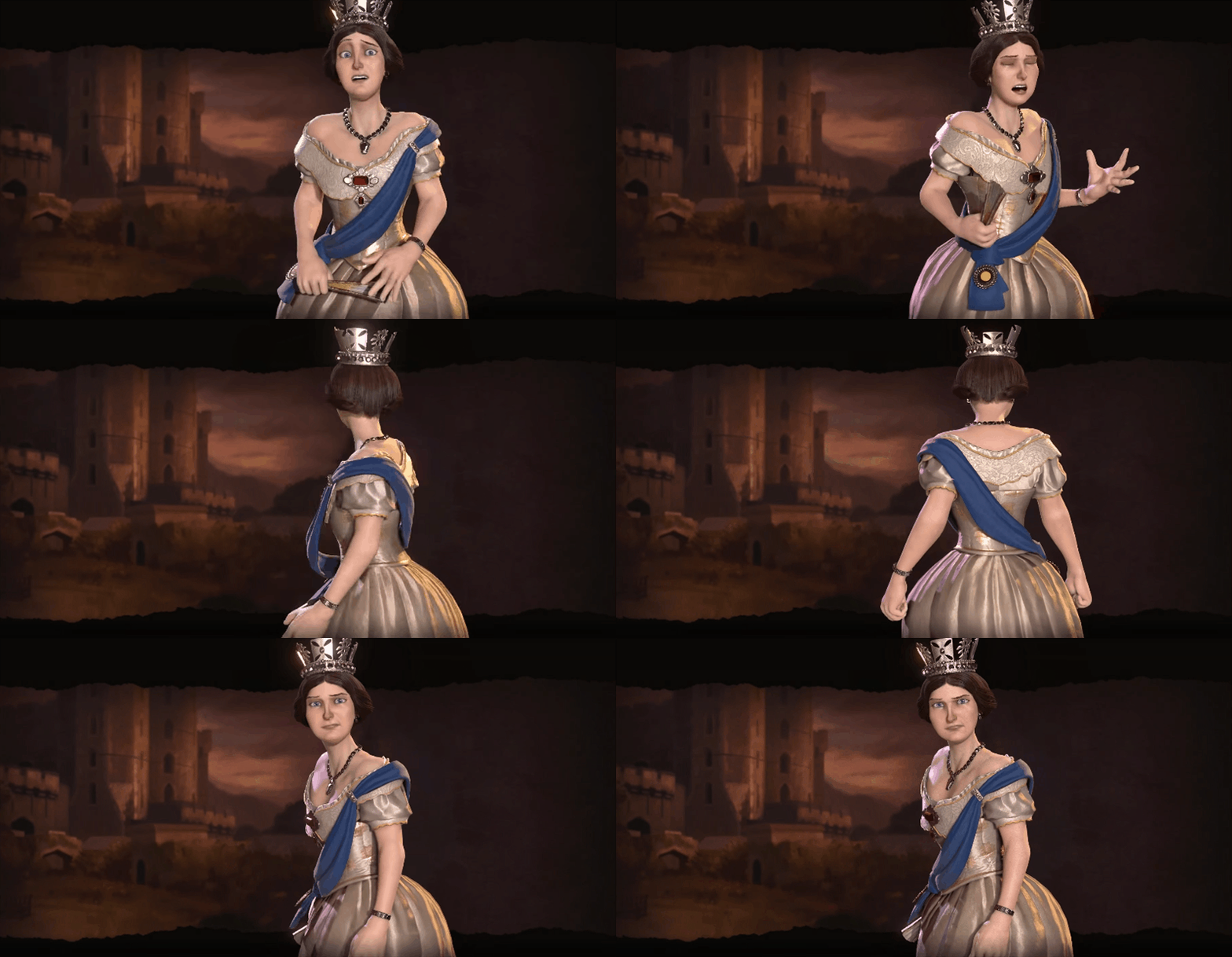
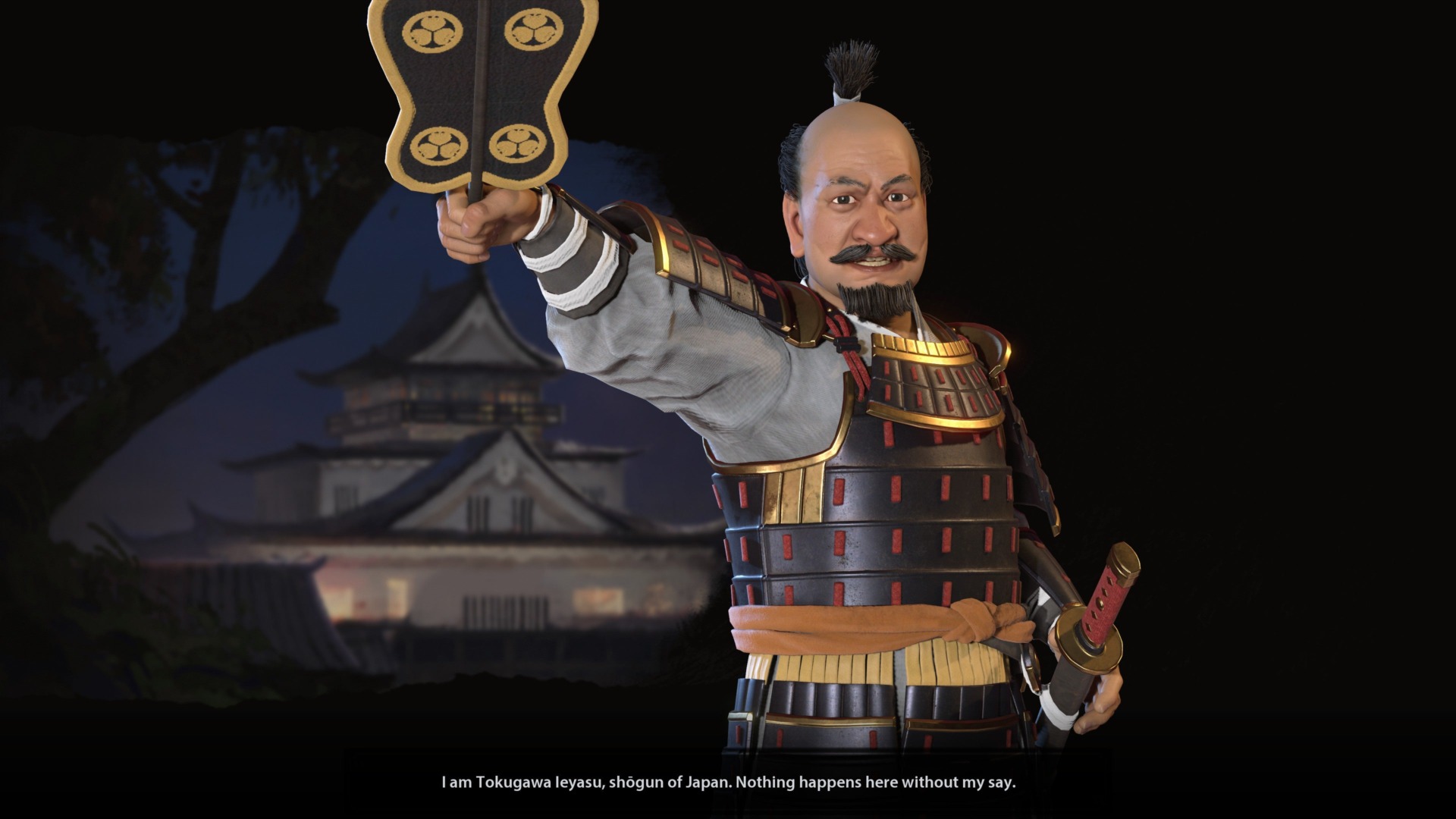
Most of those things are still here in Civ VI, just to be clear, but despite the best leader animations in the series (and maybe in all of video games), and a world that looks like you can reach out and touch it through the screen, the crushing weight of scores and bonuses and figures, thrown at you repeatedly throughout the ages, wears them all down. In Civilization VI I don’t feel like a disembodied leader watching over a world evolving through the ages. The longer I’ve played the game, the more I’ve felt like an accountant staring at a stop-motion video of a stranger building a LEGO set.
It’s a damn shame that Civilization VI could never take all these ideas and systems and tie them together, or at least tie them to the world you were lording over, because individually so many of them were so good! The game tackled climate change in a really interesting way for the genre, and its implementation of religion, while far from perfect—strategy games can seemingly never separate church from state—was at least more interactive than previous attempts.
Civilization VI’s happiness system is the best in the series, which can also be read as the one I hate the least. And I’m sorry it’s taken this long in the review to get to Giant Death Robots, one of the most wildly overpowered and as a result immensely satisfying military units in 4X history.
I love the way Civilization VI—again, in contrast to a lot of other its other, less successful ideas—makes the game’s culture such a tangible force. Watching your borders spread like a virus in earlier games was one thing, but manually controlling archaeologists and artists and rock bands in the field is a blast. It’s these areas, where the game asks you to get down on the ground and shape your Civilization directly, that it’s at its strongest. Where the numbers—which are always there, in every video game, I know—fade into the background.
We’re now seven years into Civilization VI’s lifespan. That’s a record between Civ games, we’ve never gone this long without a whole new entry in the series. I’m sure many fans will point to this longevity—and continued support for the game, which has just released a bunch of new and reskinned leaders—as proof of its success.
And like I’ve hopefully got across, it has been a success! This is still a Civilization game, and it’s still a very good strategy game. It just also happens to be the weakest entry in that series, the one least equipped to endure this long of a wait between games.