I was in Paris to see the new Castlevania game, and with the temperatures holding at close to 100 degrees Fahrenheit well into the evening, Paris was burning.
Konami had chosen a deconsecrated church nestled deep in the city to hold its hands-on event for Castlevania: Belmont’s Curse, and within, long banquet tables of computer stations were watched over by suits of armour drenched in dramatic lights. It definitely created a mood.
An opening presentation introduced us to Castlevania series producer Tsutomu Taniguchi, Konami producer and liaison Hannah Hurst, and Emmanuel Nouaille and Bérenger Dupré of Evil Empire, the French studio responsible for 2025’s The Rogue Prince of Persia. Soon, it was time to play.
Outside, Paris still burned.
The vibes, baby
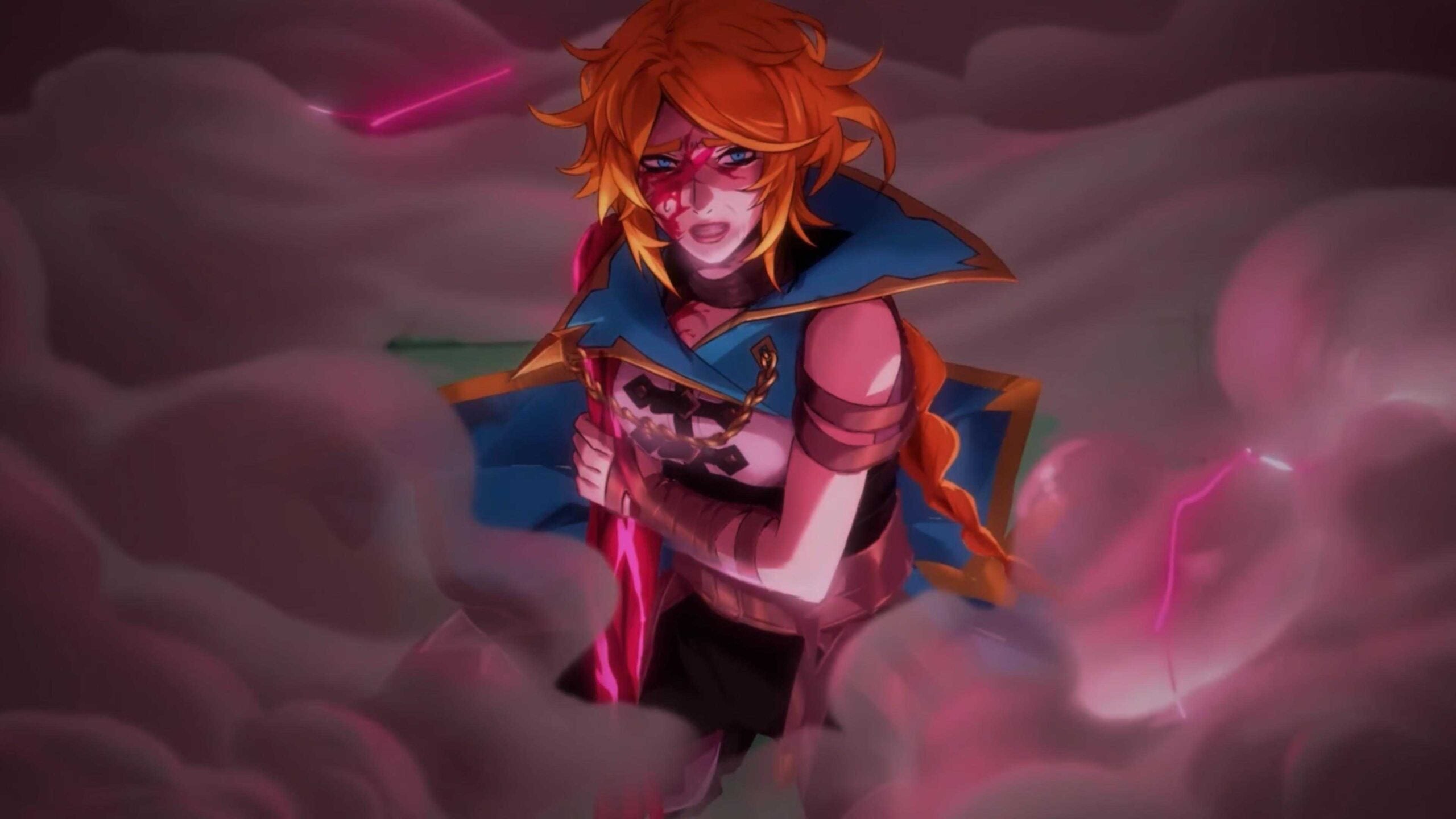
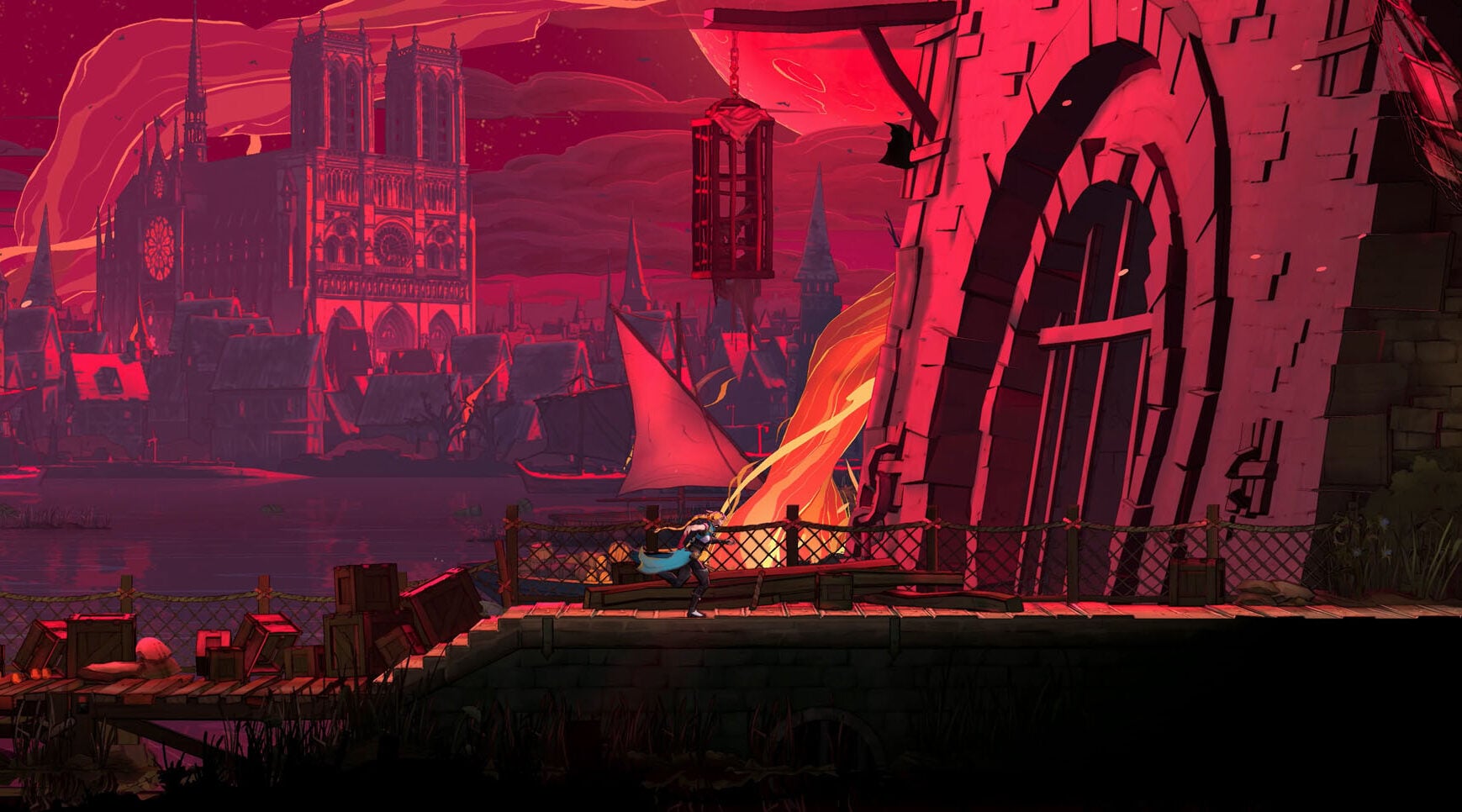
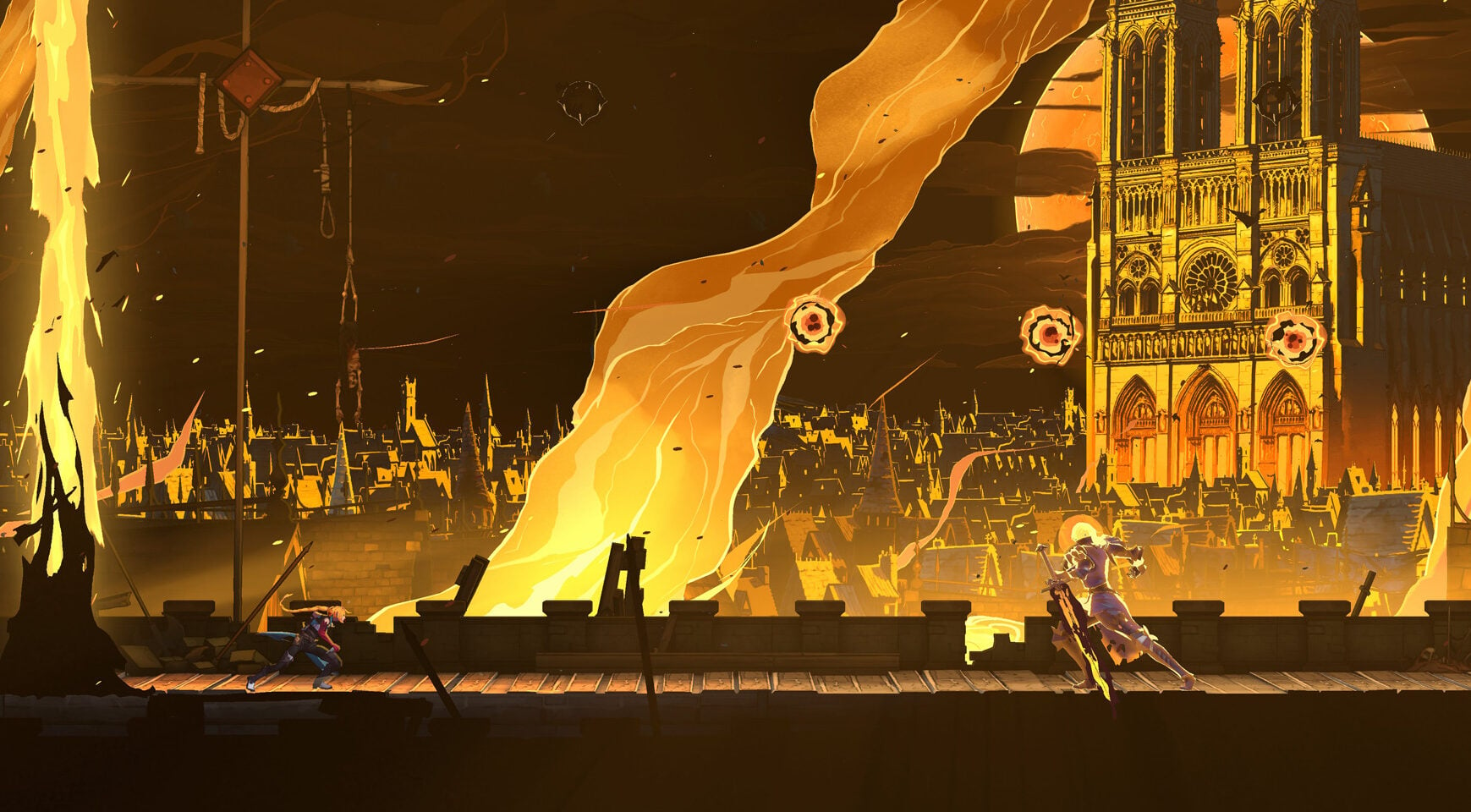
We were given three hours to explore the game, which begins as one might expect: Our hero, Rose Belmont, stands on the docks of a besieged Paris with her father Trevor, the protagonist of 1990’s Castlevania III. Soon they’re separated, propelling Rose on the adventure she’s yearned for all her life.
Behind her, Paris literally burns–flames lick the heavens, silhouetting the Notre Dame cathedral in ruin.
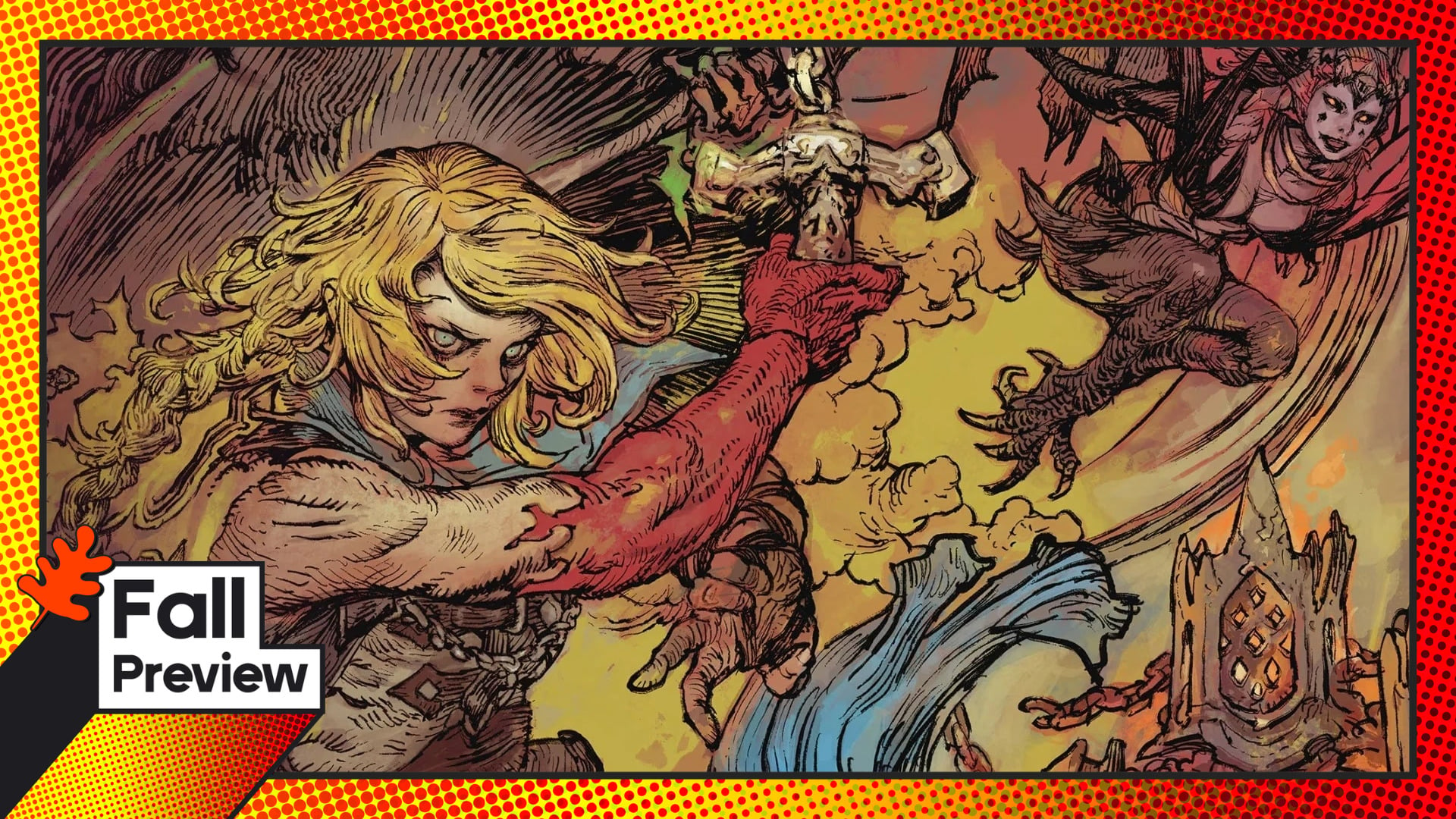
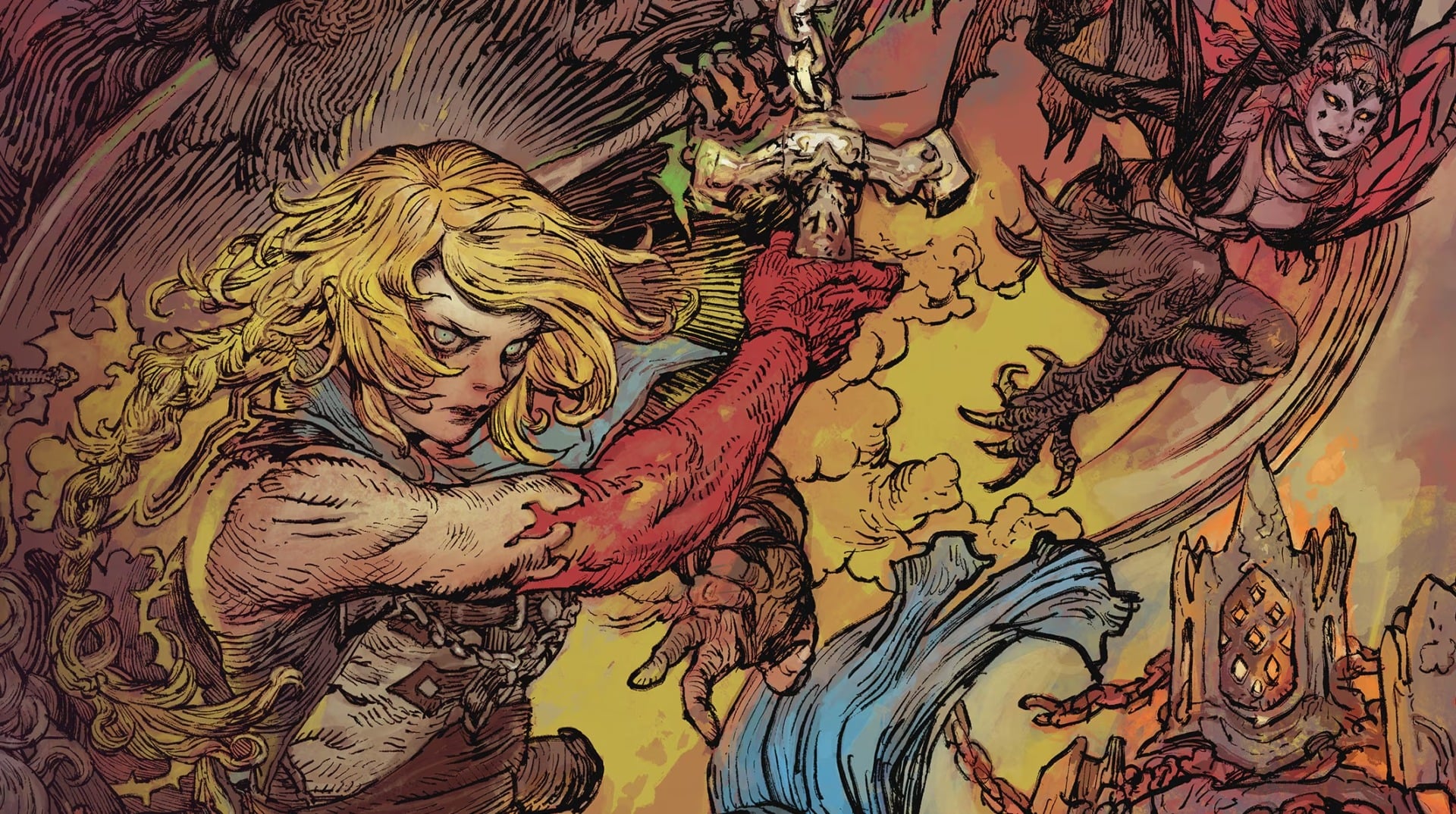
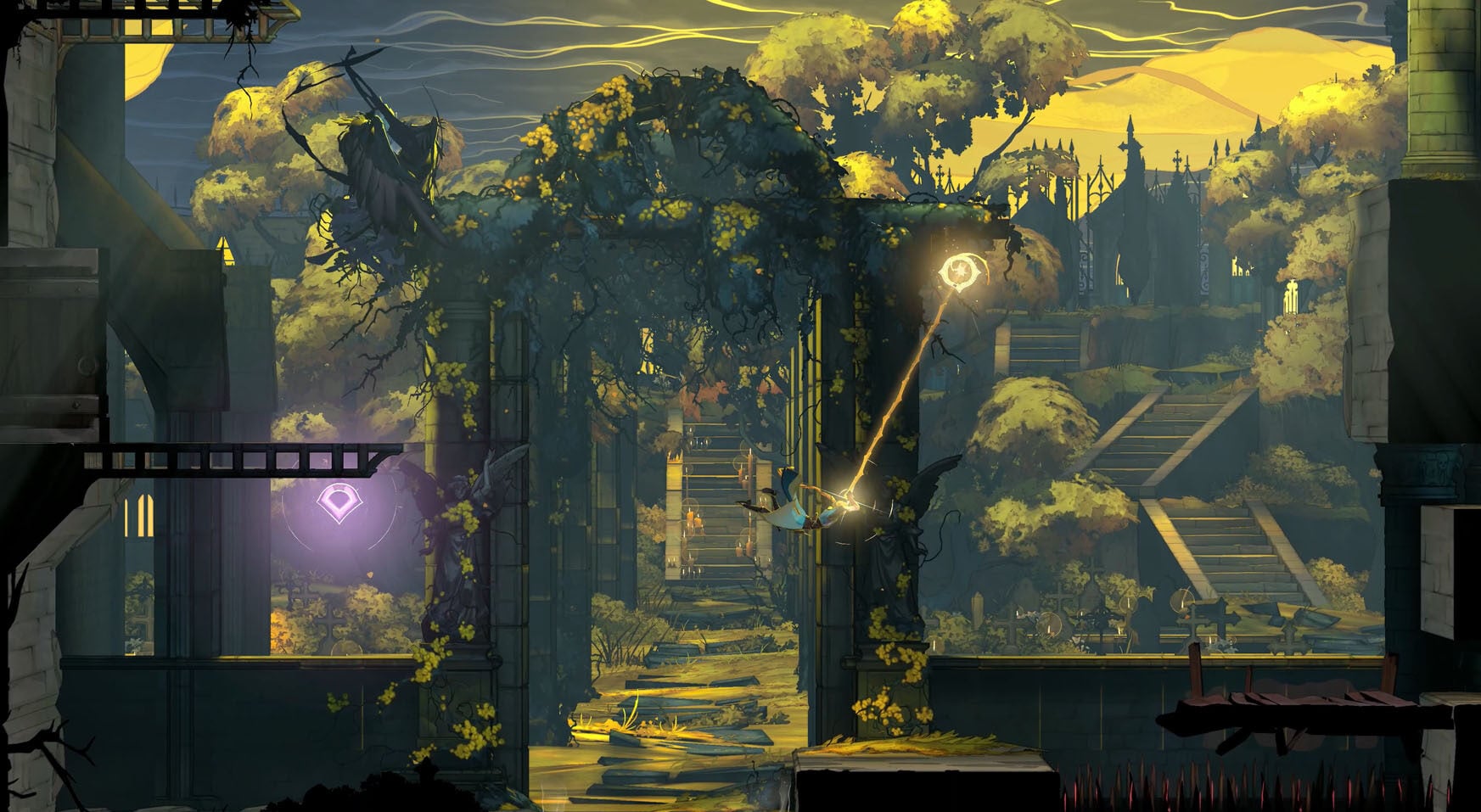
Let me just get this out of the way: The game fucking rules. No surprise, considering the track record of Dead Cells developers Evil Empire and Motion Twin, collaborating again on Belmont’s Curse. Dead Cells is known for stylish graphics and an immaculate use of bright colors, and the visual design is no less striking here. Belmont’s Curse is beautiful. Its art style feels simultaneously modern and true to Castlevania. Color abounds. And not in the subtle, negative-space-enhancing way of Hollow Knight. It’s everywhere. This level of artistry—mixing hand-drawn and 3D environmental assets and beautifully animated character models—feels like something from a stylish, trendsetting indie game, far removed from the Lords of Shadows and Castlevania 64s of the past.
To pull this off while still keeping the action on screen legible is a tough task. It could go wrong and look like the worst version of a Western anime ripoff. But the Dead Cells team has had years to perfect the style, and the payoff is one of the most beautiful games of the year. The same goes for the music, which builds heavy electronic soundscapes out of the series’ long-standing motifs. It’s like church organs on acid and dance drums. This ain’t your gramma’s Castlevania.
The Castlevania name brings with it certain expectations. And while Evil Empire and co-developer Motion Twin’s fingerprints are all over Belmont’s Curse, it’s also got all those vital Castlevania elements: vampires, hunters, whips, labyrinthine platform-heavy exploration, and gothic aesthetics. It feels like Castlevania, but, beyond that, it’s also in clear conversation with modern classics in the Metroidvania genre.
The influence of both Dead Cells and Hollow Knight can be seen in Belmont’s Curse. Taniguchi confirmed at the event that Dead Cells’ Castlevania-themed DLC happened on the condition Motion Twin and Evil Empire would go on to make a standalone Castlevania title.
“It was actually [Motion Twin/Evil Empire] who approached us and said, ‘Hey, do you want to create a [Castlevania] collaboration DLC [for Dead Cells]?'” Taniguchi explained through Hurst, who was acting as his interpreter at this event. As series producer, Taniguchi had been thinking about what a new Castlevania title would look like, and had his eye on Dead Cells, so the proposed collab was a “fantastic opportunity.”
“It was absolutely difficult to refuse this kind of proposition because it’s an absolutely famous franchise,” recalled Nouaille with a laugh. Their collaborative process on the Dead Cells DLC—Return to Castlevania—was “wonderful,” he said, so continuing the partnership made sense.
How hard is too hard?
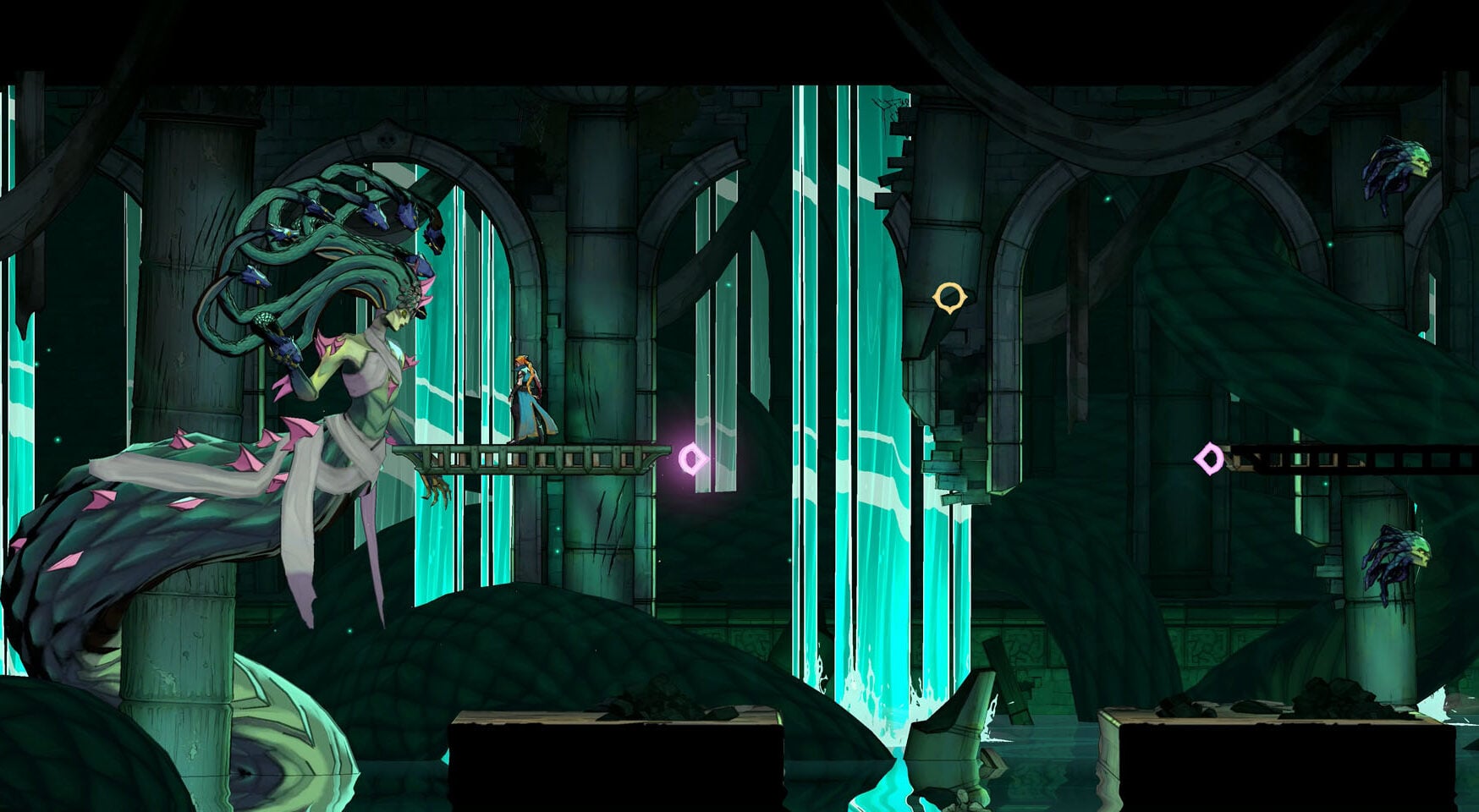
The biggest surprise for me, and several of the other attendees I spoke with, was the game’s base difficulty. The goal of the demo, which is also the opening of the final release, is simple—defeat three bosses, acquire three keys, and open the locked door to the Catacombs—but getting through the bosses—who include Joan of Arc—was anything but simple.
I’d brute-forced my way through Dark Souls and Hollow Knight, abusing the wealth of knowledge available online. But there was no Belmont’s Curse wiki I could turn to for advice, and though the developers would provide hints, they were coy and eager to see how I would overcome the challenge on my own.
About 45 minutes into my time with Belmont’s Curse, I got stuck on the game’s first real boss: “The Fallen.” Think of a punished Ben Starr pumped full of steroids and My Chemical Romance. I died, over and over, making a little bit of progress each time. It’s a pattern built into this genre: Mistakes are yours to own, but so is hard-fought victory.
But still, after several attempts, and eager for me to see more of the demo, one of the developers quietly suggested I do something forbidden to us at the start of the event: fiddle with the difficulty modifiers.
I made some small tweaks and returned to the fray. Quickly, I triumphed and acquired the game’s most important weapon: the Arcana Whip, which opens a whole bevy of new traversal methods and gives the game a major Castlevania boost.
These difficulty modifiers—which include stuff like tweaks to damage dealt/taken, automatic respawns outside boss doors, and so forth—allowed me to find the right challenge for my skill set.
They helped me find the fun.
The Soulslike influence on Belmont’s Curse is also undeniable. Castlevania‘s mirror rooms not only act as save points, but also replenish health and reset the world’s enemies and collectables, just like the Souls series’s bonfires and Hollow Knight’s benches. Levelling up is more Symphony of the Night than Hollow Knight, but Belmont’s Curse‘s relics system is very reminiscent of Hollow Knight‘s charms, and the seven weapon types (I used a long sword, two-handed sword, and cestus knuckles in the demo) provide a Dark Souls-esque level of variety to combat.
Evil Empire executes the ideas well and, more importantly, adds a few tweaks of its own. Chief among these are the Arcana, which essentially replace the Castlevania series’ sub-weapons and can be leveled up by accomplishing various in-world tasks called “Works of Mercy.” For instance, defeating a certain number of enemies with my fireball granted me a “blessing,” which I could use to unlock an improvement for the spell. I chose to make the fireball bigger while adding knockback.
It’s too early to tell if these options will help keep Belmont’s Curse balanced and interesting for its whole playtime, and if the game will offer the same replayability as its predecessors, but the level of customization in the first three hours is promising.
Midway through my play session, I was ushered to the back of the church where several couches waited in a casual, fireside chat-style circle. Seated for our questions already were Taniguchi, Hannah Hurst, and Evil Empire’s Bérenger Dupré and Emmanuel Nouaille.
Old meets new
“It’s been a long time since the last mainline Castlevania was released,” I said when my turn rolled around. 2014’s Lords of Shadow 2, to be exact, a game that exemplifies the way the series had strayed from its past successes while chasing the success of other popular series like God of War.
“So, why is right now the right time to bring Castlevania back?”
“Yeah, I wonder why!” laughed Taniguchi and Hurst.
When Taniguchi joined Konami a decade ago, he wondered where Castlevania had gone. He wanted to create something new, but given how much time had passed since the last major release, he focused on reintroducing the series through multiplatform collections: Castlevania Anniversary Collection (2019), Castlevania Advance Collection (2021), and Castlevania Dominus Collection (2024). But the massive success of Netflix and Warren Ellis’s TV adaptation, which follows the adventures of fan favorites Richter Belmont and Maria Renard during the French Revolution, created a new wave of interest in the series and opened doors previously closed.
“We know there’s people who have watched the anime but haven’t played the game,” Taniguchi said. “So, it was a good time for us to create a new and completely removed entry to the series.”
“We are trying to keep the spirit of the franchise and to modernize the formula,” said Nouaille. Belmont’s Revenge is the first Castlevania in a long time to focus on difficulty as a core gameplay element. But, Nouaille explained, ensuring the game remains accessible to Castlevania fans unused to the high degree of difficulty popularized in a post-Hollow Knight world remains important.
“It’s about balancing the new audience with the old fans, because we want to really care for both of them,” Taniguchi expanded.
Nailing the feel of Castlevania is about more than just gameplay, though. The long-running series has a complex timeline spanning nearly a millennium. Balancing accessibility and lore expansion with the new story was like threading a needle, but Nouaille is convinced Rose Belmont’s adventure, set between 2005’s Curse of Darkness and 1989’s Castlevania: The Adventure, will satisfy both groups, and from what I’ve seen, I think he’s right.
Nouaille laughed when I asked how they settled on a story for Belmont’s Curse. “It takes a long time.”
Castlevania is so huge and rich that the opportunity to tell a new story was, to paraphrase Nouaille’s answer, both a blessing and a *ahem* curse. Appealing to newcomers meant creating something that didn’t require a lot of homework, while satisfying longtime fans is where many series revivals stumble.
Set in 1499, Belmont’s Curse follows Dracula’s defeat at the hands of Trevor Belmont and Sypha Belnades 23 years earlier in Castlevania III: Dracula’s Curse. Instead of continuing their story directly, Nouaille and his team dipped their pen into old ink, and drew up a story for their daughter, Rose Belmont.
“We thought it was the best entry for the new and former players to link between the past and the new entry of the series,” he said.
Rose Belmont is young and snarky, eager to step out from inside her parents’ long shadow. In a series predominated by brooding, hardened vampire hunters, Rose’s naivety and earnest thrill for adventure is a welcome change. Her verbose, bustling personality—so different from what we usually see in Souls-inspired games (shoutout to Another Crab’s Treasure, though)—creates an urgency that’s often missing in similar games due to their reticent, careful protagonists.
Just as Rose looks to earn her spot in the familial legacy, so too does Belmont’s Curse want to prove that it’s not just inspired by the greats, but that it belongs alongside Hollow Knight and Dark Souls.
Rise from the ashes
This event was about putting a promising game in front of a bunch of early eyes, and goosing up the hype train. But it was also about people connecting. As reporters, those of us in attendance wanted to know more about the game and the people making it. But as we played, members of the development team stood at a quiet distance behind us, observing our struggles and successes—anything to give them a headstart on final bits of refinement.
With the Fallen defeated, his whip now serving as my main traversal tool, Paris opened up. In true Metroidvania fashion, each defeated boss provides you with means of accessing new areas of the map, turning the tight early-game experience into the sprawling explorationfest that so many modern gamers know and love. So I kept exploring, and I kept running into road blocks: tough enemies and labyrinthine areas.
There’s one particularly cool sequence in which you have to climb a huge tower in a non-linear fashion, moving in and out of the structure as you raise drawbridges, break down locked doors, and swing across huge gaps. There’s cleverness and creativity on display in spades, and the world is full of optional, Hollow Knight-style platforming challenges with genuinely useful rewards waiting for those who can navigate the dangers.
I climbed, I fought, I died, and died again. But, eventually, the game’s second boss, holder of another key, and a new defensive Arcana, Joan of Arc fell, and I had two of the three necessary keys to the catacombs.
It wasn’t enough.
Before I knew it, though, and before I could obtain the third and final key, the event was over, and another group of vampire hunters were slated to soon arrive for their own journey through the burning Paris.